Profile view of a bearded man wearing a dark green baseball cap and a dark gray T-shirt against a plain light background.

Gas or electric water heater for a Texas home

Step 1 of 3: Equipment

Most Texas homes do better with an electric water heater, mainly because most homes here are already set up for electricity rather than gas. If your house already has a gas line run to the water heater, gas still has a real edge: it recovers faster, so a family that runs through hot water back to back is less likely to hit a cold shower. Electric units cost less to install when there's no gas line to add, and with power priced about average here, the running cost doesn't swing the decision much either way. The honest answer is that the fuel you already have in place usually decides it, not a rule about which is better. Where it matters more is sizing and setup: a unit matched to your household and installed correctly will outperform a bigger, pricier one put in wrong. That part is worth getting right, and it's where a qualified installer matters more than the gas-versus-electric question itself.

A middle-aged woman with shoulder-length dark hair, wearing a gray cardigan over a cream top, sits in an upholstered armchair and looks toward a sunlit window, with a shelf holding framed pictures and a plant behind her.
A woman and a child wrapped together in a knitted gray blanket on a couch, with the child's head resting on her shoulder and a lit table lamp and houseplant in the background.

How Each Type Actually Works

  • A gas water heater needs a vent pipe or direct vent to carry exhaust outside, which limits where it can go in the house.
  • An electric water heater only needs a 240-volt circuit, so it can sit in a closet or garage without any venting at all.
  • Gas models use a thermocouple or igniter to light the burner each time the tank calls for heat.
  • Electric models heat with one or two submerged elements, and most run the bottom element and top element on a cycle rather than both at once.
  • Switching from gas to electric, or the other way around, usually means running a new circuit or a new gas line, not just swapping the tank.
  • A gas unit's pilot or igniter needs combustion air, so the room it sits in has to meet code for air supply.

A gas water heater burns fuel at the bottom of the tank, and that burner has to breathe. The exhaust has to go somewhere, either up a vent pipe through the roof or out through a wall with a direct vent kit. That's why gas units are often stuck in a garage, utility room, or near an outside wall, wherever the venting can actually reach. The room also needs enough air coming in to feed the flame, which is why you won't find one crammed into a small closet with the door shut tight.

Electric units skip all of that. No flame, no exhaust, no vent pipe. The tank just needs a 240-volt circuit run to it, so it can go in a closet, a small utility room, or anywhere else that's convenient, as long as the wiring is there. Inside, instead of one burner, there are one or two heating elements submerged in the water itself. With two elements, the heater usually runs the bottom one first and lets the top one kick in only when needed, rather than firing both at once.

This difference is also why switching from one type to the other isn't a simple tank swap. Going electric where there's no 240-volt circuit means an electrician has to run one. Going gas where there's no gas line means running one, plus adding the venting. Either way, it's new infrastructure, not just a new water heater.

A gray-haired man in a dark sweater sits on a light gray sofa in a living room, looking toward a sunlit window with trees outside.
A gray-haired man in a dark blue sweater sits on a light gray sofa in a sunlit living room, looking off to the side, with a potted plant, shelving unit, and large glass doors behind him.
A bearded man with graying hair in a dark green sweater sits on a sofa in a living room, looking off to the side, with a sliding glass door and a dim kitchen doorway behind him.
A gray-haired man in a dark knit sweater sits on a light gray sofa in a living room, looking toward a sunlit window, with houseplants, a lamp, and framed art in the background.

What's going on with your water heater right now

If you've got an electric water heater and the hot water is running out faster than it used to, or it takes longer to heat back up between showers, that's the tank telling you something, usually a failing heating element or a buildup of sediment at the bottom. With gas, pay attention to the pilot or igniter. If it won't stay lit, or you notice a sulfur smell near the unit, that needs attention soon, not later. A water heater that's struggling to keep up usually isn't dangerous yet, but a gas unit with a venting problem can let exhaust back into the house, and that's worth having someone qualified look at.

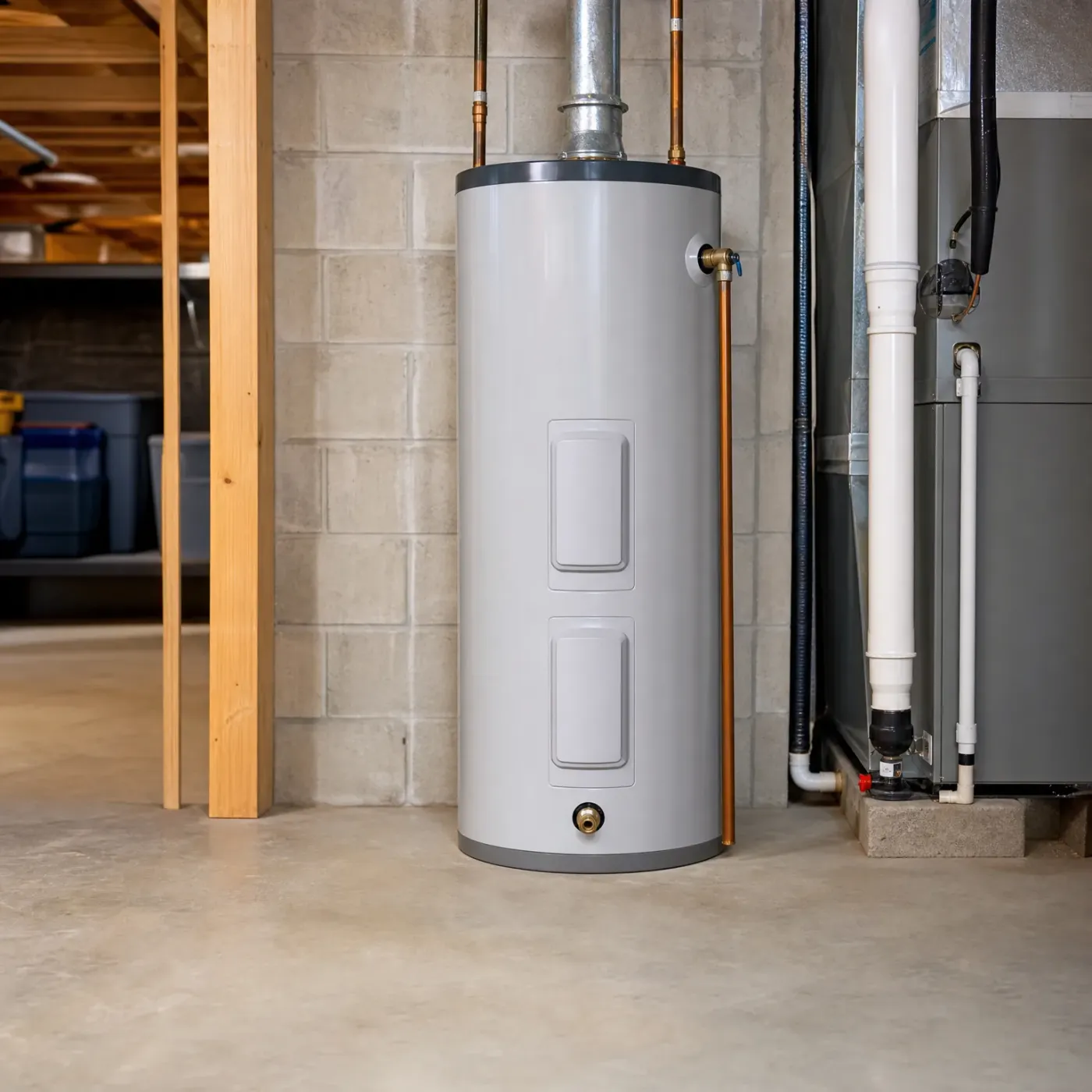
A gray cylindrical water heater with copper pipes stands against a concrete block wall in a basement, next to white PVC piping and a gray furnace, with wood framing and storage bins at left.

An electric water heater set up right

This tank sits against the wall with copper lines run clean and a proper flue for the HVAC unit beside it. Both access panels are sealed and the connections are tight. Installed correctly, an electric water heater like this runs for years without surprises.

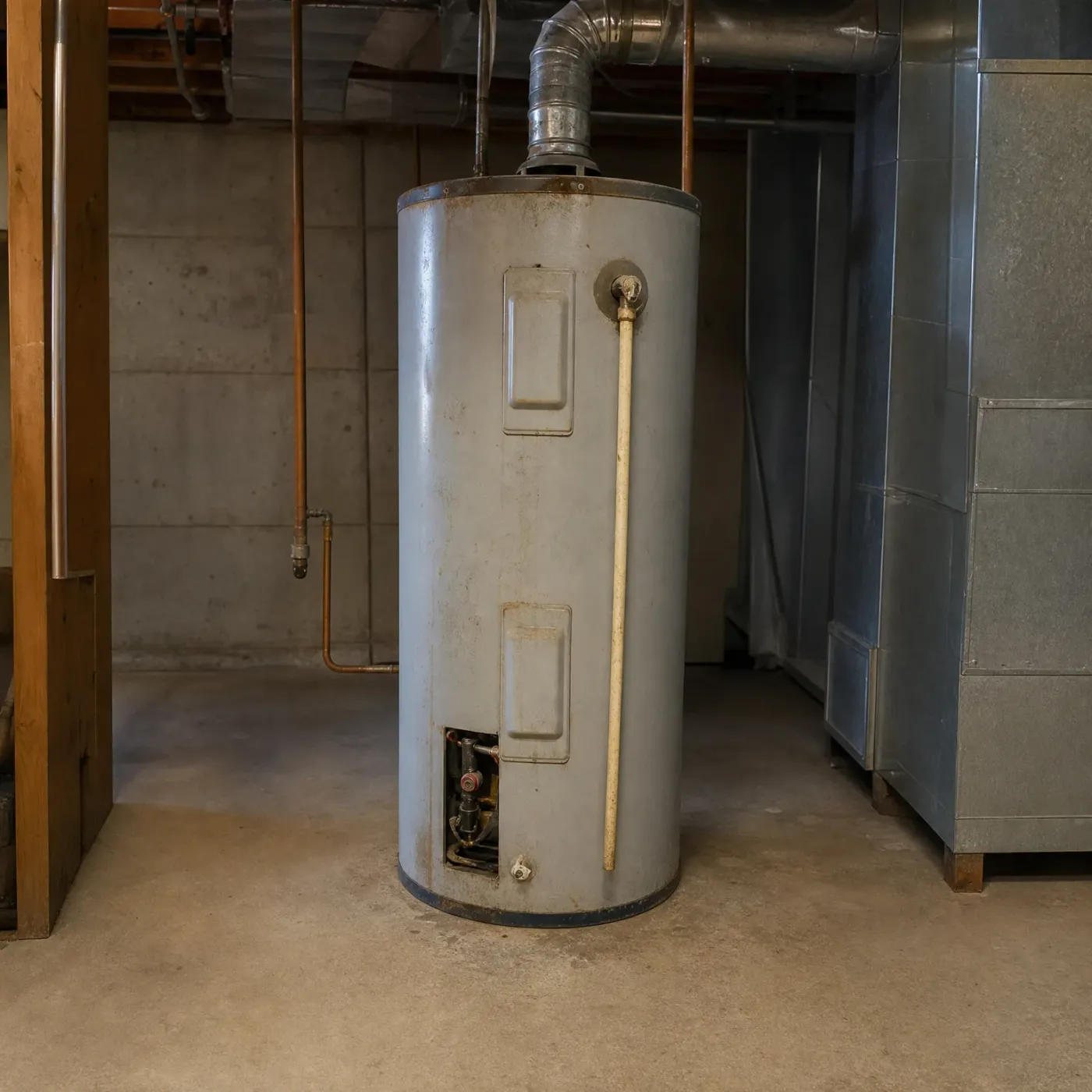
An older gray gas water heater with a metal flue pipe stands on a concrete basement floor beside ductwork and exposed copper piping.

A gas water heater past its prime

Rust spreads across the tank and the metal is starting to go. The flue pipe, the copper lines, the relief valve discharge, all of it still needs to be sized and routed right for a gas unit to be safe. Get this wrong and you're looking at a bigger repair than the tank itself.

61.2% of homes statewide heat with electricity

Most houses in your neighborhood were wired for an electric water heater from the start, not plumbed for gas. That's why swapping to electric is usually the simpler job, and why a licensed installer can set the new tank wherever the old one sat without running new gas line.

ACS 2020-2024 5-year B25040

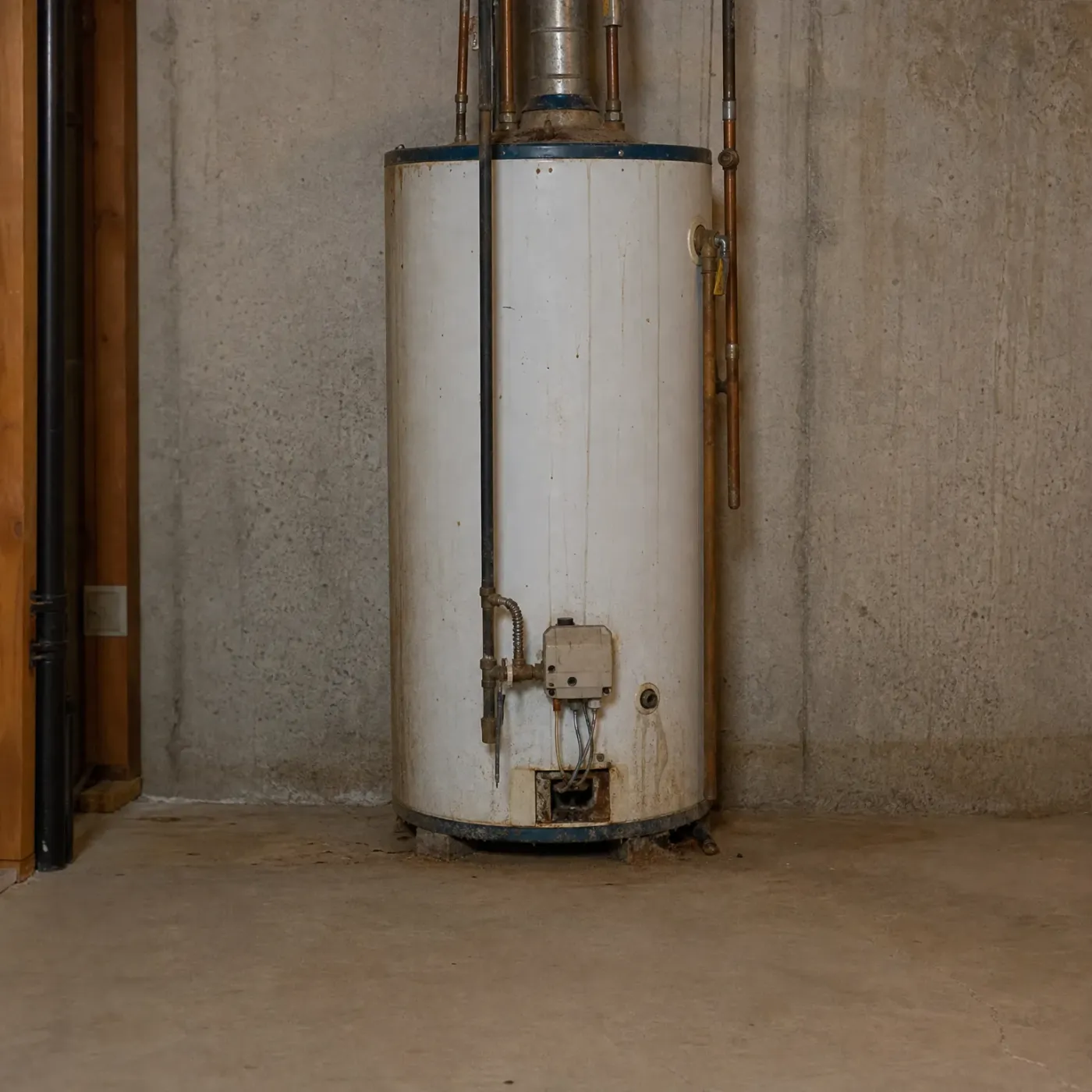
An old white gas water heater with rust stains, copper pipes and a flue stands in the corner of a concrete-walled room with a bare concrete floor and a wooden door frame at left.
Before you get your water heater installation
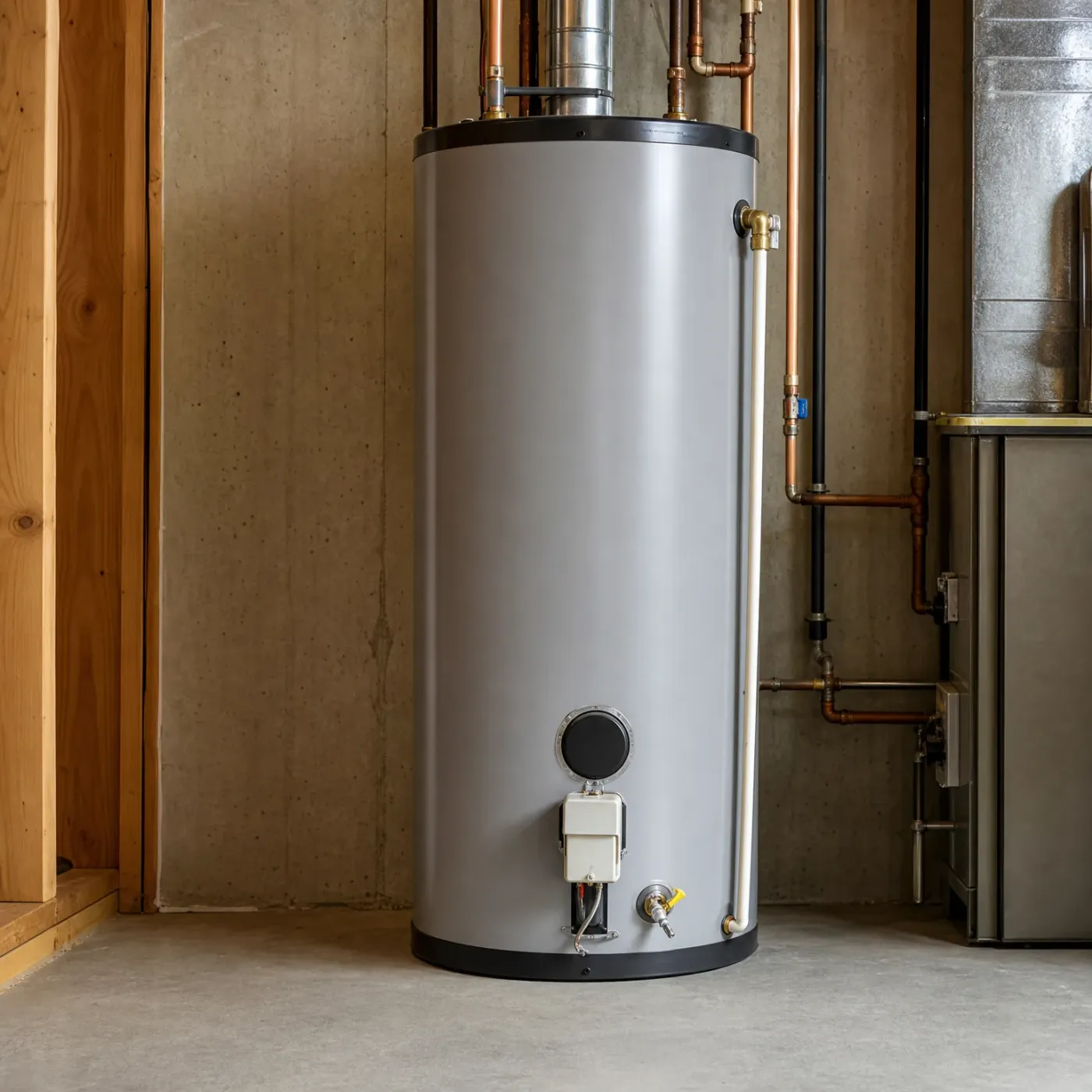
A gray cylindrical water heater stands on a concrete floor against a concrete wall, with copper and black pipes running overhead and a metal duct and dark equipment cabinet to the right.
After you get your water heater installation
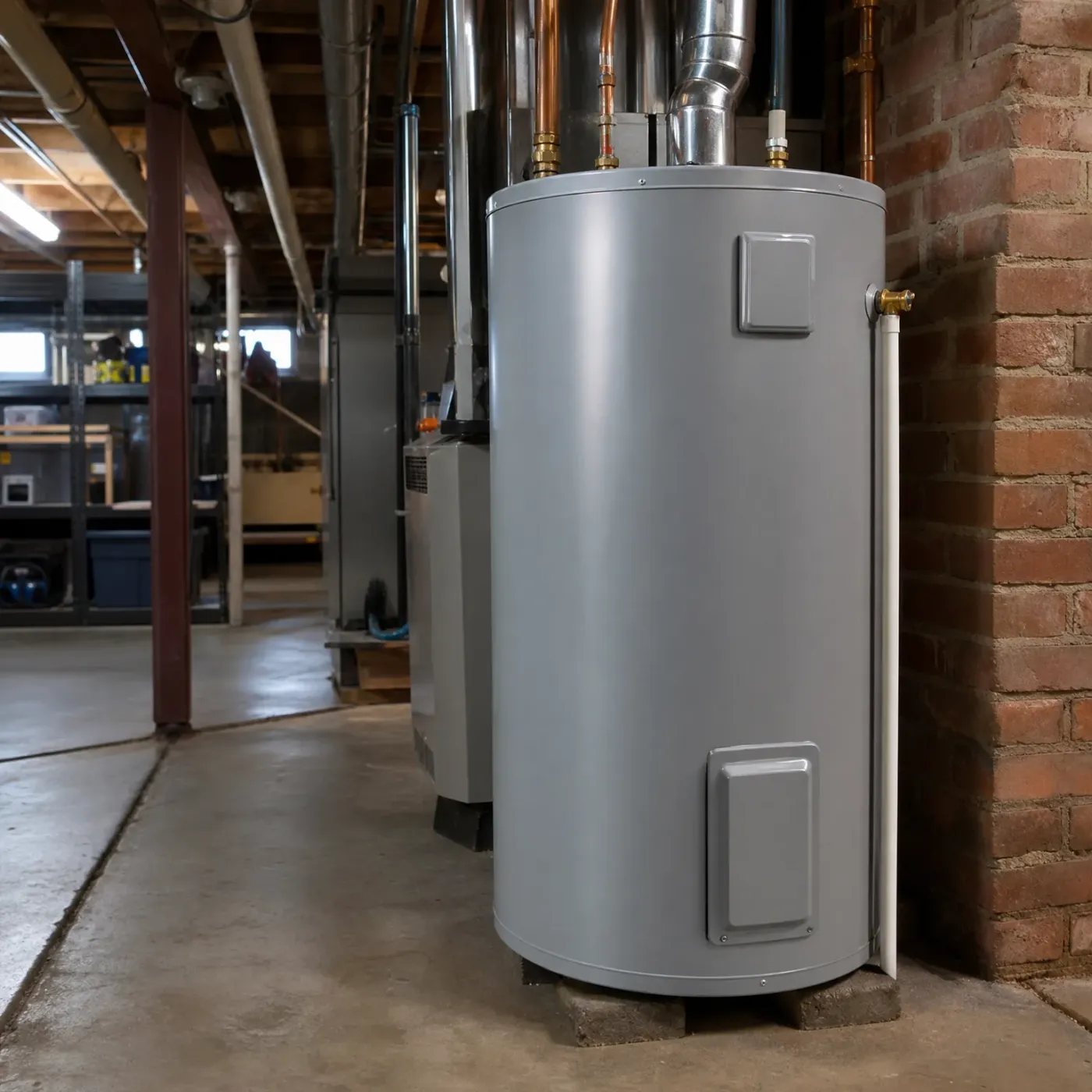
A gray cylindrical water heater with two access panels stands on concrete blocks beside a brick wall in a basement, with copper and metal pipes above and shelving visible in the background.

The right pro for this job

One installer gets your project, so there's no bidding war over it.

Get in touch with a local installer about a new water heater.

Get one local pro

There's no charge for the request.

Why does my gas water heater need a vent but electric doesn't?

You've noticed the gas water heater has that pipe running up through the roof or out the wall, and the electric one you're considering doesn't need anything like it. It's a fair thing to want explained before you decide, since it affects where the unit can even go in your house and what the installer has to work with.

Burning gas produces exhaust that has to leave the house

A gas water heater burns fuel to make heat, and that combustion creates exhaust, mostly carbon monoxide, that has to go somewhere other than your living space. The vent pipe or direct vent carries that exhaust outside, which is why the unit has to sit near an exterior wall or a route up through the roof. An electric water heater has no flame and no exhaust. It heats water with an element inside the tank, the same way a coil in an oven works, so there's nothing to carry away and nothing to vent. That's also why electric units can go in a closet or garage with no outside wall nearby, somewhere a gas unit never could.

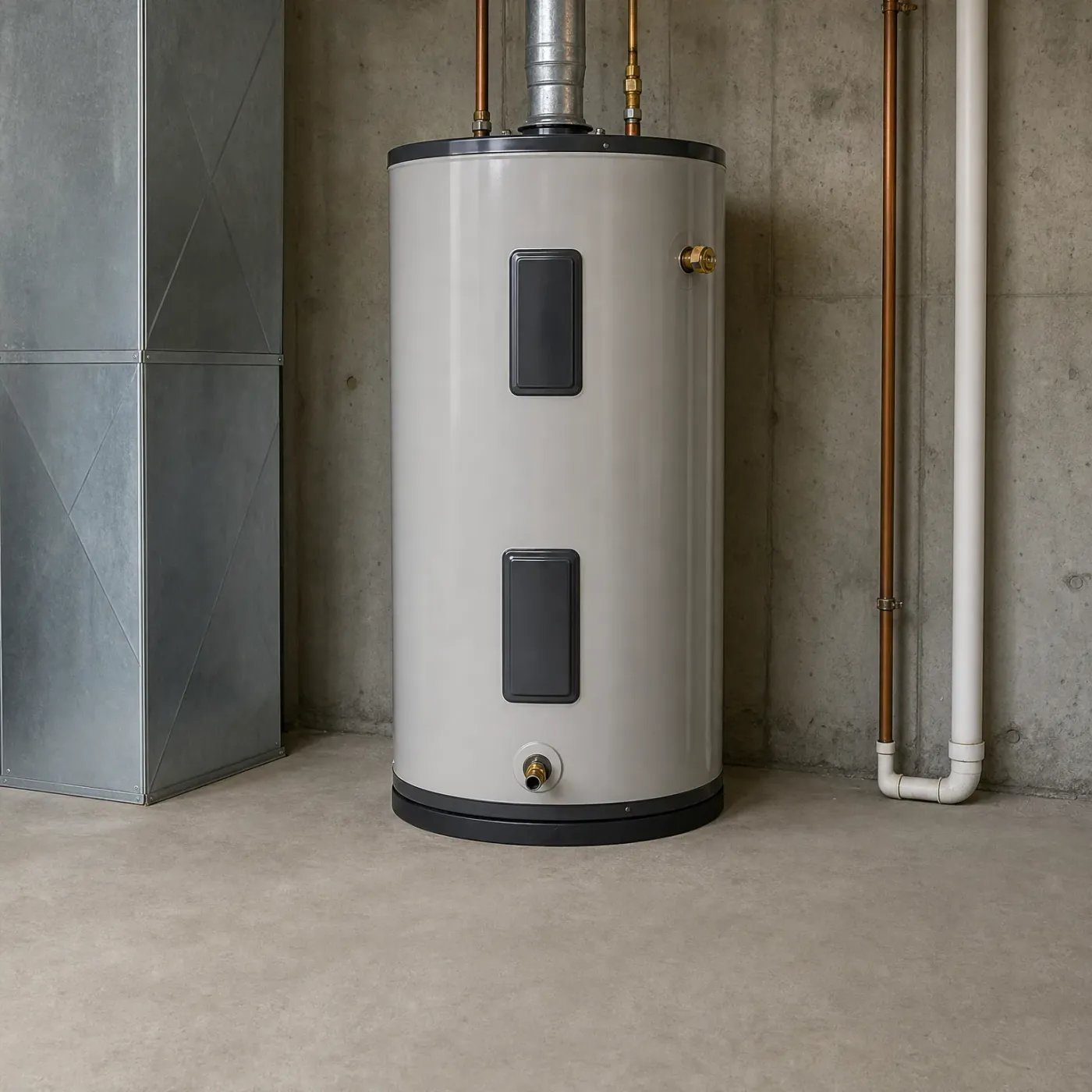
A cylindrical beige water heater with two dark access panels stands on a concrete floor against a concrete wall, with copper and white pipes to the right and sheet-metal ductwork to the left.
A water heater working the way it should, sitting flush against the wall with the panels sealed and no sign of wear.
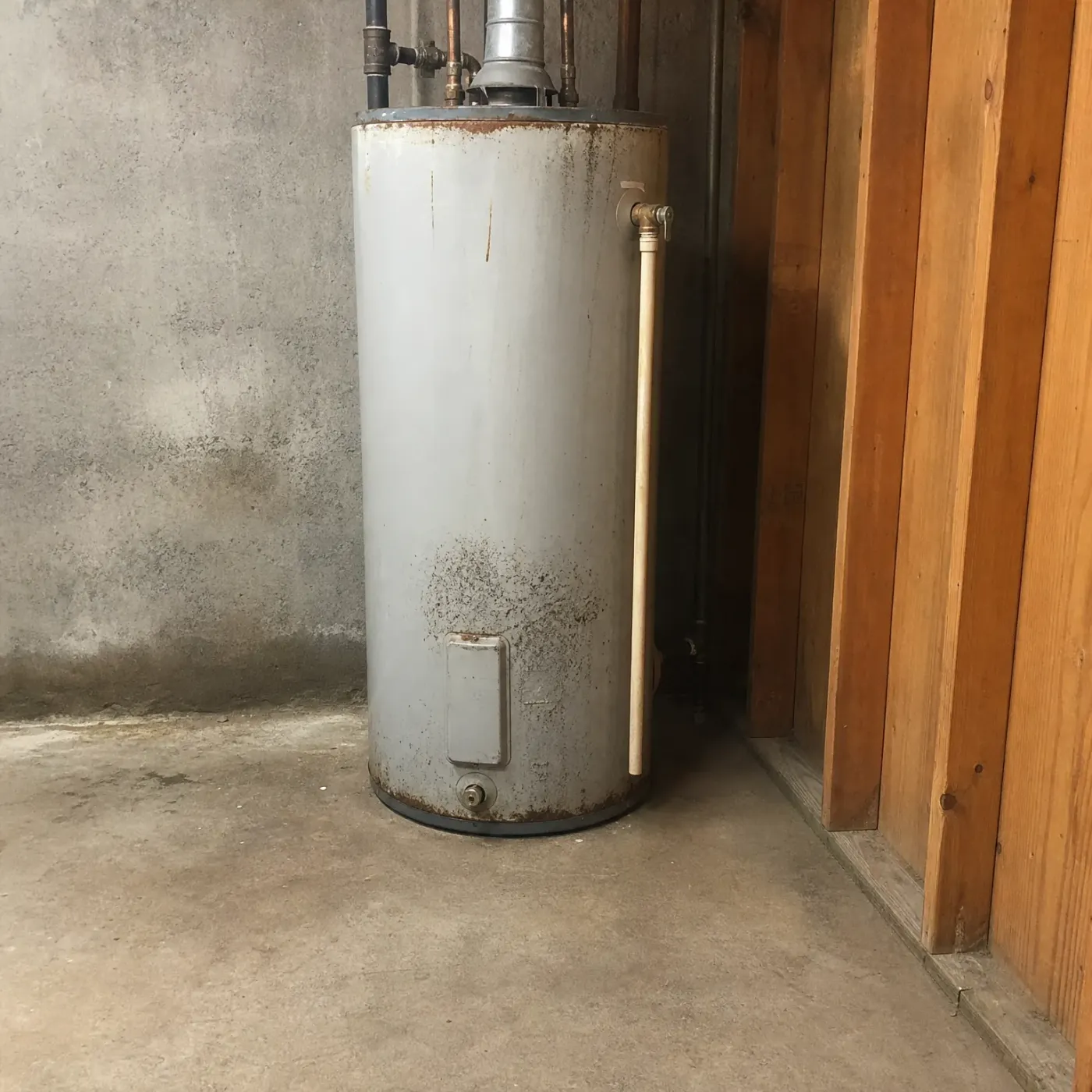
A rusting gray cylindrical water heater with copper pipes and a drain tube stands on a concrete floor against a concrete wall beside vertical wood paneling.
This one has gone to rust, with soot stained up the tank from a burner or vent that isn't drafting the way it should.
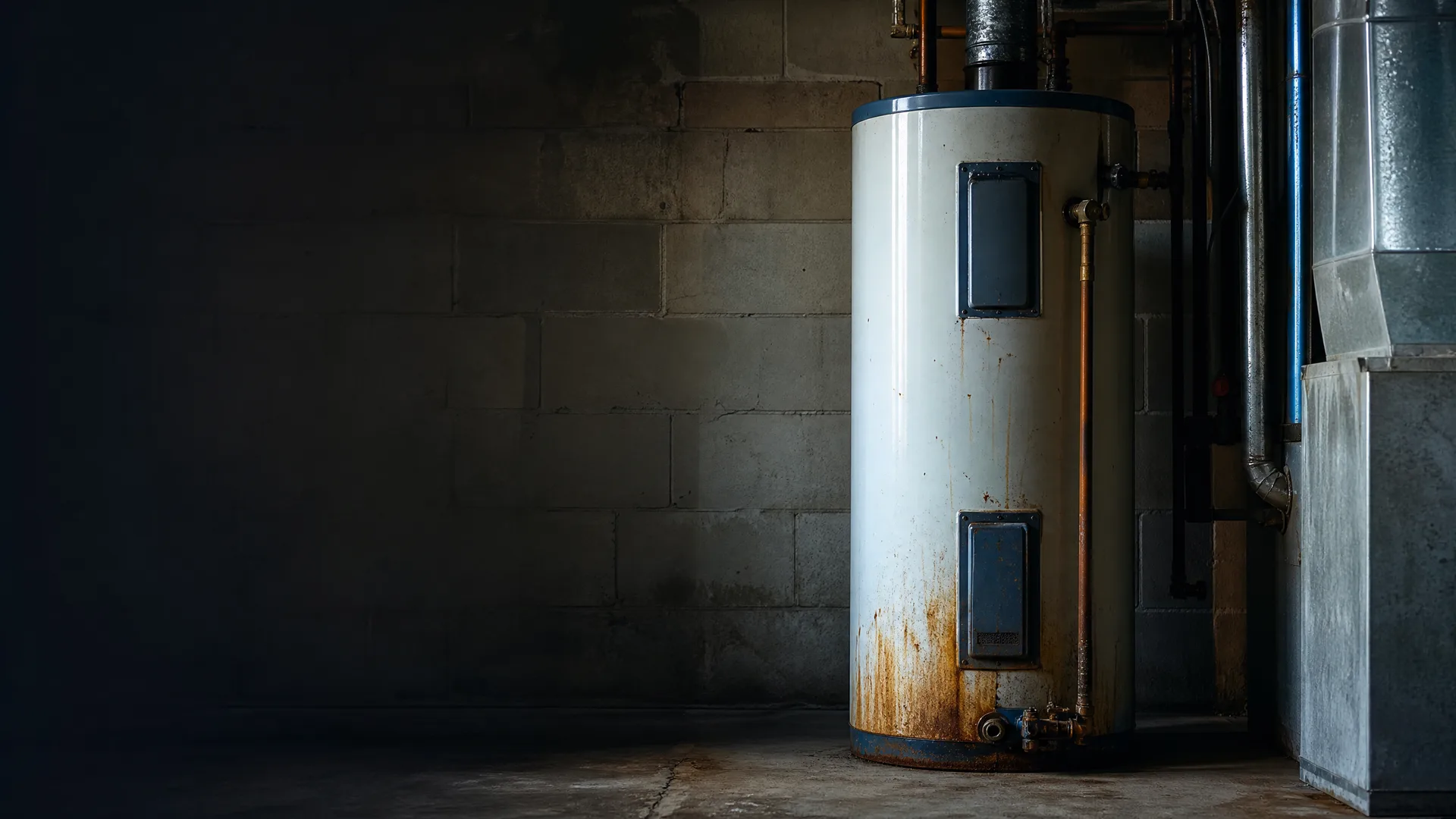
A rusting white and blue water heater with copper and steel pipes stands against a concrete block wall in a dim basement with a bare concrete floor.

It's past eight and you're down in the utility room because the water never got hot tonight, just lukewarm and fading. The old tank sits in the corner, and under the bare bulb you can see the rust streaks running down its side to the floor, dried in some spots and still dark and wet in others. You crouch down and touch the base and the concrete feels damp around it. The air in the room is close, the way it gets in a Texas house by evening even with the AC running upstairs. You stand there a minute, listening for anything, a hiss or a drip, but it's quiet. You already know you're not getting hot water out of this one tonight.


A man in a dark blue shirt stands in an open front doorway of a stucco and wood-clad house, facing a blond woman seen from behind in the foreground on a stone walkway.

Electric is the right call for most homes here

For most houses in Texas, electric is the straightforward choice, because the wiring is already there and the gas line isn't. If your house is the exception, with a gas line already run to the water heater, that changes the math and gas may still make sense. Either way, the install matters more than the fuel. A tank set in wrong, with a loose flue or a sloppy connection, will cause the same problems regardless of what powers it.

A licensed installer who works on water heaters in this area all year has seen how these tanks fail here and what a clean install looks like in a Texas utility closet or garage. When you request a match, you get connected with one contractor suited to your situation, not a handful competing for your callback. They'll look at what you have, tell you straight whether electric or gas is the right fit for your house, and take it from there.

A living room corner with a beige sofa and cushion, a round wooden coffee table holding a pale ceramic vase of eucalyptus stems and a wooden bowl, and a curtained window with a potted plant above a latticed radiator cover in the background.
Kitchen corner with cream upper cabinets, oak lower cabinets, white marble-look countertop, beige tile backsplash, a ceramic vase of greenery, a wooden cutting board and bowl, and a black-framed window at right.
Interior corner of a room with a white-framed window and wide sill, beige walls with panel molding, a wooden cabinet holding a ceramic vase with a green leafy plant, and blurred shrubs and trees outside.
A wood-framed armchair with beige cushions and a woven lumbar pillow sits in a corner beside a large window overlooking green trees, with a tall ceramic vase holding leafy branches on the left and plaster walls and wood flooring.
Interior corner with a white-framed window above a sill, beige walls with baseboard molding, a greige shaker-style cabinet with brass knobs and a potted plant on top, light wood flooring and a woven jute rug.
A dark-framed six-pane window with white trim and sill set in gray horizontal lap siding, with hydrangea shrubs below and a white column and shingled roof section at left.

Matched to your water heater job

Your request goes to one pro, not a list of companies.

Get a local pro

You only hire the pro if you want to.