No smell, no rust, working right
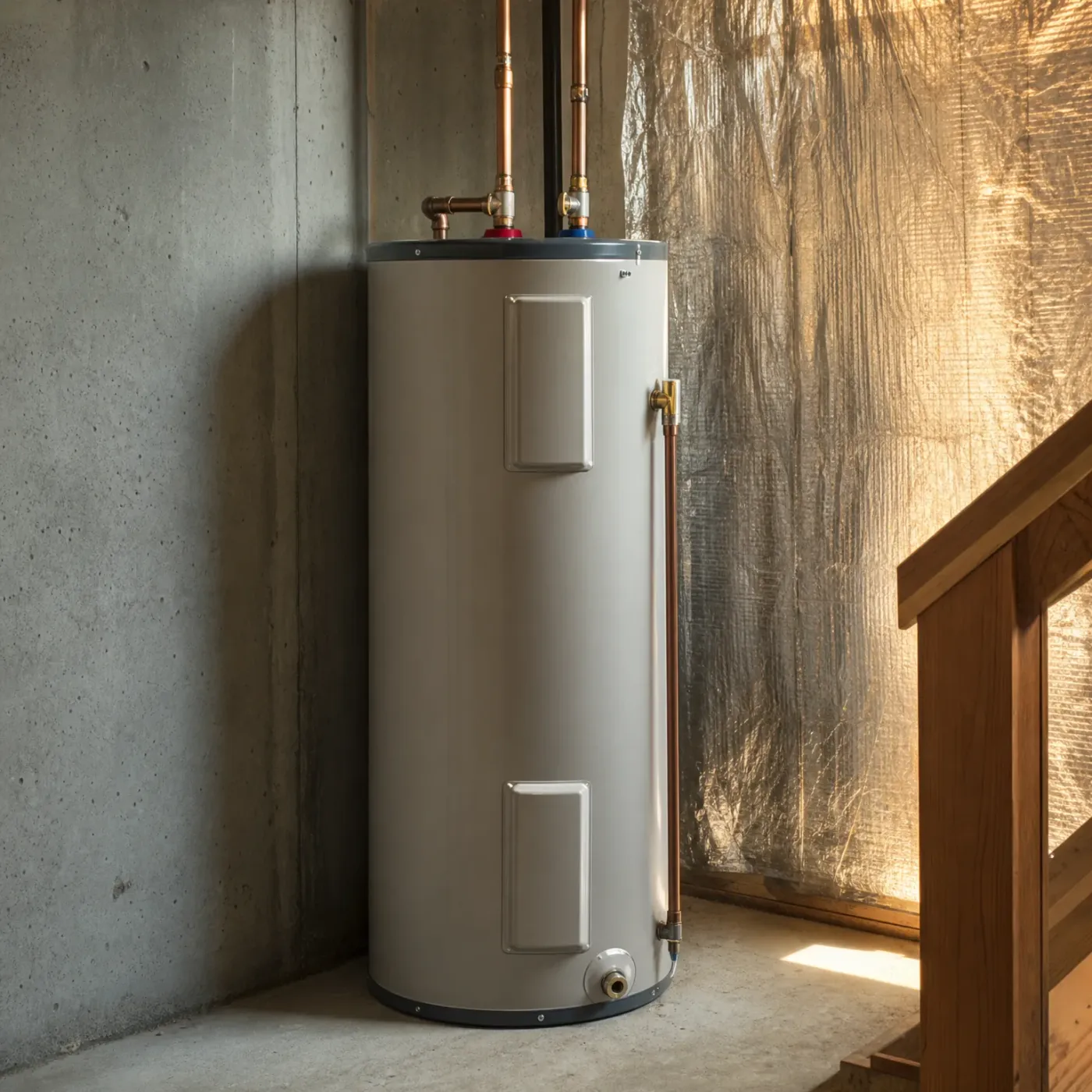
This is what a water heater looks like when the anode rod is still doing its job. The tank is clean, the fittings are sound, and the water coming out of it shouldn't carry any odor at all.

That rotten egg smell is sulfur bacteria reacting with the magnesium or aluminum anode rod inside your water heater tank, and it's common with well water or with municipal water that has a trace of sulfate in it. The reaction produces hydrogen sulfide gas, which is what you're smelling. It tends to show up worse in a tank that's been sitting unused for a day or two, since that gives the bacteria time to work. It isn't usually a sign your water is unsafe to use, but it does mean something inside the tank needs attention, either the anode rod itself or the water in it. A tank that's gone untouched for years is more likely to have built up the conditions for this. Left alone, the smell doesn't go away on its own, and in some tanks it gets stronger over time. The fix depends on what's causing it in your specific tank, and that's worth having a plumber look at rather than guessing.




The anode rod is doing its job when it corrodes. It's a sacrificial piece of metal, usually magnesium, screwed into the top of the tank and hung down into the water on a steel wire core. Its whole purpose is to corrode instead of the tank lining, and that corrosion process releases hydrogen. Bacteria that produce hydrogen sulfide gas feed on that hydrogen, and they do best in water that sits warm and still, which describes the inside of a water heater tank between uses. That's why the smell often fades somewhat after a long shower and returns after the tank sits overnight. Gas water heaters tend to smell worse than electric ones because many gas models ship with a magnesium rod, which corrodes faster and feeds the bacteria more. Houston's municipal water is chlorinated, but chlorine doesn't reach every corner of the tank, and bacteria can still establish themselves if the water isn't moved through regularly. None of this means the tank is failing. A plumber can swap the factory rod for one made of aluminum or a zinc-aluminum alloy, which reacts more slowly and starves the bacteria without leaving the steel tank unprotected. It's a straightforward part swap, not a sign the water heater needs replacing.
2.73 people per household on average
Most households here run 2.73 people through the same tank, and more people means more hot water draws that let the tank sit and breed bacteria between uses.
Half the homes here were built by 1988
Half the water heaters in Harris County sit in homes built in 1988 or earlier, old enough that the anode rod has likely never been swapped out.
55.4% of homes heat with electricity
55.4% of homes here heat water with electricity, and electric tanks hold water at lower, more variable temperatures where sulfur bacteria do well.
ACS 2020-2024

You turn on the shower before you brush your teeth, the way you always do, so it has time to heat up. By the time you step in, the smell hits before the steam does. Rotten eggs, coming right up out of the showerhead with the hot water. You back out, towel still on the rail, and run the cold tap at the sink to check if it's just the hot side. It is. The cold water's fine. You've got a few minutes before you need to leave for work, and now you're standing in a bathroom that smells like a struck match left too long, deciding whether to shower in it anyway or skip washing your hair today.
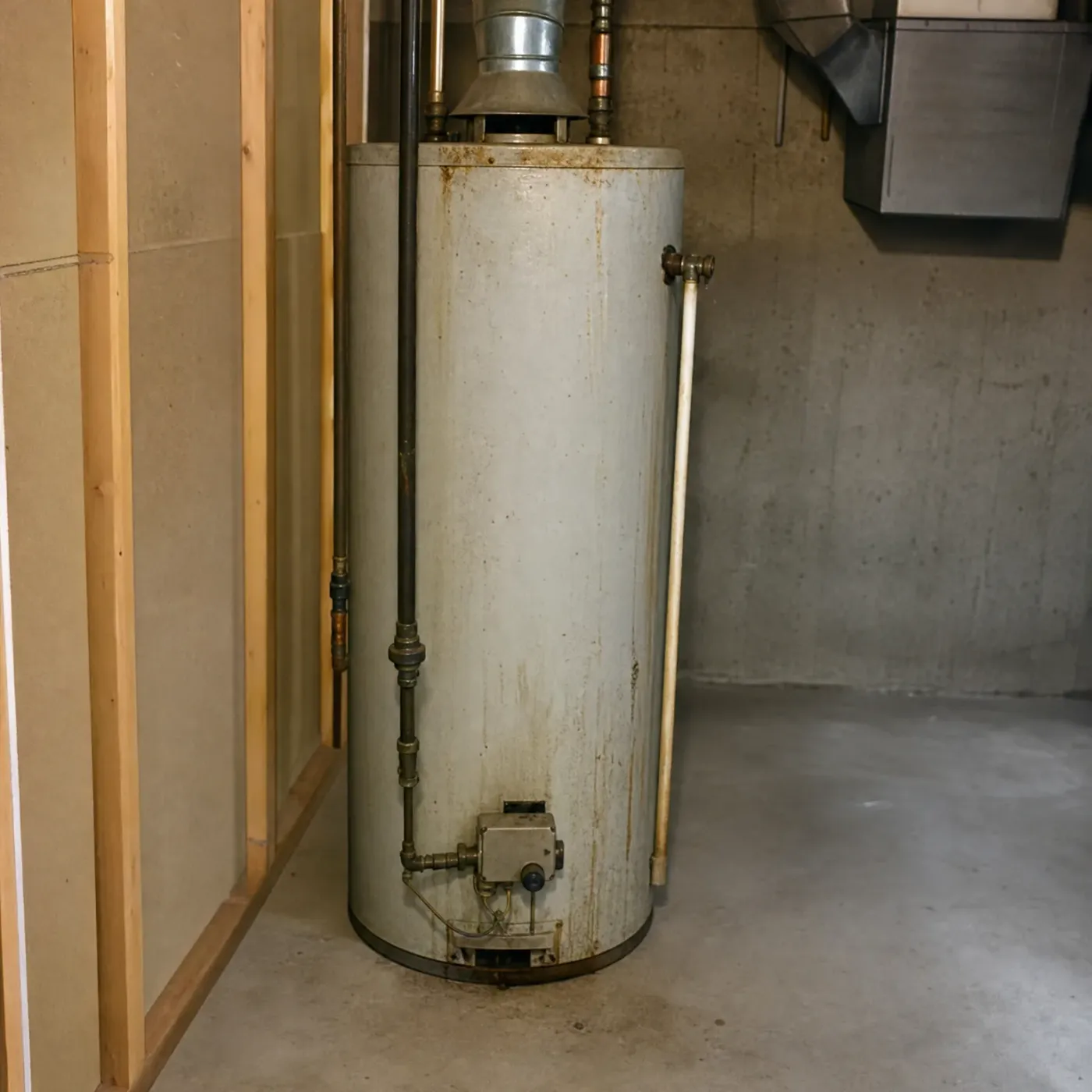
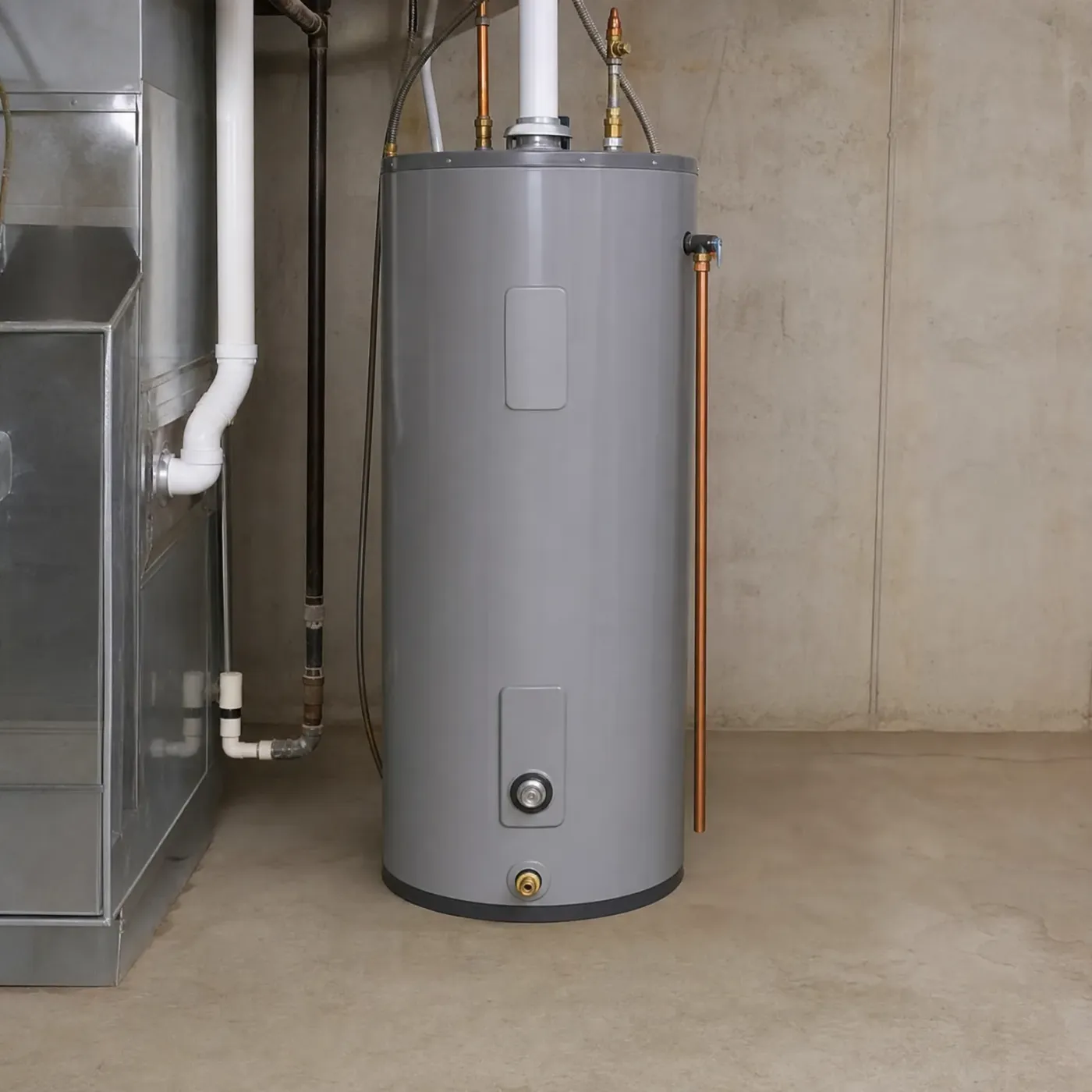
You've read why the smell is there and what fixes it. What's left is deciding whether to deal with it yourself or hand it to someone who does this work daily. An anode rod swap or a tank flush sounds simple until you're the one with a wrench in a cramped utility closet, and if the water heater is old or the fitting's seized, that modest part cost turns into a bigger job fast. A contractor who's smelled this in a hundred other Harris County homes knows whether your water calls for a magnesium rod, an aluminum one, or a switch to powered anode, and whether the tank itself is worth saving. You don't have to figure that out standing over the tank with a flashlight. Send the request and let someone who knows your water and your equipment take it from here.
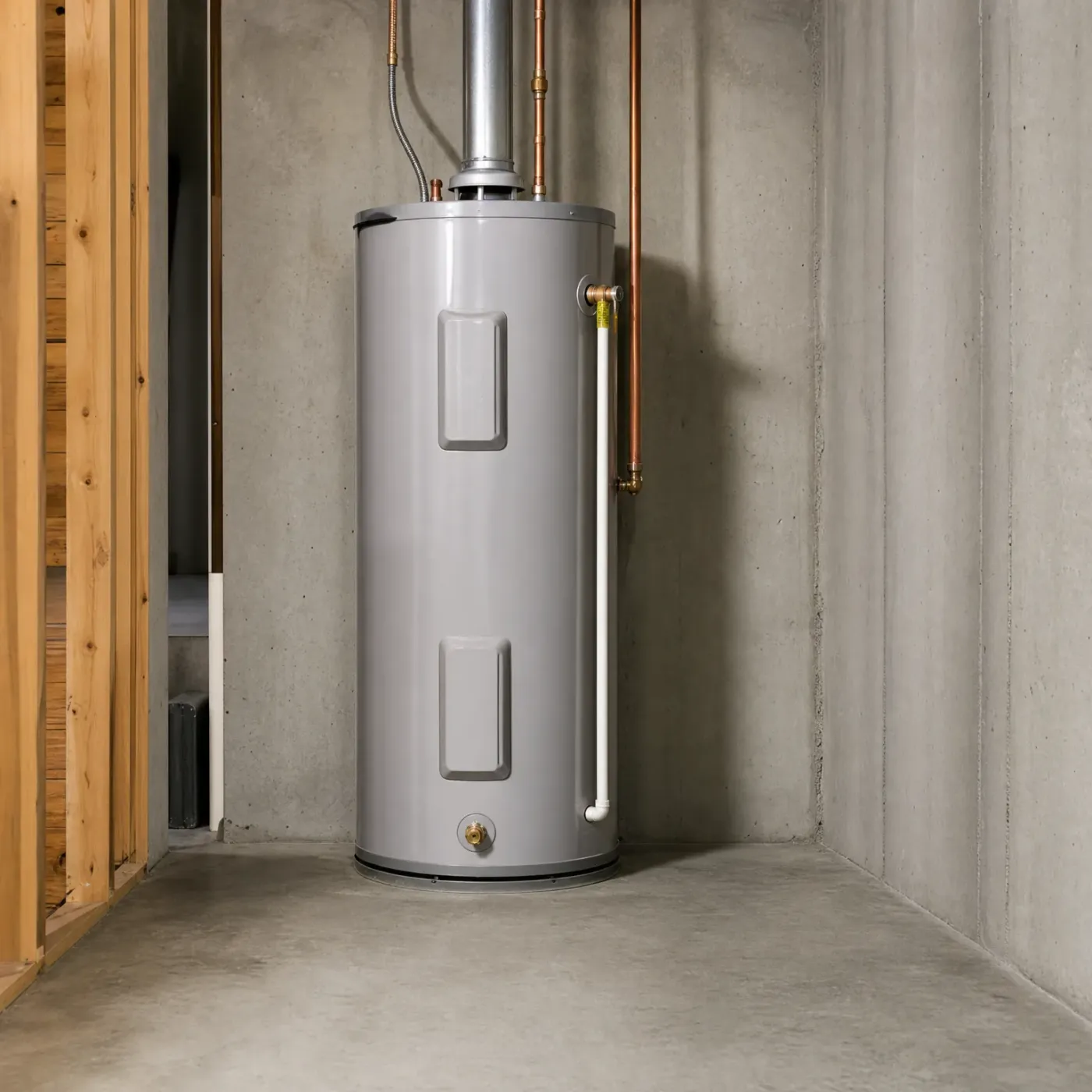
This is what a water heater looks like when the anode rod is still doing its job. The tank is clean, the fittings are sound, and the water coming out of it shouldn't carry any odor at all.
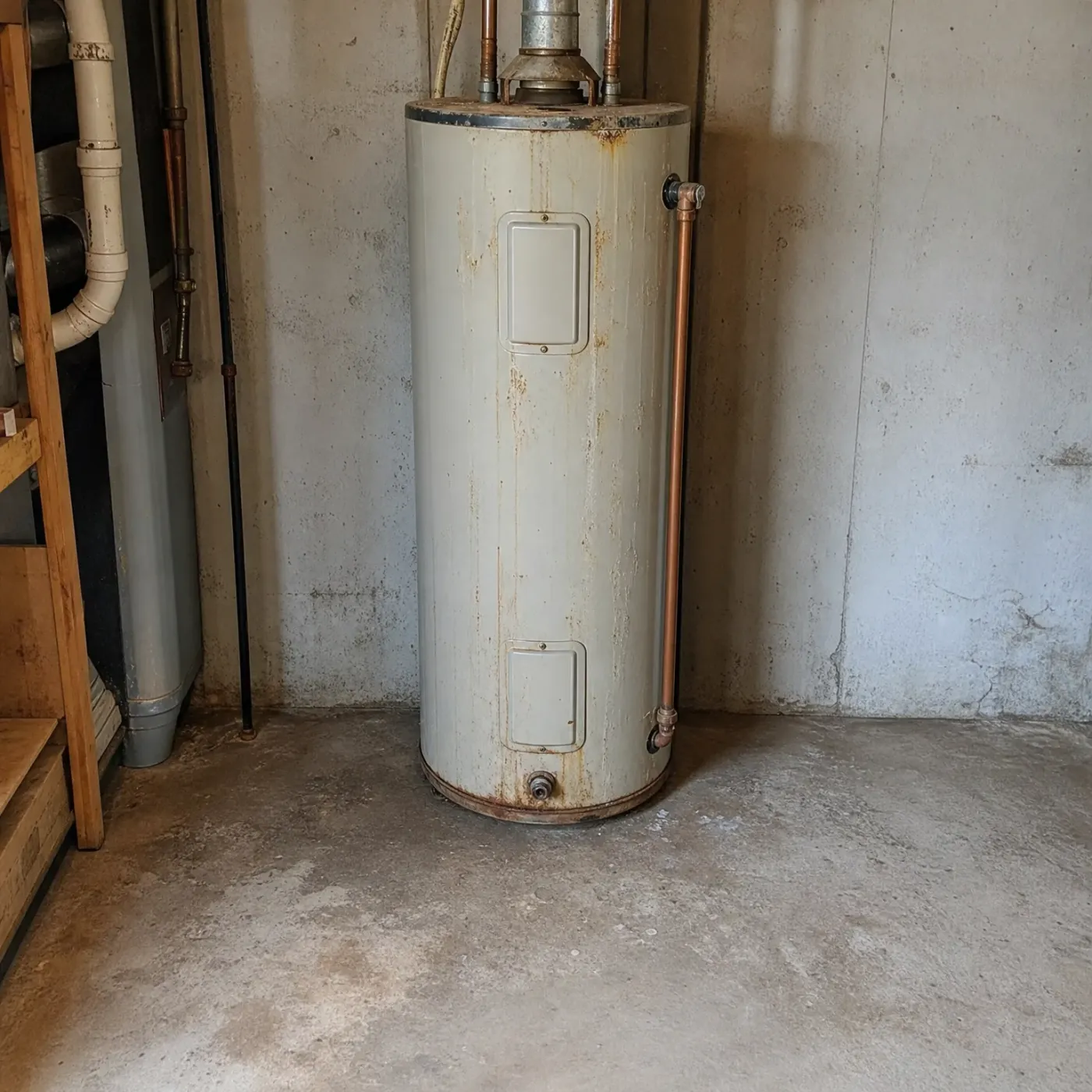
Rust on the tank itself is a different problem than a spent anode rod, but it points the same direction: metal breaking down inside a warm, wet space where bacteria can take hold. A tank this far gone is also a sign the rod inside gave out a long time ago.
At 16.78 cents per kilowatt-hour, running your water heater hotter than it needs to be to kill off the bacteria costs real money. A swapped anode rod or a flush fixes the smell at the source, so you're not paying to overheat water that still stinks.
EIA-861 2025


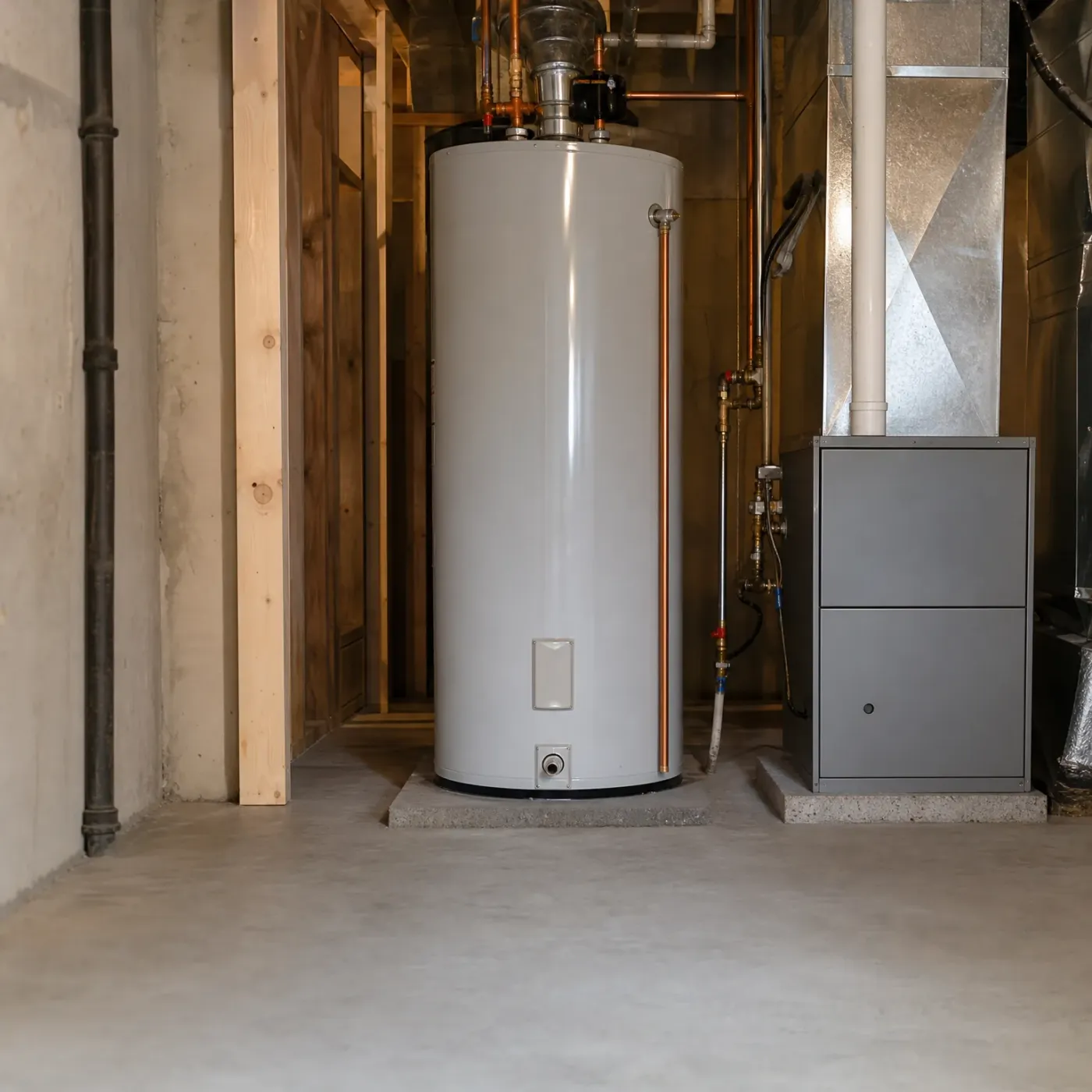
This is what sits next to the furnace when the anode rod is still doing its job. The tank is clean, the fittings are tight, and the copper lines show no sign of trouble. Water coming out of a tank like this has no business smelling like anything.
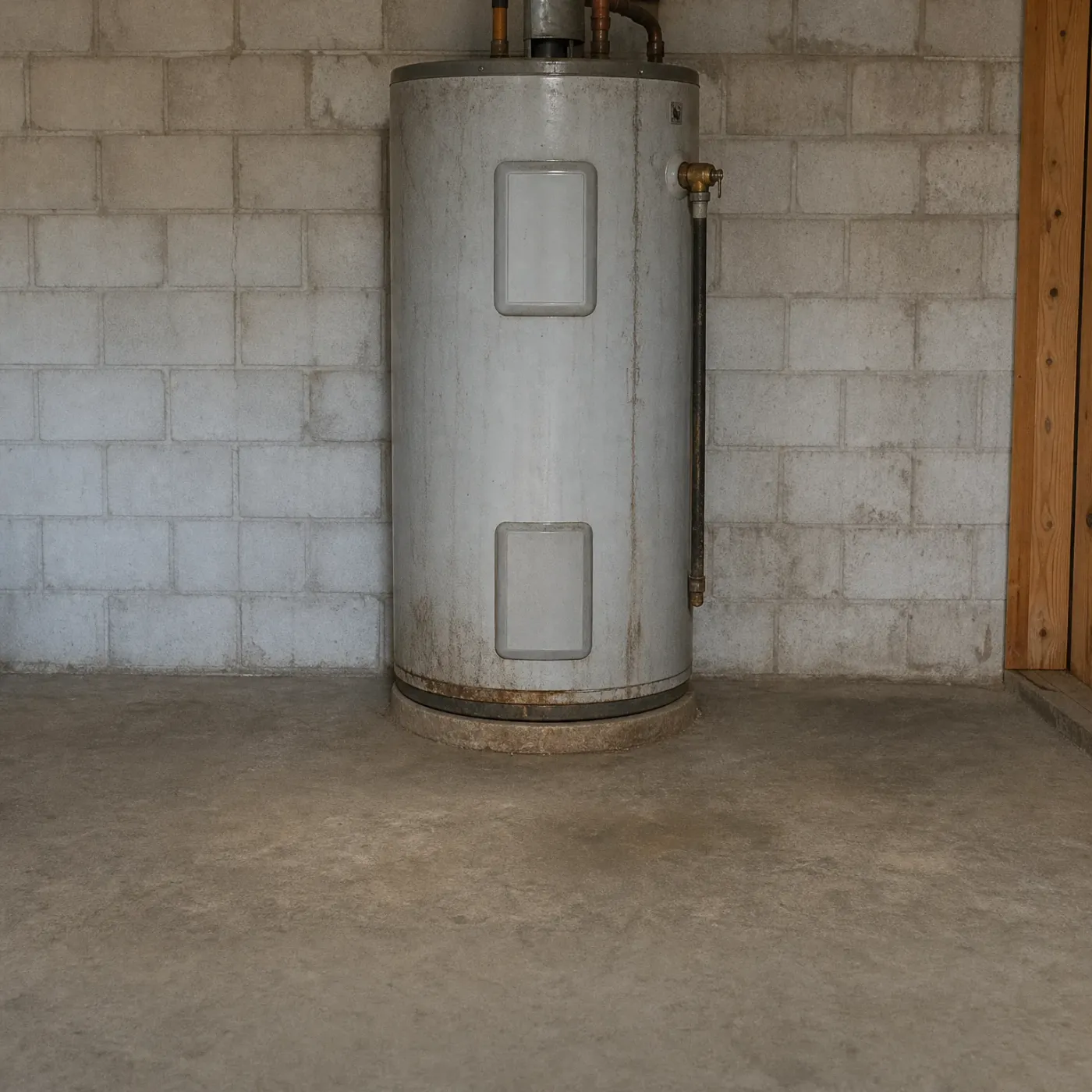
Rust on the panels and corrosion creeping up the tank mean the anode rod gave out a while ago. Once the steel underneath starts going, the bacteria causing the smell have exactly the warm, worn environment they need to keep working.
You've seen the bullet card mention a tank flush as part of the fix, and you're wondering if that alone clears up the smell or if it just buys you a little time before it comes back. It's a fair question before you decide what to do about it.
Flushing the tank drains out the sediment and loose debris that build up at the bottom, and that helps the water heater run the way it should. But sediment isn't what's producing the hydrogen sulfide gas. The bacteria causing the smell live on the anode rod, feeding on the hydrogen it gives off as it corrodes. A flush doesn't touch that reaction. If the rod stays in the tank, the smell comes back within a matter of weeks. The only way to stop it for good is to replace the rod itself, usually with a different metal than what's in there now, or in some cases to pull it and cap the fitting instead.
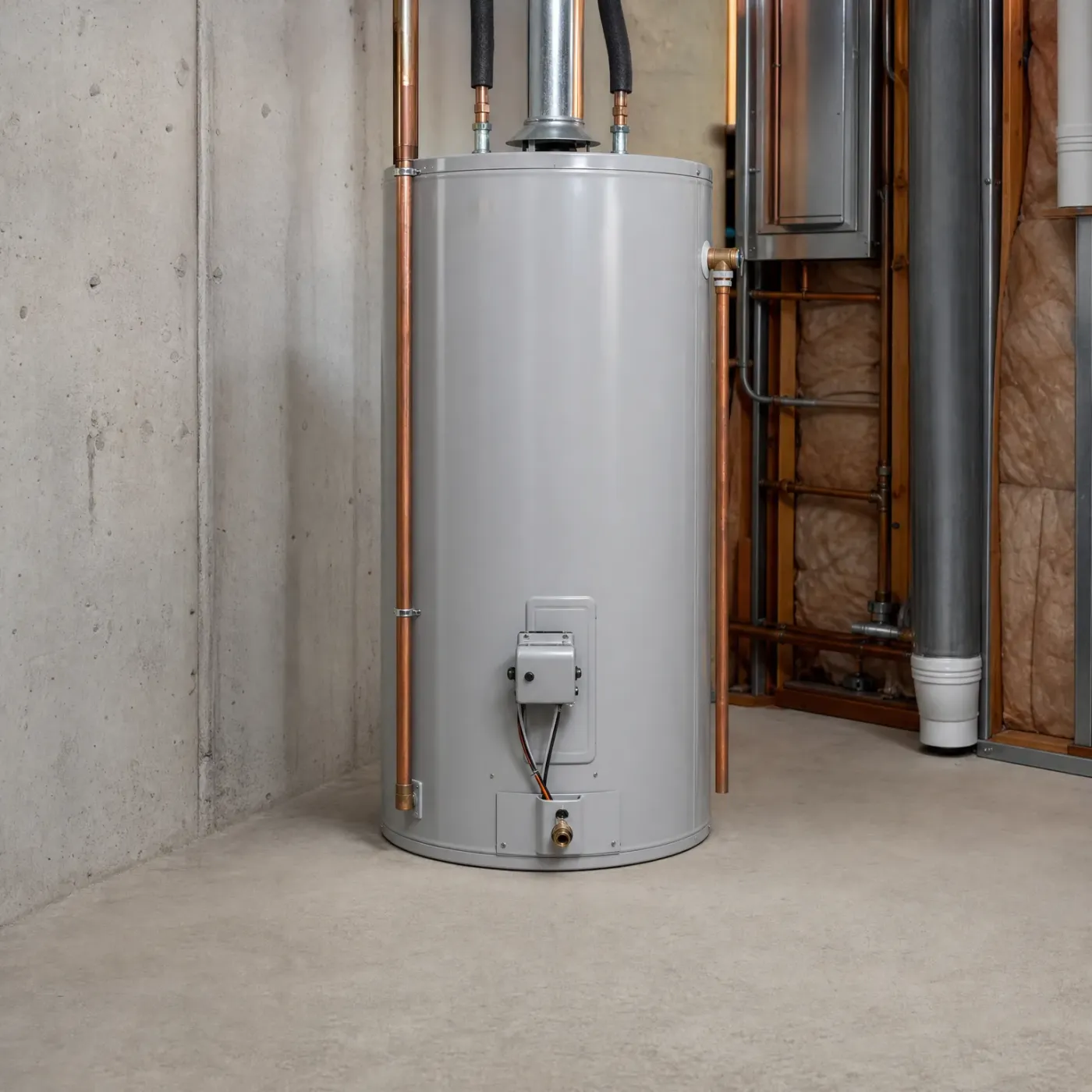
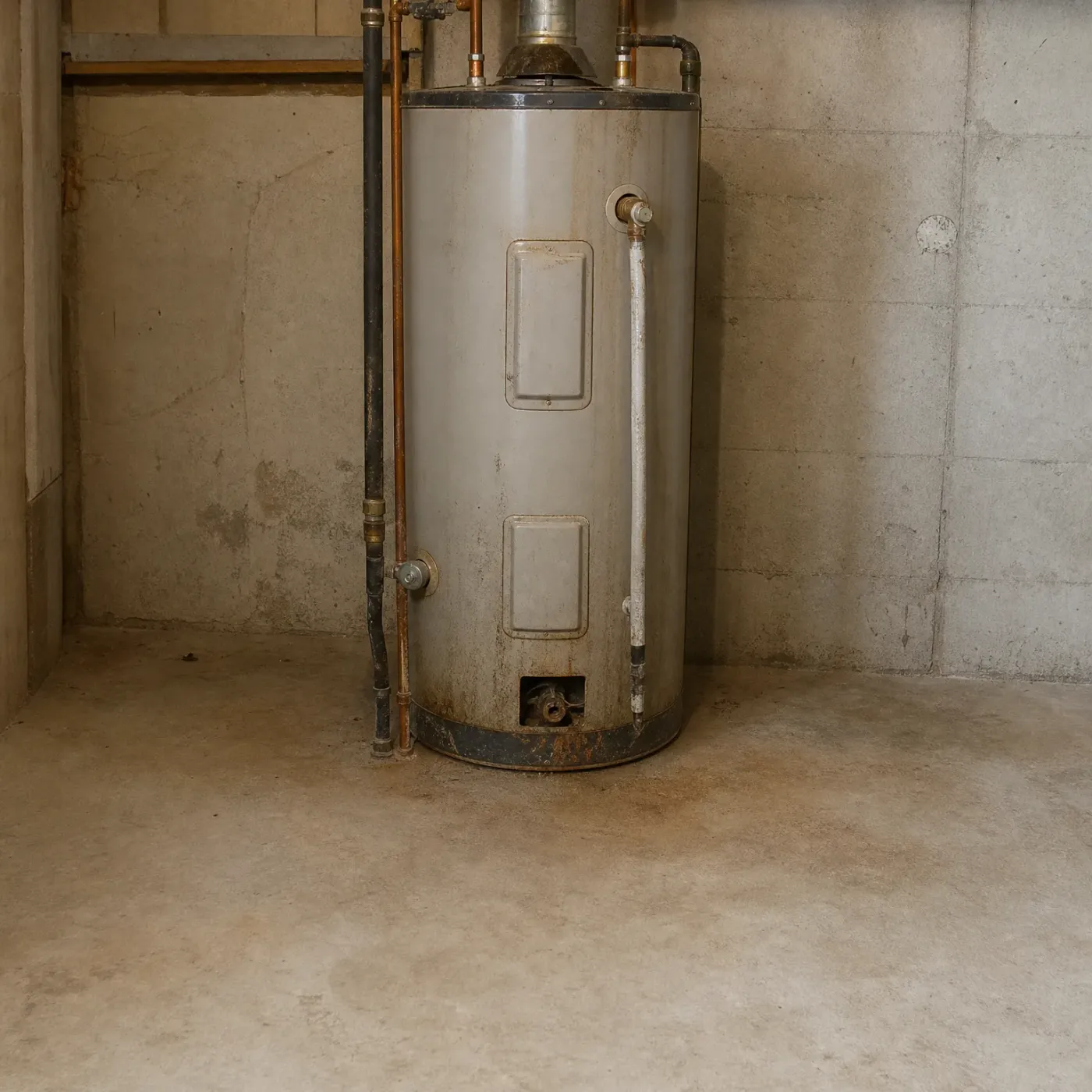
Run the hot tap at the kitchen sink and in the shower. If the smell is there at both, it's coming from the tank itself, not just one fixture. Notice if it's stronger first thing in the morning or after the house has sat empty for a day, which points to water sitting still in the tank long enough for bacteria to work. Check whether it shows up on cold water too. If cold is clean and only hot smells, that confirms the tank. Left alone, the smell doesn't damage the tank by itself, but the corrosion eating the anode rod will eventually reach the steel tank wall, and that leads to rust and leaks.
Bacteria in the tank combine hydrogen with sulfate to form the gas.
Hydrogen sulfide gas builds up inside the tank between hot water draws.
Running the hot tap pulls the gas out through the fixture.
A contractor pulls the anode rod to check how far it's corroded.

The rotten egg smell coming out of your hot water is bacteria feeding on the anode rod inside your tank, and it stays until the rod is replaced or the tank is flushed out. That's the whole answer. Nothing about your house is unusual, and nothing about your water is a lost cause.
What's left is the part that's hard to do alone: getting a contractor out to your utility closet to check the rod, see how far the corrosion has gone, and decide whether a flush is enough or the rod needs to come out. Once you send the request, that search is off your plate. A contractor who handles this work will reach out to you directly, and from there it's a conversation about your tank, not a project you're managing by yourself.

Get the water heater repair search off your mind today.
You only hire the pro if you want to.