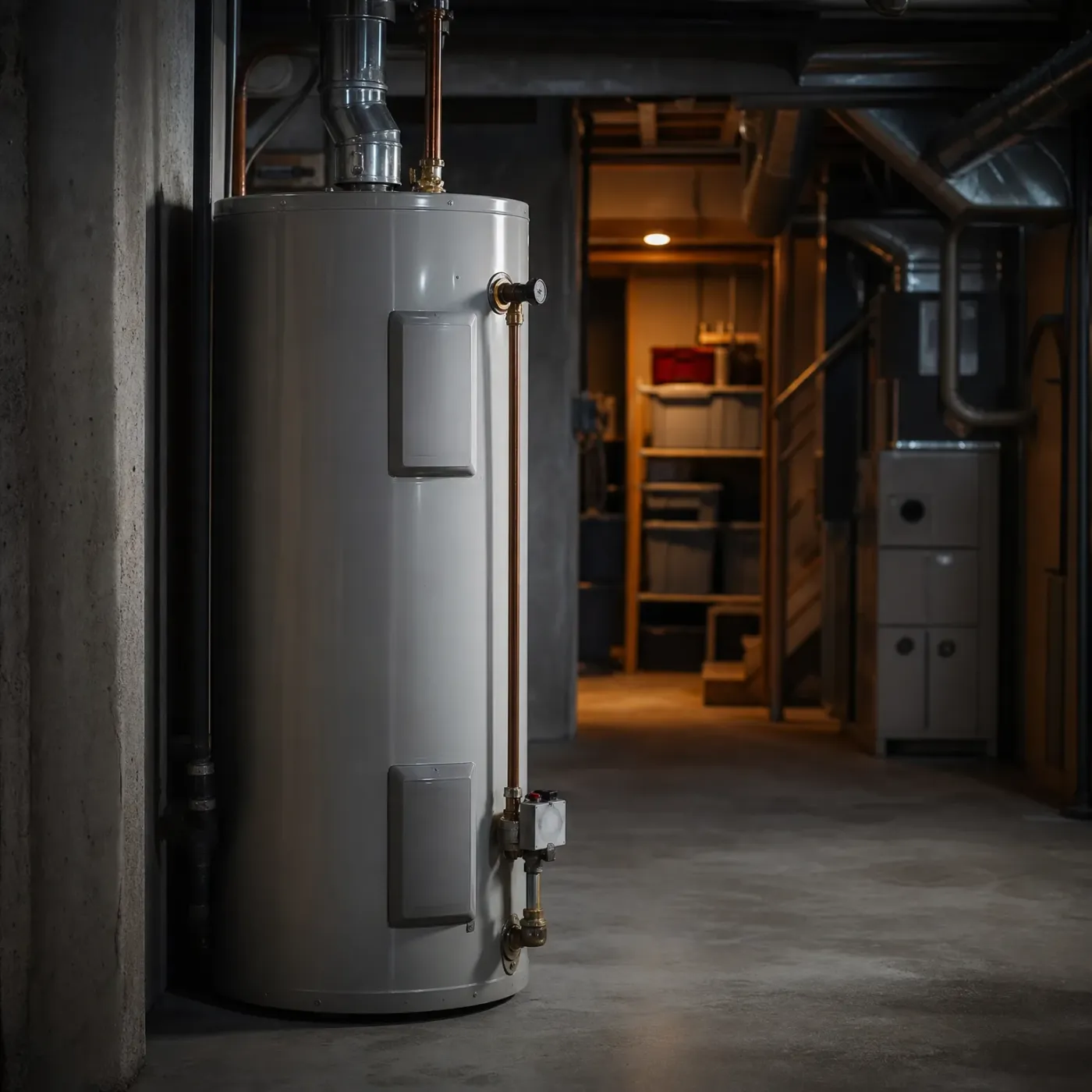




A large gray cylindrical water heater with copper piping and a flue stands against a concrete wall in a dimly lit basement with shelving, stairs, and overhead ductwork in the background.

Get your water heater to the right pro

Hot water smells like rotten eggs in Plano, TX

That rotten egg smell from your hot water usually points to the anode rod inside the tank reacting with your water supply, and it's a fix a local contractor sees often in Plano and Collin County homes. This page gets into why it happens and what it means for your water heater. Get matched with a licensed contractor who can take a look.

Connect with a pro

That rotten egg smell comes from hydrogen sulfide gas, and it forms when bacteria in your water react with the anode rod in your water heater tank. The rod is metal, usually magnesium or aluminum, and it's there on purpose: it corrodes so the tank itself doesn't. Plano and the rest of Collin County run on well-treated municipal water or private wells, and either source can carry the sulfate-reducing bacteria that cause this reaction. It tends to show up more in hot water than cold because heat speeds up the chemical process inside the tank. If you only smell it from the hot side, the water heater is almost certainly the source, not your home's pipes or the city supply. A swapped-out anode rod, a different rod material, or in some cases a tank disinfection will usually clear it up. Left alone, the smell doesn't damage anything, but it won't go away on its own either.

Why does this happen to your water heater and not just anyone's?

  • 2.77 people per household on average

    Your household is typical for Collin County at 2.77 people, so your tank is likely sized to match that demand, drawing the anode rod down on a normal schedule.

  • Half the homes here were built by 2003

    Half the homes in Collin County were built in 2003 or earlier. If yours is one of them, the water heater may be newer than the house, but the plumbing it feeds is not.

  • 49.8% of homes heat with electricity

    Just under half of homes here, 49.8%, heat with electricity, and many of those run an electric water heater too, which uses the same anode rod setup that reacts with sulfur bacteria.

ACS 2020-2024

If only cold water smells, the problem usually sits in the water itself, and running the hot tap won't clear it. That points a contractor toward the water supply or a softener rather than the tank.

If the smell is only in the hot water, the anode rod inside your tank is almost always the cause. A contractor can test for this and replace the rod without replacing the whole water heater.

A man with graying curly hair and a dark green sweater sits on a gray sofa in a sunlit living room, looking off to the side, with a framed picture, shelving, an armchair and a window with sheer curtains behind him.
A middle-aged man with graying hair and a short beard sits on a blue sofa in a living room, looking toward a window, with a bookshelf, lamp and framed picture in the background.
A gray-haired man in a dark blue sweater sits on a light gray sofa in a sunlit living room, looking off to the side, with a potted plant, shelving unit, and large glass doors behind him.
A gray-haired man in a dark sweater sits on a light gray sofa in a living room, looking toward a sunlit window with trees outside.
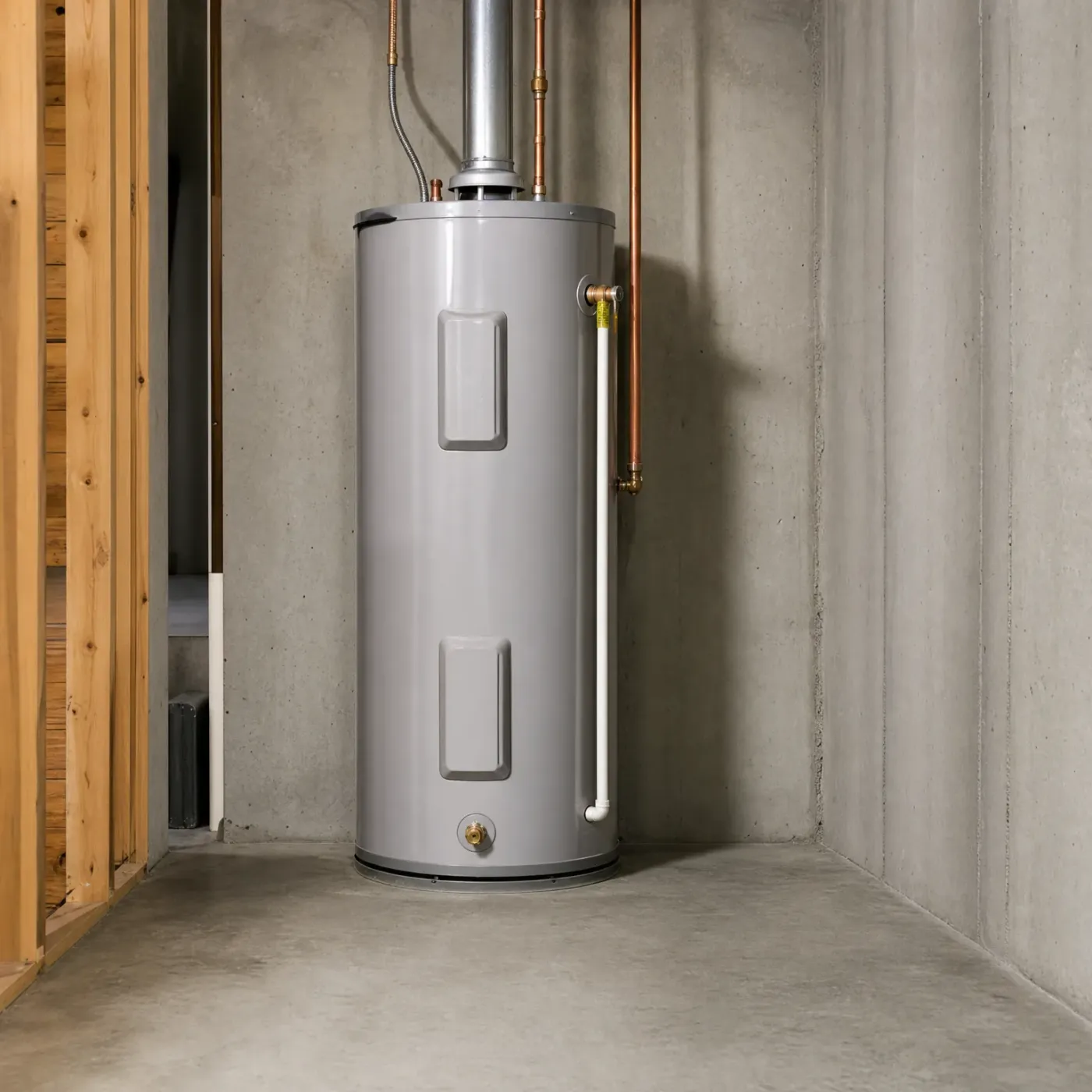
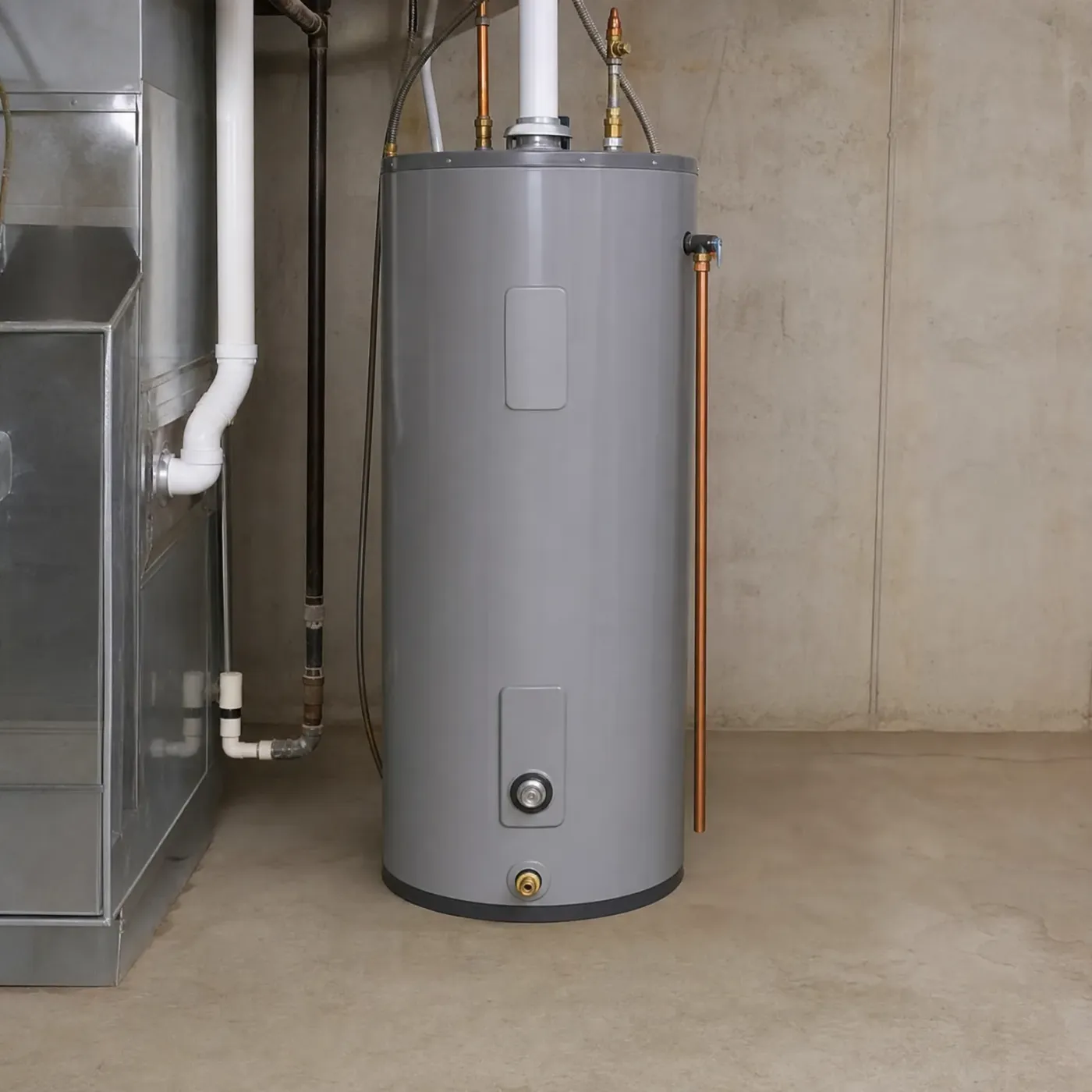
A gray cylindrical water heater stands on a concrete floor against a concrete wall, with copper and white pipes above it and a metal ductwork unit to the left.

Tank working as it should

This is a water heater with no smell and no rust, just copper and PVC lines running clean to the tank. The anode rod inside is doing its job quietly, corroding in place of the tank wall. Nothing about the water tells you it's even there.
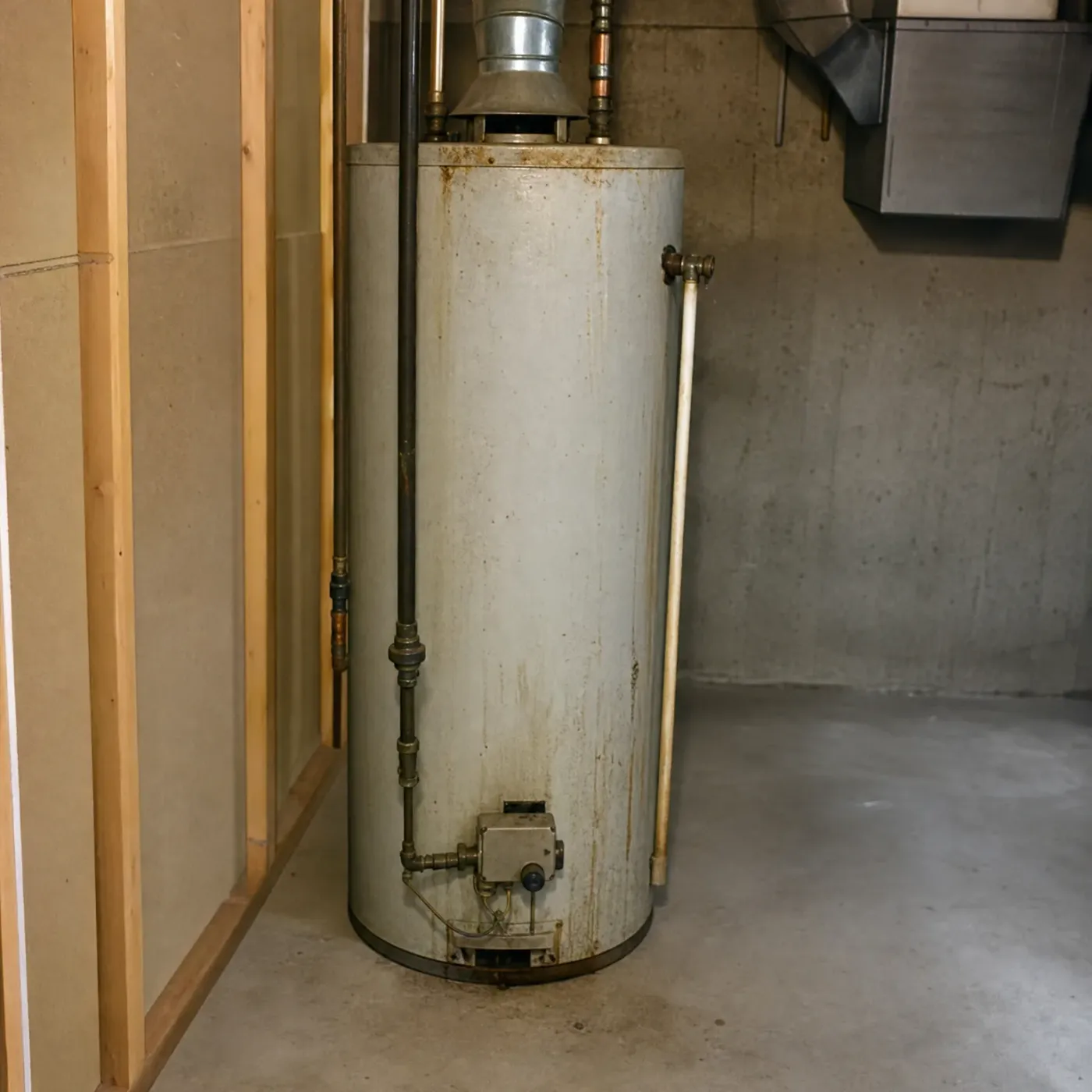
An old rusting gas water heater with flue pipe and connected plumbing stands on a concrete floor in a basement corner beside an unfinished wood-framed wall and a metal duct.

Tank past its point

Rust like this on the outside often means the inside has been losing ground for a while, and a spent anode rod stops protecting the tank at all. Once the rod is gone, the smell can start and the tank itself is next. A gas line and flue like these need a qualified eye before anyone touches the valve.

Is it safe to shower or drink water that smells like rotten eggs?

You've noticed the smell and now you're wondering if it's actually safe to use the water, not just annoying. Before you let anyone in your house run a bath or fill a glass from the tap, you want to know whether this is a health issue or just an unpleasant one. It's a fair question, since rotten egg smells usually mean something is wrong somewhere.

Showering is fine. Drinking it, don't, until you know why.

Hydrogen sulfide gas is what you're smelling, and at the levels a water heater produces, it isn't dangerous to bathe in. It won't hurt your skin or your lungs at that concentration. Drinking it is a different matter, not because the gas itself is toxic in small amounts, but because the same conditions that let bacteria react with the anode rod can also mean bacteria are present in the water itself. A contractor can test the water and tell you whether it's the rod reacting or something in your supply. Until then, cook and drink from the cold tap, since the smell is almost always isolated to the hot water line and the tank behind it.

A rusted cream-colored water heater with copper piping and a flue stands in the corner of a concrete-walled basement next to wooden shelving and ductwork.
Before you get your water heater repair
A gray cylindrical water heater standing in a concrete-walled basement corner, with copper and white pipes and a metal flue running up to the ceiling, next to exposed wood framing on the left.
After you get your water heater repair
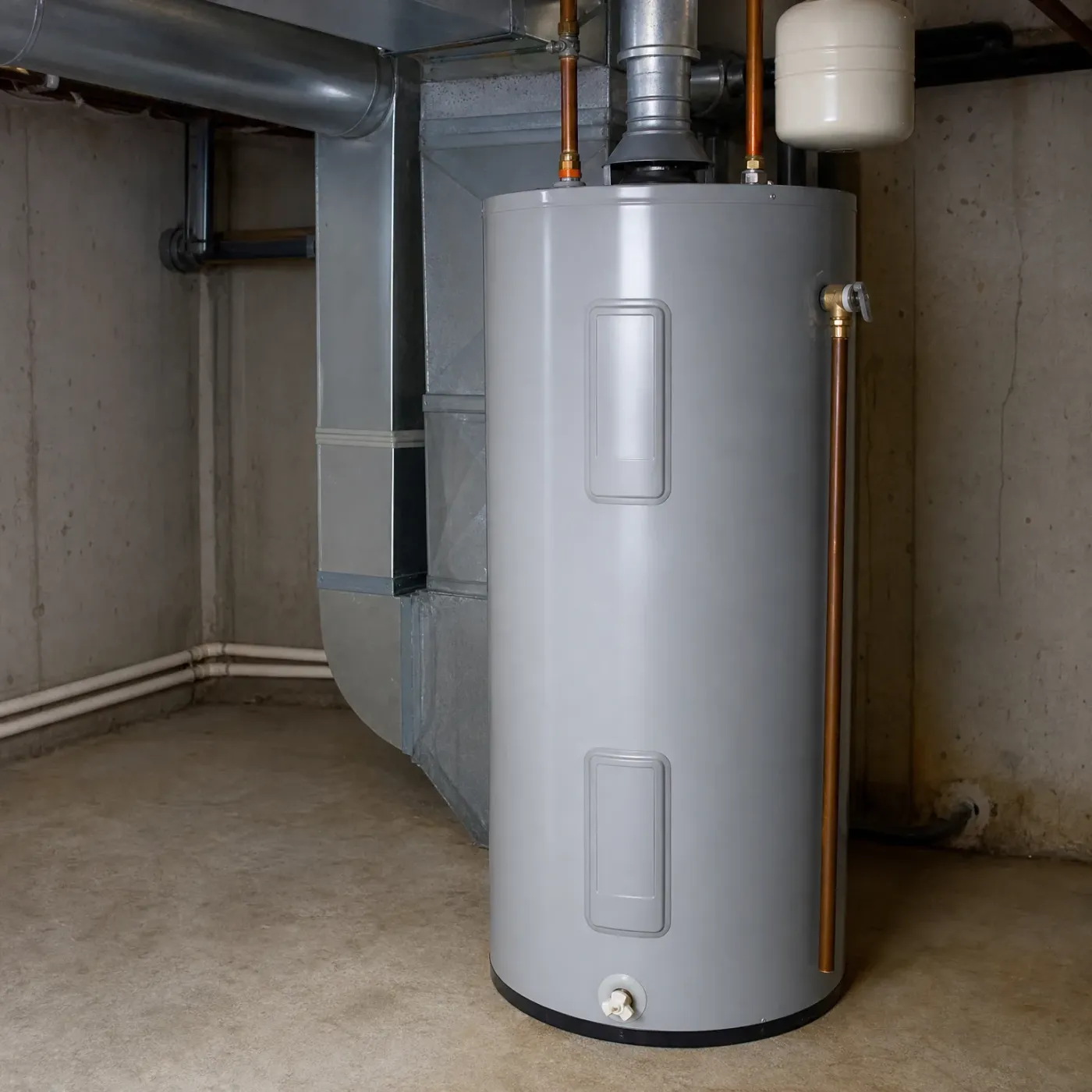
A gray cylindrical water heater standing on a concrete basement floor beside metal ductwork, with copper pipes, a valve, an expansion tank and a flue vent above it.

Find a water heater repair pro in Collin County

Only one pro gets your request, so you hear from one company.

Get matched with a pro who works on water heaters in Collin County.

Find a pro near me

You only hire the pro if you want to.

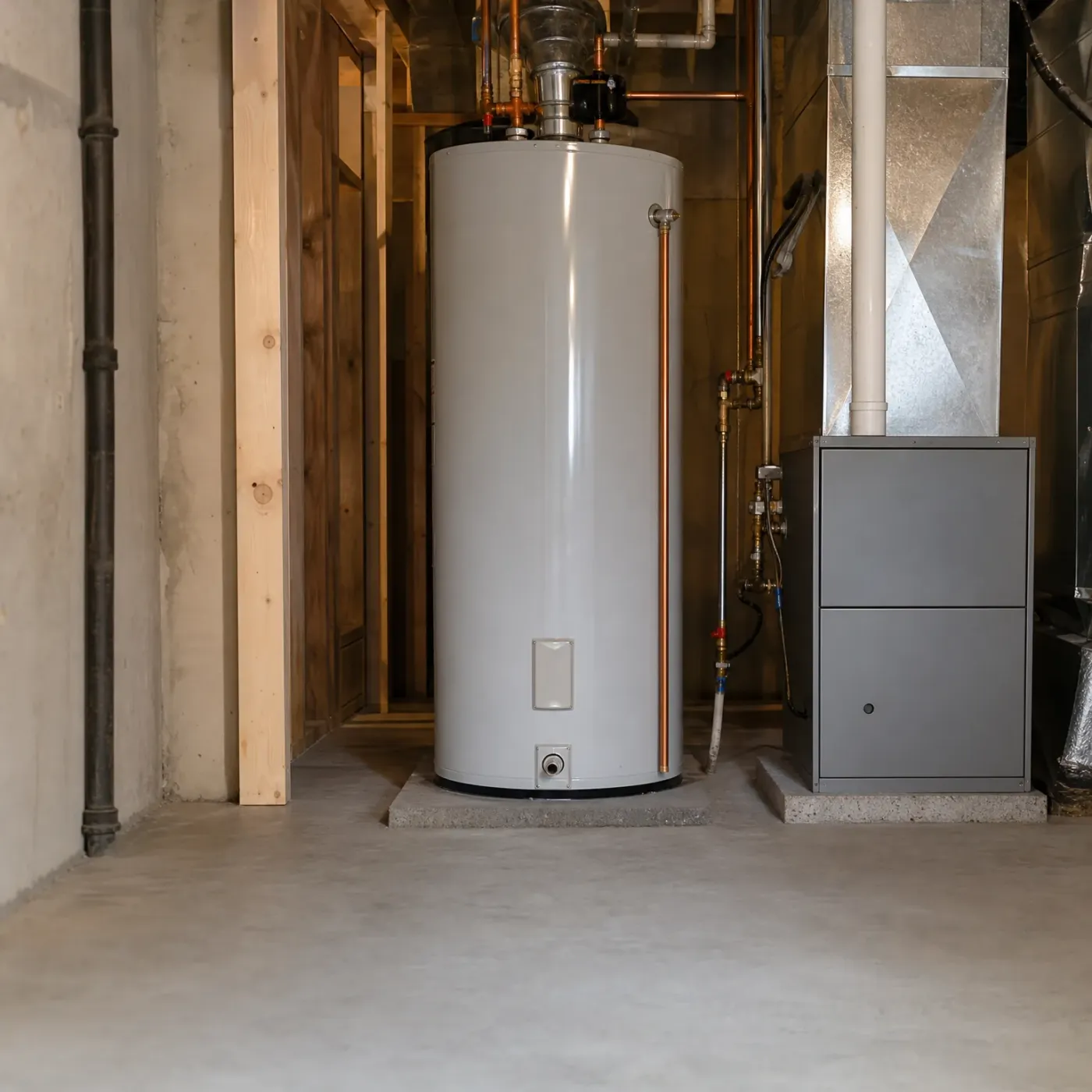
A white cylindrical water heater on a concrete pad in a basement, with copper and metal piping above it and a gray furnace cabinet with ductwork to the right.
A water heater sitting next to the furnace like this, with clean copper lines and no rust on the tank, is doing its job without you ever noticing it.
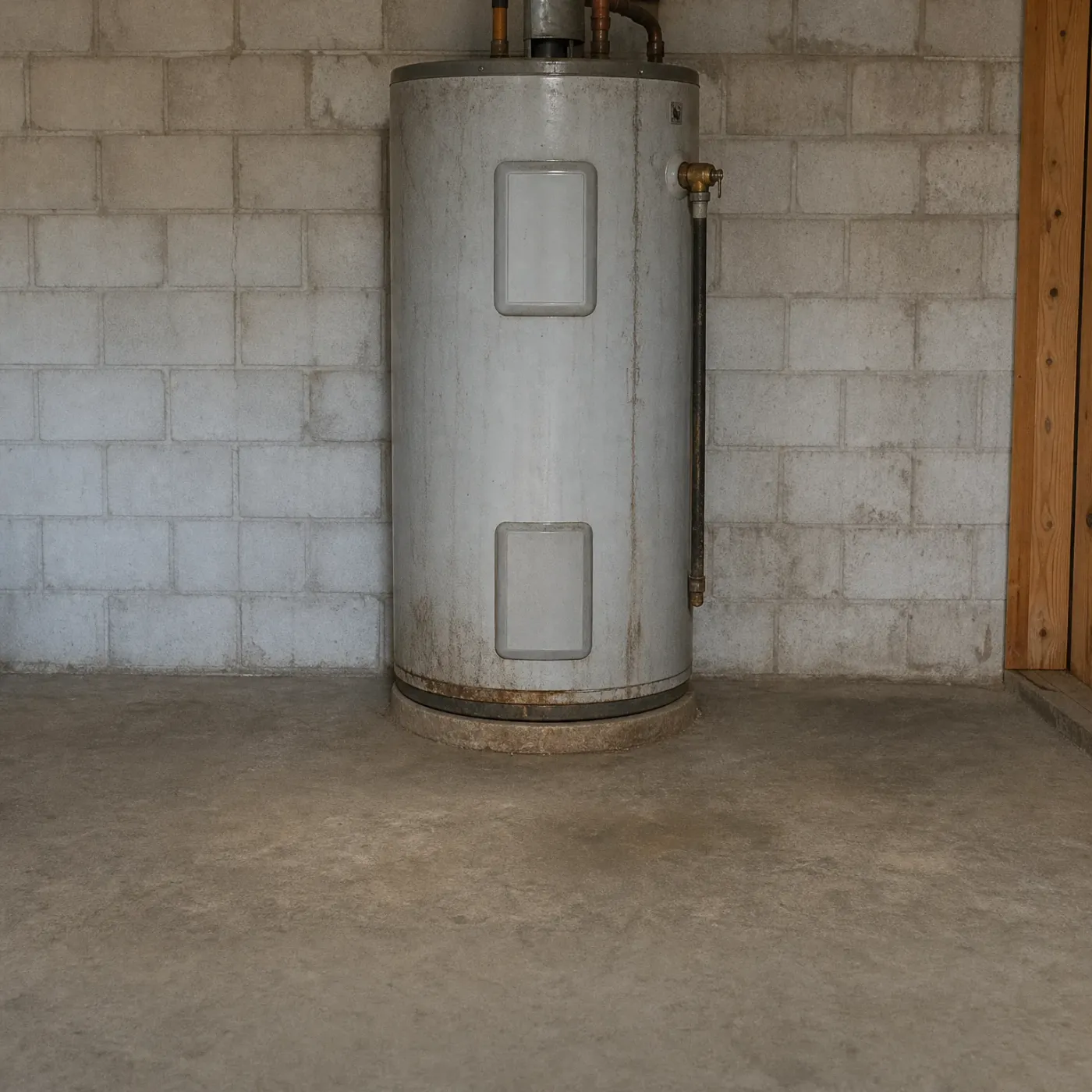
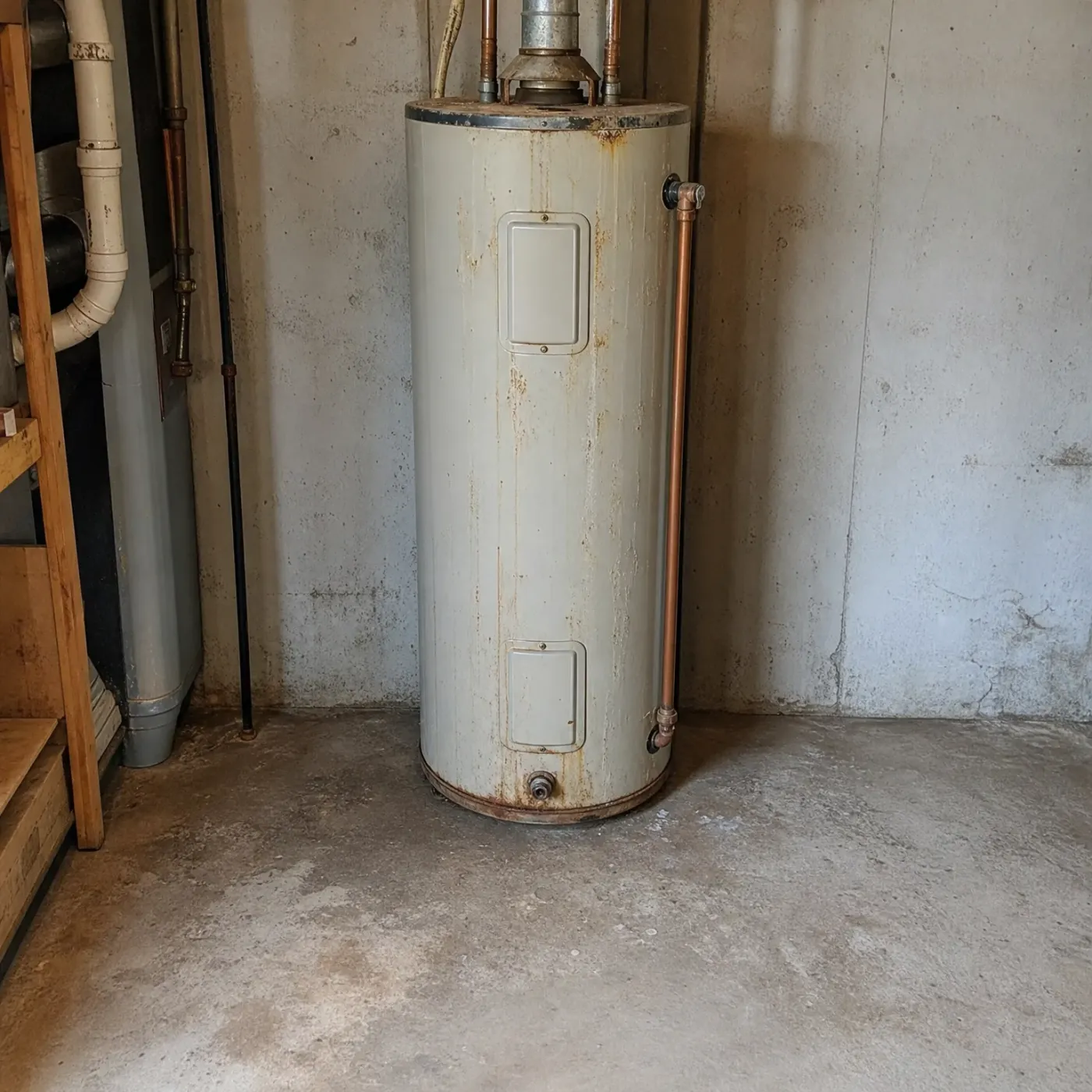
A cylindrical water heater with two access panels and copper pipes stands on a concrete floor against a painted concrete block wall.
Rust creeping across the tank and around those access panels usually means the anode rod is spent and corrosion has started on the steel underneath.

What are you noticing when you run the hot water

You turn on the hot tap and the smell hits you before the water even warms up. It might be strongest in a bathroom that doesn't get used much, or it might show up everywhere in the house. Run a bath and the smell can fill the room. Fill a pot for dishes and you notice it there too. It doesn't fade after the water runs a while, and it doesn't come and go with the weather. If you've let it sit for weeks thinking it would clear on its own, the anode rod isn't getting less corroded in the meantime. Left alone, that corrosion keeps going until the rod stops protecting the tank at all, and then the tank itself starts to rust from the inside.

A tall metal water heater stands against a plain light wall in a basement corner, with copper pipes and a metal flue above it and exposed wood framing to the left.

Why a replacement rod can fix it

A contractor can swap the magnesium rod for one made of aluminum and zinc. The zinc works against the bacteria that produce the smell, so the same tank that was reacting with your water stops doing it. The tank itself doesn't change, just the rod inside it. This is often the whole repair, and it's one a plumber carries on the truck rather than orders in.

A gray cylindrical water heater with copper pipes on top stands against a concrete column and wood-paneled wall in an empty room with a plain wall and concrete floor, with a black vertical pipe and gauge at right.

What happens if it's left alone

A spent anode rod stops protecting the tank once it's fully corroded, not before. Past that point, the tank steel itself is exposed to the same water and corrosion moves to the tank wall. That's a slower process, but it's the difference between replacing a rod and replacing the whole water heater, and it's why a smell worth checking now is worth checking before the rod is gone.

New Rod or New Tank

Replace the rod

  • A contractor pulls the old magnesium rod and threads in a new aluminum and zinc one, usually without draining the whole tank down first.
  • The smell should clear within a few days once hot water has cycled through the tank and past the new rod a few times.
  • This works best when the tank itself is still sound, with no rust showing at the seams or around the fittings.
  • It costs less than a new tank and keeps the water heater you already have running the way it was built to.
  • If the smell comes back within a year or two, that points to something in your water supply rather than the rod itself.

Replace the tank

  • If rust has worked its way through the tank wall, a new rod won't do anything, because the tank itself is what's failing now.
  • A new water heater comes with a fresh anode rod already installed, so you're not paying for tank and rod separately down the line.
  • This makes sense if the tank is old enough that a contractor would expect other parts to start failing soon anyway.
  • You get to pick the rod material up front, aluminum and zinc instead of magnesium, so the smell has less reason to start again.
  • It costs more up front than swapping the rod, and it means a day without hot water while the new unit goes in.
  1. A contractor shuts off power or gas to the tank first.

  2. The hot water line gets opened to relieve pressure.

  3. The old anode rod gets unscrewed from the top of the tank.

  4. A new aluminum and zinc rod threads into its place.

Power here costs 15.96 cents per kilowatt-hour

At 15.96 cents per kilowatt-hour, keeping an electric water heater running isn't a big expense here. That matters once a contractor swaps the anode rod, since the tank keeps heating the same way it always did. The repair changes what's reacting with your water, not what you pay to run the tank.

EIA-861 2025

A woman stands in the open front doorway of a single-story house with a dark hipped roof and light siding, while a man in a navy jacket and cap is seen from behind in the foreground on the paved walkway.

The smell has an answer, and so does the fix

The rotten egg smell in your hot water comes from the anode rod reacting with your water supply, and swapping that rod for an aluminum and zinc one usually clears it within a few days. That's the whole mechanism. Nothing about your plumbing or your gas lines is at fault, and nothing about it needs guessing once someone's looked at the tank.

A contractor who works on water heaters across Plano and Collin County sees this exact complaint on a regular basis and knows which rod to put in and how the swap goes for your tank. When you request service, you're matched with one licensed local contractor rather than a handful of companies competing for your call, and that contractor reaches out to you directly about your tank and your water.

Living room interior with a light sofa holding a dark green cushion and a brown knit throw, a tall leafy plant by a black-framed window, a wooden coffee table with a round tray, and wooden shelves holding vases and books.
A woman with shoulder-length graying brown hair, wearing a beige cardigan over a white top, sits in a light upholstered armchair and looks off to the side, with a curtained window, bookshelf, and lamp shade behind her.
A woman and a child with closed eyes sit wrapped together in a cream knitted blanket on a couch, with a lit lamp and shelves blurred in the background.

Water Heater Repair

The right pro for this job

A licensed pro who works in Collin County gets your request.

A black-framed smartphone standing upright against a plain light gray background, its screen filled with solid green.
Step 1 of 3: Equipment