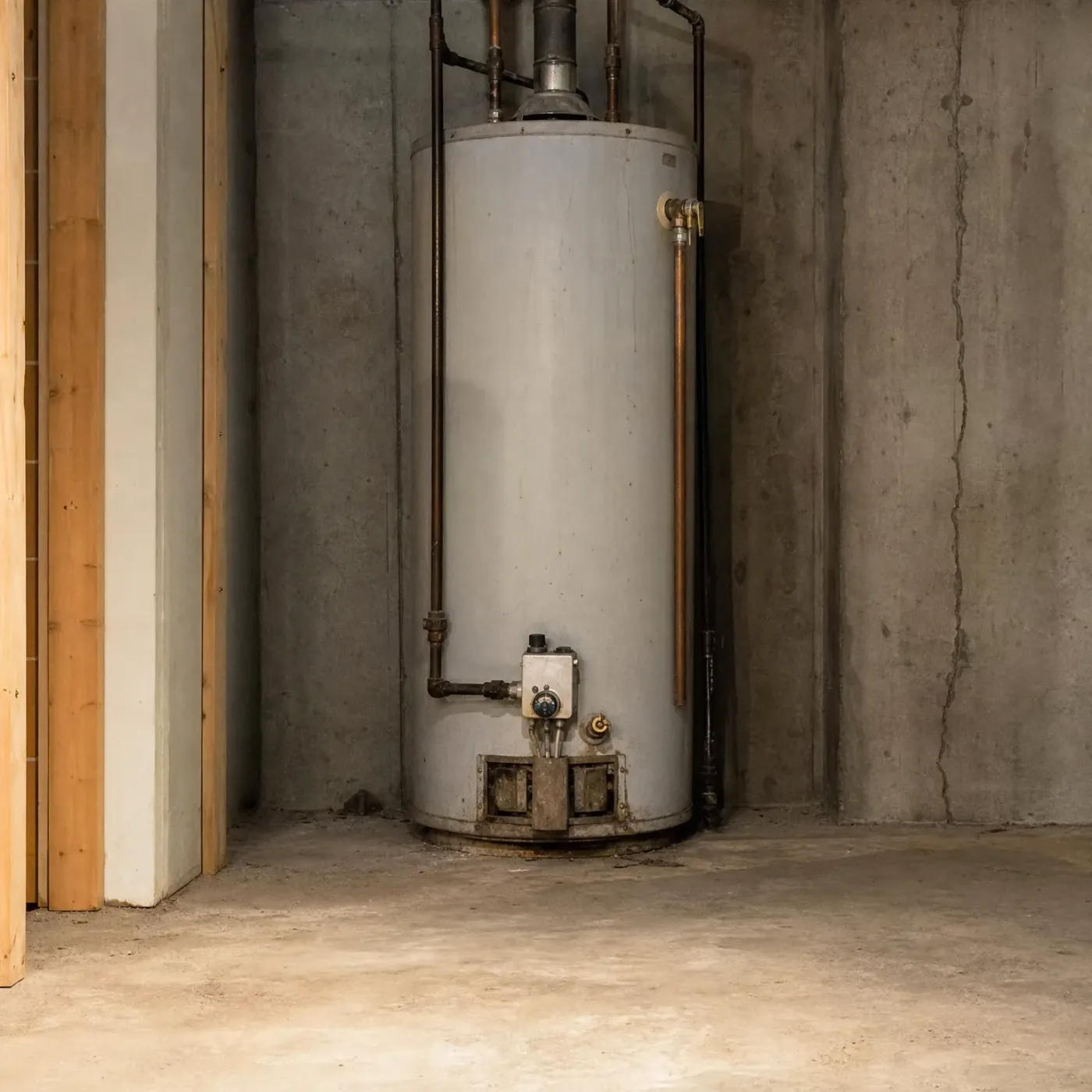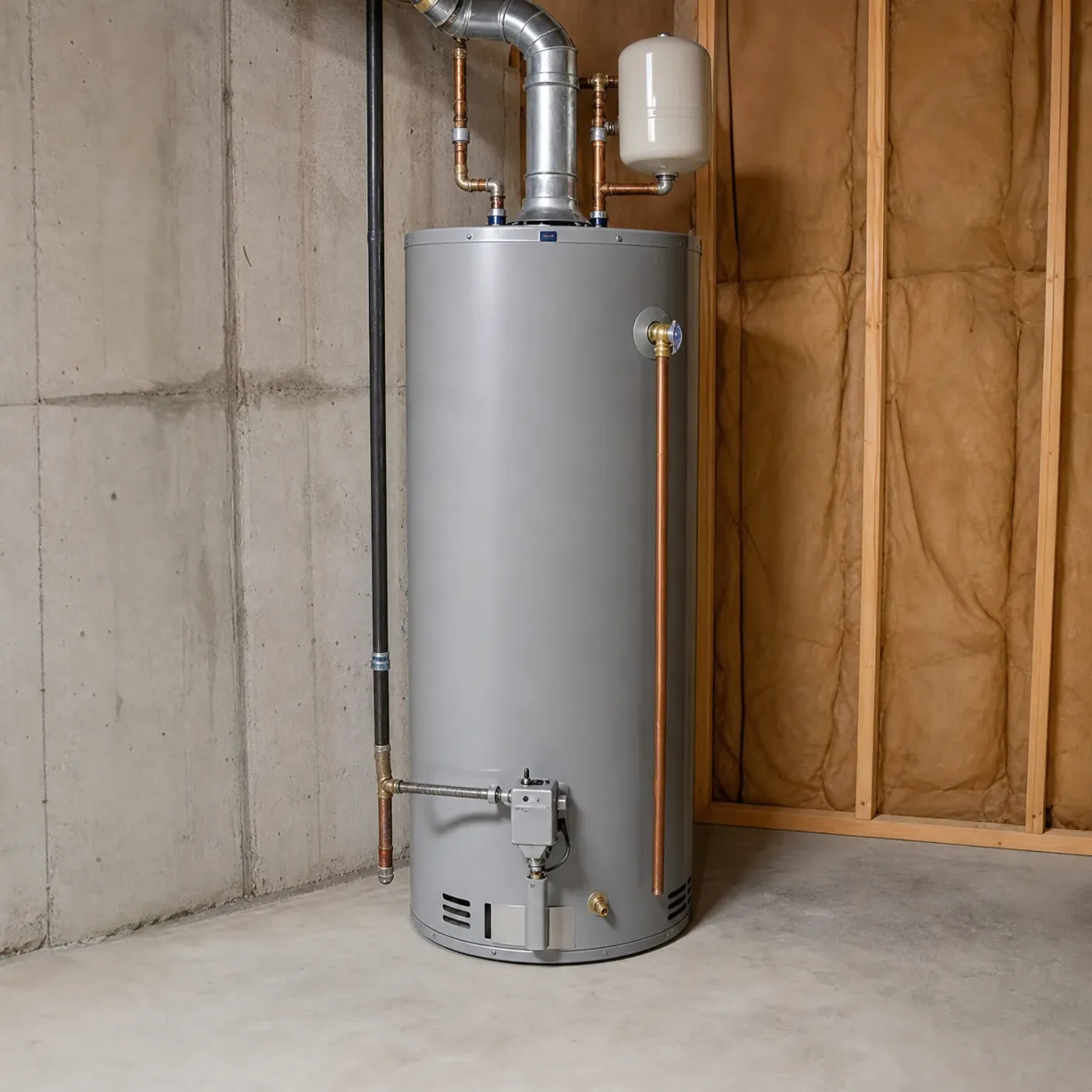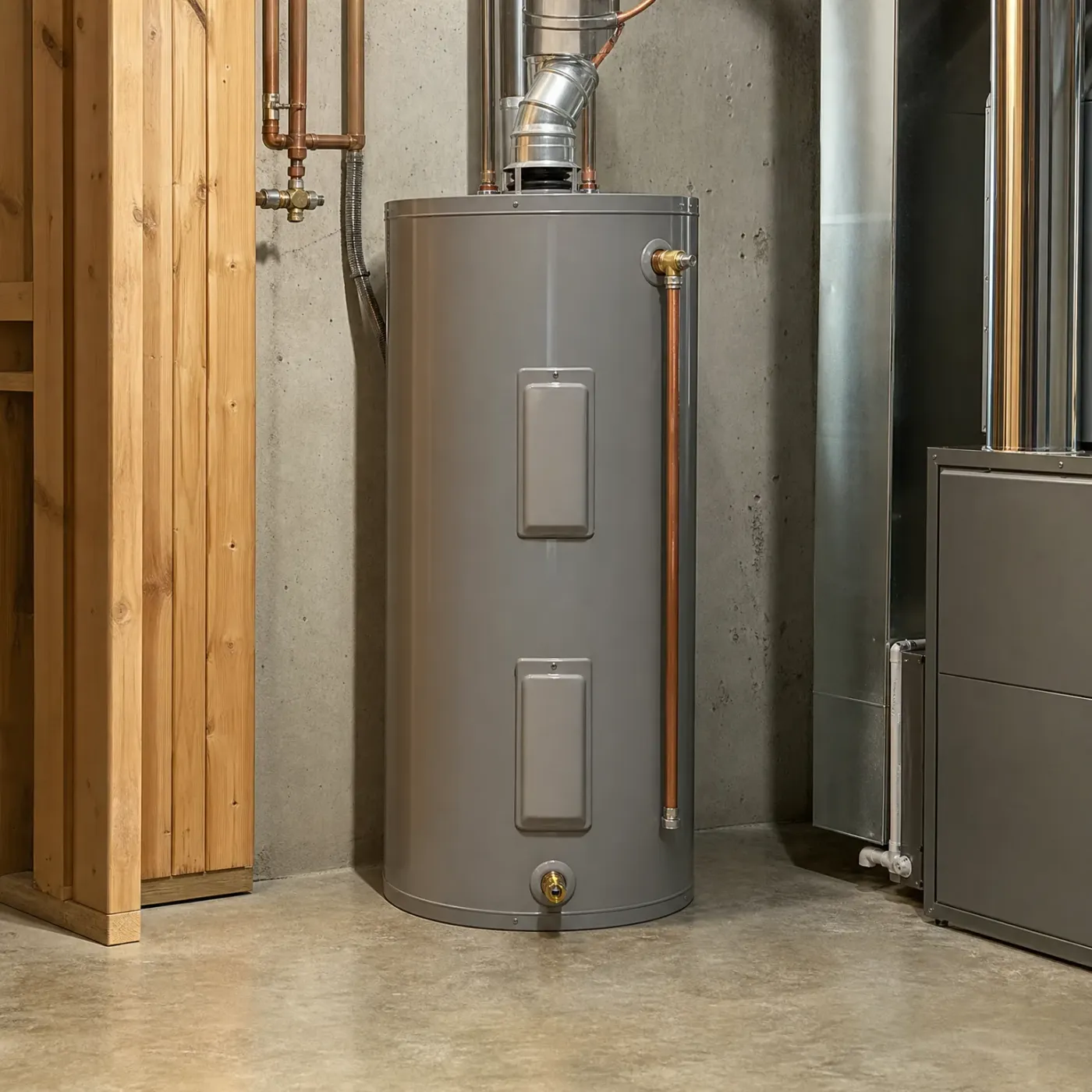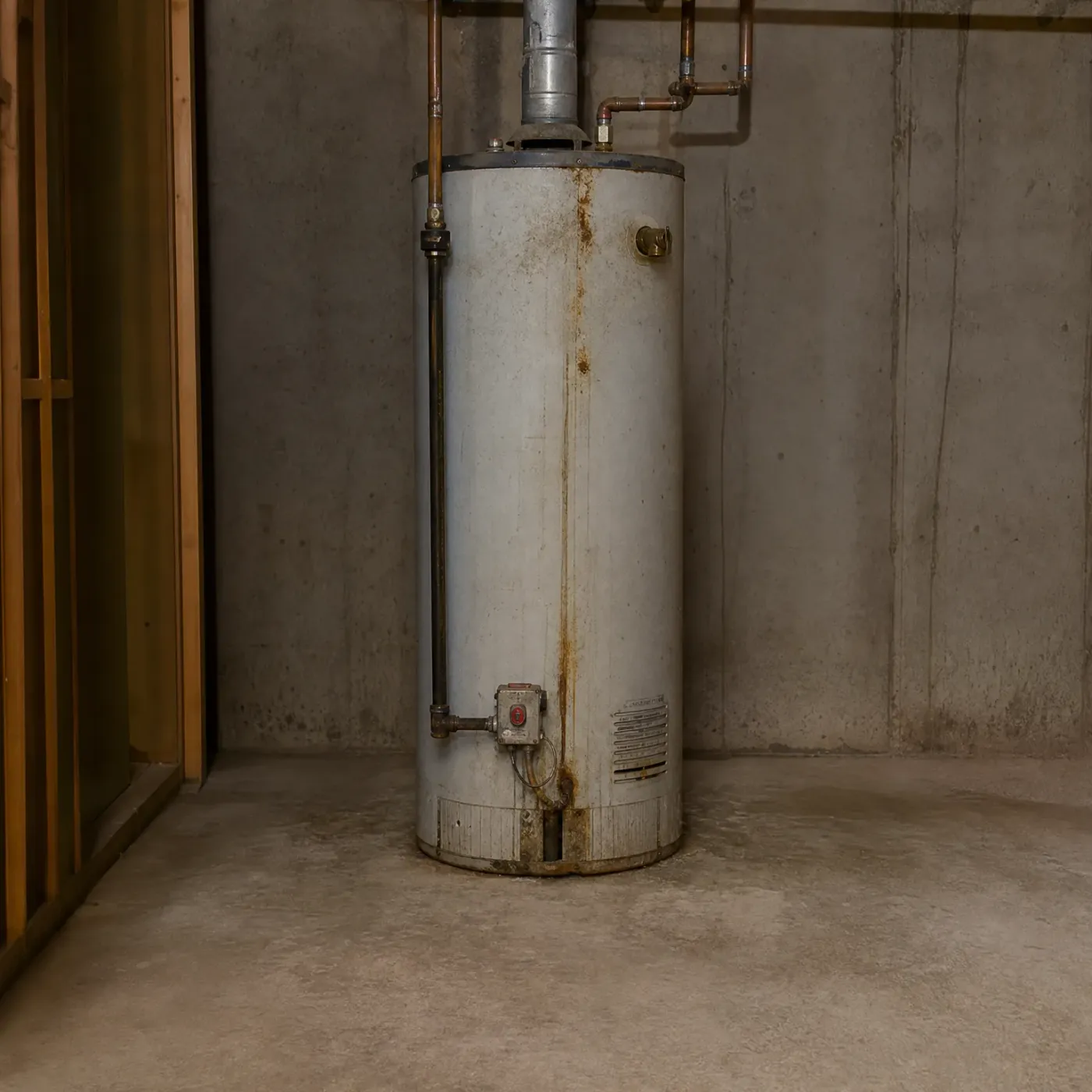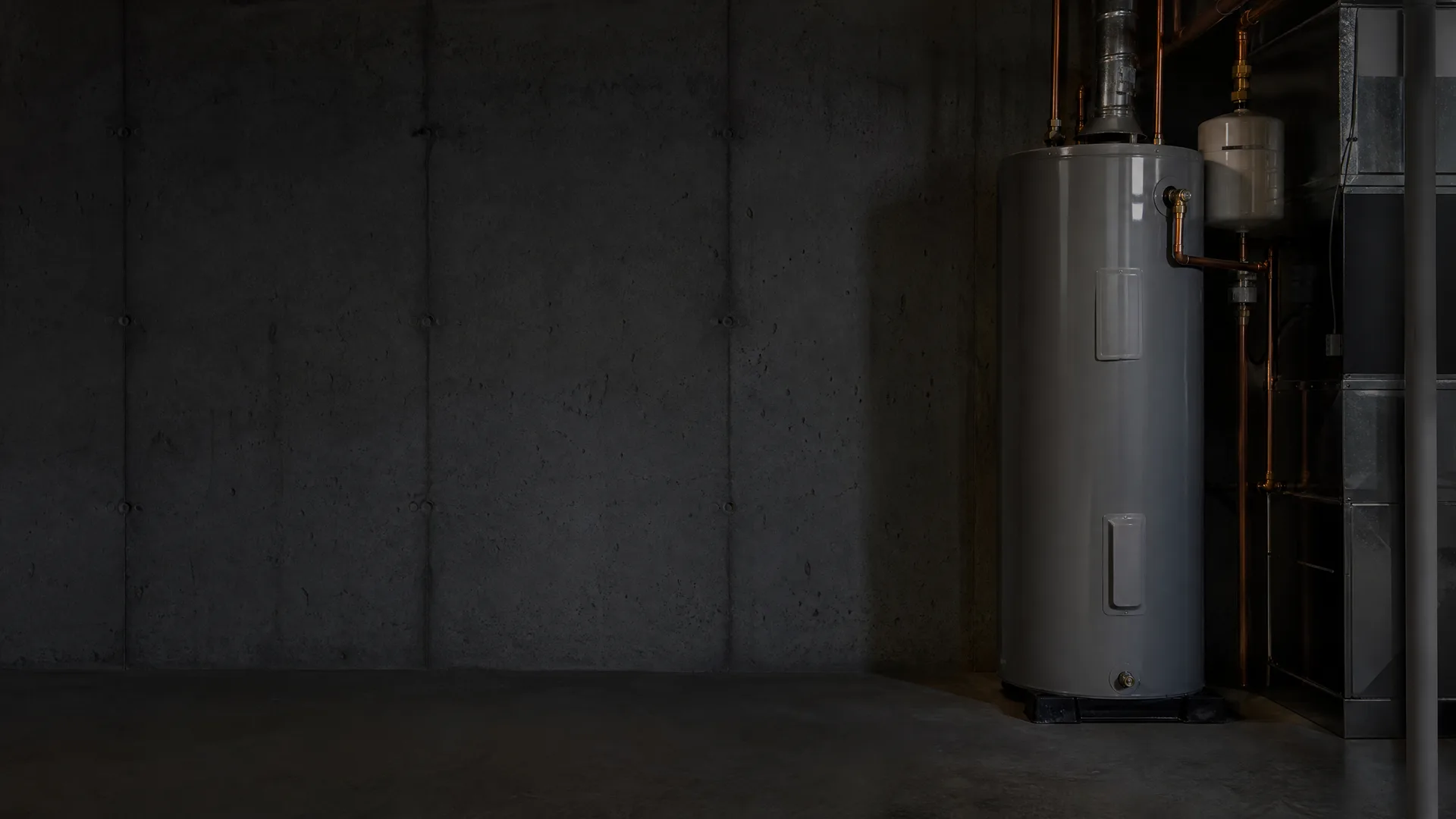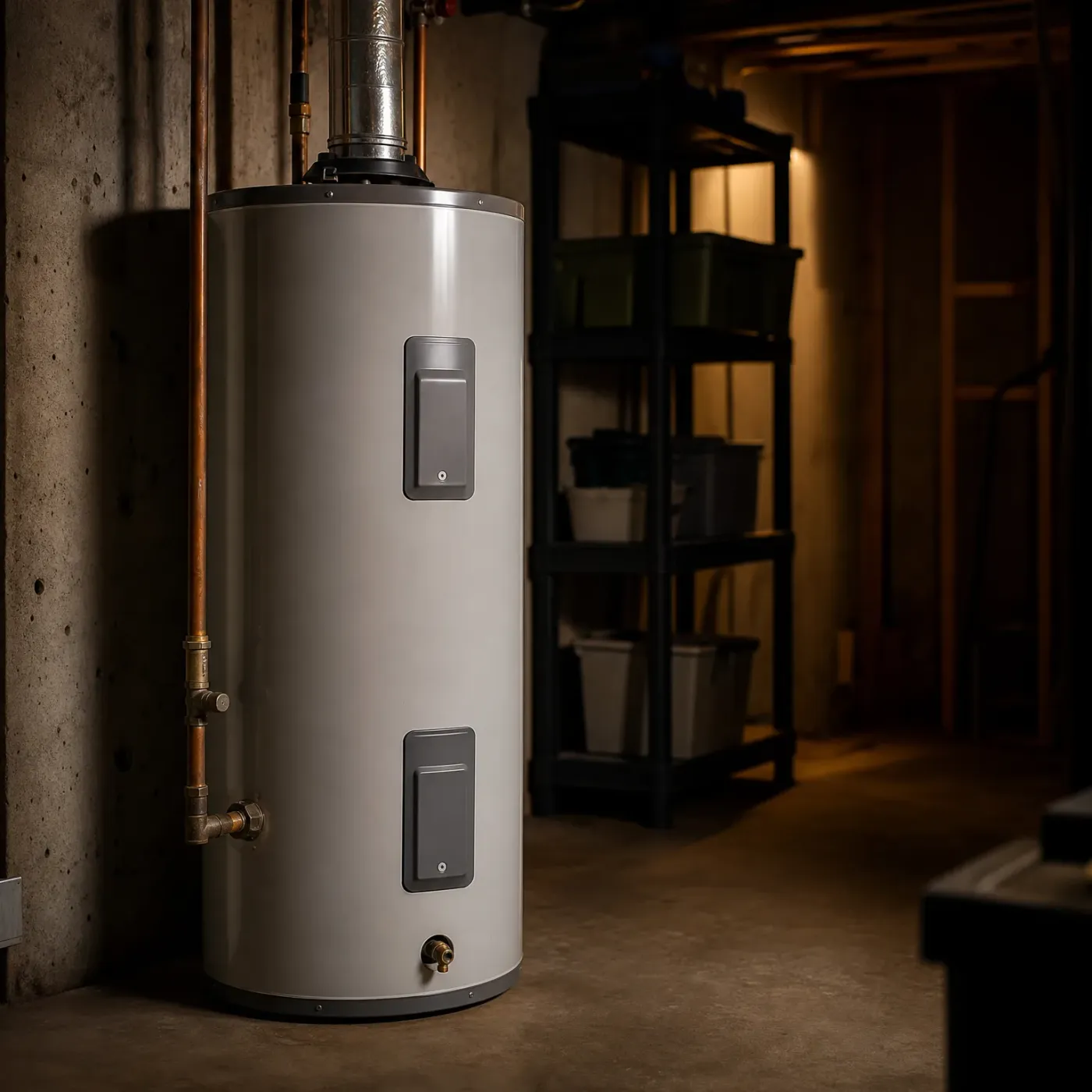






A tall cylindrical water heater with a metal flue pipe and copper plumbing stands against a concrete wall in a dim basement, with a black shelving unit holding plastic storage bins nearby.

Get matched with a water heater pro in El Paso County

How long a water heater lasts in El Paso, TX

Most water heaters in El Paso last somewhere between eight and twelve years, but the water here and how hard your tank works can push that number either way. This page walks through what shortens the life of a tank and what signs mean yours is close to done. If it's time to replace it, you can get matched with a contractor who handles installations in your area.

Get a water heater pro

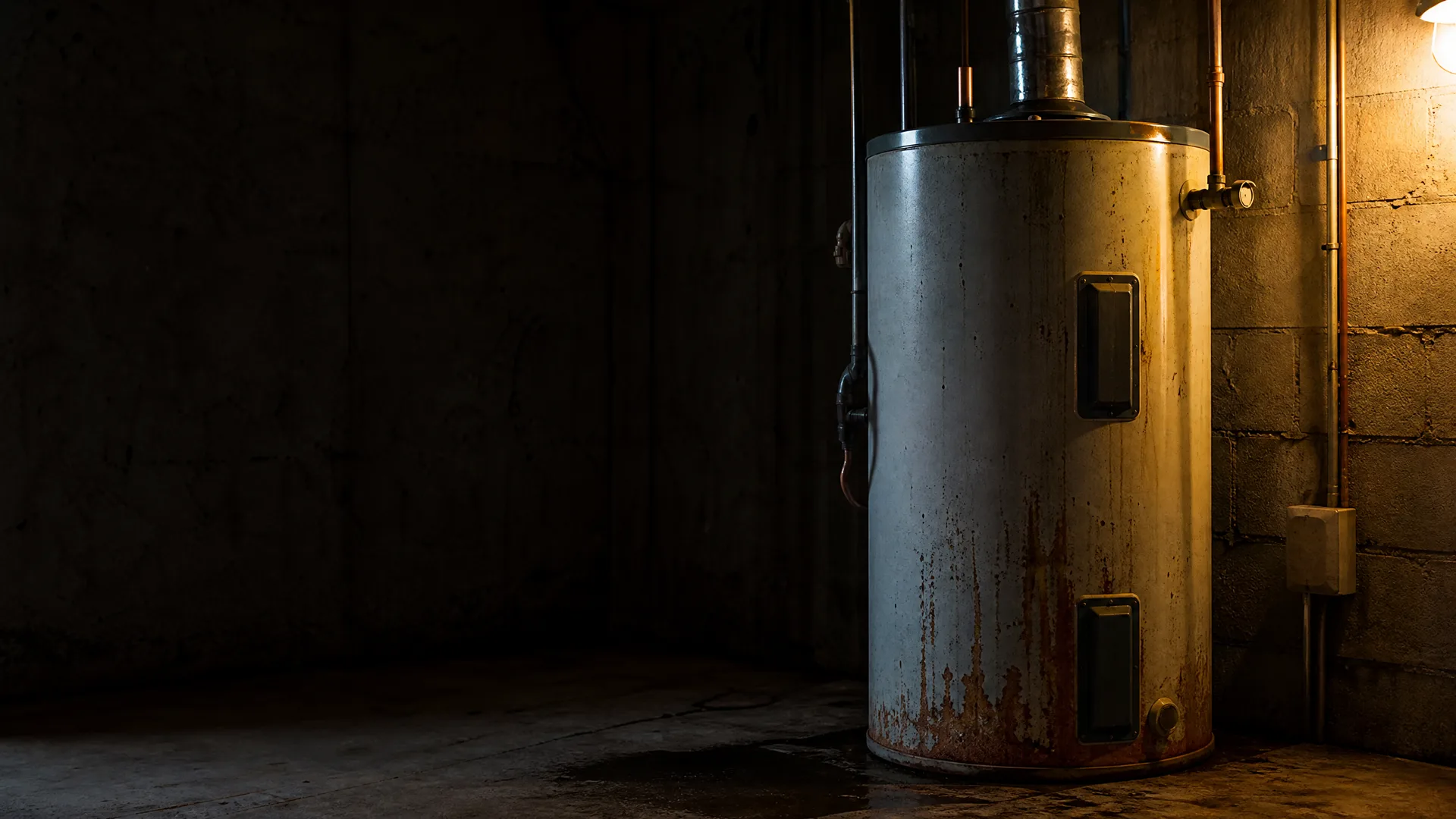
A water heater in El Paso typically lasts 8 to 12 years. Gas models, which most homes here use, tend to land in that range if the tank stays free of heavy sediment. El Paso's water is hard, and hard water leaves mineral buildup inside the tank over time. That buildup settles at the bottom, makes the burner work harder to heat the same amount of water, and wears the tank out from the inside faster than it would with softer water. A unit that never gets flushed can fall short of eight years. One that gets regular attention can push past twelve. Past the ten year mark, it's worth watching for warning signs: rusty water, a tank that's noisy when it heats, or water that takes longer to get hot. Those point to a tank nearing its end rather than a small problem passing through.

What does your household mean for your water heater's lifespan?

  • 2.86 people per household on average

    A household here averages 2.86 people, per Census data. More people means more showers and more laundry loads, and a tank that cycles that often wears out its parts sooner.

  • Half the homes here were built by 1988

    Half the homes in El Paso County were built in 1988 or earlier, per Census data. A water heater that age has long since been replaced, maybe more than once, so check when yours was installed rather than going by the house.

  • 71% of homes heat with gas

    71% of homes here heat with gas, per Census data. Gas tanks have a burner and a flue that electric models don't, and those parts can fail before the tank itself does.

ACS 2020-2024

A tank that never gets flushed will carry sediment year after year, and in El Paso's hard water that layer thickens fast. It sits between the burner and the water, so the burner works harder and the steel underneath takes the heat it was never built to take.

A tank flushed once a year sheds that layer before it builds into a problem. The burner heats water instead of baking through sediment, and the tank is far more likely to reach 12 years instead of stalling out near eight.

A gray-haired, bearded man in a dark coat dusted with snow stands smiling in a dimly lit room with a lamp, mirror, framed art, and a sofa in the background.
An older man with white hair and a beard, wearing a dark snow-dusted coat and scarf, stands in a warmly lit interior hallway with a framed landscape picture, a table lamp and a potted plant behind him, and a snowy view through a window at left.
An older man in a dark snow-flecked overcoat and scarf stands smiling in a warmly lit home entryway, with a glass-paned door showing darkness outside and a lamp-lit room visible through a doorway behind him.
An older man with gray hair and a beard, wearing a dark snow-dusted jacket and scarf, stands smiling in a warmly lit interior hallway with a lit table lamp, a vase of dried branches, and a framed picture in the background.

A gas water heater burns fuel under the tank and sends the exhaust up through a flue pipe. If that flue cracks or gets blocked, the exhaust has nowhere to go but back into the house. Inside the tank, a steel rod wrapped in magnesium or aluminum sits in the water and corrodes instead of the tank. That's its whole job. Once that anode rod is finally eaten through, the tank's own steel lining starts taking the damage, and that's usually how a pinhole leak gets its start. Meanwhile, the thermostat and gas valve are switching the burner on and off to hold the water temperature, and if sediment has settled on the bottom, the burner has to run longer to do the same work. A dip tube carries the incoming cold water down to the bottom of the tank. If it cracks, cold water starts mixing in near the top, where the hot water line draws from. On top of the tank, the pressure relief valve is the part standing between a normal failure and a dangerous one.

What's happening inside the tank

  • Gas water heaters pull combustion air from the room and vent it through a flue pipe, and a cracked or blocked flue lets exhaust back up instead of out.
  • The anode rod inside the tank is steel wrapped in magnesium or aluminum, and it corrodes on purpose so the tank itself doesn't have to.
  • Once the anode rod is used up, the tank's steel lining is next in line, and that's when pinhole leaks start.
  • The thermostat and gas control valve cycle the burner on and off, and sediment at the bottom of the tank makes that burner run longer to heat the same amount of water.
  • A dip tube feeds cold water to the bottom of the tank, and if it breaks, cold water mixes in near the top where the hot water gets drawn out.
  • The pressure relief valve on top of the tank is the part that keeps built-up steam or pressure from turning a failure into something worse.
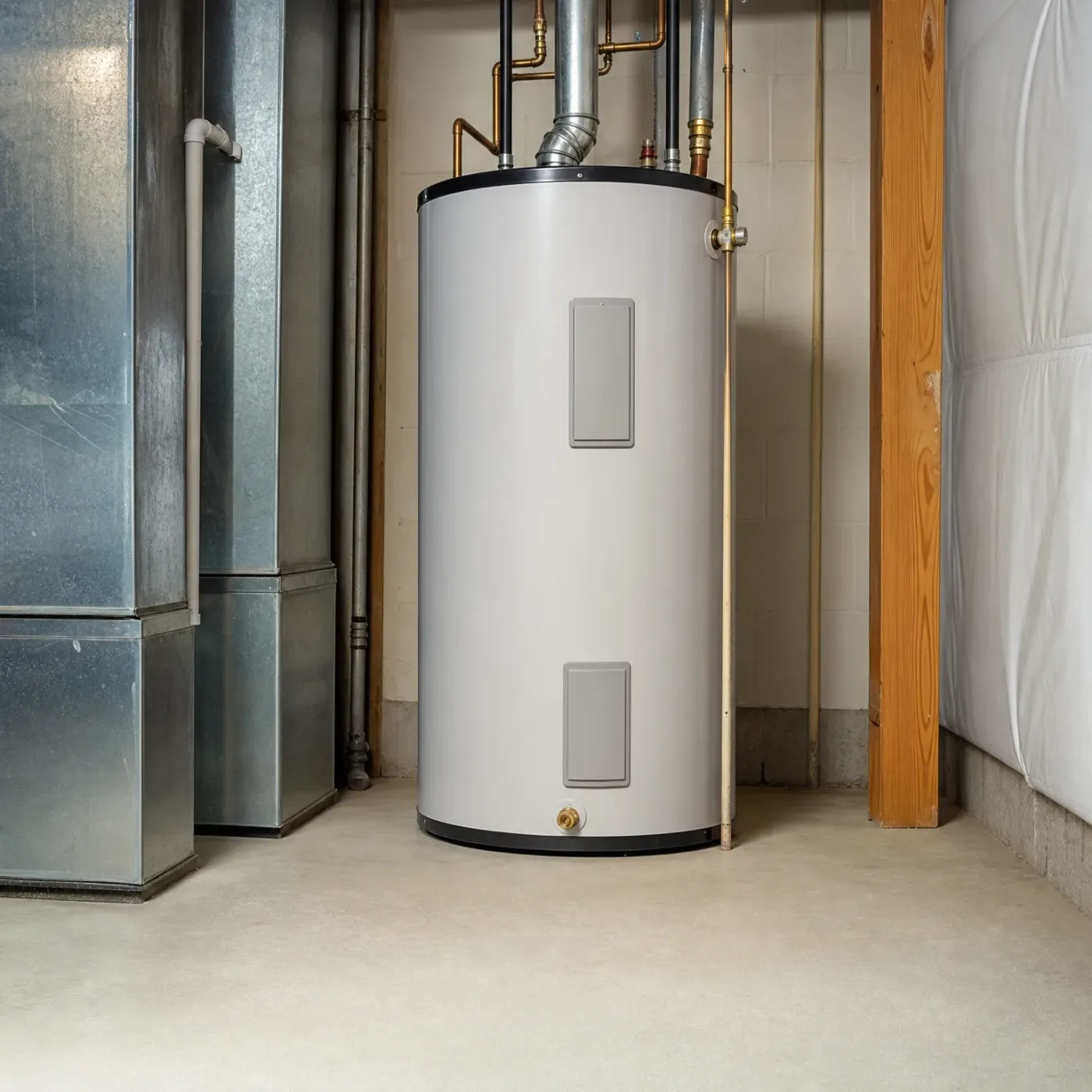
A white cylindrical water heater with two access panels stands on a concrete floor in a basement corner, beside galvanized ductwork, copper and metal pipes, a wooden post, and a concrete block wall.
A tank like this one is still doing its job. No rust at the fittings, no damp spots on the floor underneath, and the panels are solid.
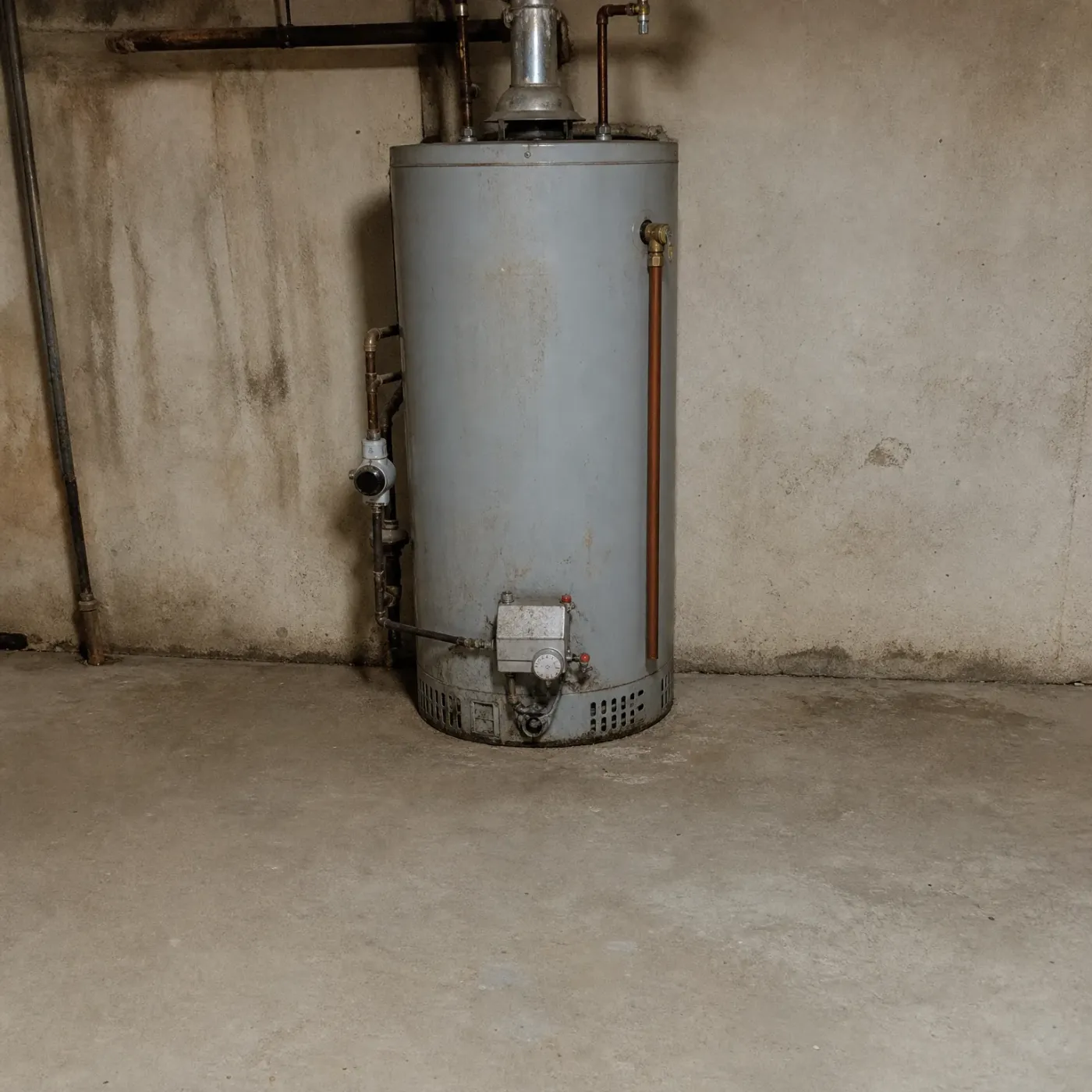
An older gray cylindrical gas water heater with copper and steel piping and a flue, standing on a concrete floor against a stained concrete wall.
An old tank like this, with a flue vent and a gas control unit this worn, is near the end regardless of what the calendar says.
  1. Cold water enters the tank through the dip tube at the bottom.

  2. The gas burner fires beneath the tank to heat that water.

  3. The thermostat cuts the burner off once the set temperature is reached.

  4. Hot water rises and exits through the outlet at the top.

Flush It or Risk It

Keep flushing it

  • A tank you flush once a year sheds sediment before it packs into a hard layer, so the burner heats water instead of fighting through buildup.
  • Flushing costs you a little time now, but it's the one thing that keeps El Paso's hard water from shortening a tank that would otherwise run the full 8 to 12 years.
  • You get to watch the water as it drains, and cloudy or gritty water tells you the sediment is still building even with regular flushes.
  • A flushed tank keeps its anode rod working longer too, since the rod isn't buried under a layer of scale it has to corrode through first.
  • Sticking with flushing means you're also the one who notices a failing component early, like a burner that's slow to catch or a pilot that won't hold.

Let it ride

  • Skip the flushing and sediment settles at the bottom of the tank every year, thickest right over the burner where the heat is worst.
  • A tank that's never been flushed can fail years before the 8 to 12 year range just from the burner overworking against that buildup.
  • You won't notice anything different day to day until the water runs lukewarm or the tank starts making a popping or rumbling sound as water boils under the sediment.
  • Letting it ride means the anode rod corrodes against scale instead of against the tank itself, so the steel underneath takes damage sooner.
  • Once the tank starts leaking from sediment damage, there's no flushing your way out of it. The tank needs replacing at that point, not maintenance.
A rusty cylindrical water heater with copper pipes and a flue stands against a concrete block wall in a dim basement, lit by a single bare bulb at the right.

The sun's down and the utility room light is the only one on in the house. You're out there with a towel already under your feet because you knew what you'd find. Rust streaks run down the side of the old tank, following the seam to a small puddle at the base. You crouch and touch the floor near it, checking if it's still spreading. It isn't, not tonight, but it wasn't there last week either. The pilot light hums along like nothing's wrong. You stand there a minute longer than you need to, doing the math on how many years this tank's had, then head back inside to fill out the form so someone can come look at it before it decides the timeline for you.

Find a water heater installation pro in El Paso County

Send the form and stop researching installers for the new water heater.

No fee to send it, and nothing to sign.

Why hard water cuts it short

A water heater doesn't wear out on a clock. It wears out from what passes through it. El Paso's hard water carries calcium and magnesium that drop out as sediment once the burner heats the tank. That layer builds on the bottom, and the steel underneath has to sit through more heat than it was built for. A tank fed softer water can run past twelve years on the same parts that fail at eight here. The water is the variable, not the brand or the install.


What a flush actually changes

Draining a few gallons from the bottom valve once a year clears sediment before it packs down. A tank that's never flushed builds a crust that insulates the steel from the water above it, so the burner runs longer to do the same job. That extra runtime is what ages the tank early. Flushing doesn't undo buildup that's already hardened, but it keeps new sediment from joining it. A tank flushed yearly from the start is usually the one still working at year eleven or twelve instead of year eight.

A woman wrapped in a cream textured blanket sits in an armchair beside a lit lamp and a dark window, with an open book in the foreground.
A bearded man in a blue and brown plaid flannel shirt stands indoors looking out a window at snow-covered trees, with a ceramic mug on the windowsill.

Replace it now or wait

Replacing a tank before it fails means picking the time and the model instead of scrambling after a flood in the utility room. You get to compare gas water heaters on your own schedule, ask about recovery rate, and pick a size that fits the house. A contractor can also tell you whether the venting or gas line needs anything different for a new unit, which matters more once a tank is past ten years old. The trade-off is spending money on a tank that still runs, even if it won't for much longer.

Waiting it out

Running a tank until it actually fails costs nothing extra up front, and some tanks pass twelve years without trouble if the water stays on top of maintenance. But a tank doesn't usually fail on a convenient day. It fails during a holiday, or while you're out of town, and then it's an emergency instead of a plan. Water damage to the floor or the drywall around the tank adds its own cost on top of the water heater itself. Waiting also means losing the choice of contractor and model to whoever is available that day.

An older gas water heater with copper and black pipes stands in the corner of a bare concrete basement next to a wood-framed partition wall.
Before you get your water heater installation
A gray cylindrical gas water heater with copper piping, flue vent, and a small expansion tank stands in a basement corner between a concrete wall and an insulated stud wall.
After you get your water heater installation

Power here costs 14.10 cents per kilowatt-hour

Most homes here heat water with gas, so that 14.10 cents a kilowatt-hour mostly shows up on the electric bill in other ways, not the water heater itself. If yours is electric, it's running on a rate close to the national average, so a tank losing efficiency to sediment will cost you more in that case than it would somewhere cheaper.

EIA-861 2025

A gray cylindrical water heater with two access panels and copper piping stands against a concrete wall in a basement, beside wood framing and metal ductwork.

Still sound

A tank like this one looks the way it should. The piping is clean, the pressure relief valve is clear, and there's no rust creeping down the side toward the floor. A water heater in this shape is still working the way it was built to, and there's no reason to touch it yet.

An aging rust-streaked gas water heater with copper and galvanized pipes stands against a bare concrete basement wall beside wooden stud framing.

Past its point

Rust has worked its way down the whole tank, not just a spot near the bottom. The gas valve and thermostat sit low on a shell that's corroded well past the surface. A tank that looks like this is running on borrowed time, no matter what the burner is still doing inside it.

A woman stands in the open doorway of a white stucco house holding the dark door, facing a man in a black cap and shirt seen from behind in the blurred foreground, with a potted flowering plant beside the entry.

Eight to twelve years, give or take what your water puts it through

A water heater in El Paso lasts 8 to 12 years, and where yours falls in that range comes down to the sediment, the anode rod, and whether it's been flushed. The hard water here doesn't change that range so much as decide which end of it you land on. A tank that's been maintained can reach the far side of twelve. One that hasn't may not see eight.

If yours is getting close, or if you've already seen the signs this page described, the next step isn't figuring out which model to buy or who's free this week. It's getting matched with a contractor who can look at your specific tank, your water heater's setup, and tell you where you actually stand. That part stops being something you have to sort out on your own once you send the request.

A dark ceramic mug on a round wooden table beside a light grey sofa with a woven cushion and knit throw, with a window, potted plant, floor lamp and wooden cabinet blurred in the background.
A gray cylindrical water heater with copper piping and an expansion tank stands on a drip pan against a dark concrete basement wall, next to metal ductwork.

Get your water heater to the right pro

One request ends the search for a water heater installer.

Step 1 of 3: Equipment