

8 to 12 years
That is about how long your tank heater will hold up before the steel gives out. Past that point, a leak can show up with no warning.
Send the form and the search for an installer is over.
Let a pro reach outA water heater in Fort Worth lasts about 8 to 12 years, tank units toward the lower end of that if the home has hard water, which speeds up the sediment buildup inside the tank. Most homes in the area run electric water heaters, and the heating elements work harder once sediment sits on top of them, so you'll often see a slow drop in hot water before a full failure. Mild winters here don't stress a water heater the way a hard freeze would elsewhere, so most of the wear comes from age and from what's in the water itself, not the weather. Once a tank starts leaking or the water stays lukewarm no matter the setting, it's at the end, not something worth patching. If yours is past 10 years, it's worth finding out now whether it needs replacing rather than after it fails and leaves you without hot water.
2.73 people per household on average
Tarrant County households average 2.73 people, per Census data. More people means more showers and more laundry, and a tank works harder every year it runs.
Half the homes here were built by 1990
Half the homes in Tarrant County were built in 1990 or earlier, Census figures show. An older home can mean an older water heater too, if it's never been swapped out since.
66.6% of homes heat with electricity
66.6% of homes here heat water with electricity, according to the Census. Electric elements run longer to make up for the county's expensive power, and that adds wear a gas burner doesn't see.
ACS 2020-2024
A water heater fails from the inside, long before you see water on the floor. Hard water in this area carries minerals that settle out as sediment, and that sediment collects at the bottom of the tank. On a gas unit, the burner sits underneath, so that layer acts like insulation between the flame and the water, and the burner has to stay on longer to do the same job. On an electric unit, the lower element sits inside the tank itself, and scale builds up around it the same way. Either way, the water heater runs longer and harder each year just to keep up with what it used to do easily.
Inside the tank there's also a rod, usually magnesium or aluminum, bolted in to corrode instead of the steel around it. That trade-off is the whole point of it. As long as the rod has material left, it draws the rust to itself. Once it's used up, the tank has nothing left protecting it, and the steel starts to go instead. That's usually the stretch where a tank that seemed fine starts to leak.
There's also a pressure relief valve, meant to open if pressure inside builds past a safe point. A valve that's stiff or won't move isn't just an inconvenience. On an older tank, it's often the first sign the rest of the unit is wearing out too.




Skip the round of in-home estimates for a new water heater.
You're not committing to anything by asking.
A tank water heater almost never dies because the electric elements burn out. Elements are cheap to replace and a contractor can swap one in an afternoon. What actually ends a water heater's life is the tank itself. Steel holds water under pressure for years, but the glass lining inside it is thin, and once that lining cracks, the bare steel underneath starts to corrode. Hard water speeds this along because the minerals that settle out of it pit the lining faster. There's no patch for a leaking tank. When the steel gives out, the whole unit gets replaced, not repaired.
Every tank water heater ships with a sacrificial anode rod, a length of metal bolted into the top that corrodes instead of the tank. It works by attracting the corrosive reaction away from the steel walls, and it's designed to wear away over the years so the tank doesn't have to. Once the rod is used up, the tank is next in line. A rod can be checked and replaced before it's gone, and doing that stretches the tank's life past the 8 to 12 years most units get in this area. Skip it, and the hard water here has nothing standing between it and the steel.


That is about how long your tank heater will hold up before the steel gives out. Past that point, a leak can show up with no warning.
Get a straight read on your water heater's condition from someone local, without calling around Fort Worth and Tarrant County yourself.
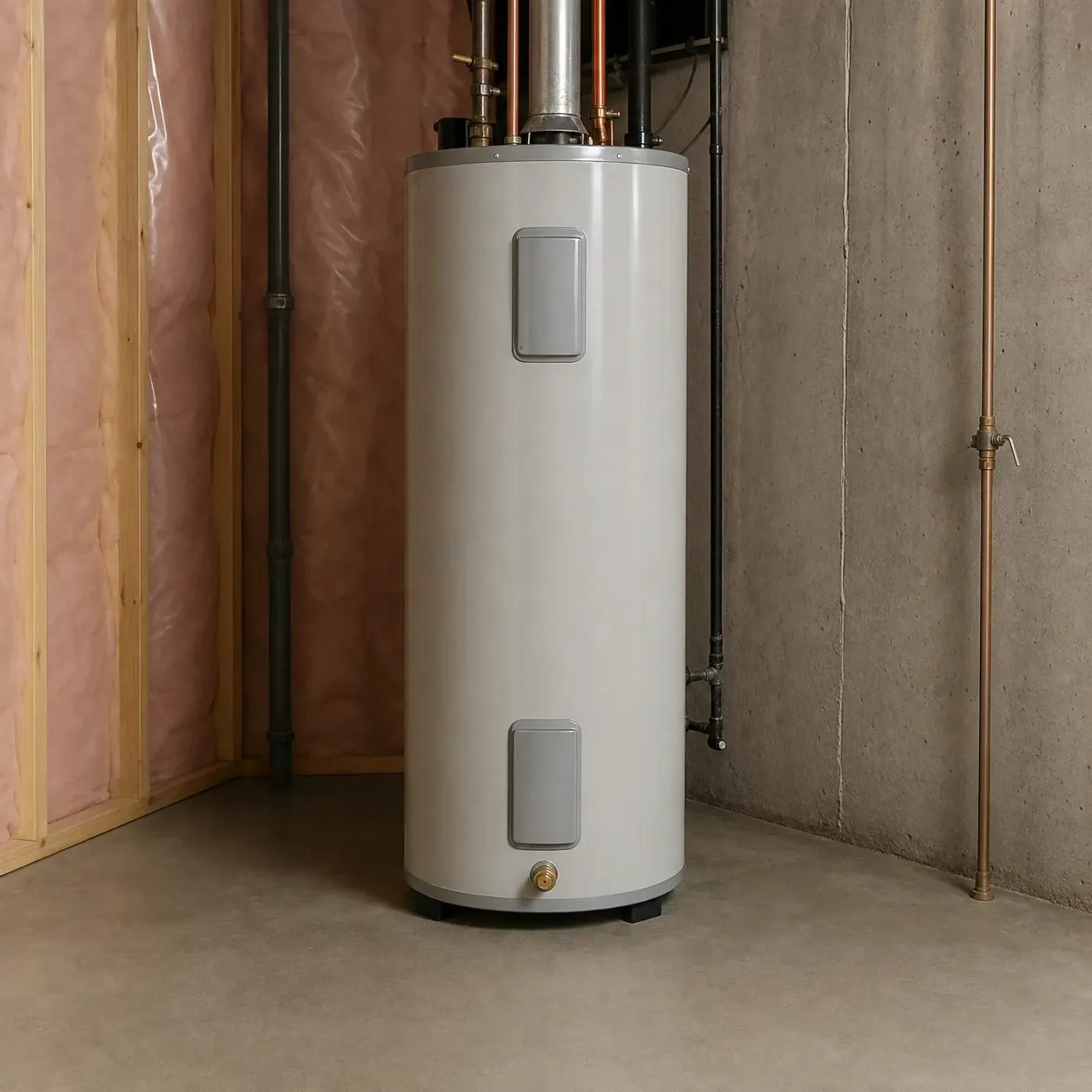
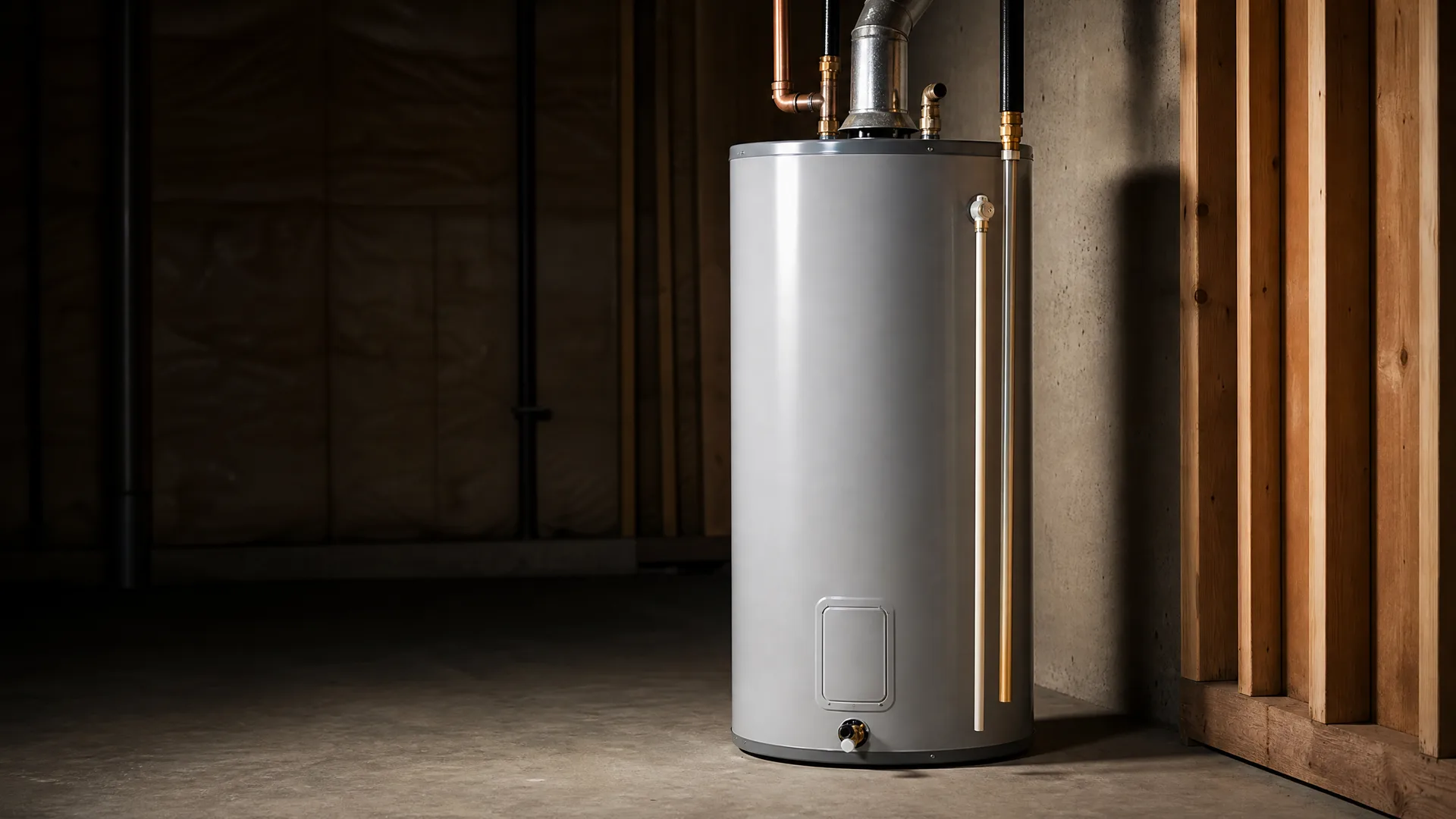
This is a water heater with years left in it. The tank is clean, the fittings are dry, and the pipes running to it show no sign of trouble. Insulation behind the wall stays dry too, which means no slow leak has been feeding it moisture.
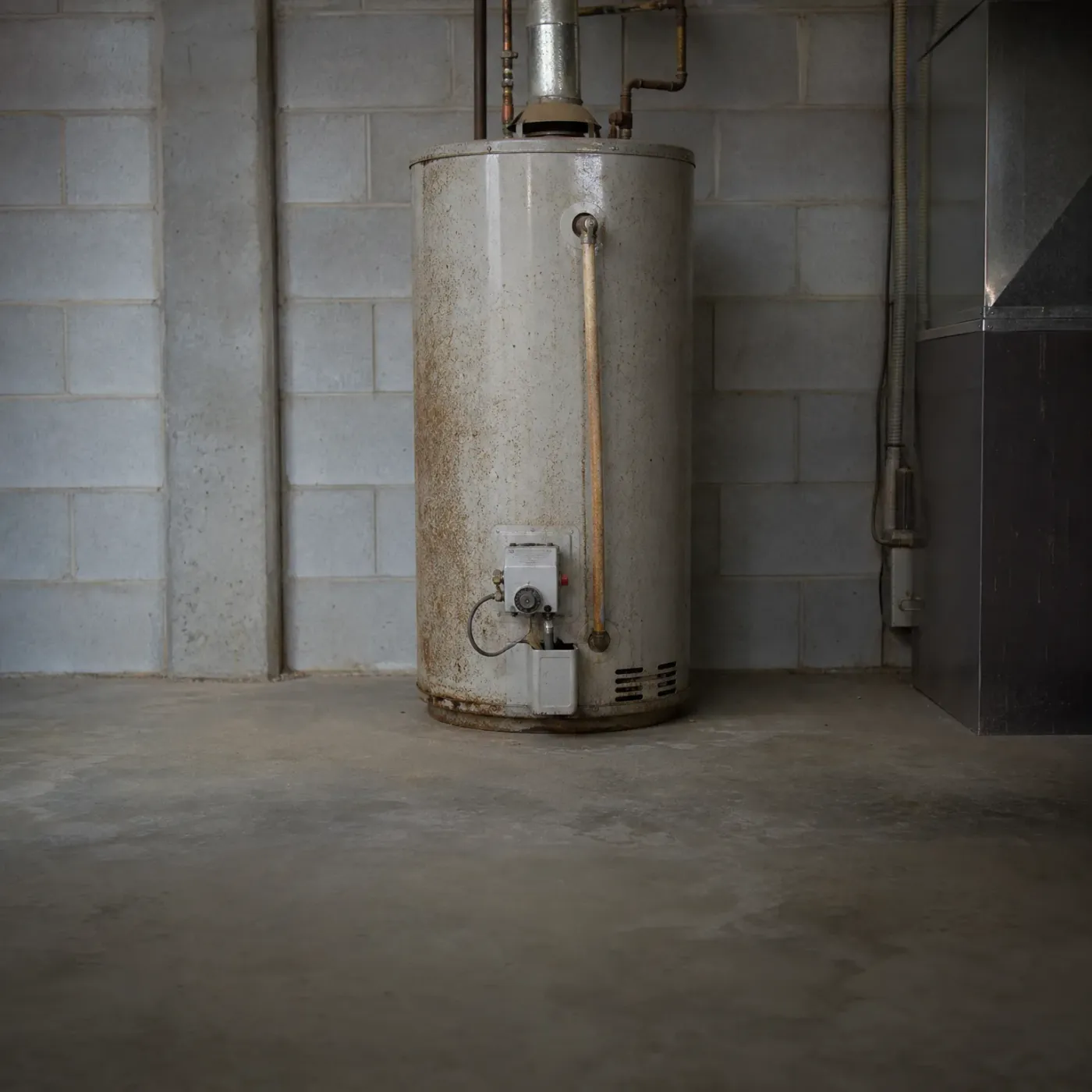
Rust has worked through the tank from years of sitting full of water, and the fittings show the same wear. A water heater this far gone can start leaking on its own schedule, not yours, and once the steel goes, there is no part to swap in and fix it.
At 16.84 cents per kilowatt-hour, every degree your electric water heater raises costs more here than in most places. A heater struggling against sediment or a failing element doesn't just run longer, it runs up a bill you'll notice, which is one more reason to replace a tired unit before it starts working overtime.
EIA-861 2025

8 to 12 years is what you can expect from a water heater in Fort Worth, less if the tank has been fighting hard water the whole time, longer if it hasn't had to work as hard. Past that window, the risk isn't that it stops heating. It's that the tank gives out and you find a wet floor instead of a warm shower.
If your water heater is getting up there in years, or you've already seen rust at the base or a pressure relief valve that won't quit dripping, you don't have to spend your evening calling around town, explaining the same thing to three different companies, and trying to guess which quote actually means what. Send the form and that part is done. Someone local takes it from there.

Done looking for a water heater pro