

Side profile of a bearded man wearing a dark faded baseball cap and a dark gray t-shirt against a plain light background.

How long a water heater lasts in Killeen, TX

Step 1 of 3: Equipment

A water heater in Killeen lasts about 8 to 12 years. Tank units rust from the inside over time, and once a leak starts at the tank itself, repair isn't an option. Most homes in Bell County run on electric water heaters, and the electric element and thermostat can be replaced along the way, but the tank is what decides the lifespan. Summers here are long and hot, which means the heater works for most of the year rather than sitting idle through a short mild season, and that steady use adds up over the years. If yours is nearing 10 years old and you're seeing rusty water, a tank that's warm to the touch, or puddling at the base, those are signs the tank is failing rather than something a repair can fix. Replacing it before it fails outright means you choose the timing instead of dealing with a flooded closet or garage.

Power here costs 15.95 cents per kilowatt-hour

Most water heaters in Bell County run on electricity, and at 15.95 cents per kilowatt-hour, a tank working harder than it should will show up on your bill before you ever see a drop of water on the floor. A failing thermostat or a heating element coated in sediment makes the unit run longer to reach the same temperature, and that extra run time is what you're paying for each month.

EIA-861 2025

What's Actually Happening Inside the Tank

  • Sediment settles at the bottom of the tank and the burner or lower element has to push through it to heat the water above.
  • Anode rods are built to corrode first so the steel tank doesn't, and once the rod is gone the tank starts rusting from inside.
  • Electric tanks have two elements, upper and lower, and either one can fail while the other keeps working, so hot water that runs out fast often means one element is dead.
  • A thermostat that reads wrong tells the element to run longer than it needs to, and that extra cycling wears the element out sooner.
  • The pressure relief valve opens if pressure inside the tank climbs too high, and a valve that won't reseat means it has already done its job once too often.
  • Water that comes out rust colored or with a metallic smell usually means the tank itself has started to corrode, not just the pipes.

Bell County water carries minerals that settle out as sediment, and in a tank water heater that sediment sinks to the bottom. The burner or lower element sits right there, so it ends up heating through a layer of grit instead of clean water, and that layer only gets thicker with time. Inside the tank is a rod of aluminum or magnesium bolted in to corrode on purpose. It sacrifices itself so the steel tank wall doesn't rust, and it keeps doing that job for years before it finally wears down to bare wire. Once it's gone, there's nothing left standing between the water and the steel, and the tank starts rusting from the inside out. Electric tanks run two separate elements, one near the top and one near the bottom, wired to work independently. Lose the lower element and the upper one still heats the top few gallons, so you get a short burst of hot water that runs cold fast. A thermostat that's drifted out of calibration makes the problem worse by telling an element to stay on longer than the water actually needs, and that extra run time shortens the element's life. The pressure relief valve on top is the tank's safety release, built to open if internal pressure climbs past a safe limit. If yours won't reseat properly afterward, it's a sign it's already had to work harder than it should. And if water from the tap runs rust colored or smells metallic, that's usually the tank corroding, not the pipes leading to it.

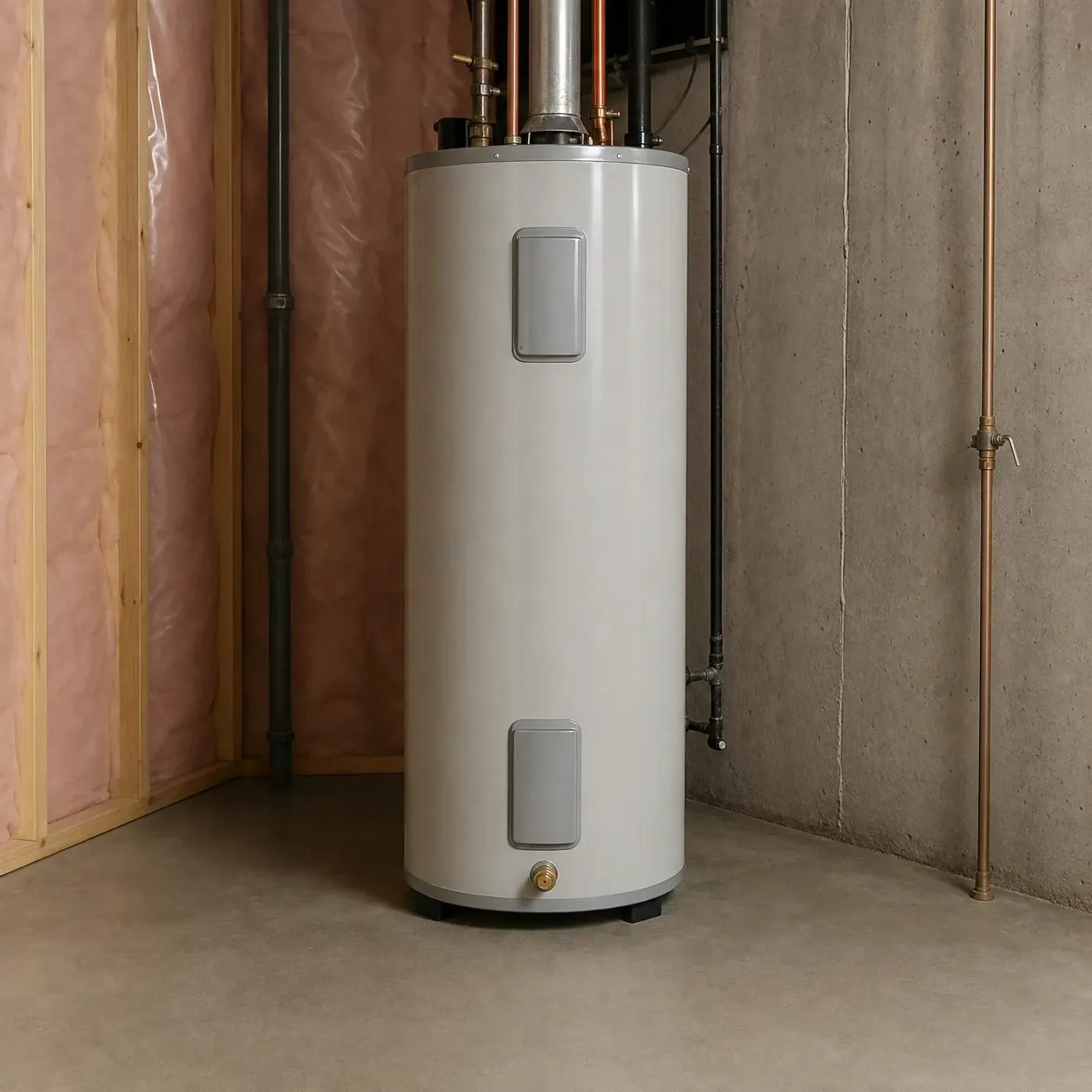
A white cylindrical water heater with two access panels and a brass drain valve stands on a concrete floor in a basement corner, beside a pink-insulated stud wall and a concrete wall with copper and black pipes.
A water heater like this is still doing its job, heating evenly with no rust or strain on the tank.
A rusted gas water heater with a flue pipe stands against a concrete block wall on a bare concrete floor, next to a dark metal duct or furnace cabinet at right.
This one has rusted through after years of wear, the kind of damage that ends in a leak, not a repair.

Once your water heater passes 10 years, the risk shifts from how long it lasts to what happens when it stops. The anode rod inside is what keeps the tank itself from rusting, and once that rod is used up, the steel starts corroding from the inside. That kind of damage doesn't announce itself. It shows up as a slow leak behind the tank, soaking into drywall or flooring before you see a puddle on the floor. Before that, you'll likely notice smaller signs: hot water running out faster than it used to, or taking longer to heat back up, both signs of sediment building at the bottom of the tank and making the burner or element work harder than it should. That extra strain costs you on the power bill well before the tank fails outright. And once it does fail, there's no patching a rusted hole. The tank gets replaced, and if you've waited for the failure instead of planning around it, you're doing without hot water in the meantime.

What an Aging Tank Means for Your House

  • A water heater past 10 years old in a Bell County home can fail without warning, leaving you with cold showers and a flooded closet or garage.
  • Once the anode rod is spent, the tank rusts from the inside out, and a slow leak can soak the drywall or flooring around it before you notice.
  • A dropping supply of hot water or water that takes longer to heat is often the tank straining to keep up as sediment builds at the bottom.
  • Sediment forces the burner or heating element to work harder, which raises your power bill months before the tank actually fails.
  • A leaking tank usually means replacement, not repair, since the steel itself has corroded and there's no patching a hole once it starts.
  • Waiting until a water heater fails outright means doing without hot water until a new one is installed, instead of planning the swap on your schedule.
A gray-haired woman in a white top and gray cardigan sits in an upholstered armchair indoors, looking toward a window with a green potted plant, with a bookshelf behind her.
A woman holds a sleeping boy wrapped in a gray knit blanket on a couch, with a lit table lamp and houseplant blurred in the background.
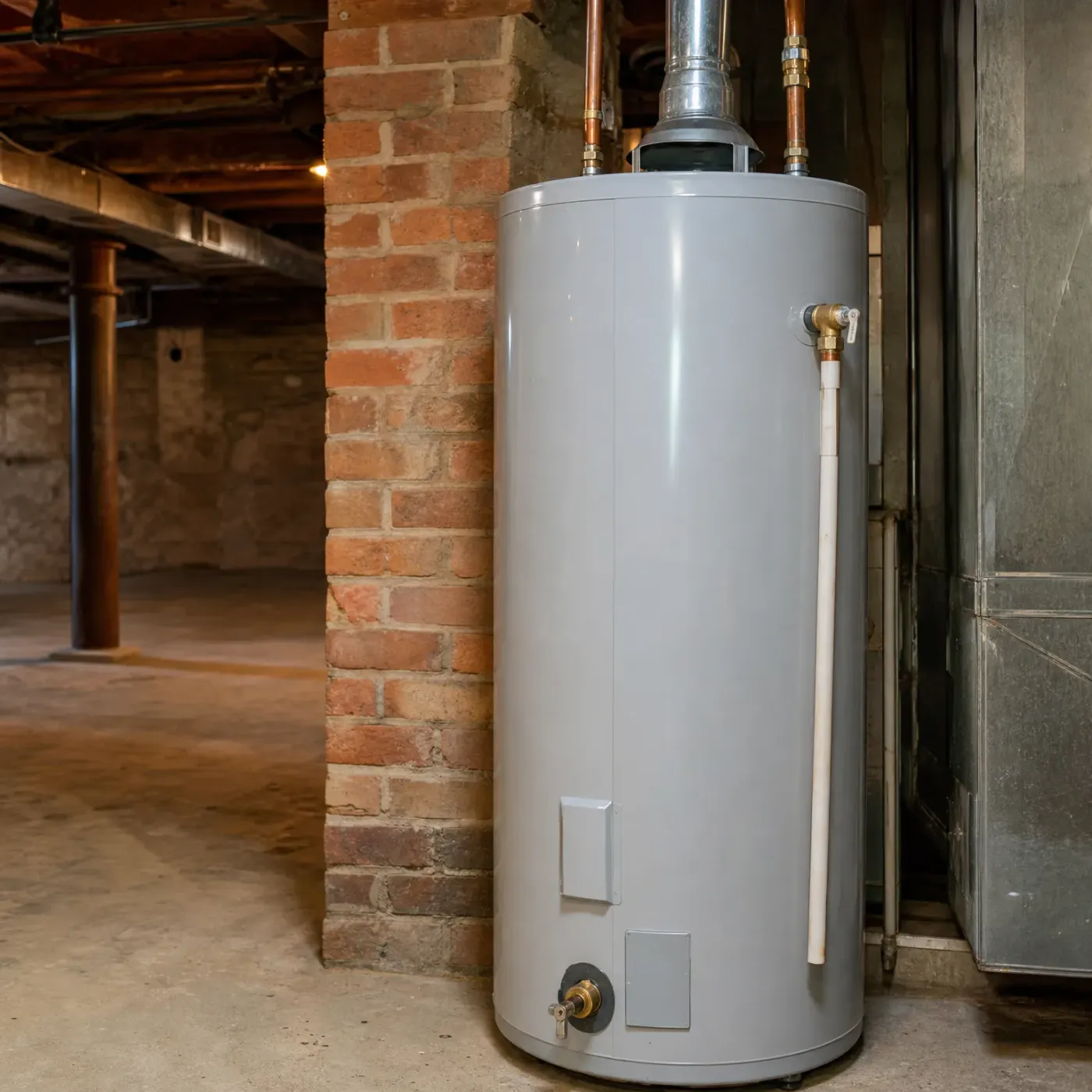
A gray cylindrical gas water heater with copper supply pipes and a metal flue stands on a concrete basement floor beside a brick pillar and a sheet-metal duct.

No quotes to chase

A licensed installer who works in Bell County gets your project.

Skip collecting and comparing quotes for the new water heater.

Answer a few questions

Sending the form costs nothing.

Is your water heater trying to tell you something?

You might notice hot water that runs out faster than it used to, or water that comes out lukewarm no matter how long you wait. Some homes hear a low rumbling or popping from the tank, which is sediment rattling around at the bottom. Others see rust color in the hot water, or rust forming around the fittings and the base of the tank itself. A puddle underneath, even a small one, means the tank is already leaking and won't stop on its own. Left alone, a leaking tank can soak the drywall, the flooring, or whatever is stored nearby, and that damage costs a lot more to put right than the water heater does.

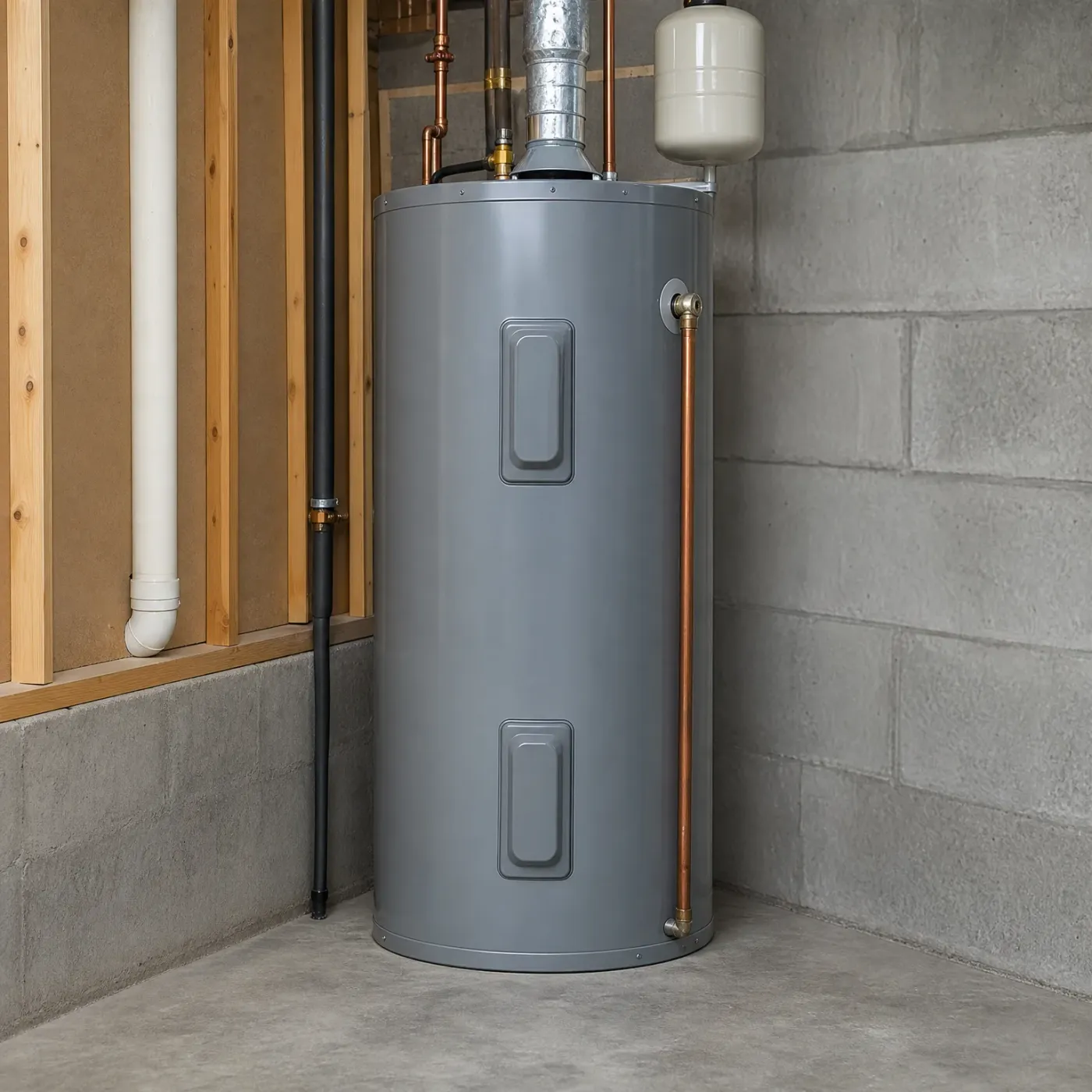
A gray cylindrical water heater with copper piping and an expansion tank stands in a basement corner beside a concrete block wall and exposed wood framing.

Working as it should

This is a tank in good shape, electric element doing its job, copper and PVC lines tight, no rust on the fittings. The expansion tank above it handles pressure changes so the seams and joints aren't taking that strain. A unit like this just needs the anode rod checked from time to time.
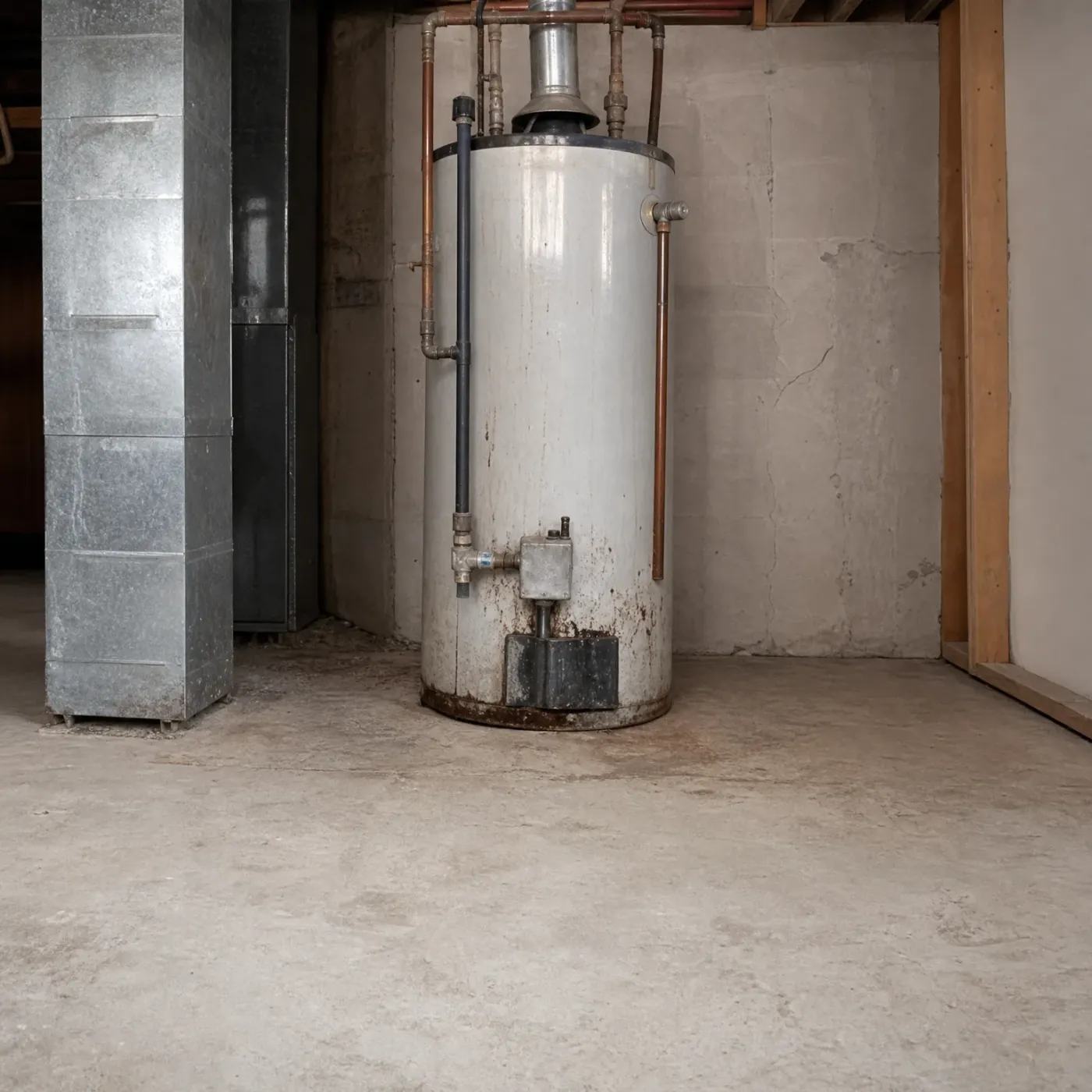

An old rusting cylindrical gas water heater with copper and steel pipes and a flue stands against a concrete basement wall beside metal ductwork on a bare concrete floor.

Past the point of repair

Rust has worked through the steel on this one, and the mineral buildup around the fittings shows water's been finding its way out for a while. Once corrosion gets into the tank itself, there's no patch for it. The flue vent and gas line still look fine, which tells you the tank failed on its own, not from anything around it.

Repair the Water Heater or Replace It

Repair

  • Makes sense if the tank itself is sound and the problem is a part, like a heating element or a thermostat.
  • A repair can buy a few more years out of a water heater that's only 5 or 6 years old.
  • If only one of the two electric elements has failed, replacing it is cheaper than a new tank.
  • A thermostat that's stuck or reading wrong can look like a dead water heater when it isn't.
  • Repair won't help once the tank itself is rusted through, no matter how new the parts around it are.

Replace

  • Makes sense once the tank is past 8 to 12 years old, since that's about how long one lasts in Bell County.
  • A new unit stops the risk of the tank rusting through and leaking into a closet or garage floor.
  • Installing a new water heater resets the anode rod, so the tank isn't already partway to failing from the inside.
  • A licensed local installer who works on these year-round will size the new unit to your home instead of guessing.
  • Going with replacement means dealing with one contractor instead of calling around and comparing quotes from several.
  • A newer electric water heater runs its elements more efficiently, which matters at 15.95 cents per kilowatt-hour.
A man with greying hair in a dark green sweater sits on a light sofa in a sunlit living room, looking off to the side, with a large window, table lamp, framed art and white built-in shelves behind him.
A gray-haired man in a dark navy sweater sits on a light sofa in a living room, looking toward a sunlit window with a houseplant and wooden cabinet behind him.
A gray-haired man in a dark green ribbed sweater sits on a light sofa in a living room, looking toward a sunlit curtained window with a potted plant and lamp nearby.
A middle-aged man with gray hair and a beard, wearing a dark green sweater, sits on a light sofa in a sunlit living room with large windows, a potted plant, and a dining area in the background.

Gas units can run longer

A gas water heater in Bell County often holds up a couple years past what an electric one does, since there's no element sitting in the tank taking the brunt of hard water and sediment. The burner sits underneath, and it's the tank itself that wears out first, not a part feeding into it. That said, most homes here are set up for electric, and swapping fuel types for a longer-lived tank isn't a small project on its own.

The warranty hints at lifespan

Manufacturers set warranty lengths on water heaters based on how long they expect the tank to hold up, usually 6, 9 or 12 years depending on the model. A unit with a longer warranty typically has a thicker tank lining and sometimes a second anode rod, both of which slow the rusting from inside. Checking the sticker on the side of your tank for the warranty term is a quick way to get a sense of which end of that range yours was built for.

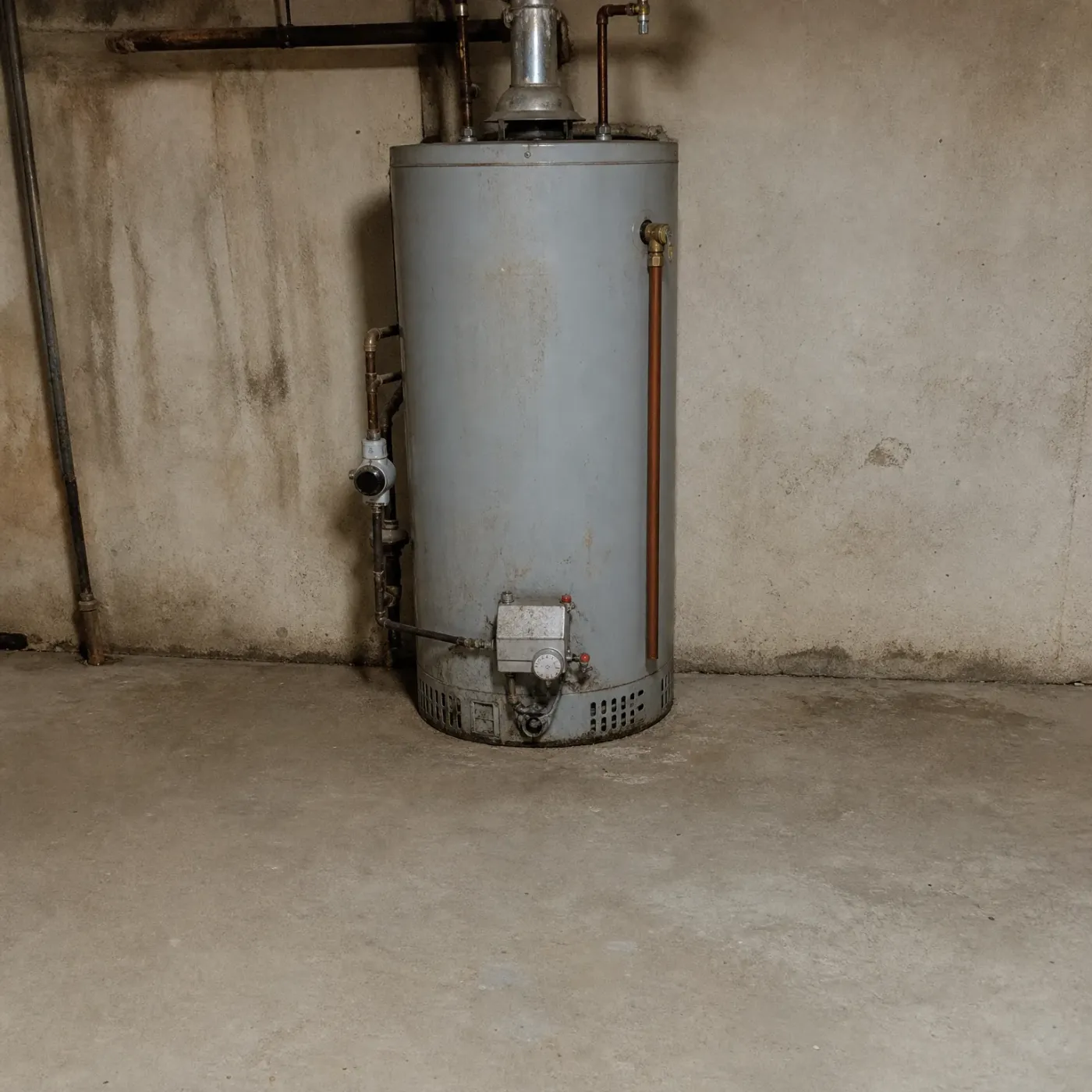
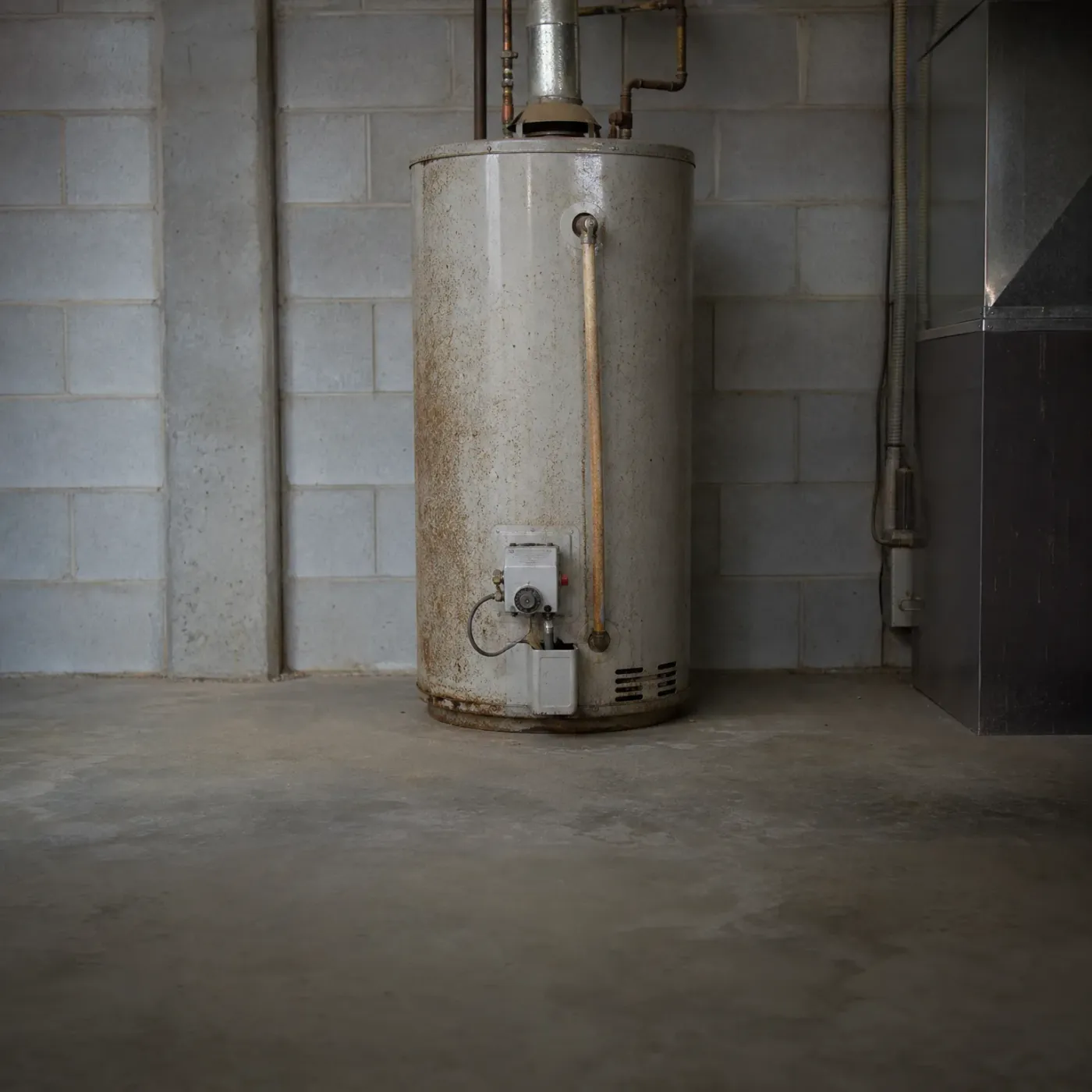
An older gray cylindrical gas water heater with copper and steel piping and a flue, standing on a concrete floor against a stained concrete wall.
Before you get your water heater installation
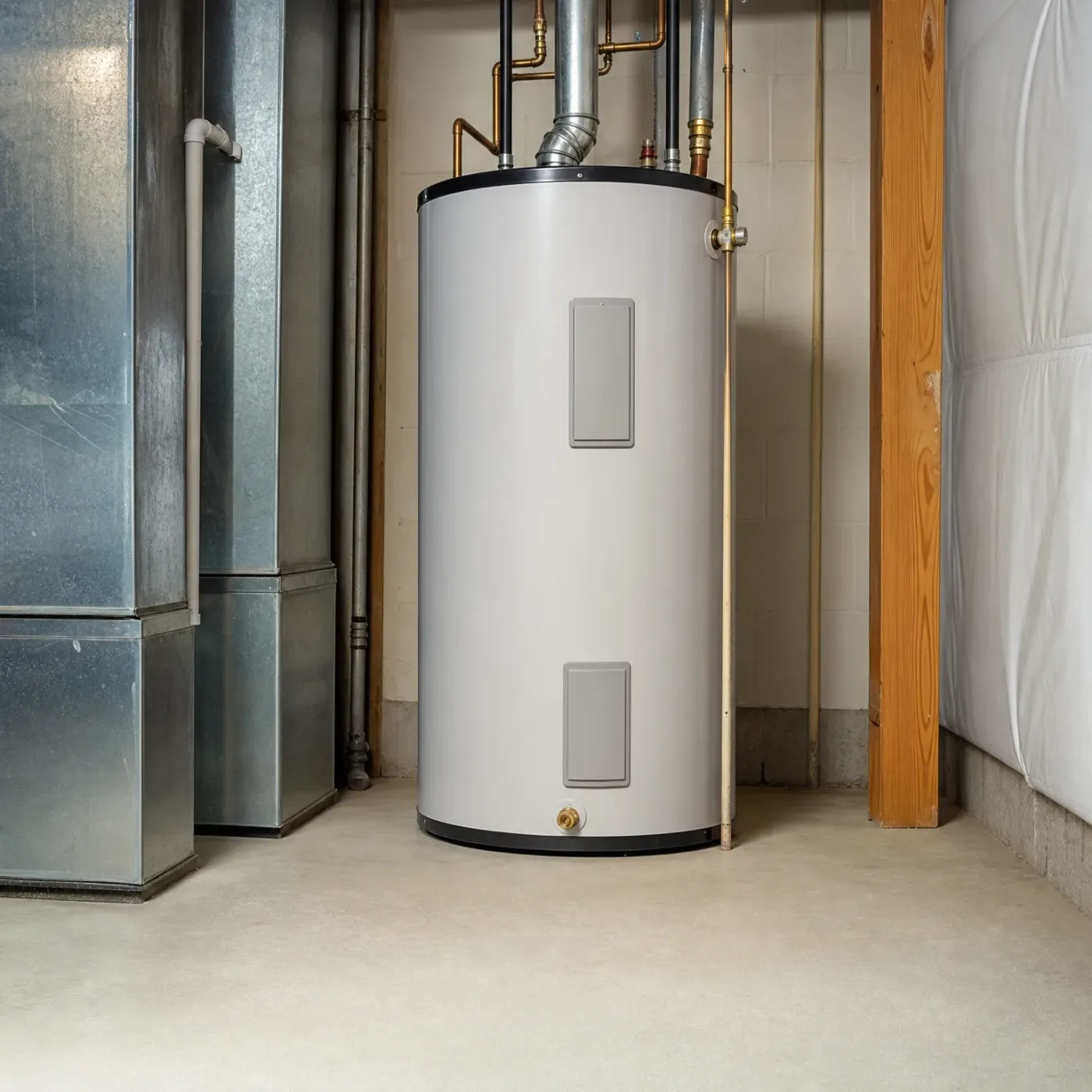
A white cylindrical water heater with two access panels stands on a concrete floor in a basement corner, beside galvanized ductwork, copper and metal pipes, a wooden post, and a concrete block wall.
After you get your water heater installation

How many people are depending on your hot water?

  • 2.65 people per household on average

    The average Bell County household is 2.65 people, which means most tanks here are sized for a family, not a single person's showers.

  • Half the homes here were built by 1996

    Half the homes in Bell County went up by 1996, so a lot of water heaters are original equipment well past the point of trusting them.

  • 86% of homes heat with electricity

    At 86% electric, odds are good your tank has an element and thermostat inside it, not a gas burner underneath.

ACS 2020-2024

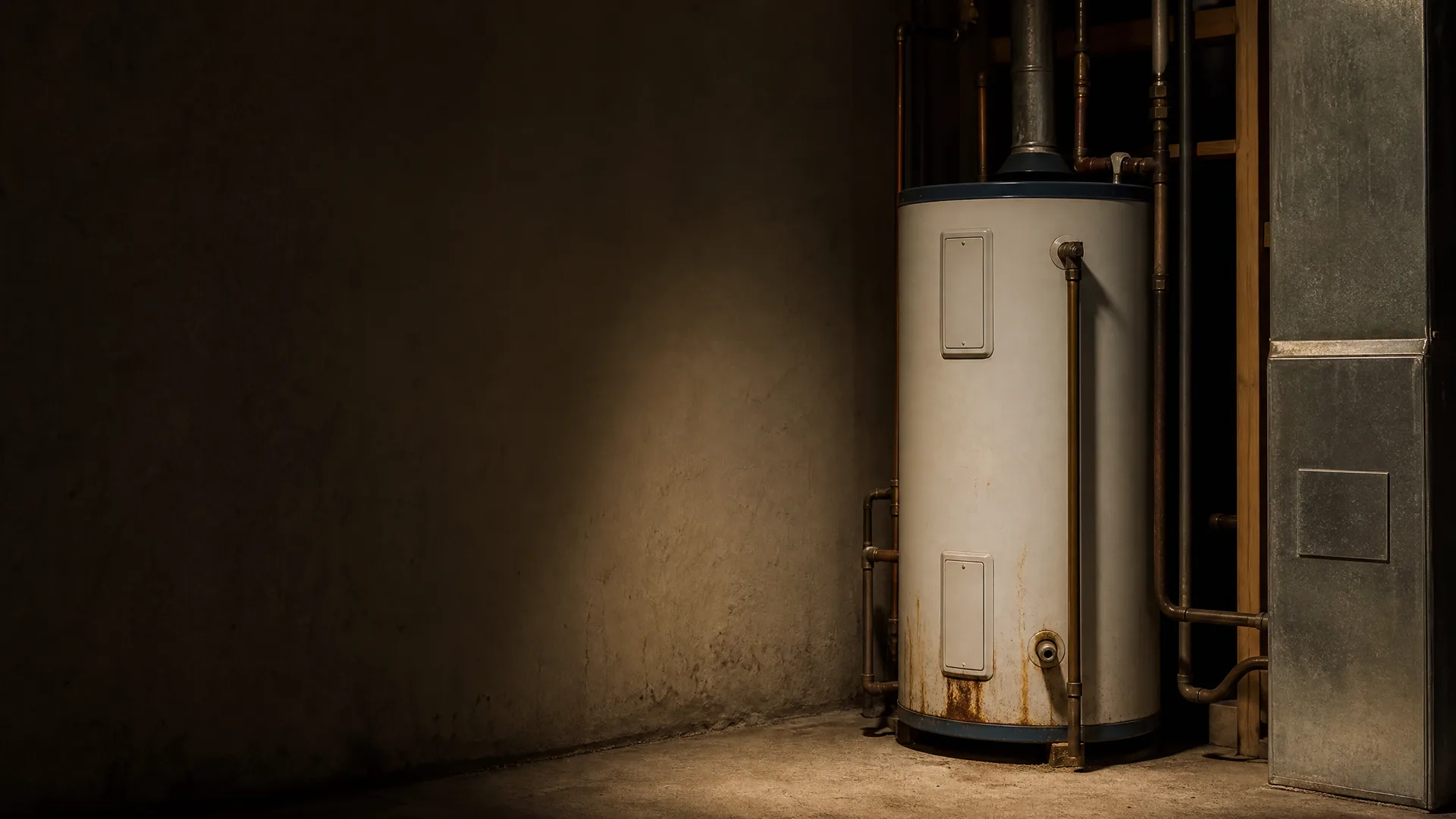
A rust-streaked white water heater with copper and galvanized pipes stands in a dim basement corner beside a metal ductwork unit and bare concrete walls and floor.

The sun's down and the kitchen's quiet behind you. You head out to the utility room to grab detergent and the light hums on over a tank you don't look at much. Rust has bled down the side near the base, a dark trail pooling where the metal meets the floor. You crouch down and touch it, and the concrete there feels damp, though there's no puddle yet, just that one dark line. The air in the room feels heavier than it should for October, almost like the tank itself is sweating. You stand there a second, laundry forgotten in your hand, looking at the rust and doing the math on how long that tank's been running.

A closed laptop and a speckled ceramic mug sit on a wooden table beside a stoneware vase with a leafy branch, with a wooden chair, kitchen counter with cutting board and bowl, and dark upper cabinets in the dim background.

8 to 12 years, and then it's a matter of when, not if

That's the range for a water heater in Killeen and the rest of Bell County. Electric tanks wear from the inside, the anode rod gives out, sediment builds on the bottom, and eventually the tank itself rusts through. A repair can buy time if the unit is still young and the trouble is a single part. Past that 10 year mark, you're mostly waiting to see where the leak shows up first.

When it's time to replace rather than patch, you don't have to spend an afternoon calling around Bell County, explaining the same leak or the same cold shower to four different companies, then sitting with four quotes trying to guess which one is honest. You get matched with one licensed local contractor who already knows what tends to fail in this area's water and this area's weather, and who can tell you straight whether your tank is worth repairing or whether it's done.

A dark ceramic vase holding a leafy green branch sits on a round wooden table, with a blurred cushioned wooden armchair, woven basket, window and shelving with pottery in the background.
A house with a dark standing-seam metal roof, stone chimney and stone-and-stucco gable in the foreground, with green wooded plains and distant low mountains under a partly cloudy sky behind.

Skip the calls to every shop

Describe it once

You're not committing to anything by asking.

A new water heater takes one trip through a licensed installer, not a string of calls and quotes to compare. Submit the request and you're matched with one contractor local to Bell County who installs these every week and knows what a Killeen home needs before they walk in the door.