How long a water heater lasts in Texas

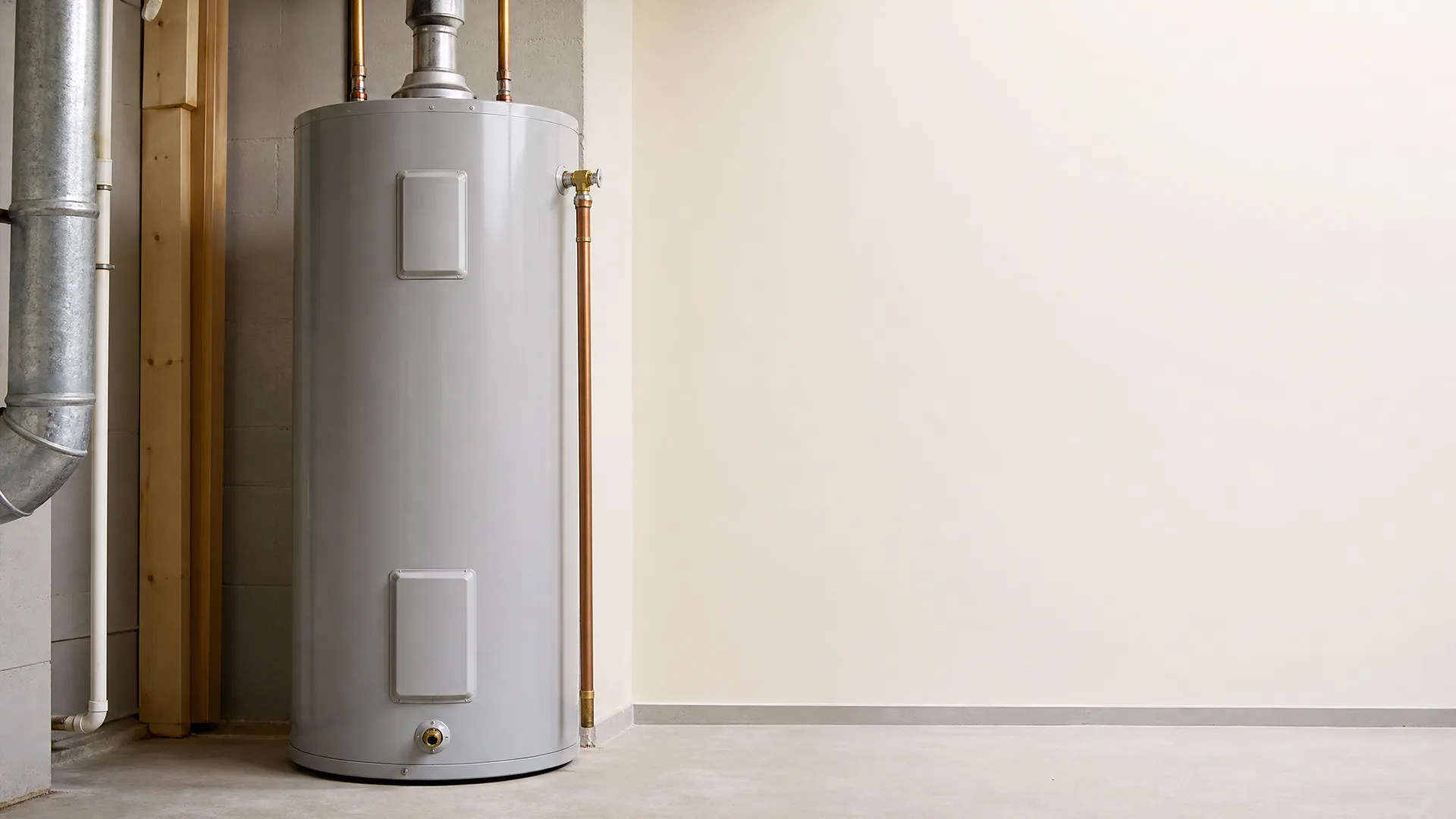
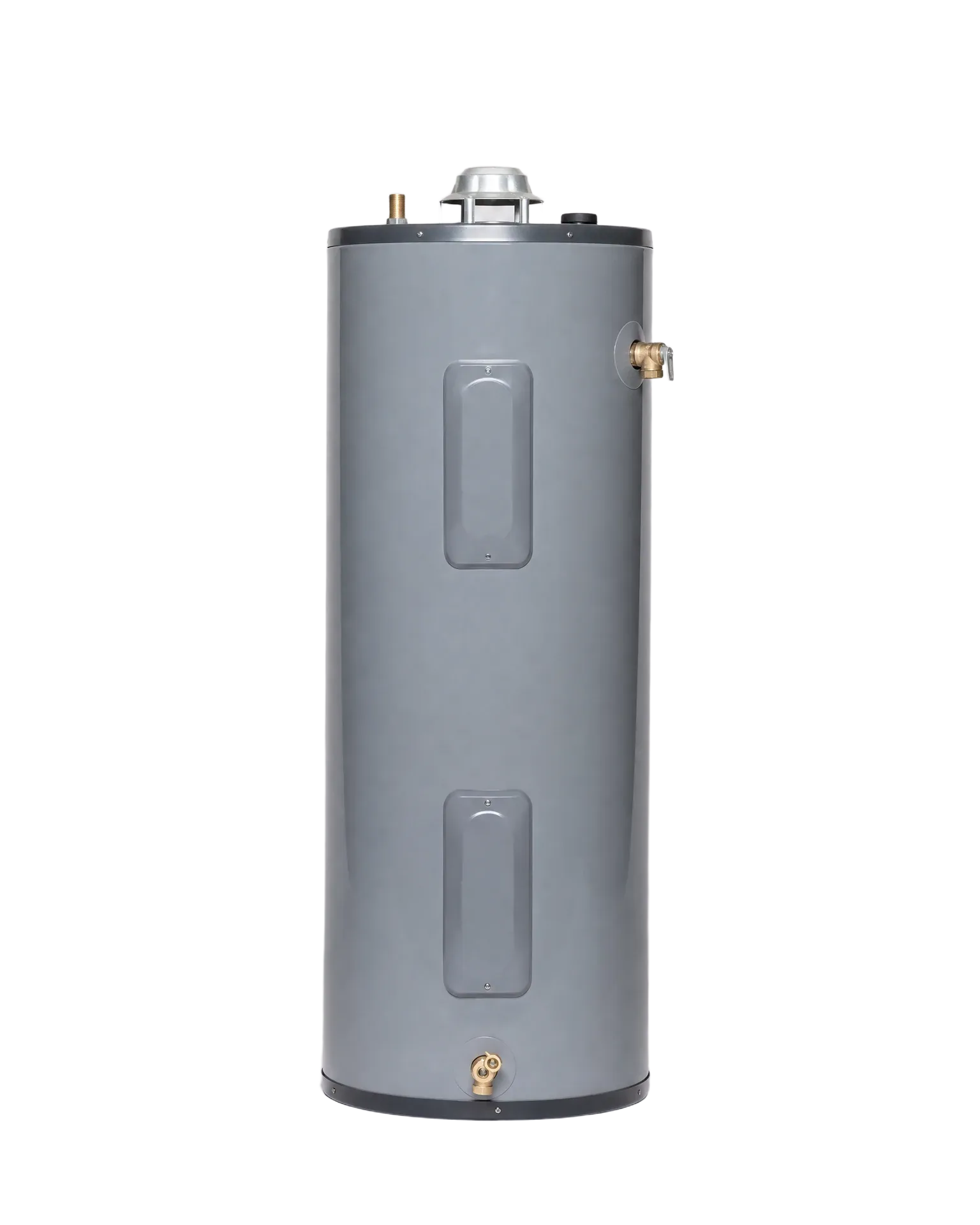
A gray cylindrical water heater with two access panels, a brass side valve, a bottom drain valve, and a metal vent cap on top, photographed against a plain light background.
Get my match

How long does a water heater last in Texas?

You're probably asking because yours is getting up there in years, or it's already giving you trouble, water that won't stay hot, a popping sound from the tank, rust at the fittings. Most homeowners don't think about their water heater until it starts acting up, and then the question is whether it's worth fixing or whether it's on its way out for good.

About 8 to 12 years, often less in Texas

Most tanks are built to last 8 to 12 years, but the heat here pushes them toward the shorter end of that range. Most homes in Texas heat water with electricity, and an electric tank still has to work harder when the incoming groundwater runs warm for most of the year, since the unit isn't doing as much lifting to reach your set temperature but the sediment and mineral buildup inside the tank still accumulates year-round without a break. By year 8 or 9, it's worth checking the tank for rust around the fittings or a pilot of rusty water, since those are the signs that it's near the end rather than just due for maintenance.

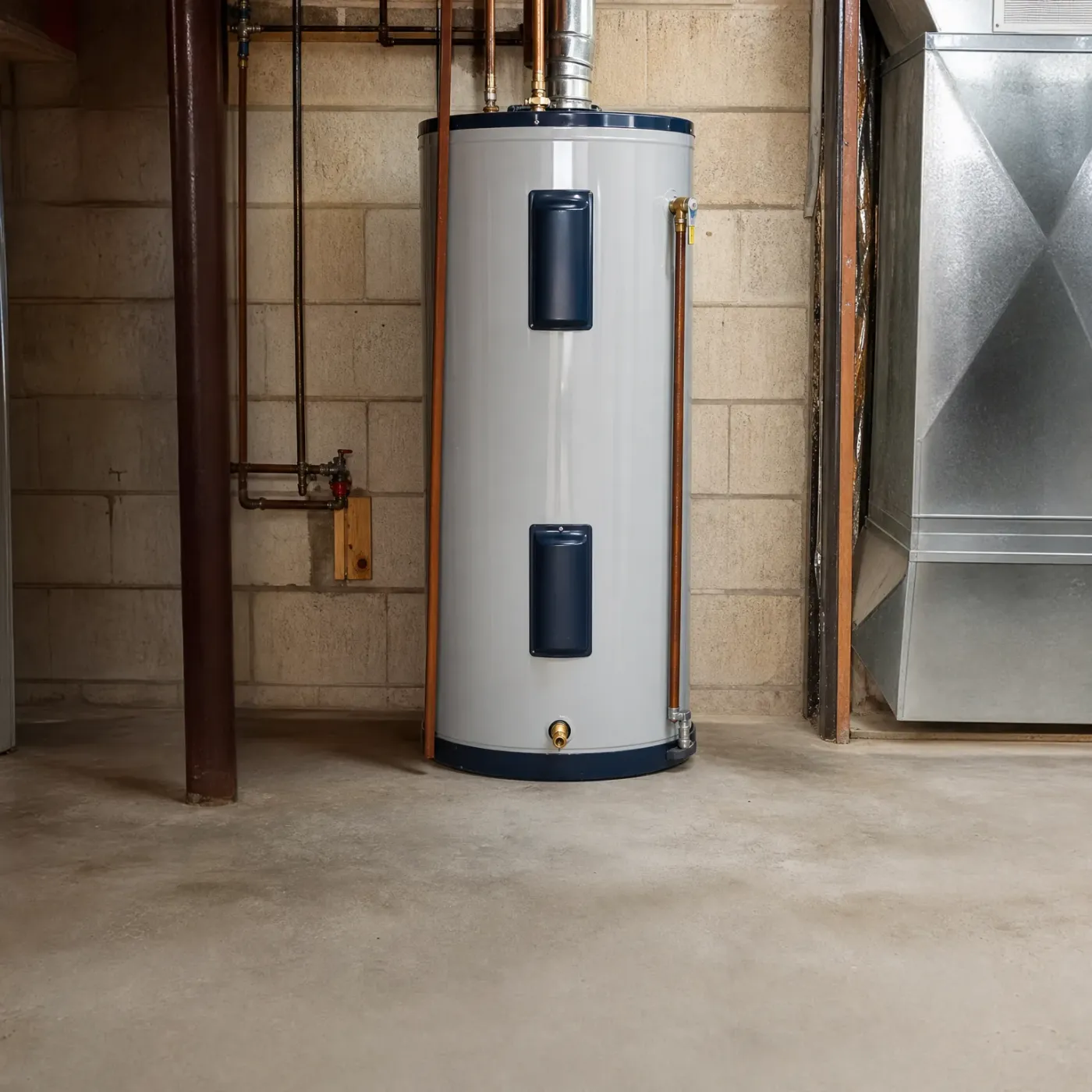
A white cylindrical water heater with two dark access panels stands on a concrete basement floor against a concrete block wall, with copper pipes, a flue duct above, and sheet metal ductwork at right.

Working the way it should

A water heater that's doing its job runs quiet. No rust at the fittings, no popping from the tank, no streaks on the floor around the base. Water comes out hot and stays that way, whether it's running for a shower or filling the sink.
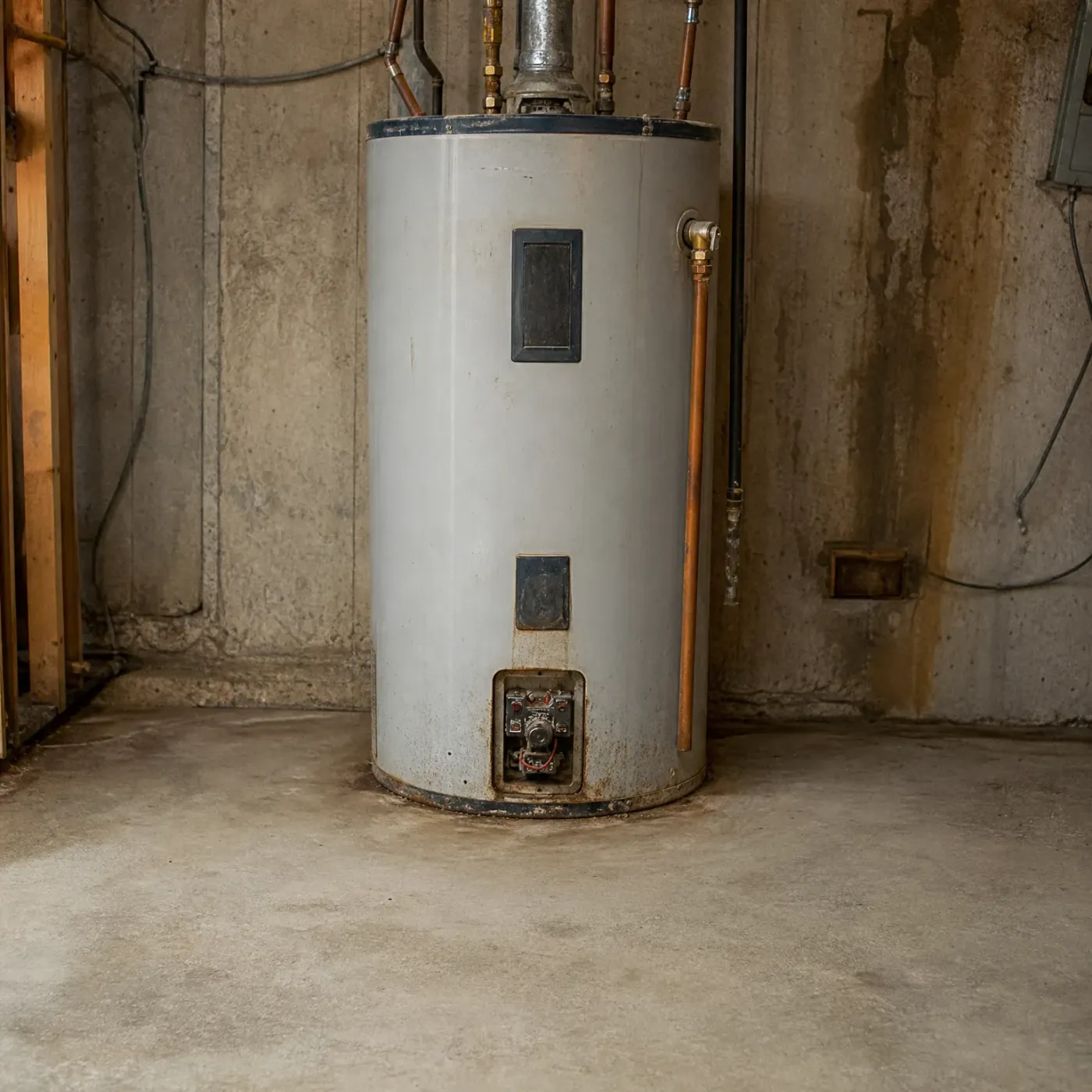

A white cylindrical water heater with copper piping and a gas control valve stands against a stained concrete basement wall on a bare concrete floor.

Showing its age

Rust on the tank, wiring connections corroding at the top, panels that don't sit flush anymore. Once a water heater looks like this, it's not a question of if it fails, it's when. Replacing it before that happens means you choose the timing, not the tank.

Is your water heater on its way out

You might notice the hot water doesn't last through a second shower, or it runs lukewarm before anyone expects it to. The tank might pop or rumble when it heats, a sign of sediment built up on the bottom. Check around the base for rust or a damp spot, even a small one. A leak there usually means the tank itself is failing, not a part that can be swapped out. Left alone, a failing tank can let go all at once, and with the laundry room or closet it usually sits in, that means water somewhere in the house nobody wants it.

A woman with long wavy brown hair in a grey ribbed sweater sits on a couch indoors, looking toward a window, with a potted palm-like plant and fireplace behind her.
A woman with long brown hair wearing a green V-neck top and beige cardigan sits on a light sofa, looking off to the side, with a dining table, lamp and framed picture in the background.
A woman with long dark hair in a cream knit sweater sits on a beige sofa indoors, looking toward a bright window with a houseplant and framed picture in the background.
A woman with long dark hair in a green knit sweater sits on a couch indoors, smiling and looking toward a window with a blurred room behind her.

A local pro for your water heater installation

A water heater in Texas works harder in summer than you might think, not for heat but for recovery, since most homes here run on electric elements that take longer to catch up once the tank empties. Add years of sediment settling in the bottom of the tank, and that recovery time only grows. Once a unit is past the age where parts failures start showing up one after another, replacing it costs less in the long run than patching it piece by piece. If yours is showing its age, getting a quote now means you know your options before the tank fails outright and leaves you without hot water on a random morning. Submit the request and let a contractor who installs these regularly look at your situation and tell you what makes sense for your home.

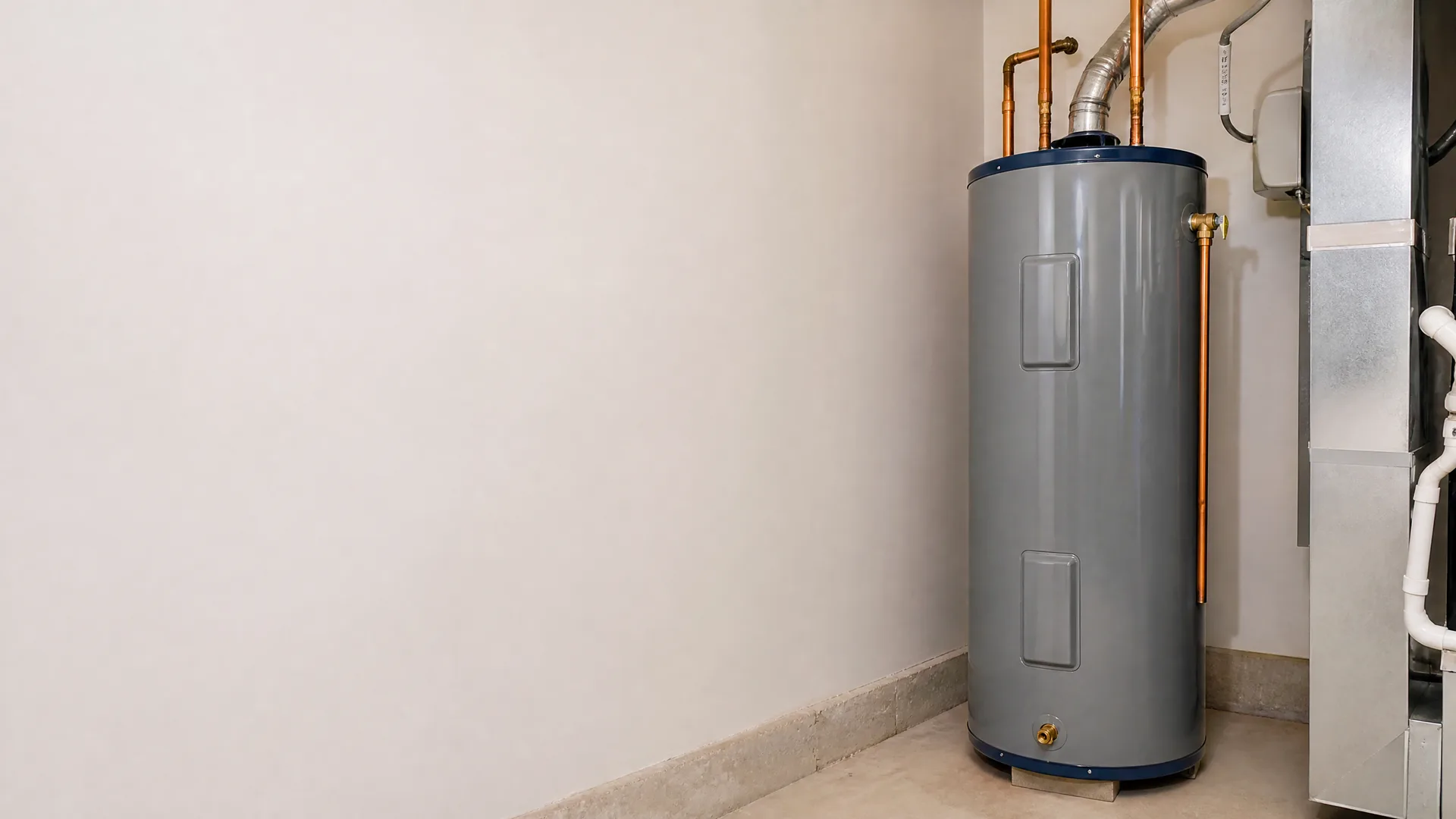
A gray cylindrical water heater with copper pipes stands in a basement corner beside a metal duct and wood framing, next to a plain beige wall and concrete floor.

What sediment does to a tank

Texas water leaves mineral deposits behind, and in an electric tank those settle on the bottom around the lower element. That layer acts like insulation between the element and the water, so the element has to run longer to heat the same amount of water. Run longer, and it wears out sooner. A tank flushed once a year keeps that layer thin. One that's never been flushed is doing more work than it should for every gallon it heats.

A gray cylindrical water heater with copper pipes stands in a corner of a basement utility room beside metal ductwork and white PVC piping.

What the anode rod does

Inside the tank, a metal rod draws the corrosion that would otherwise eat into the steel. It's built to wear down first, and once it's gone, the tank itself starts to rust from the inside. There's no way to see this happening from outside the tank. A rod checked and replaced before it's fully spent can add real years to a tank; one left alone until the tank fails can't be fixed at all, only replaced.

61.2% of homes statewide heat with electricity

Most Texas homes run electric water heaters, same as yours probably does. Electric elements heat slower than gas burners, so a tank already carrying sediment has to lean on those elements even longer just to keep up.

ACS 2020-2024 5-year B25040

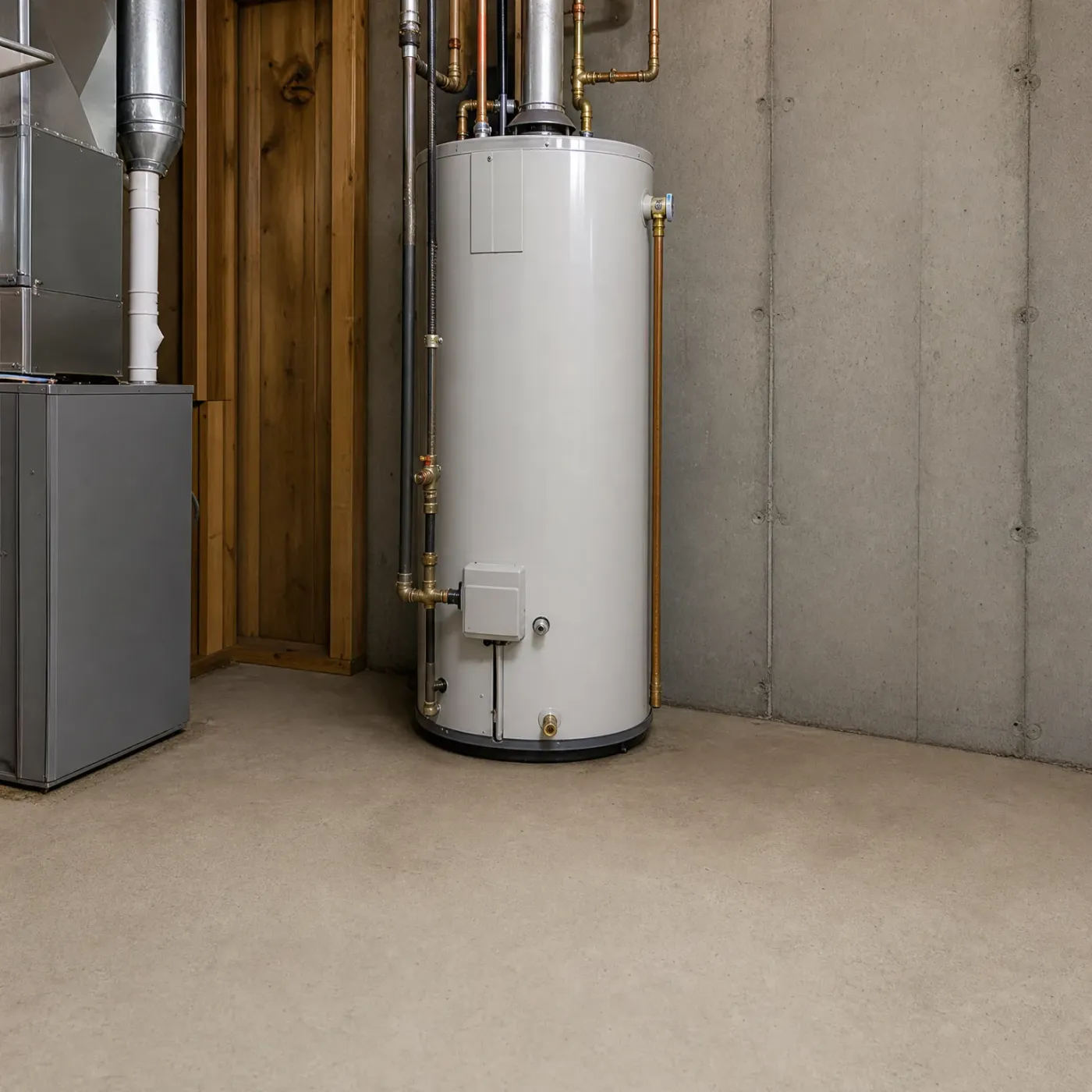
A white cylindrical gas water heater with copper and steel pipes stands against a concrete basement wall beside a gray furnace and wood-paneled wall.

Running as it should

A gas water heater like this one sits quiet, with the pipes overhead doing their job and nothing dripping below. The tank heats on demand instead of waiting on an element, so recovery isn't the strain it is for electric. No rust on the jacket, no stains on the concrete underneath.

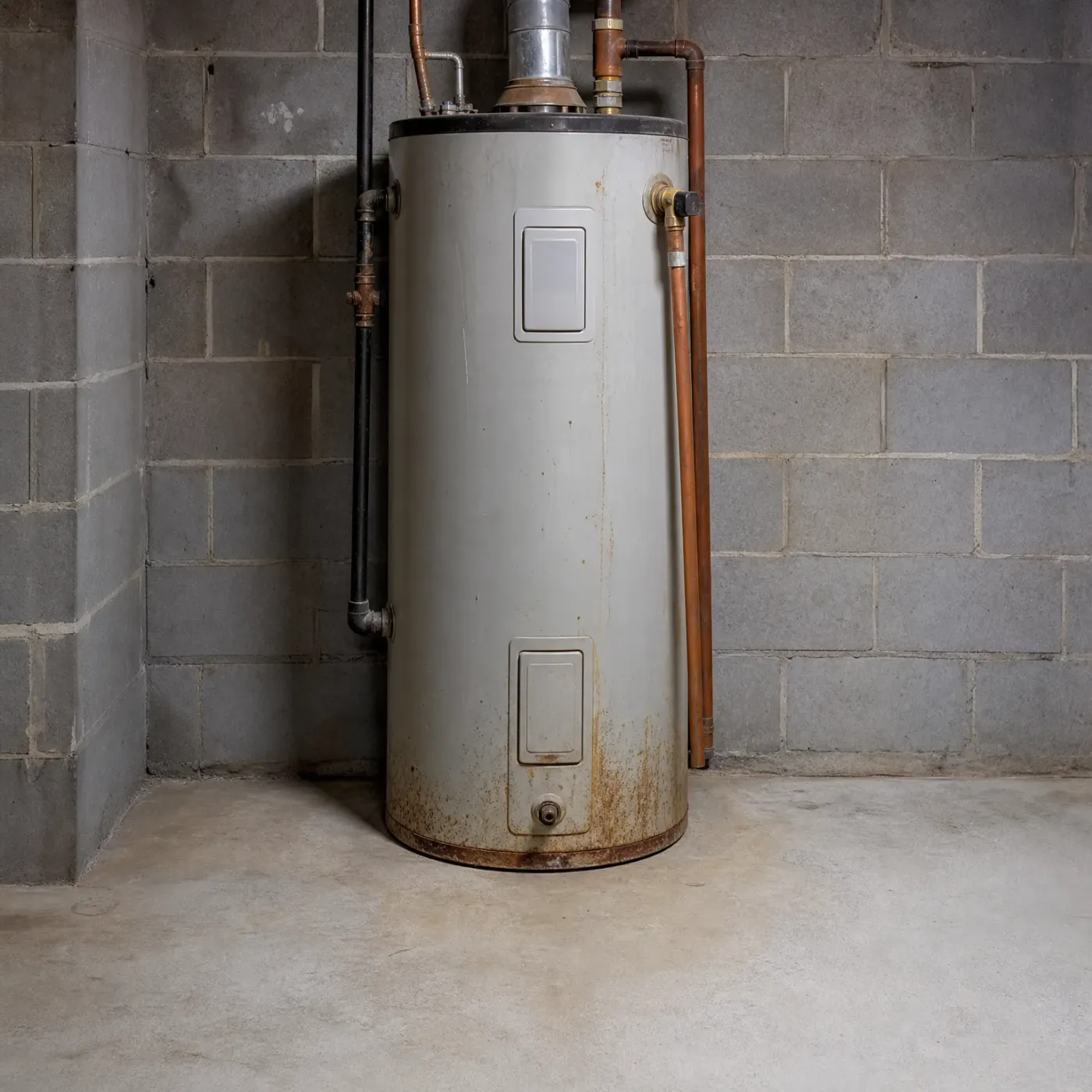
A rust-streaked cylindrical water heater with copper and black metal pipes stands in a concrete-block basement corner on a bare concrete floor.

Past its years

Rust has worked its way across the base and up the seams here, the kind that doesn't wipe off. A tank in this shape is likely leaking already or close to it. Once the steel starts going at the bottom, there's no fix for it, only a replacement before it lets go on its own.

A smiling man in a denim shirt and white t-shirt stands in an open dark doorway of a stucco house, facing a woman with long brown hair and a green jacket seen from behind in the foreground.

Most last eight to twelve years here

That's the range for a water heater in Texas, electric or gas, assuming nothing's cut it short. Sediment, hard water, and the extra work electric elements do all push a tank toward the early end of that window instead of the late one. If yours is past ten years, or it's already showing the signs covered above, it's worth finding out where it stands before it fails on its own schedule instead of yours.

A water heater that quits does it without warning, usually when someone's mid-shower or the house is full of people who need hot water on the same schedule you do. You don't have to track down a contractor yourself to get ahead of it. Answer a few questions about your water heater and your home, and a contractor who installs them in Texas will reach out to you directly. From there, it's one less thing sitting on your list.

Interior corner of a room with a window and sheer curtain at left, a gray upholstered sofa with a cushion at right, and a round wooden table holding stacked books and a round vase with an olive branch.
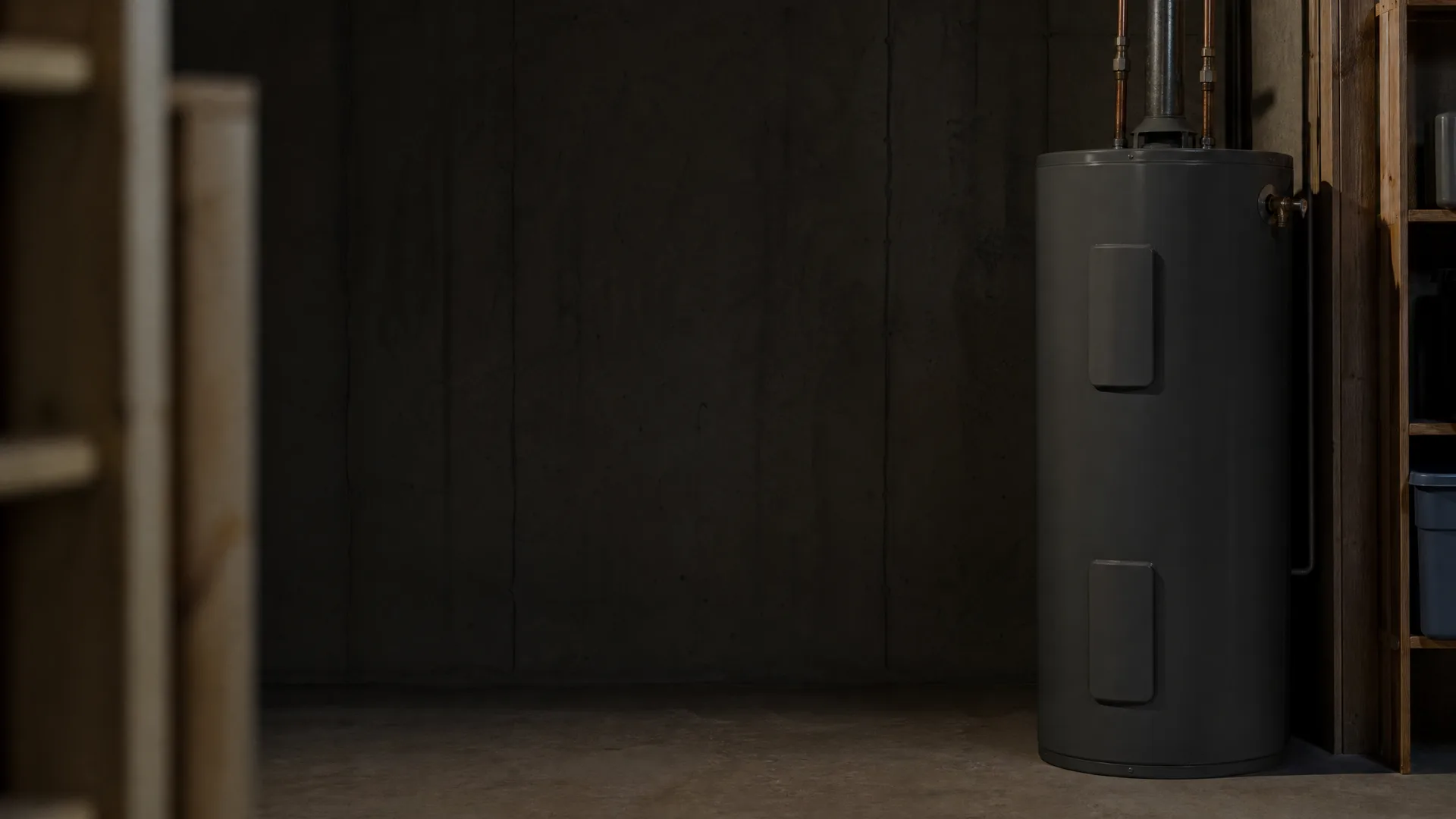
A dark gray cylindrical water heater with copper pipes at its top stands against a concrete basement wall, with wooden shelving and framing in the foreground at both edges.

Get the right pro for your water heater

Send the form and the search for an installer is over.

Step 1 of 3: Equipment