



How often to flush a water heater in El Paso, TX

Send my request

El Paso water is hard, and that means sediment builds up in the tank faster than it does in most places. Left alone, it settles at the bottom, and the heater has to work through it to heat your water. That shows up as a higher bill, a tank that takes longer to recover, and eventually a water heater that fails well before it should. Flushing it on a regular schedule is the one thing that keeps that from happening, and it's not a job that takes long when someone who does this every week handles it. Find a licensed local plumber through this page and you're done looking. One contractor gets your request, not five, so your phone isn't ringing off the hook with sales calls. Send the form and let someone who knows El Paso's water take it from there.

How often should I flush my water heater in El Paso?

With El Paso's hard water already working against your tank, you want a number you can put on the calendar instead of guessing. Most people don't think about flushing a water heater until the bill creeps up or the water takes longer to heat, and by then sediment has had a head start.

Flush your water heater once a year

Once a year is the right pace for a home on El Paso's water. The hardness here means minerals drop out of the water and settle at the bottom of the tank faster than they would somewhere with softer supply. A yearly flush clears that layer out before it packs down and hardens, which is what makes it harder to remove later and harder for the heater to work through. Skip a few years and the sediment can insulate the bottom of the tank from the burner or element, so the heater runs longer to do the same job. A tank flushed every year keeps that layer thin enough that it never gets the chance to cause that problem.

A smiling man in a navy long-sleeve shirt sits at a wooden table in a kitchen and dining area, with a ceramic mug, a potted plant, and a sliding glass door behind him.
A smiling bearded man in a green henley shirt stands at a kitchen island with a gray mug, looking off to the side, with a dining area and shelves blurred behind him.
A smiling bearded man in a navy sweater sits at a white kitchen island with a ceramic mug, with open shelves, potted plants and a range hood behind him.
A smiling man in a dark olive long-sleeve shirt sits in a kitchen beside a counter with a dark mug, with a dining table, sideboard and hallway visible in the blurred background.

Flushing It Yourself vs. Having It Flushed

Flush it yourself

  • You control the schedule and can do it twice a year without waiting on anyone's calendar.
  • It costs you nothing but the time, usually under an hour once you've done it a couple of times.
  • El Paso's hard water means sediment comes back fast, so you'll want to stay on top of it every few months.
  • If you've never drained a tank before, the valve can be stubborn, and old sediment sometimes clogs it on the first try.
  • You won't get a second set of eyes on the anode rod, the pressure relief valve, or early signs of corrosion.
  • A gas unit means working around the pilot and burner assembly, which raises the stakes if something's off.

Have it flushed

  • A contractor who works on El Paso's water all year knows how much sediment to expect in your tank and how to clear it without forcing a clogged valve.
  • The visit usually covers more than the flush, including a check of the anode rod and the pressure relief valve.
  • You're matched with one local, licensed contractor, not a handful of companies competing for the job.
  • It takes the task off your list entirely, since once the request is sent, finding someone to do it isn't your job anymore.
  • If the tank shows early wear from the hard water, it gets caught during the visit instead of after it fails.
  • You pay for the service call, where flushing it yourself costs only your time.
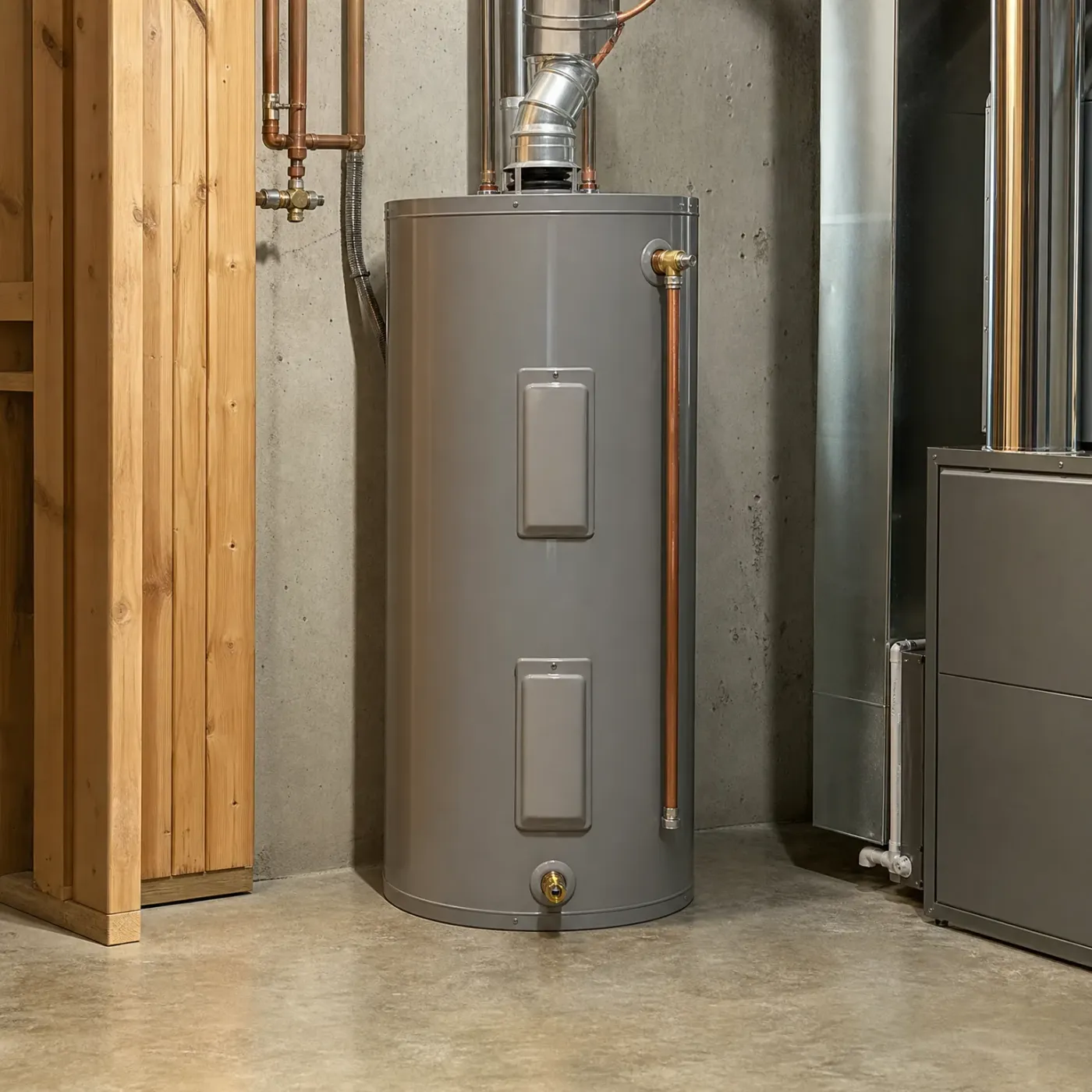
A gray cylindrical water heater with two access panels and copper piping stands against a concrete wall in a basement, beside wood framing and metal ductwork.

Flushed on schedule

This is a tank that gets flushed twice a year. The fittings are clean, the valve seats right, and the water runs clear within a minute or two. It heats water on the time you'd expect and holds its rated capacity, because there's no sediment layer eating into the tank.
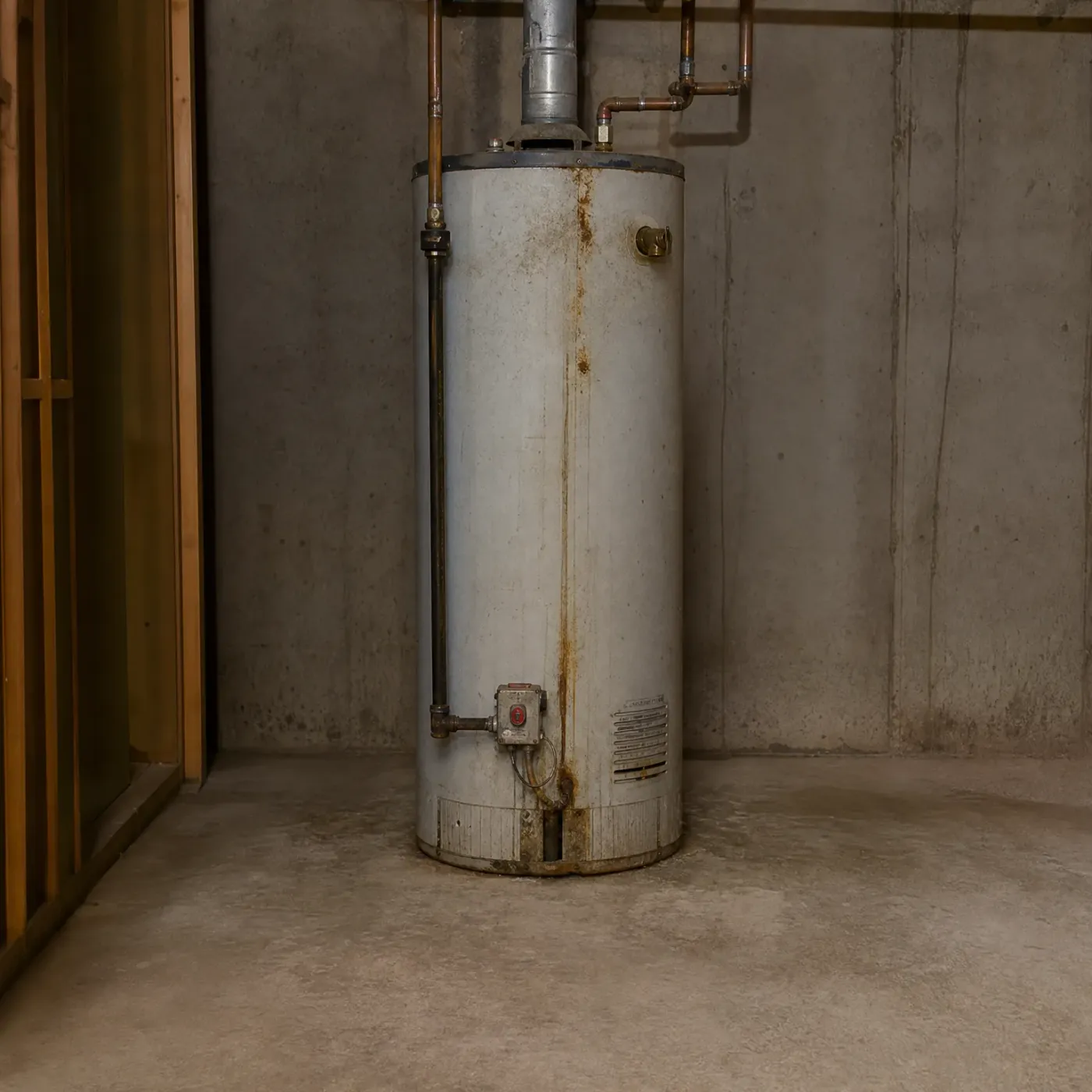

An aging rust-streaked gas water heater with copper and galvanized pipes stands against a bare concrete basement wall beside wooden stud framing.

Left alone too long

This is what El Paso's hard water does over a few years of skipped flushes. Sediment bakes onto the bottom of the tank, rust creeps in around the fittings, and the heater has to run longer to make the same hot water. Left this way, the tank fails well before it should.

A smiling man in a dark blue T-shirt sits on a light gray sofa in a living room with a wooden shelf and window behind him, with a laptop edge visible in the foreground.
A bearded man in a plaid flannel shirt sits indoors looking out a window at snow-covered trees, with a steaming mug on the sill and wooden kitchen shelves behind him.

It's off your list after this

A licensed local pro takes the request for your water heater tune-up.

Asking costs nothing, and the choice to hire stays yours.

What's Actually Happening Inside the Tank

  • Sediment settles at the bottom of the tank because that's where the burner or lower element sits, so that's where the heat has to push through first.
  • A drain valve flush pulls loose grit out through the hose, but packed, caked sediment on the tank floor often needs the water agitated or broken up first.
  • Shutting off the cold supply and letting the tank drain fully before refilling clears air pockets that otherwise cause knocking in the pipes.
  • On a gas unit, the thermocouple and burner assembly sit right under the tank, so sediment buildup there insulates the water from the flame directly above it.
  • An electric unit has a lower heating element sitting inside the sediment layer itself, which is why a crusted element burns out long before the tank fails.
  • Running the drain valve for only a minute or two often just stirs the top layer of sediment without actually removing it from the tank.

El Paso's hard water drops sediment to the bottom of the tank, and that's exactly where the heat source sits. On a gas water heater, the burner fires from underneath, so a layer of sediment acts like a plate between the flame and the water it's supposed to heat. On an electric unit, the lower heating element sits down in that same layer, surrounded by it, which is why electric elements tend to fail well before the tank itself gives out. Opening the drain valve for a minute or two feels like progress, but it usually only moves the loose grit sitting on top. The packed layer underneath stays put unless the water inside gets agitated or broken up as it drains, which is why a full, unhurried flush matters more than a quick rinse. Draining the tank all the way down before refilling it does something else too. It clears air that gets trapped in the lines, and that trapped air is what causes the knocking you sometimes hear in the pipes afterward. None of this is complicated once you know where to look. The thermocouple, the burner assembly, the lower element: they're all sitting right where the sediment lands first, which is why the same two-sided buildup that raises your bill is also what wears out these parts early.

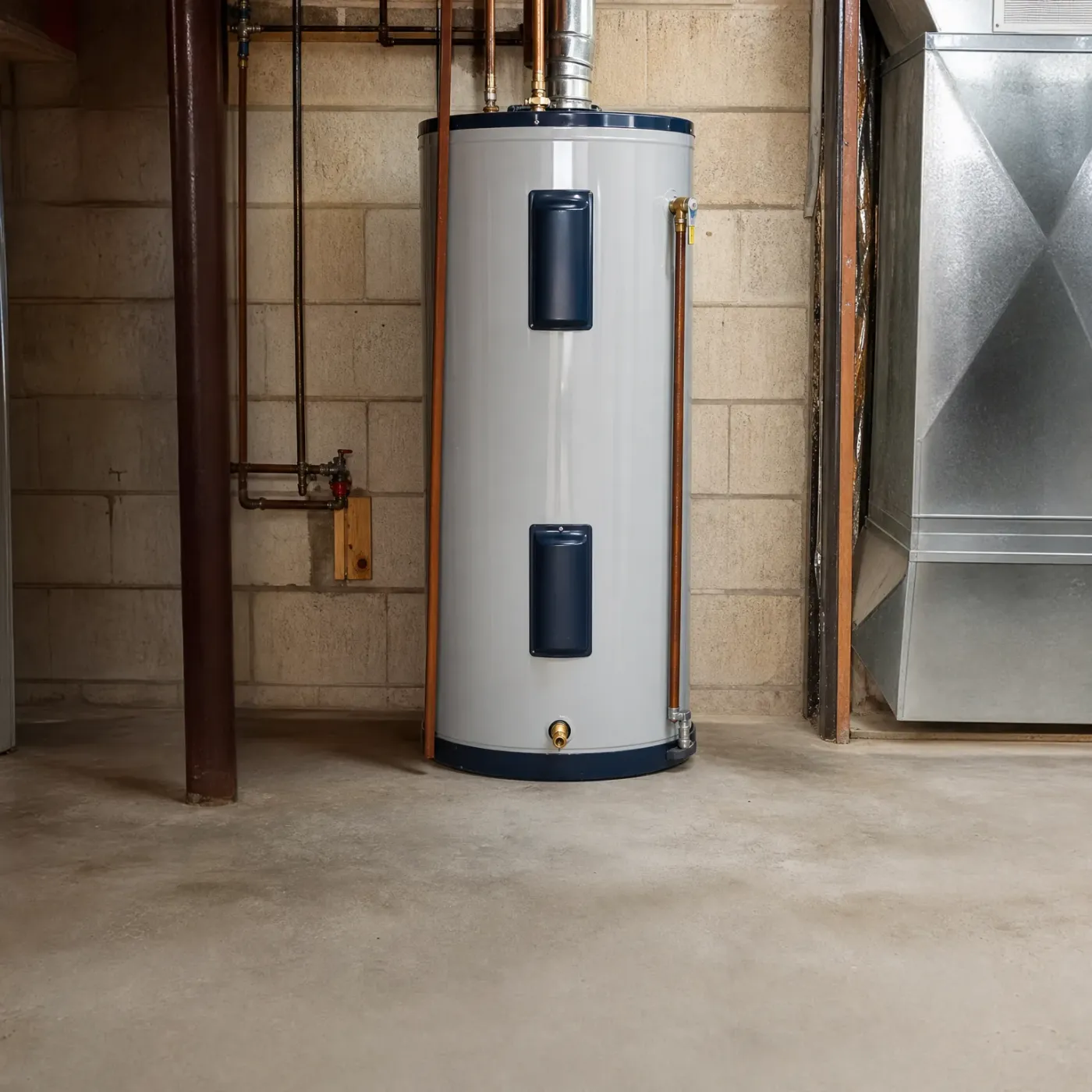
A white cylindrical water heater with two dark access panels stands on a concrete basement floor against a concrete block wall, with copper pipes, a flue duct above, and sheet metal ductwork at right.
A tank on a flushing schedule keeps its fittings clean and the valve seating right, so it draws straight from the gas or the breaker like it's supposed to.
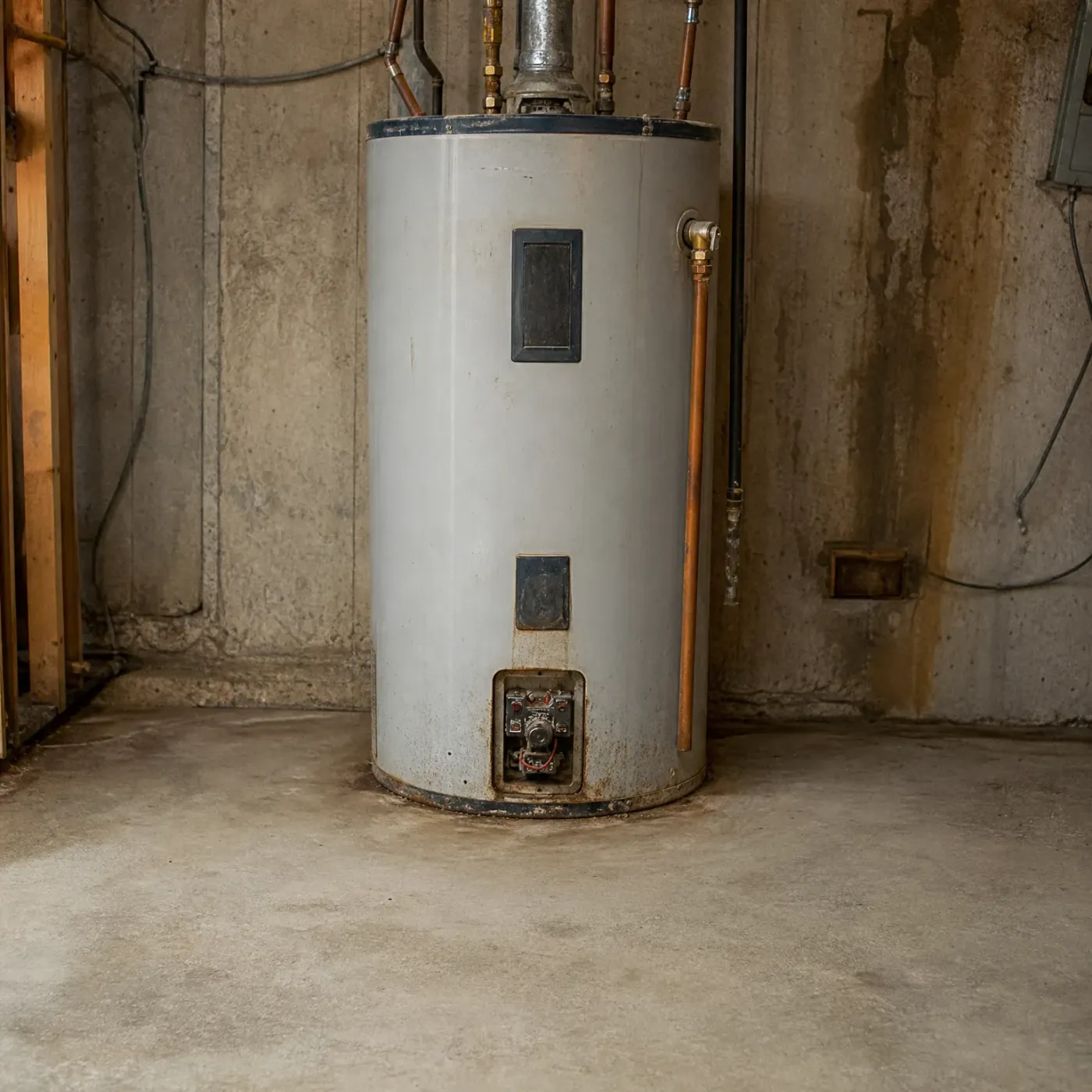
A white cylindrical water heater with copper piping and a gas control valve stands against a stained concrete basement wall on a bare concrete floor.
Rust on the panels and scale creeping up the pipes is years of El Paso sediment the tank was never flushed clear of.

Why does my household's water heater need flushing more than once a year?

  • 2.86 people per household on average

    Most homes here run 2.86 people on average through one tank, so hot water gets drawn down and refilled often, pulling fresh sediment in with every refill.

  • Half the homes here were built by 1988

    Half the water heaters in El Paso County date to 1988 or earlier. An older tank has had more years for sediment to cake onto the bottom, and less of its original lining left to protect it.

  • 71% of homes heat with gas

    Gas heats 71% of homes here. A gas water heater has a burner under the tank, so sediment sits right where the flame has to push heat through, not off to the side like an electric element.

ACS 2020-2024

What a flush actually clears

Opening the drain valve lets loose sediment run out with the water, the fine grit that settled since the last flush. That part is quick and it works. What it won't touch is sediment that's already packed hard against the tank floor and bonded there. Once it's reached that state, a flush pushes water around it instead of through it. That's why the twice a year schedule matters more here than in places with softer water. Catching it loose is the whole job. Waiting lets it set.

Where the heat has to go

The burner on a gas water heater sits under the tank, and the lower element on an electric one sits near the bottom too. Either way, the heat has to pass through whatever is sitting on the tank floor before it reaches the water above it. A clean floor means that heat goes straight into the water. A floor covered in sediment means it heats the sediment first, and the water waits its turn. That's the lag you feel as slower recovery between showers.

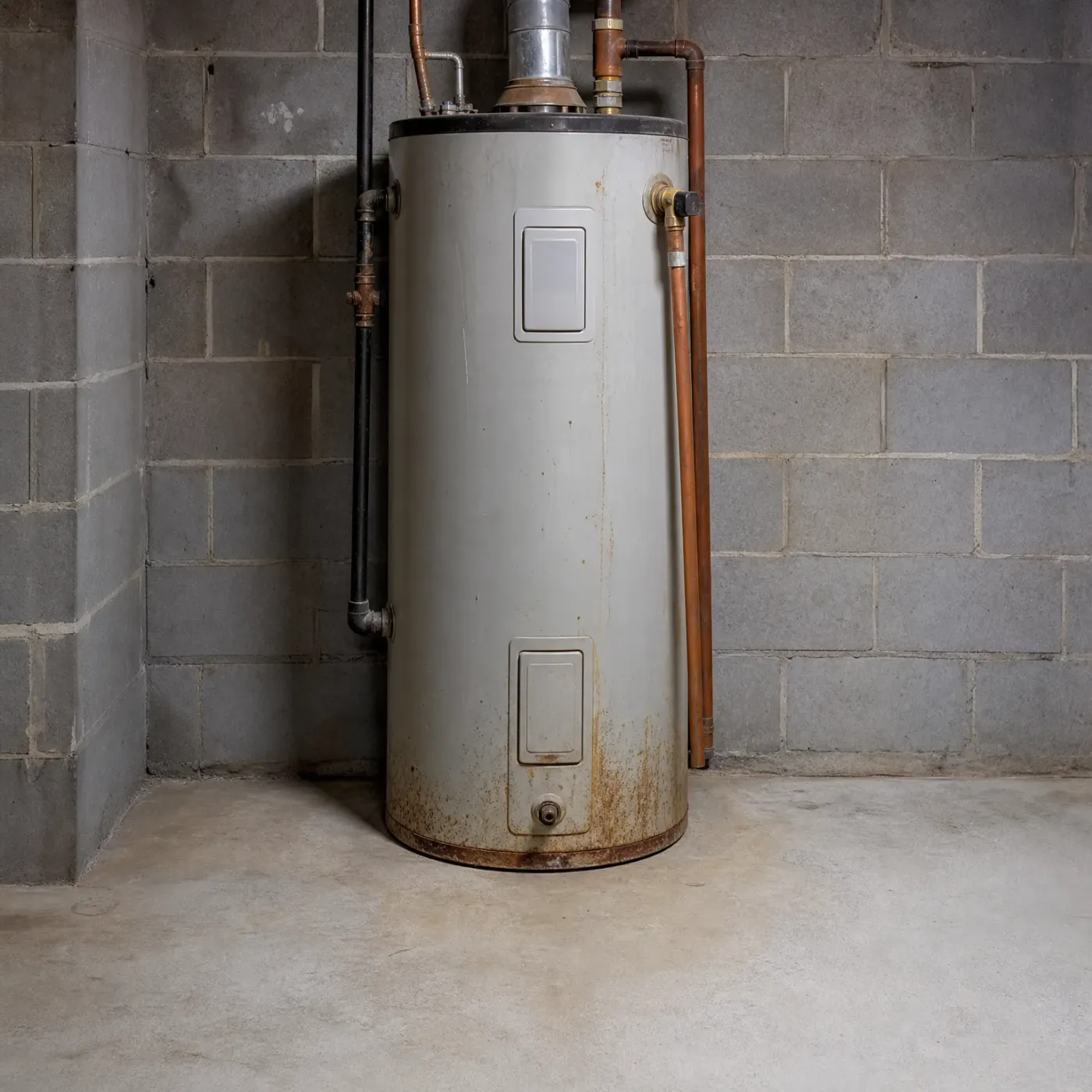
A rust-streaked cylindrical water heater with copper and black metal pipes stands in a concrete-block basement corner on a bare concrete floor.
Before you get your water heater maintenance
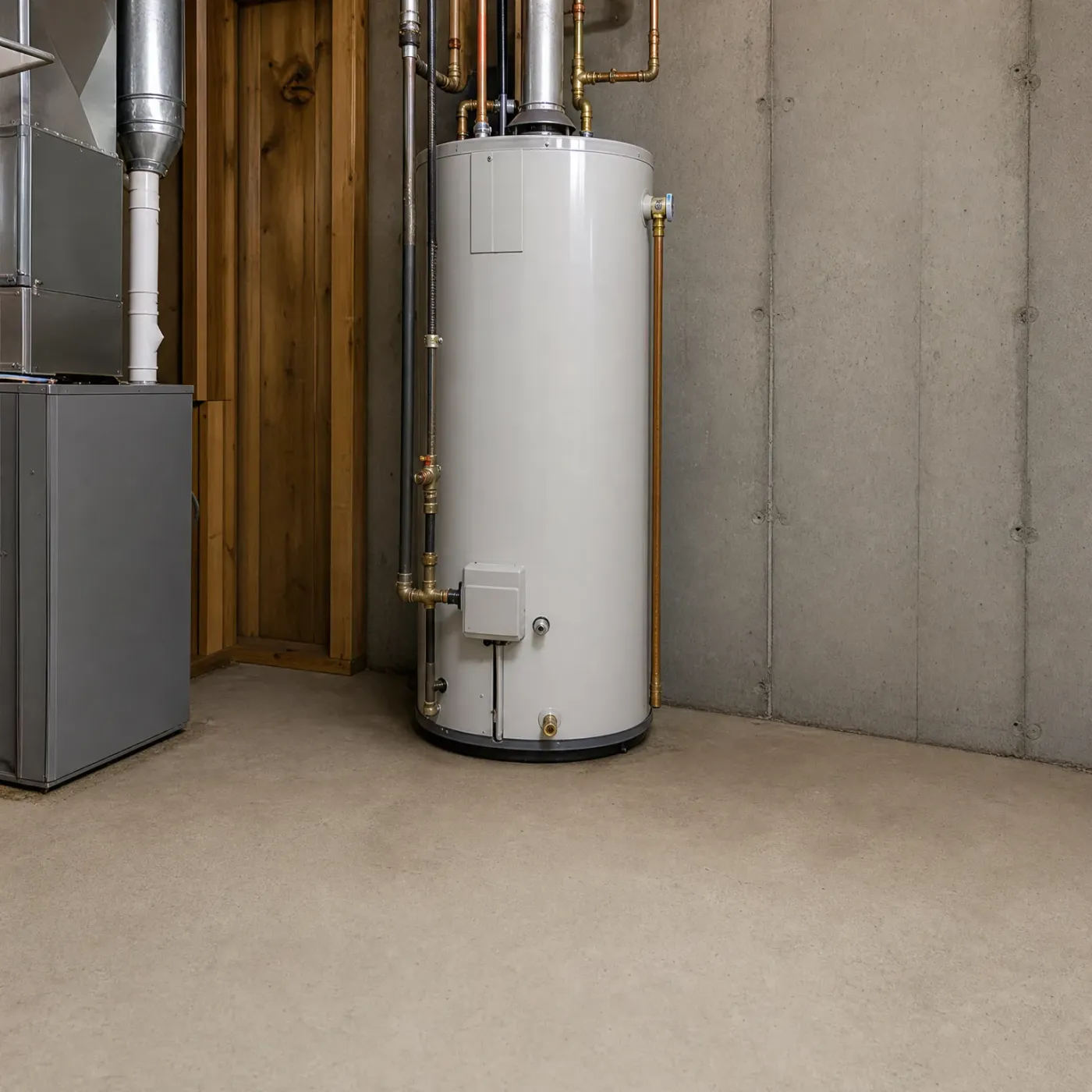
A white cylindrical gas water heater with copper and steel pipes stands against a concrete basement wall beside a gray furnace and wood-paneled wall.
After you get your water heater maintenance
  1. Water sits in the tank until the thermostat calls for heat.

  2. Sediment on the tank floor blocks heat from the burner or element.

  3. A hose on the drain valve runs to a floor drain or outside.

  4. The cold water supply shuts off at the valve above the tank.

Power here costs 14.10 cents per kilowatt-hour

At 14.10 cents per kilowatt-hour, an electric water heater fighting through sediment to heat your water shows up on the bill every month, not just once. A flush keeps the element doing its job instead of pushing heat through a layer of grit, so you're paying for hot water, not wasted power.

EIA-861 2025

Twice a year keeps El Paso's hard water from getting ahead of your tank. That's the number: once around spring, once around fall, and you've covered it. Skip it and sediment packs harder each year until flushing alone won't clear it and you're looking at a repair instead of maintenance. If you'd rather have someone handle it, you're connected with one licensed local contractor, not a handful of companies competing for your call. Someone who works on El Paso's water heaters all year knows this is the one maintenance job hard water makes necessary here, and knows what a tank looks like after a year of sediment versus five. That's the kind of judgment that catches a failing element or a valve on its way out before it becomes a tank you're replacing early. You called up this page with a question, and now you have the answer and, if you want it, someone who can act on it without you having to sort through options yourself.

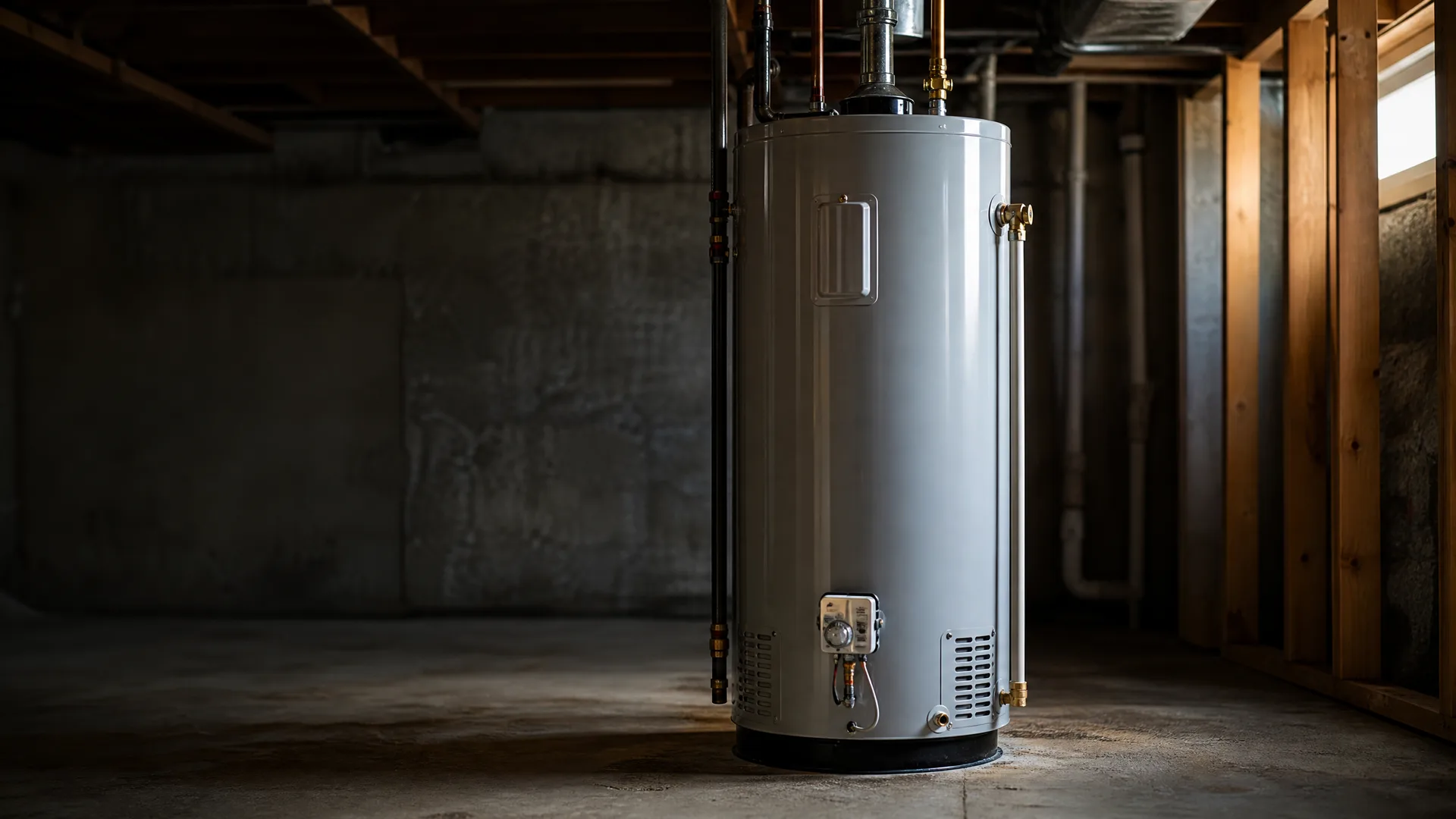
A white cylindrical gas water heater with copper and brass pipe connections stands on a concrete floor in a basement with exposed wooden joists and a concrete wall.

Stop chasing a water heater pro

Step 1 of 3: Equipment