How often to flush a water heater in Killeen, TX

Find a pro near me

Killeen water heaters work year round, and Bell County water leaves scale behind in the tank whether it's July or January. Most homes here run on electric power, and a tank with sediment built up on the bottom has to work harder to heat the same water. You already know you should flush it. What you want to know is how often, and that depends on your water heater, your water, and how it's been maintained so far. A local contractor who services tanks around Killeen every week can look at your specific setup and tell you where you stand. You'll be matched with one contractor, not a handful, so you won't be fielding calls from companies that don't know your address or your unit. Tell them what you have and what you've noticed, and they'll reach out to go over it with you.

Once a year is the right pace for flushing a water heater in Killeen. Bell County water carries enough mineral content that sediment collects on the tank bottom steadily, not seasonally, so an annual flush is what keeps pace with it. Skip it for a few years and that layer thickens into a crust that insulates the bottom of the tank from the burner or the electric element above it. An electric water heater with that buildup has to run its lower element longer to heat the same amount of water, and the element itself wears faster sitting against caked sediment. Gas tanks show it differently, with a rumbling or popping sound as water works its way under the scale. Either way, the fix is the same once a year: drain the tank, clear the sediment, and the unit heats the way it did when it was new. Put it on a yearly schedule, maybe tied to a date you already remember, so it doesn't slip.

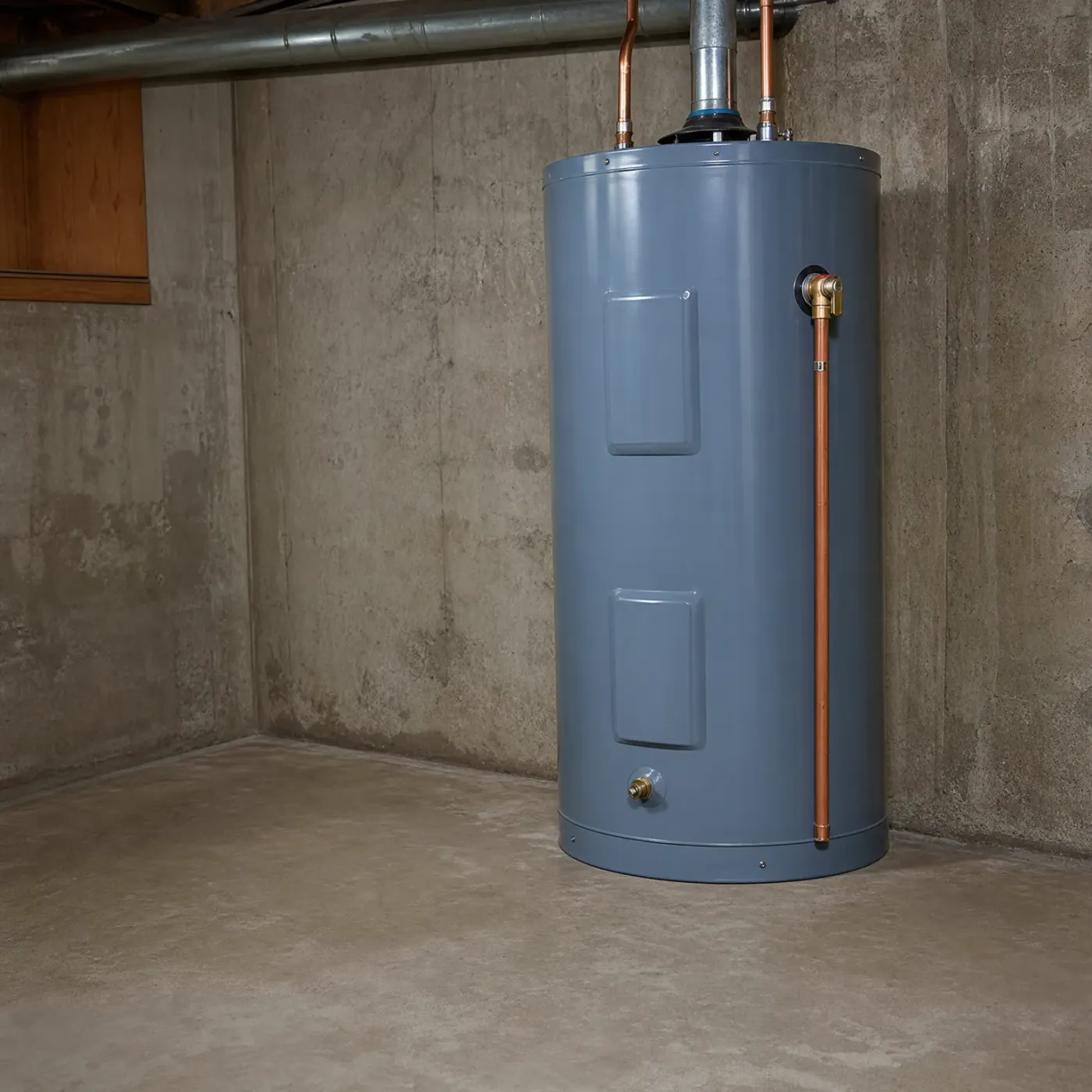
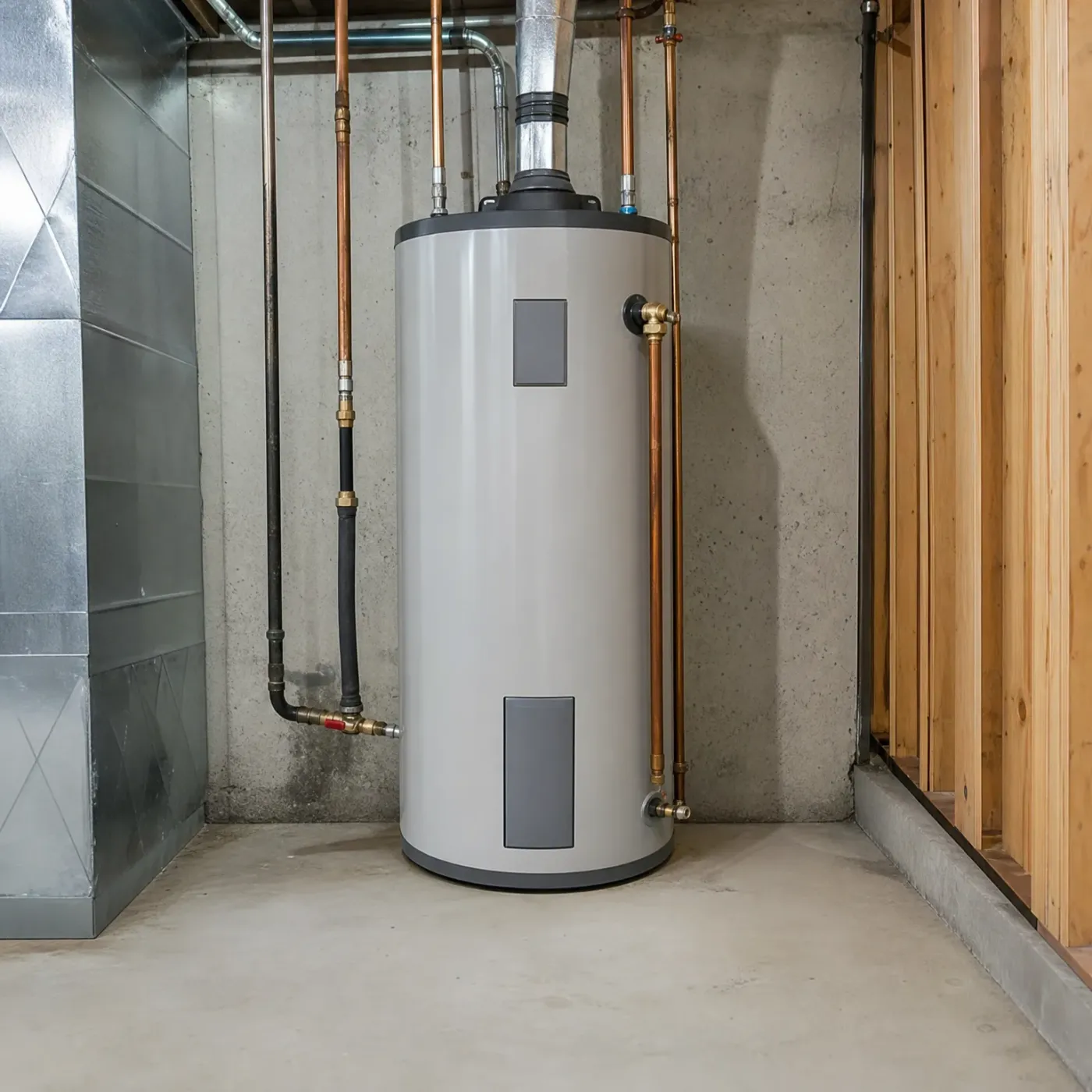
A gray cylindrical water heater standing in a basement corner against a concrete wall, with copper and black pipes, a metal flue, and ductwork nearby, next to wood framing on the right.

Tank that's been flushed

Water comes out clear when you open the drain valve. The tank heats quietly and recovers at the rate it's rated for. Gas and electric units both hold their output when sediment hasn't been given the chance to build up on the bottom.
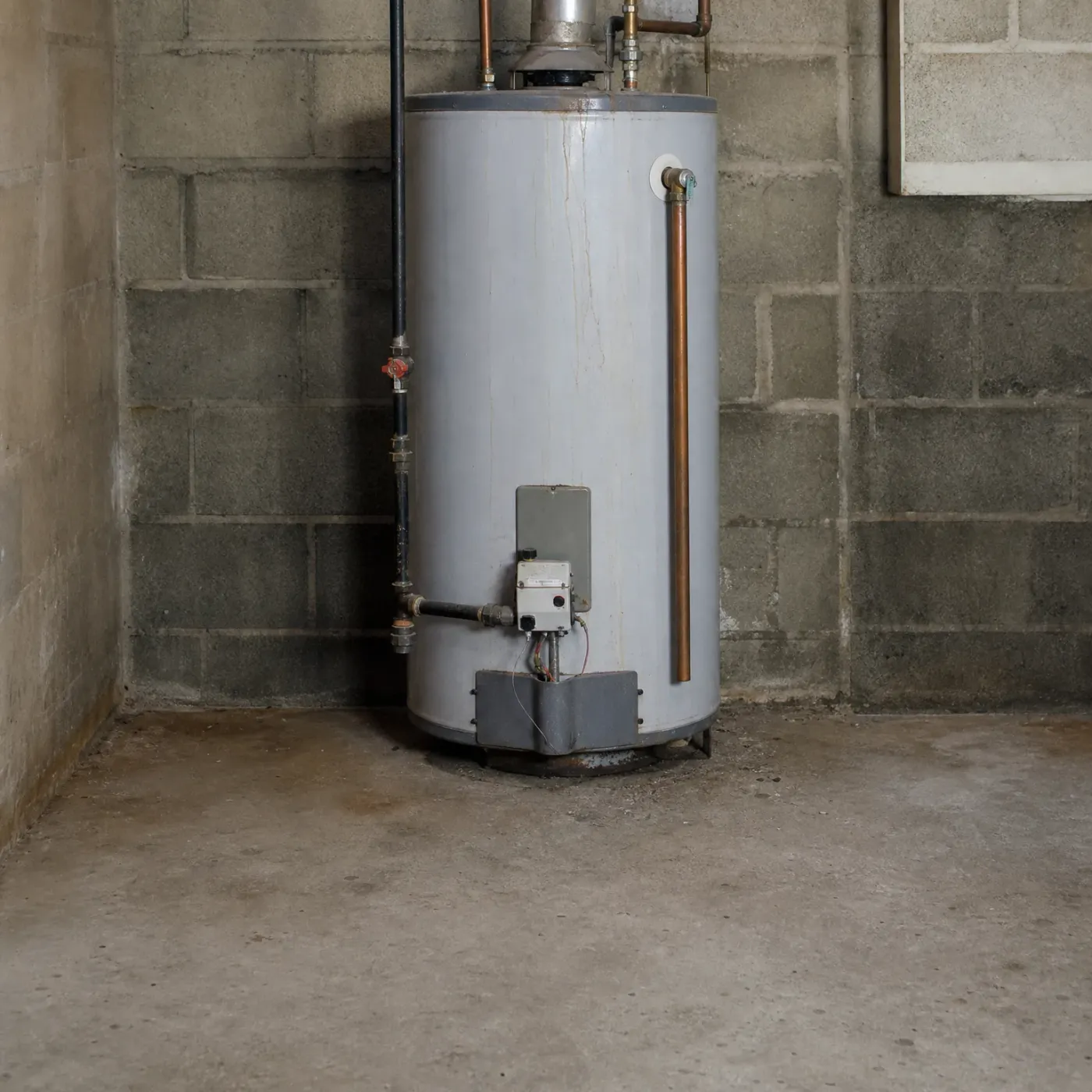

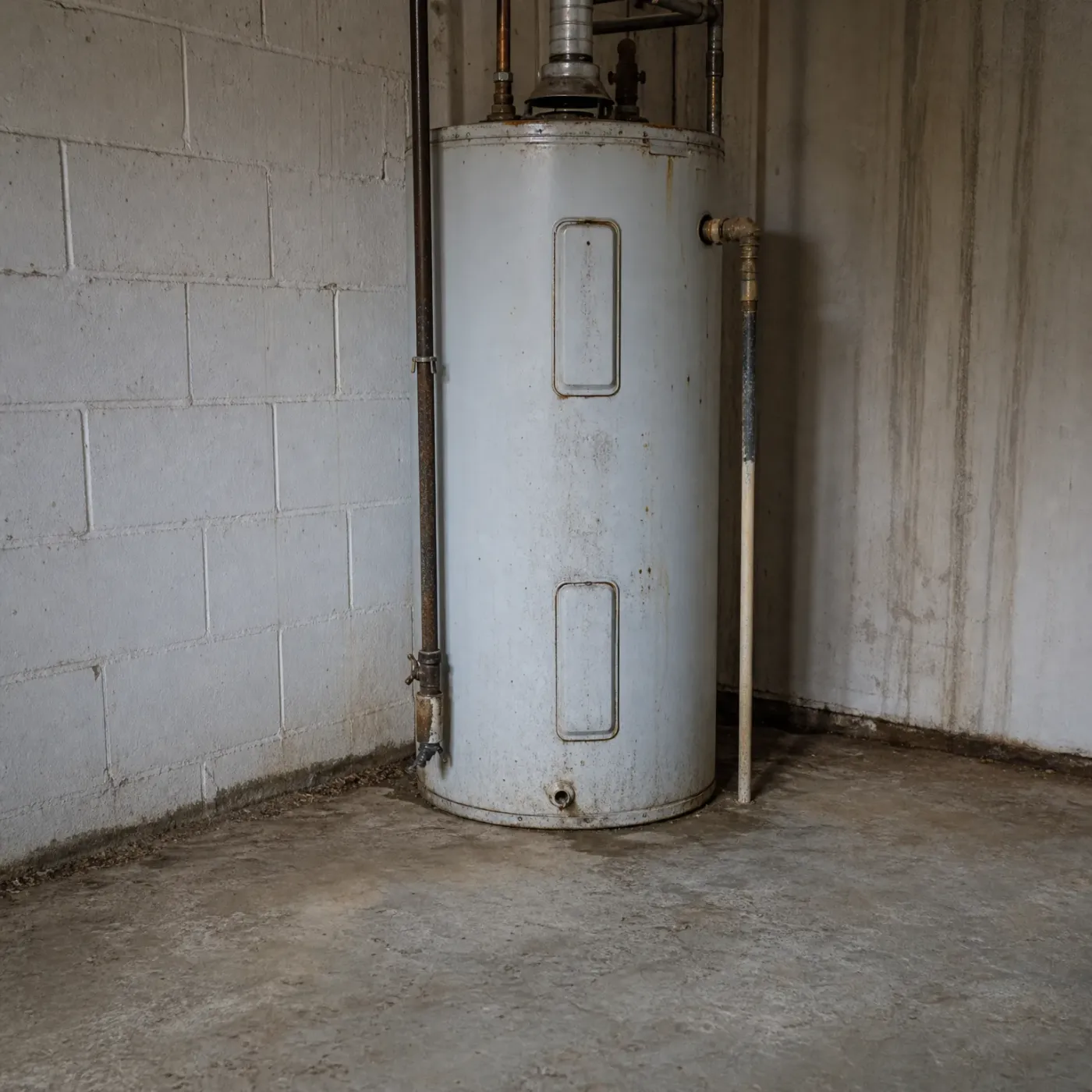
A gray cylindrical gas water heater with copper and black pipes stands in the corner of a basement with concrete block walls and a bare concrete floor.

Tank that hasn't

Sediment sits at the bottom like a layer of sand, between the burner or the lower element and the water above it. The tank takes longer to heat a full load and makes a popping or rumbling sound as water works through the buildup. Left alone, that layer can pit the steel underneath it.

What does your household actually need from a water heater?

  • 2.65 people per household on average

    Bell County households average 2.65 people. That's steady daily draw on the tank, which gives sediment a regular supply of minerals to settle out of.

  • Half the homes here were built by 1996

    Half the homes in Bell County were built in 1996 or earlier. If your water heater came with the house, it's had years to collect sediment on the tank bottom.

  • 86% of homes heat with electricity

    86% of homes here heat with electricity. An electric water heater's lower heating elements sit in the sediment layer first, so buildup affects them directly.

ACS 2020-2024

An older man with gray hair and a beard, wearing a dark coat dusted with snow, stands smiling in a doorway of a warmly lit home with a sofa, lamp and window visible behind him.
An older man with grey hair and a beard, wearing a dark coat dusted with snow, stands in a dimly lit entryway with a ceiling lamp, a side table with two shaded lamps, and a lit fireplace visible in a room beyond.
A bearded older man in a dark snow-dusted coat and scarf stands just inside a home's front door, with a lamp-lit room and snowy window visible behind him.
An older man with gray hair and a beard stands in a doorway of a home, wearing a dark coat dusted with snow, with a lit fireplace and lamp visible in the blurred room behind him.

Power here costs 15.95 cents per kilowatt-hour

At 15.95 cents per kilowatt-hour, an electric water heater working harder to push heat through a layer of sediment shows up directly on your bill. Flushing the tank once a year keeps that cost where it belongs, heating water instead of fighting scale.

EIA-861 2025

A gray cylindrical water heater standing on a concrete floor in a basement corner, with copper pipes and a metal duct running overhead along bare concrete walls.

Clean tank, no rust

This tank sits on a concrete floor with the copper and vent lines still tight and the metal underneath clean. A unit flushed every year never gets the chance to build up the sediment that eats at the tank from the inside.

A white cylindrical water heater with rust stains and two access panels stands in a basement corner between a painted concrete block wall and a bare concrete wall, with metal pipes running up and alongside it on a concrete floor.

Rust working its way through

This one has sat too long without a flush. The rust along the jacket and fittings shows where sediment held moisture against the metal for years. Once corrosion reaches this point, a flush won't reverse it, and replacement is what's left.

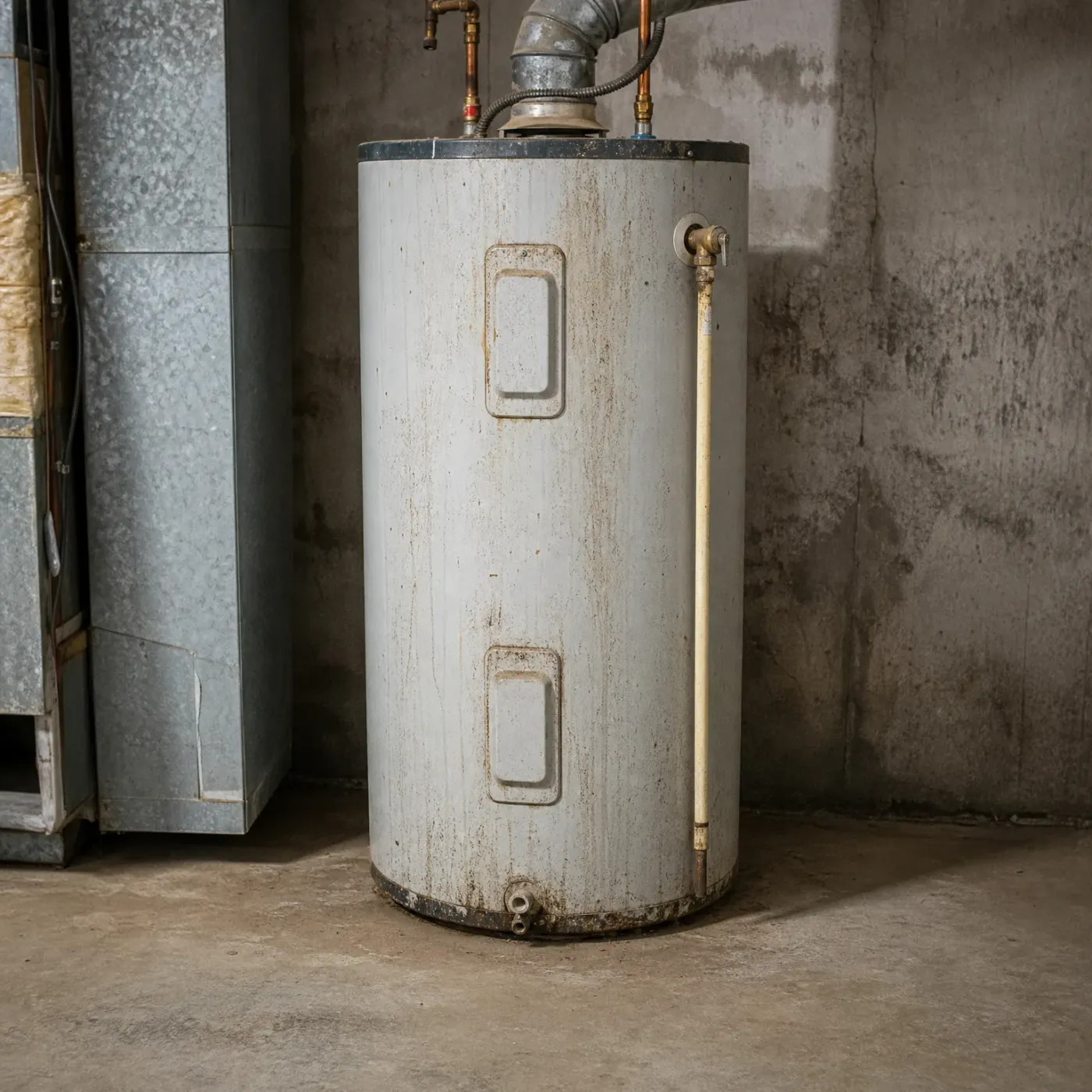
An old rust-streaked cylindrical water heater with two access panels, copper pipes and a flue at the top, and a discharge pipe along its side, standing on a concrete floor beside galvanized ductwork against a bare concrete wall.
Before you get your water heater maintenance
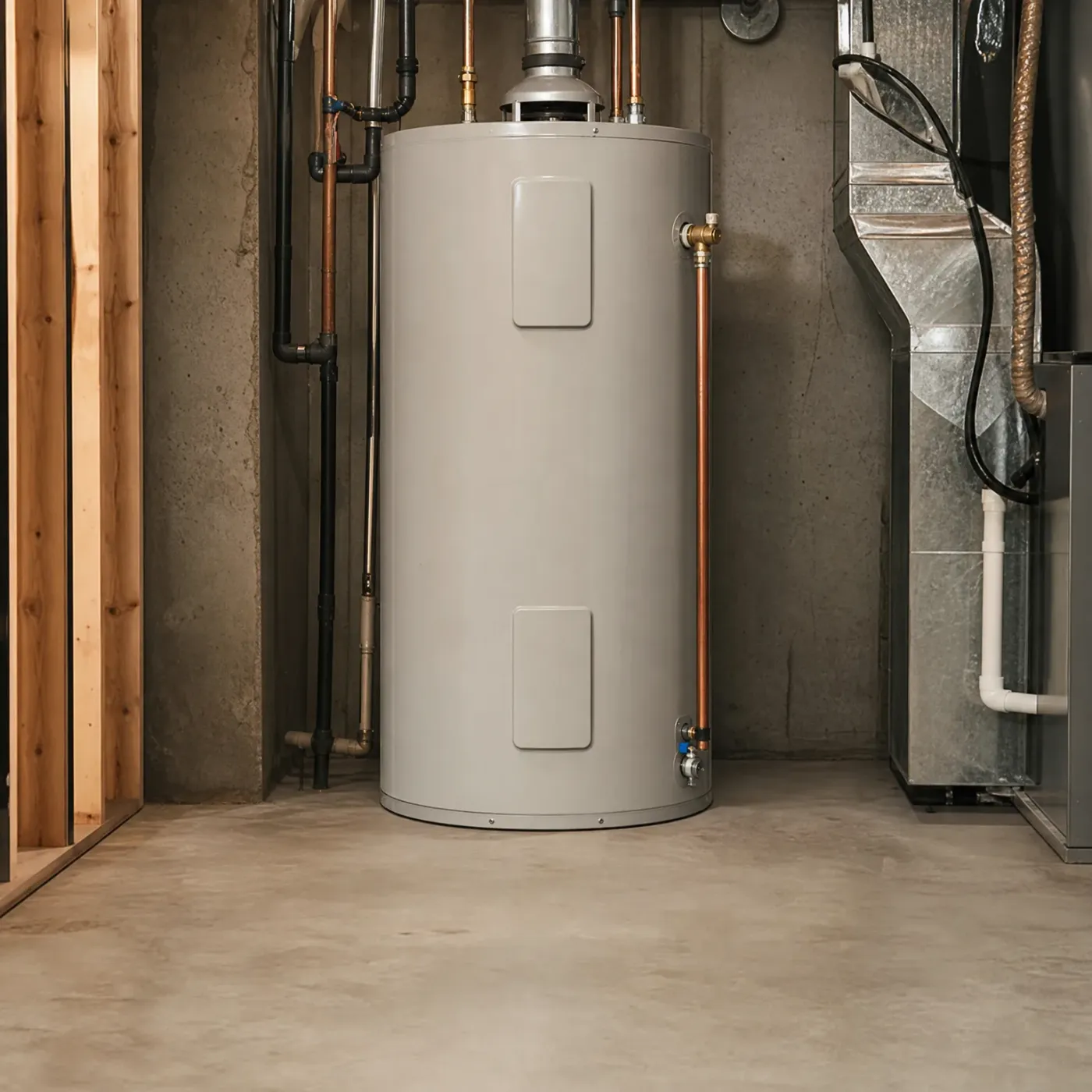
A gray cylindrical water heater with copper piping and access panels stands against a concrete basement wall beside ductwork and vertical pipes.
After you get your water heater maintenance

How do I know when my water heater needs to be flushed?

You hear your water heater running and have no way to look inside the tank. Rust-colored water, a tick or rumble when it heats, or water that takes longer to get hot are the kind of signs people notice first, but by the time you see them, sediment has usually had a long time to build up on the bottom of the tank.

A rumbling sound or slow hot water means it's overdue

Sediment sitting on the bottom of the tank hardens as it heats and cools every day, and once it does, water trapped underneath it pops and rumbles as it turns to steam. That sound means the layer is already thick enough to insulate the bottom of the tank from the burner or the heating element. Water that takes longer to get hot, or runs out faster than it used to, points to the same cause. Rust-colored water when you first turn on the tap is a later sign, not an early one. Flushing once a year in Killeen keeps the sediment from reaching the point where you notice it through the tank's performance instead of before.

A woman wrapped in a thick cream knit blanket sits in an armchair beside a lit table lamp, with an open book in the foreground and a frost-covered window behind her.
A woman in a cream knit sweater sits in an armchair with her eyes closed and head tilted back, beside a window showing orange autumn foliage and a wooden side table with a mug.

Get matched with a water heater pro in Bell County

A year is a long time to guess what's happening inside a tank you can't see into. If you've already noticed the rumble or the slow recovery the page above describes, that sediment has been sitting a while and a flush at this point is overdue, not early. If you haven't noticed anything yet, this is still the point where a yearly flush catches it before the tank has to work for it. Either way, the question isn't whether Bell County water leaves scale behind. It does, in every tank, on electric units same as gas. The question is whether someone gets to your tank before that scale costs you recovery time and part of your bill. A local contractor who flushes tanks through Killeen summers and mild winters alike has seen what a year of this water does and what it doesn't do yet. That's the read you want before deciding it can wait another season.

Where That Leaves You

  • Once a year keeps a Bell County tank ahead of the sediment its water leaves behind.
  • A tank that never gets flushed works harder every month it runs, winter or summer.
  • Signs like rumbling or slow recovery mean the sediment has already had time to build up.
  • A local contractor who flushes tanks all year knows which units in this area fail first and why.
  • Matching you with one contractor means one call back, not a string of companies competing for the job.
  • Where you stand now is simple: flush yearly, or watch for the signs that say you're behind.

A once a year flush is the whole answer for a water heater in Killeen and the rest of Bell County. The water here leaves sediment behind no matter the season, and a tank that holds onto it works harder every month to do the same job. If you've already got the rumble, the slow recovery, or water that's taking longer to heat, that's not a sign to wait and watch. It means the sediment has had time to settle and the tank is already working around it.

What happens from here does not need to be complicated. A local contractor who flushes tanks through every season in this area knows what tends to fail first in a Bell County water heater, because they see the same patterns on the same kind of units year after year. Getting matched means one contractor reaching out, not a handful of companies calling to bid on the same job. That contractor can look at your tank, tell you where it stands, and handle the flush if it needs one.

You know enough now to know where you stand. If your tank gets flushed on schedule, you're ahead of the sediment. If it's been a while, or you've heard the signs this page described, you're behind it. Either way, the next step is the same: get someone local out to look at the tank itself.

A dark-clad house with large windows beside a gravel driveway lined with in-ground path lights, ornamental grasses and hydrangeas, with distant hills and an orange sunset sky.

Water Heater Maintenance

A local pro for your water heater maintenance

Step 1 of 3: Equipment
  • A corner of a room with an upholstered wood-framed armchair holding a floral pillow, a round side table with a ceramic lamp, books and a vase of greenery, a framed landscape painting on the wall, a patterned rug, and a sunlit multi-pane window.
    • Your request goes to a Bell County pro who takes water heater jobs.
    • Get matched with someone who does this kind of work in Bell County.
  • Interior corner with a wood-framed window showing green foliage outside, a framed landscape print on a beige wall, and a rounded stone vase of leafy branches on a wooden cabinet.
    • Send the form and the water heater tune-up stops being something to remember.
    • One request and finding someone for the tune-up is handled.
  • A pale ceramic vase holding olive branches sits on a dark wooden countertop beside a carved wooden dough bowl, next to a wood-framed window and a light painted plank wall.
    • Fill out one form instead of calling around for a water heater tune-up.
    • One form instead of hunting for a pro who does water heater tune-ups.
  • A dark wood round side table holding a brass lamp with a cream shade, a blue-and-white patterned bowl, and a white textured pot of greenery, beside an upholstered chair with a gray patterned cushion and a white-framed window showing green trees and flowering shrubs.
    • A licensed pro who works in Bell County gets your request.
    • Your request stays with one local pro.