How often to flush a water heater in Texas

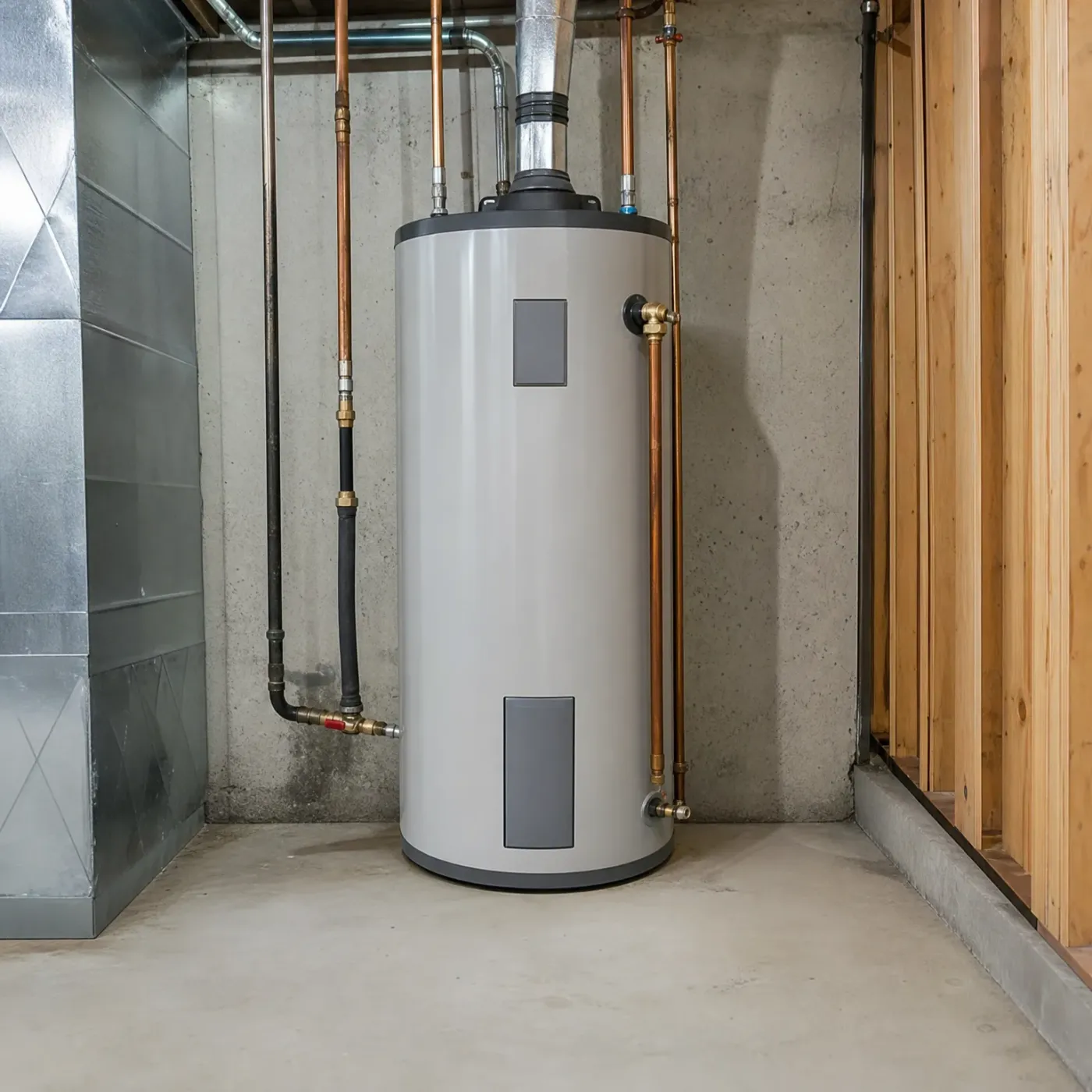
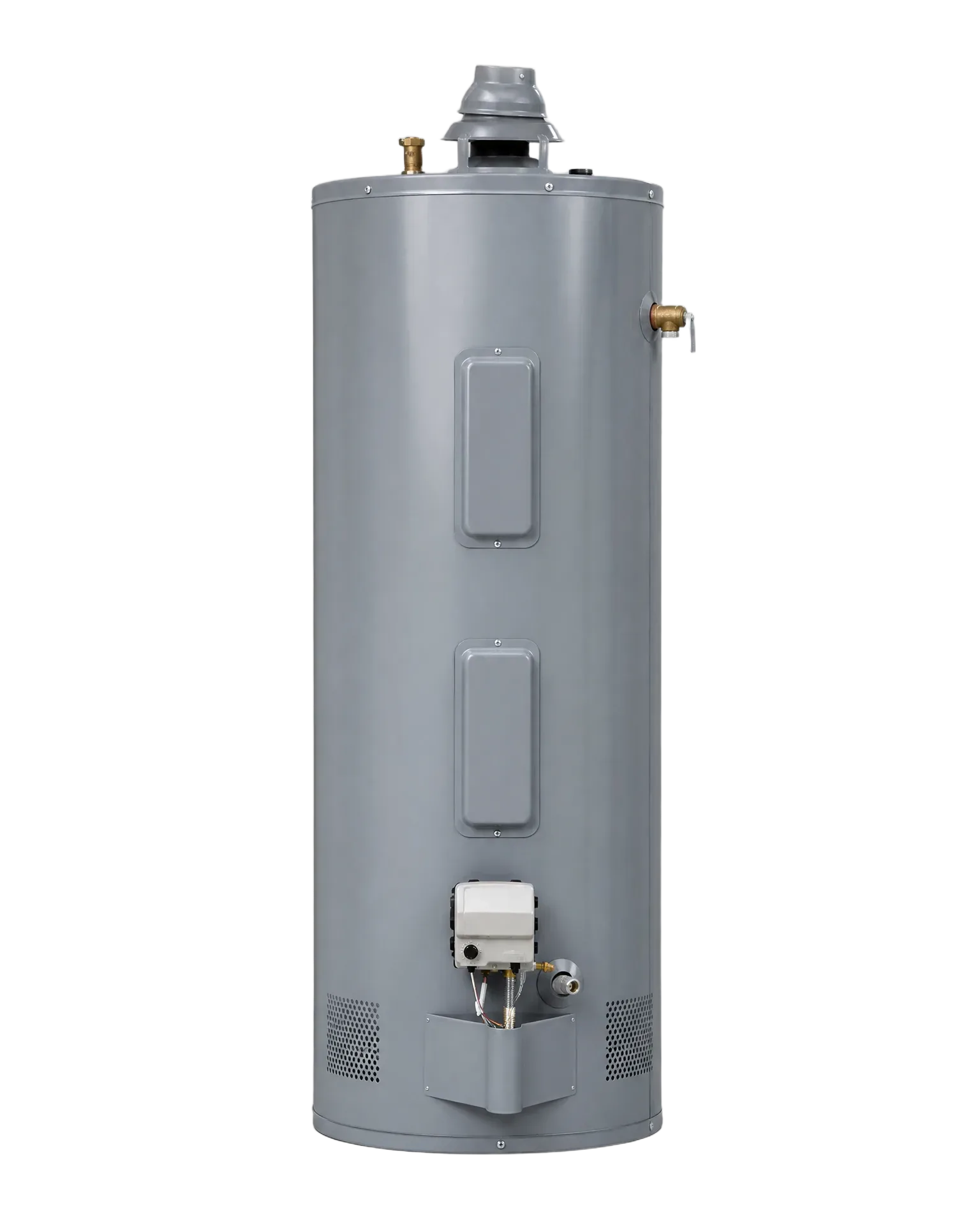
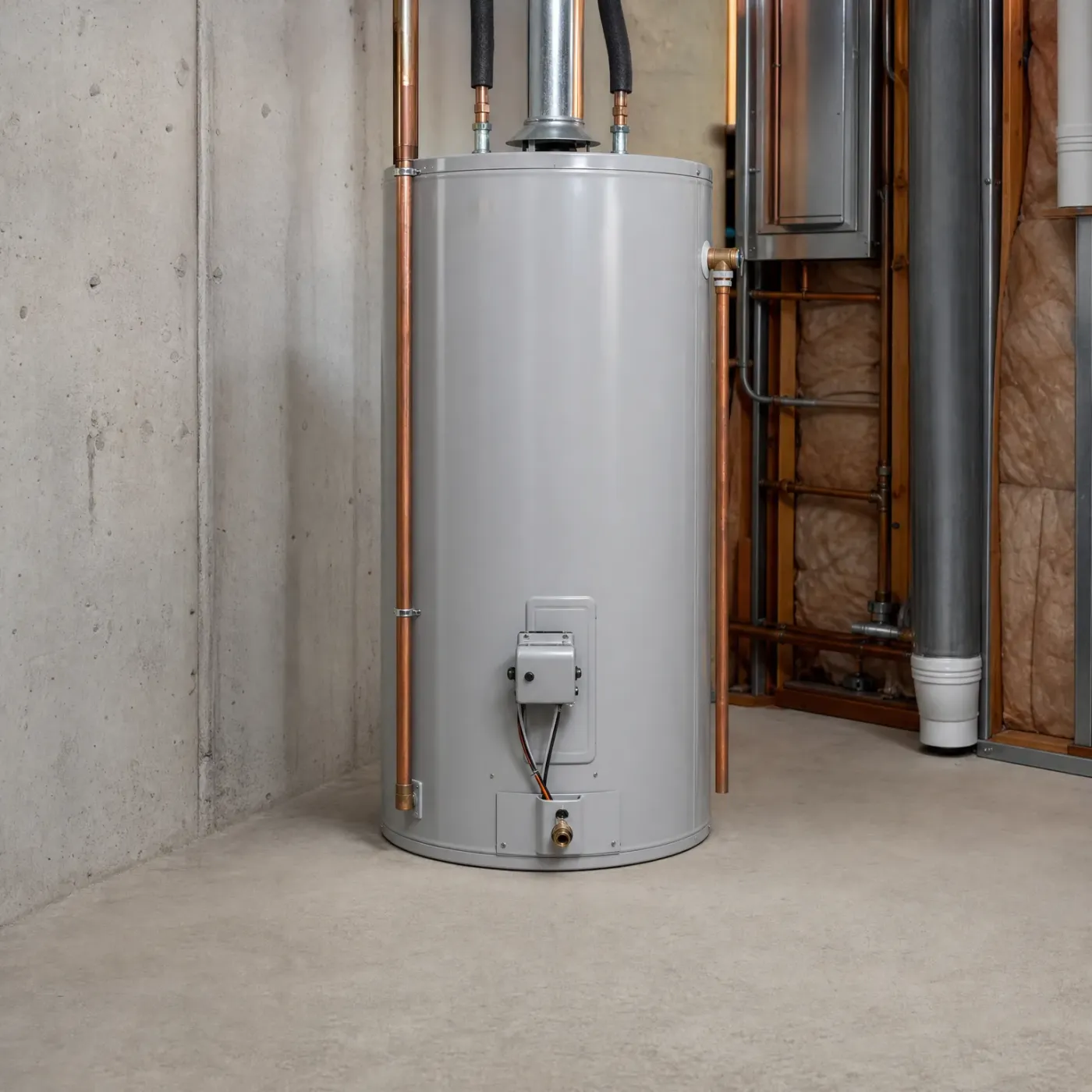
A gray cylindrical gas water heater with a top flue hood, brass fittings, two access panels, a control valve and burner cover, photographed against a plain gray background.
Get matched

Flush your water heater once a year. Texas water tends to run hard, and that mineral content settles to the bottom of the tank as sediment. Once a year clears it out before it builds into a thick layer that makes the burner or elements work harder to heat the same amount of water. Skip it for a few years and that sediment can harden, insulate the bottom of the tank from the heat, and shorten the life of the unit. If your water comes from a well or your area runs especially hard, flushing every six months instead keeps the tank clearer. Most homes here heat water with electricity, and sediment sitting against electric elements can burn them out faster than it would with a gas burner. A yearly flush is cheap insurance against a repair or early replacement.
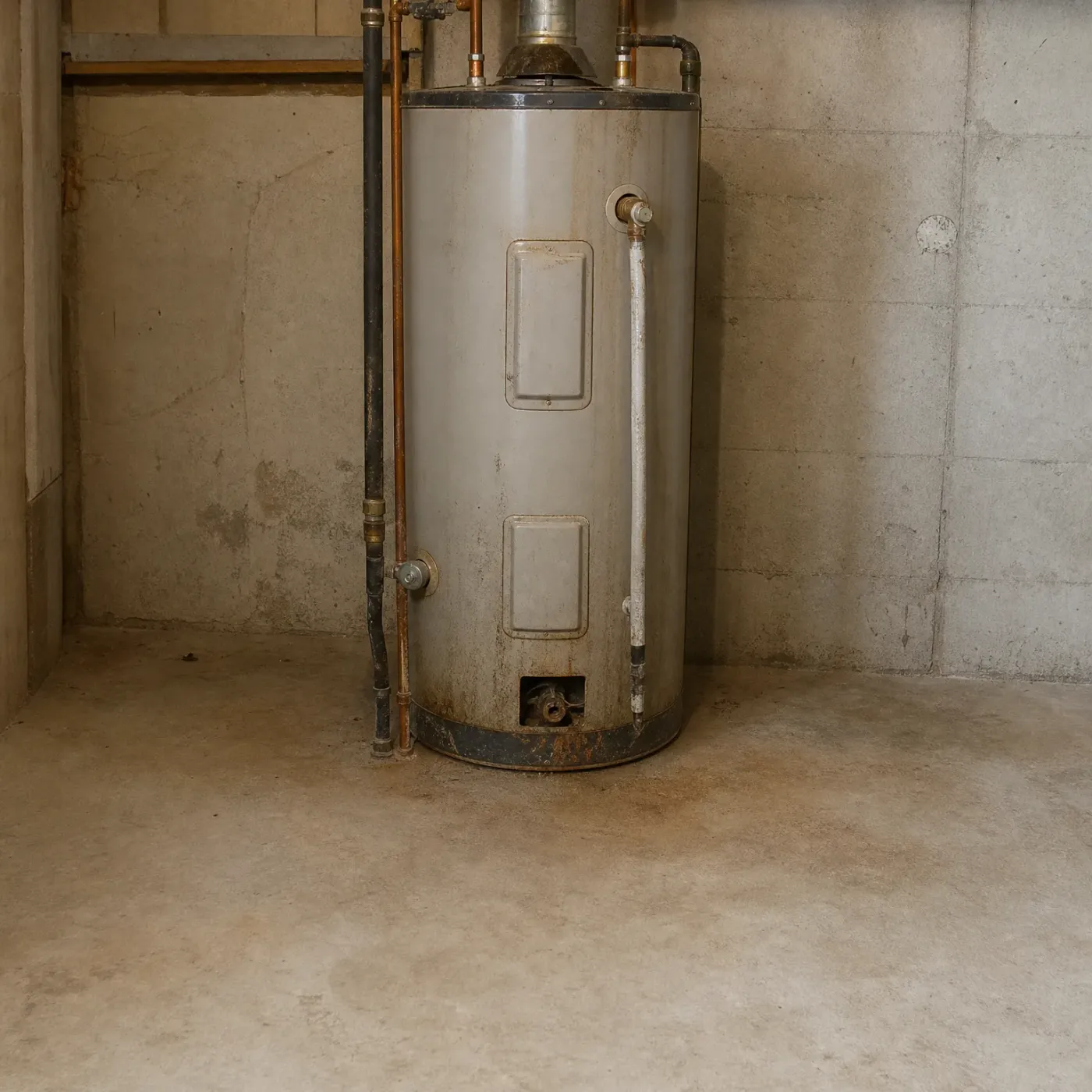
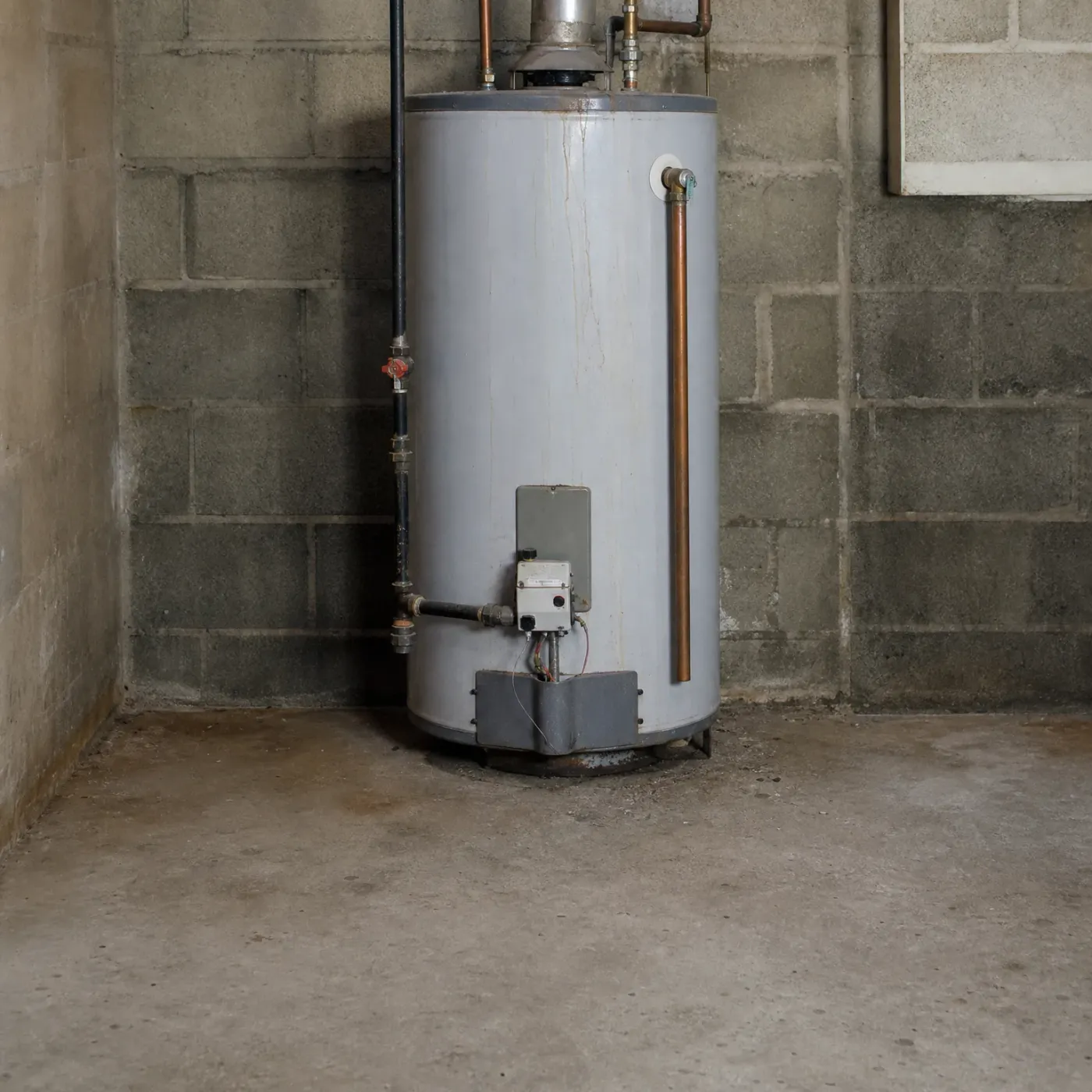
A rusting gas water heater with copper and steel pipes stands against a concrete block wall on a bare concrete floor.
Before you get your water heater maintenance
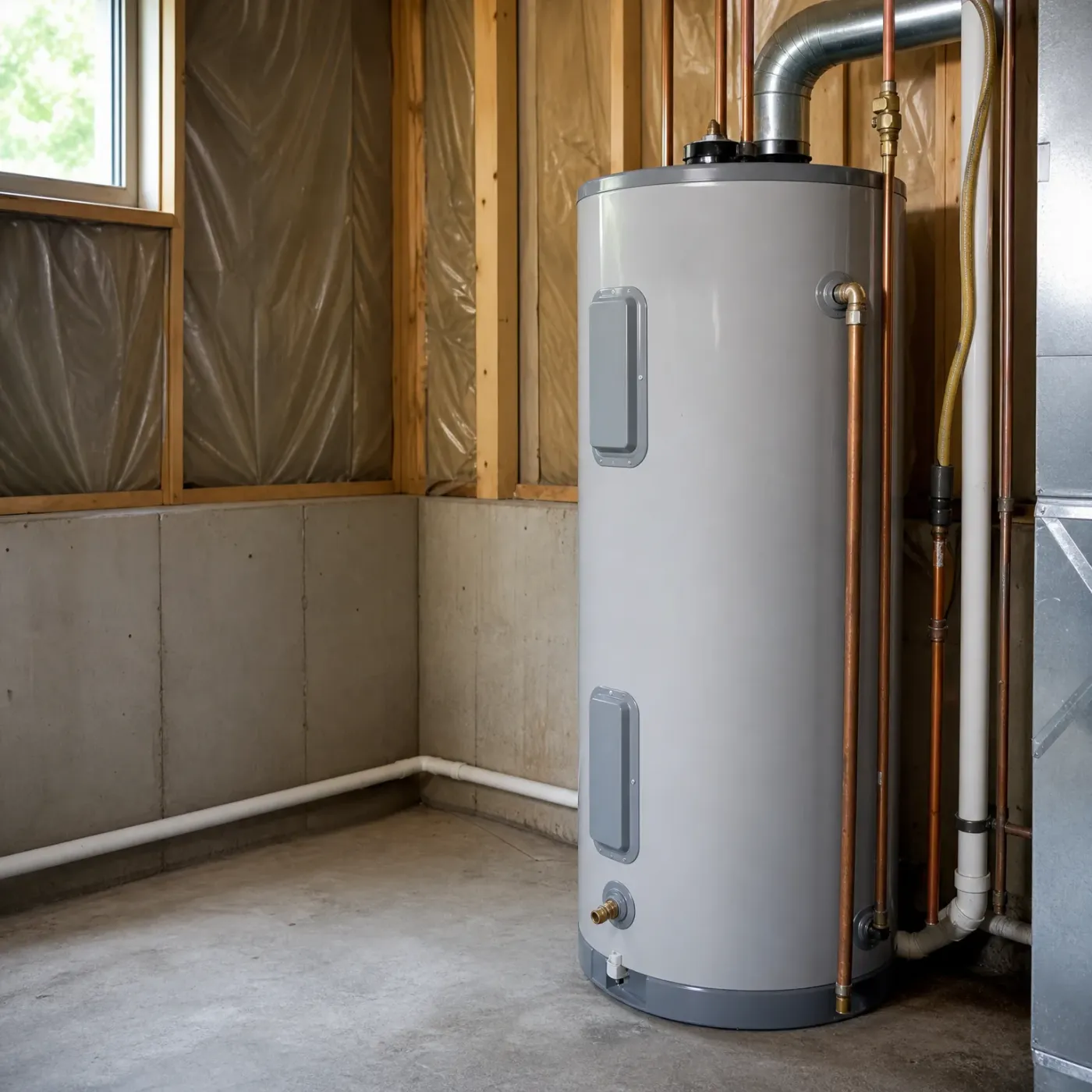
A gray cylindrical water heater stands in a basement corner against a concrete wall, with copper pipes, insulated flex lines, a metal flue, and insulated wall framing with ductwork to the right.
After you get your water heater maintenance
A gray cylindrical water heater standing in a basement corner against a concrete wall, with copper and black pipes, a metal flue, and ductwork nearby, next to wood framing on the right.

Flushed on schedule

A tank flushed once a year stays close to this. Water heats evenly, the burner cycles on and off the way it should, and the tank keeps working at the rate it was built for, year after year.
A gray cylindrical gas water heater with copper and black pipes stands in the corner of a basement with concrete block walls and a bare concrete floor.

Skipped a year or two

Sediment settles at the bottom and hardens into a layer between the burner and the water. The burner runs longer to do the same job, and the tank bottom sits under more heat than it was built to take.

A man seen from behind raises his hand to wave at a woman standing in the open front doorway of a single-story house with gray shingle siding, white columns and a gabled porch entry.

What a year without flushing looks like at your tap

Hard Texas water leaves sediment faster than most people expect, and you'll notice it before you ever see the tank. Hot water takes longer to show up at the faucet. The water heater runs more during the muggy months when everyone in the house is showering twice a day. Since most homes here heat water with electricity, a layer of sediment sitting under the heating element means that element works harder and longer to do the same job, and that shows up on a power bill that was already going to run higher in summer.

Left alone past a year, that layer hardens. It can start to crack the glass lining at the bottom of the tank or burn out an element sooner than it should have failed. If you're already thinking ahead to next summer's bill, a flush now is the cheaper problem to have. Once you request service, finding the right contractor for your tank and your setup isn't something you have to sort out yourself. They'll reach out to you directly.

A gray upholstered sofa with a textured cushion sits beside a dark round side table holding a vase of green foliage, with a table lamp and sheer-curtained window behind.
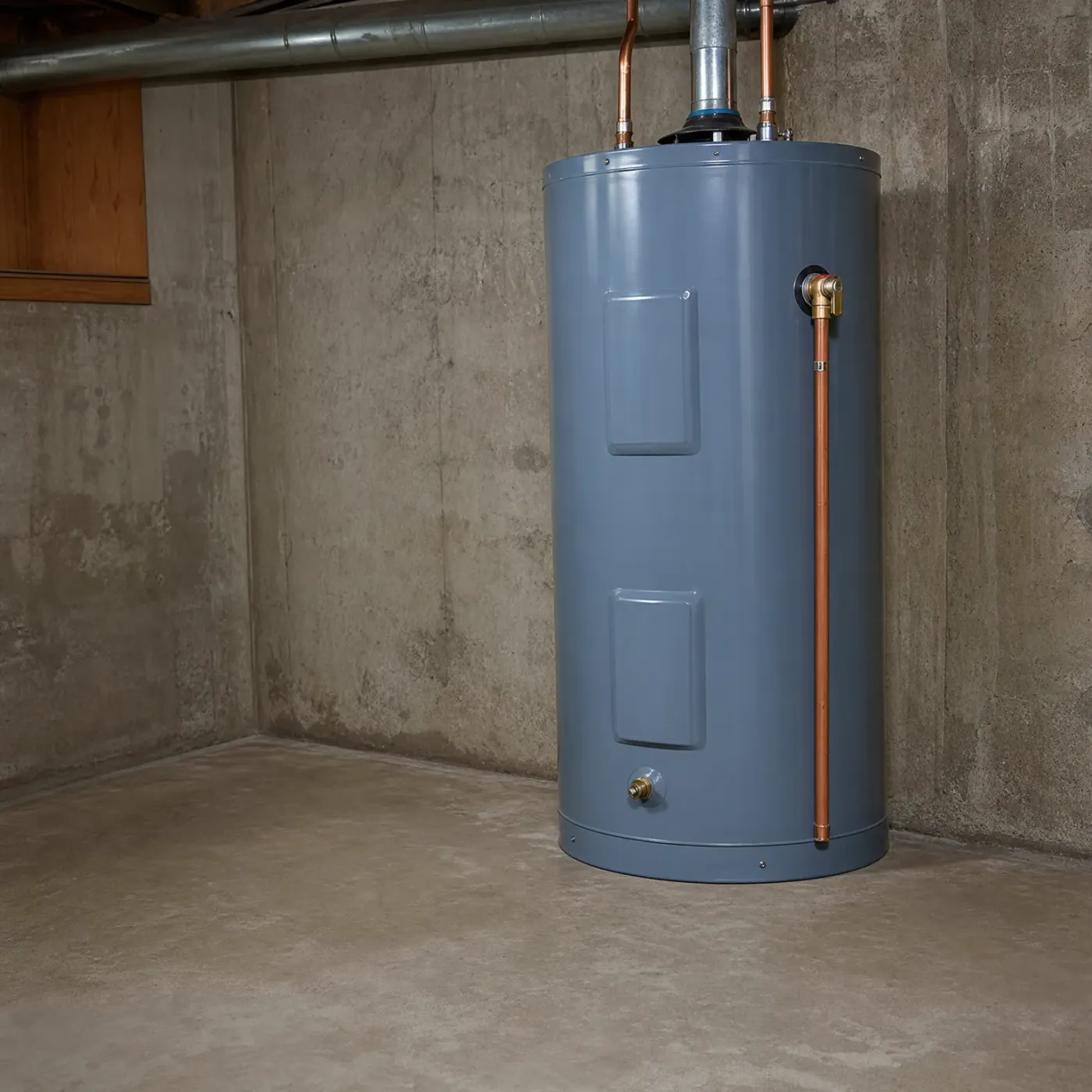
A gray cylindrical water heater standing on a concrete floor in a basement corner, with copper pipes and a metal duct running overhead along bare concrete walls.

Tank in good shape

This is a tank that's been flushed on schedule. The fittings are clean, the drain valve is clear, and the steel underneath hasn't had the chance to corrode. A unit kept like this heats water at the rate it's rated for and holds up for years without surprises.
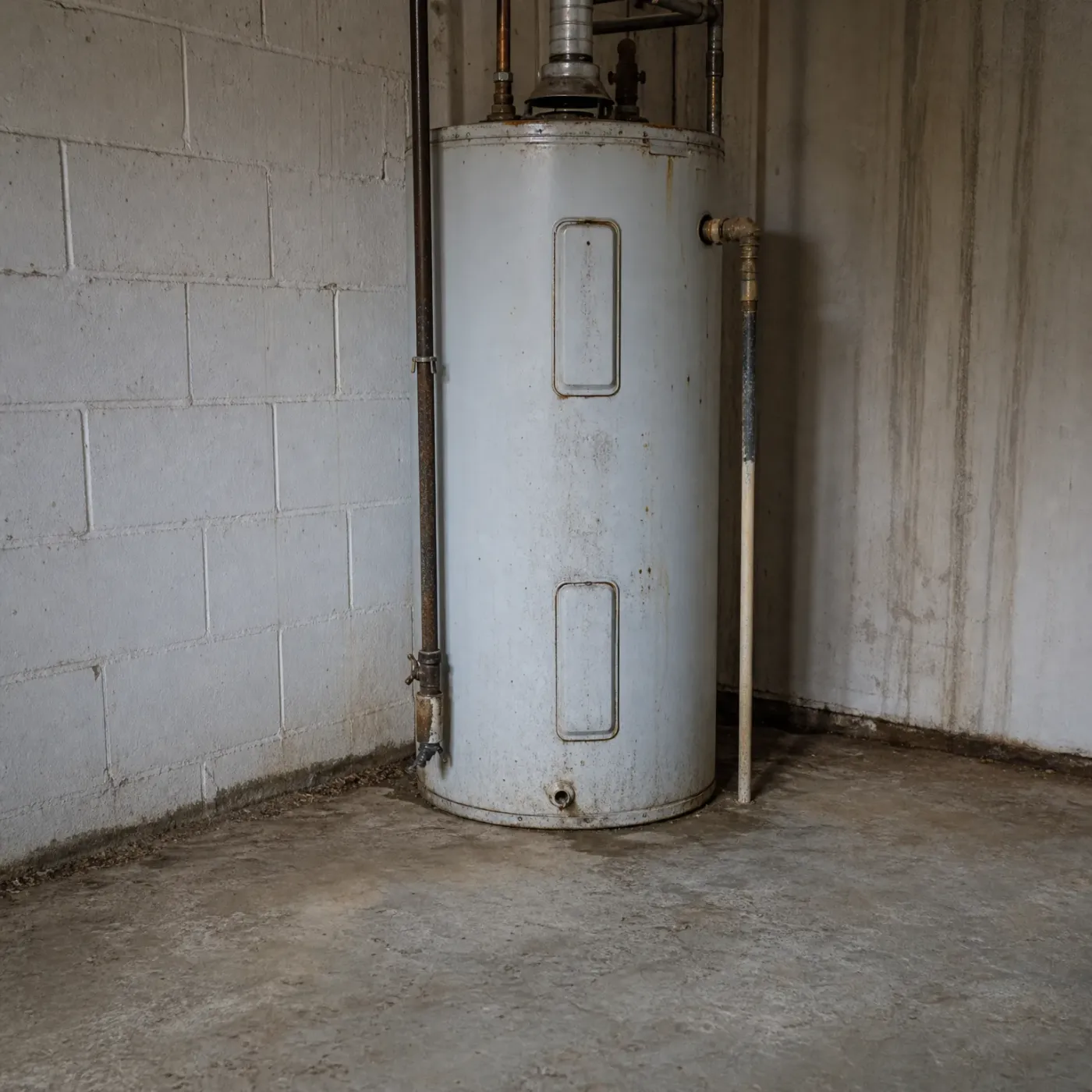
A white cylindrical water heater with rust stains and two access panels stands in a basement corner between a painted concrete block wall and a bare concrete wall, with metal pipes running up and alongside it on a concrete floor.

Tank gone too long

This is what sediment left to sit does over time. Rust has worked into the tank and the fittings, and the metal underneath is wearing thin. Once corrosion gets this far, flushing won't undo it, and a water heater in this shape is closer to the end than the start.


A woman with long gray hair wrapped in a checked blanket sits on a sofa by a window with yellow autumn foliage outside, with a lamp, framed picture and plant in the background.
An older woman in a cream knit sweater sits on a sofa by a window, looking out at sunlit trees with yellow and orange autumn leaves, with a bookshelf and lamp behind her.
A woman with gray shoulder-length hair in a dark knit sweater sits on a cushioned seat by a window, looking out at yellow autumn foliage, with a living room, armchair, houseplant and framed picture behind her.
An older woman with gray hair in a bun, wearing a cream knit sweater, sits on a sofa with a gray blanket and looks out a large window toward yellow-green autumn trees, with a lit table lamp and dark armchair behind her.
A gray cylindrical water heater stands in a basement corner with exposed wood framing, plastic vapor barrier, concrete walls and floor, copper and PVC piping, and a metal flue vent.

A local pro for your water heater maintenance

Once you send the form, finding a pro is off your list.

Say what's going on with your water heater, and a pro who works on them reaches out.

Find a water heater pro

Sending the form costs nothing.

61.2% of homes statewide heat with electricity

Most Texas homes heat water with electric units, not gas. An electric water heater has no burner, just elements sitting down in the tank, and sediment buried around them makes those elements work harder and fail sooner. Flushing keeps that layer from building up around them.

ACS 2020-2024 5-year B25040

Once a Year, On Schedule

  • Once a year keeps sediment from building up around the elements and shortening the tank's life.
  • Texas water runs hard, so that buildup happens faster here than it does in places with softer water.
  • A tank flushed on schedule heats water at the rate it was built for and stays that way for years.
  • Skip it for a year or two and the elements work harder, the tank runs hotter, and recovery slows down.
  • A contractor who flushes tanks for a living can tell you how much sediment is already down there.
  • Once you send the request, finding someone to do it is off your plate.

Once a year is the answer. Texas water carries enough mineral content that sediment settles into the tank faster than it would somewhere with softer water, and a year is about how long it takes to form a layer worth clearing. Flush on that schedule and the tank keeps heating water at the rate it was built for, cycle after cycle, without the elements straining to push heat through buildup that shouldn't be there. Skip a year, and the next flush has more sitting at the bottom than it would have otherwise. Skip two, and you're often looking at a tank that runs hotter than it should, recovers slower, and asks more of its elements just to keep up. None of that announces itself right away. It shows up slowly, in a water heater that seems to take a little longer each month, until one day the difference is obvious.

A contractor who does this work can look at a tank and tell you where it stands, how much has built up, whether it's been a year or closer to three since the last flush. That's not something you can judge from the outside. Sending the request is the only part left to you. Once it's in, the work of finding someone who flushes tanks for a living stops being something you have to manage. It gets handed off, and you get to stop thinking about it until they're in touch.
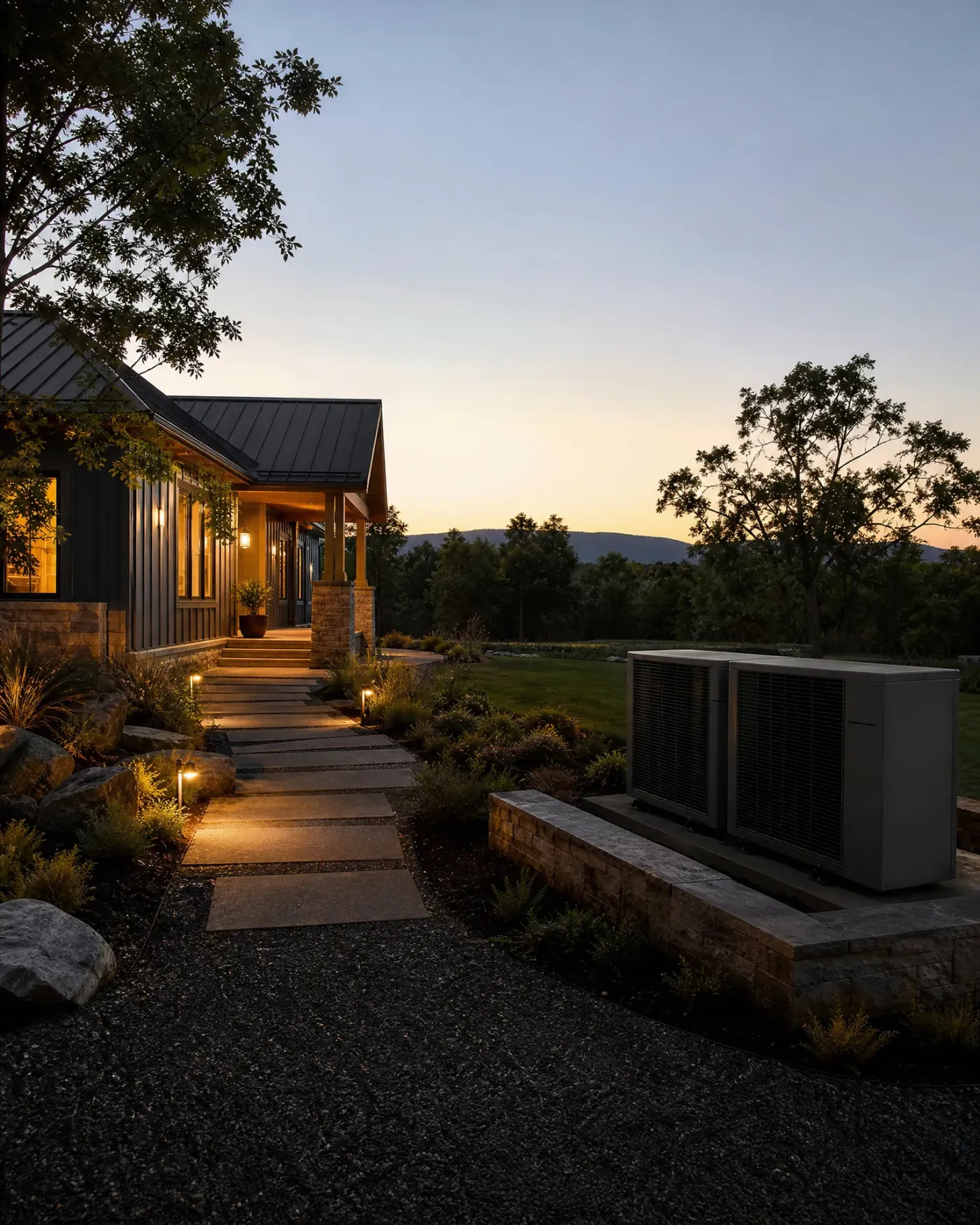
At dusk, a dark board-and-batten house with a standing-seam metal roof and lit entry walkway of stone pavers, with two large outdoor heat pump units on a stone-walled pad at right and trees and hills in the background.

Water Heater Maintenance

Get the right pro for your water heater

Step 1 of 3: Equipment
  • A brown leather and wood armchair with a cream knit throw sits in a corner beside a woven basket holding a dark cushion, under a framed mountain photograph, with a wood-trimmed window showing yellow and green foliage.
    • A local pro who services water heaters gets in touch about the tune-up.
  • A dark wood dresser against a pale wall holds a ceramic vase of eucalyptus branches, a stack of books with a wooden bowl, and a woven basket, with a framed landscape painting above and a woven basket holding a knit blanket on the floor beside a window.
    • Send the form, and lining up the water heater tune-up stops being yours to chase.
    • Send the request and finding a pro stops being your problem.
  • A window seat with beige linen and brown textured cushions, a chunky knit blanket, and an open book, beside a window showing blurred yellow autumn foliage.
    • Answer a few questions instead of calling shop after shop.
    • Describe your water heater job once, to one pro.
  • A cream upholstered armchair with a rust-colored pillow and knit fringed throw sits beside a window with a ceramic vase of orange-leafed branches on the sill, overlooking autumn trees and leaf-covered ground.
    • Your request goes to one pro, not a list of companies.
    • The pro who reaches out is licensed in Texas.