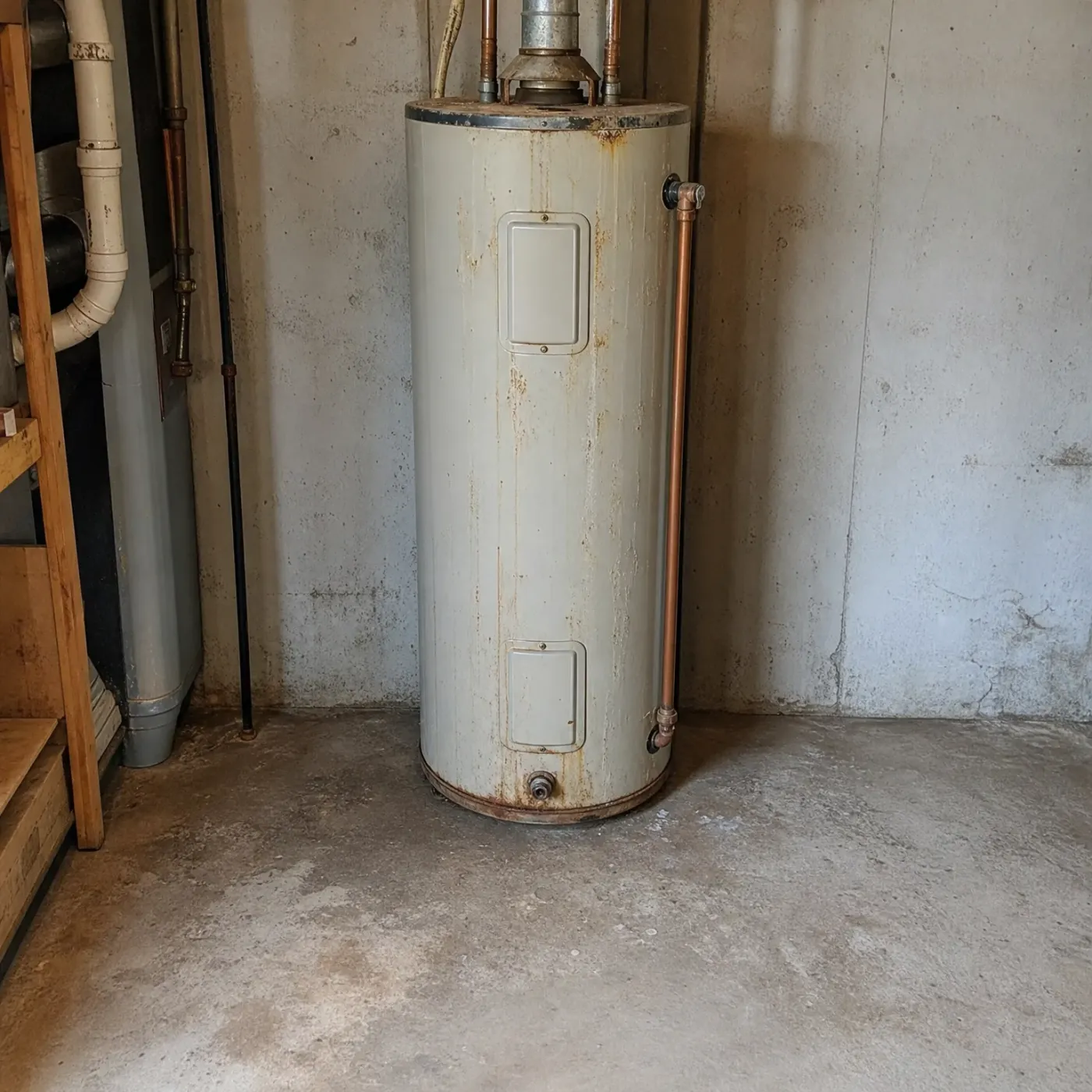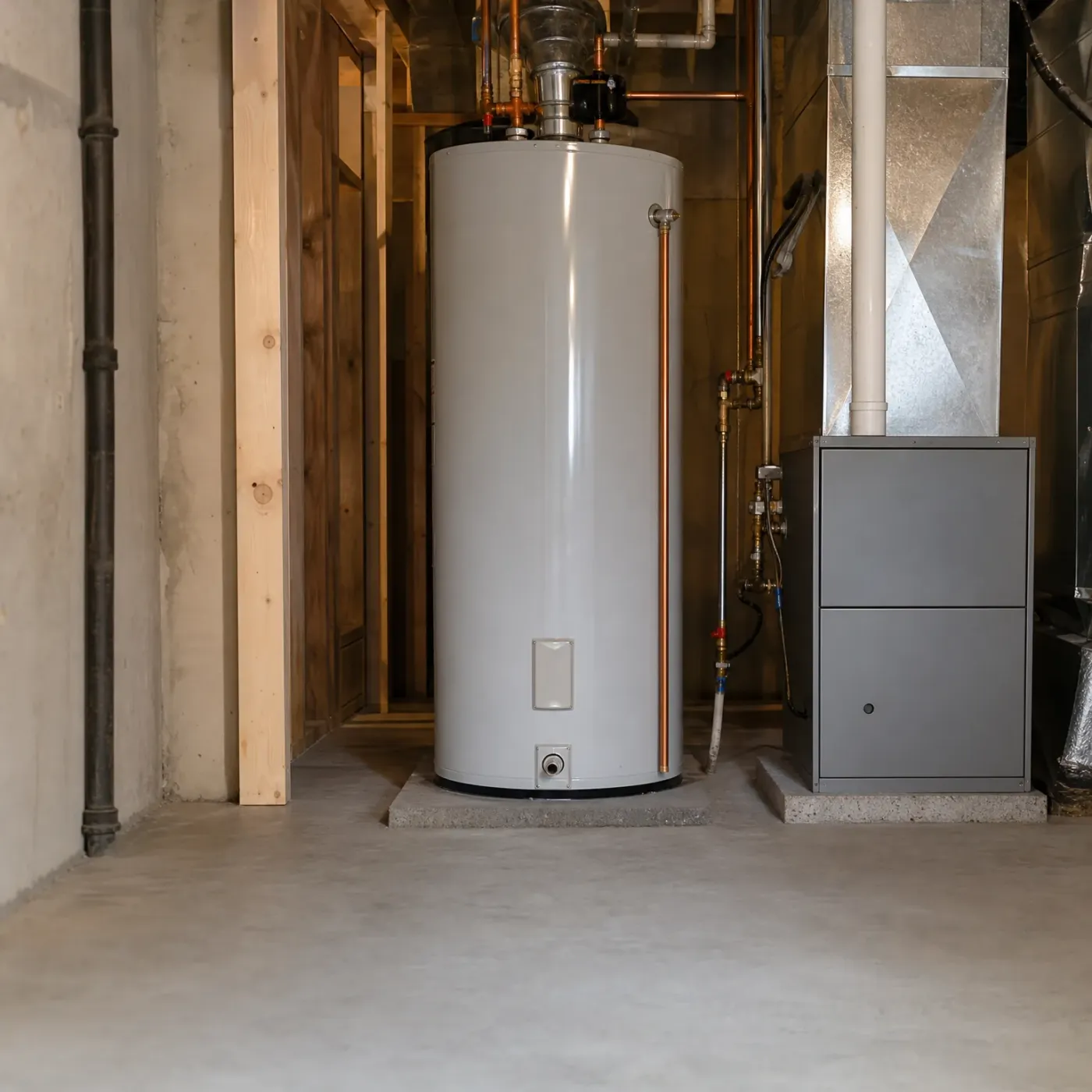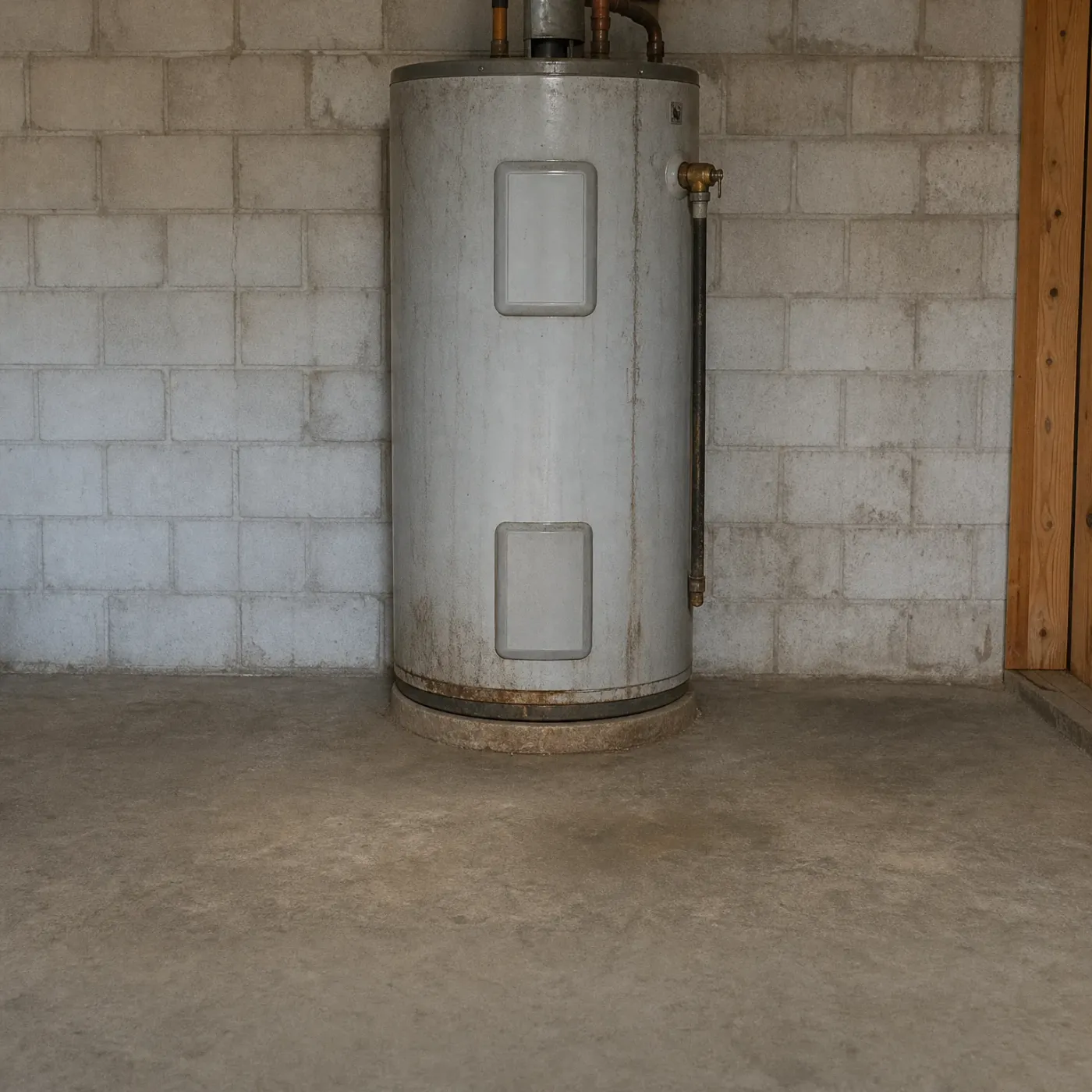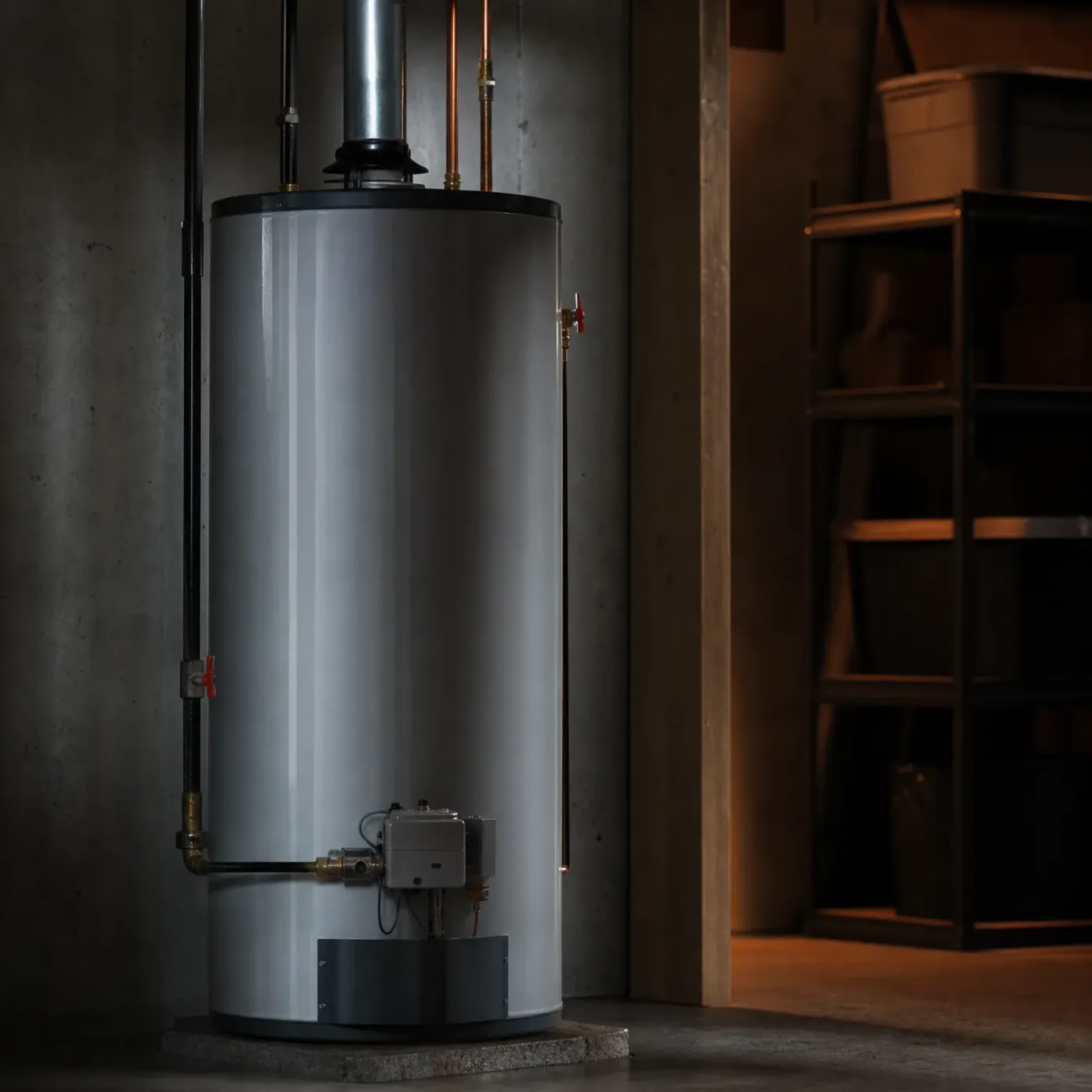




A large gray cylindrical gas water heater with copper and black pipes and a flue stack, standing on a concrete pad against a concrete wall, with a dark metal shelving unit in the background.

Stop chasing a water heater pro

Is a heat pump water heater worth it in Texas

A heat pump water heater pulls heat from the air instead of generating it directly, so it costs less to run than the electric tank most Texas homes already have. Whether that trade works in your house depends on where it would sit and how your home handles the cooler air it puts out. Find out what that takes, then skip the search for who can install one.

Hand it off

Yes, for most Texas homes it is worth it. A heat pump water heater moves heat out of the surrounding air instead of burning energy to make heat, and since most homes here heat with electricity already, you're swapping one electric water heater for a far more efficient one rather than changing fuels. The muggy air that makes Texas summers uncomfortable actually helps the unit work, since it pulls moisture and heat out of the air at the same time, which is part of why it costs less to run than a standard electric tank. The catch is where it sits. These units need space around them and they cool and dry the air in whatever room they're in, so a small closet works differently than a garage. If your water heater is in a spot with enough room and airflow, it's a straightforward swap. If not, that's worth checking before you decide.

A man in a blue sweatshirt reclines with closed eyes in a brown leather armchair in a living room with a bookshelf, houseplant, sofa, window, and a side table holding newspapers and a dark mug.
A bearded man in a gray pullover reclines with closed eyes on a brown leather sofa in a sunlit room with a window, framed picture, potted plant, and a wooden cabinet holding papers and a dark mug.
A man in a gray sweater leans back with closed eyes in a brown leather armchair beside a wooden side table holding a dark mug and a folded newspaper, with bookshelves and a window seat behind him.
A man in a green sweater reclines in an armchair with his eyes closed and a slight smile, beside a window with plants, a small table holding a mug and folded newspaper, and bookshelves behind him.

What is your water heater costing you right now

You notice it most when the electric bill comes. A standard electric tank runs almost constantly to keep up, especially with a houseful of showers, laundry and dishes going through a Texas summer. That tank sits in a garage or closet pulling power day and night, and you pay for every bit of heat it makes from scratch. A heat pump water heater pulls warmth from the air around it instead, so it draws less power to heat the same water. If yours is older, you might also notice it struggling to keep up or running longer than it used to, which drives the bill higher still.

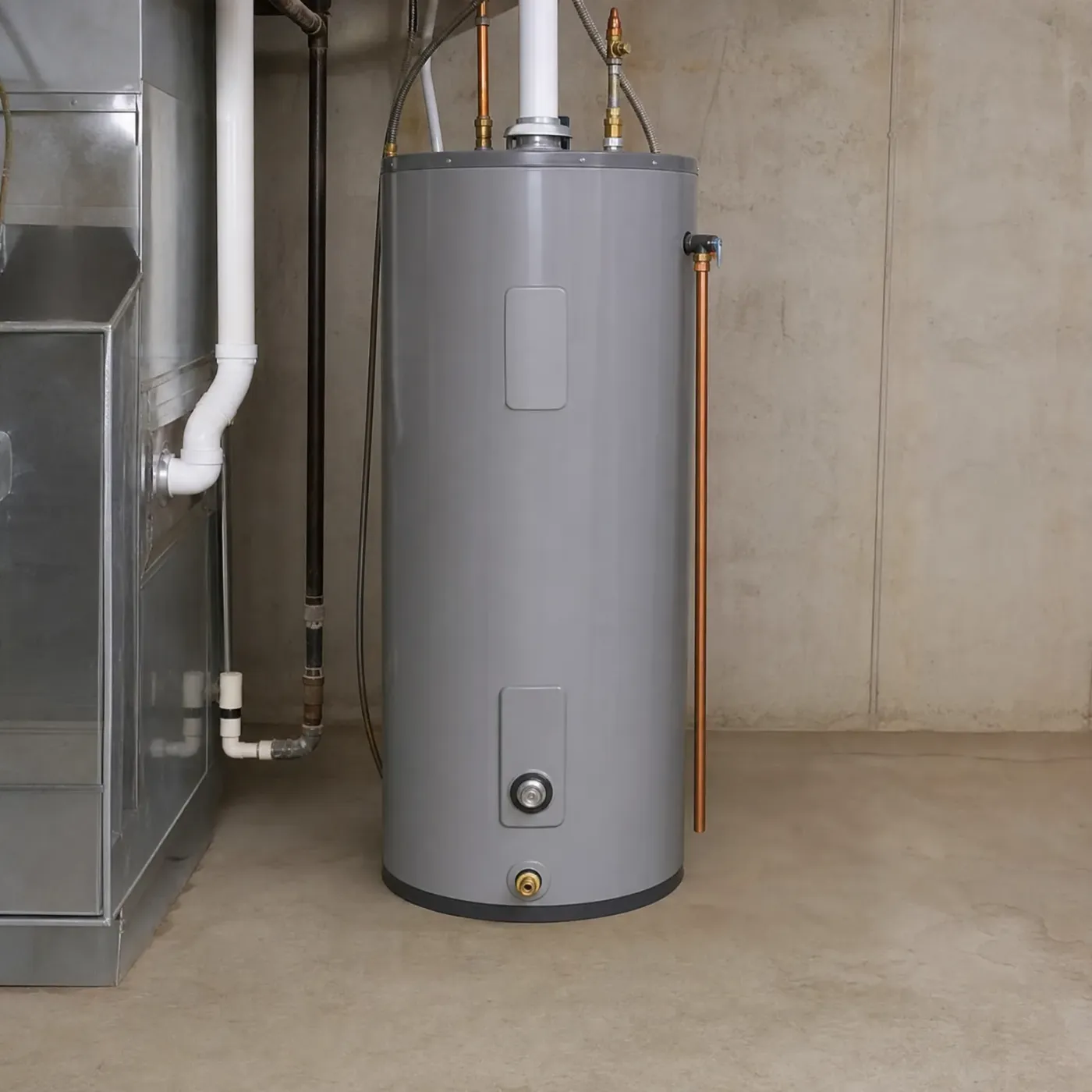
A gray cylindrical water heater stands on a concrete floor against a concrete wall, with copper and white pipes above it and a metal ductwork unit to the left.

Running the way it should

This is a standard electric tank doing its job, heating element cycling on and off all day to keep up with showers and laundry. It works fine. It just pulls power the whole time to do what a heat pump water heater could do using a fraction as much.
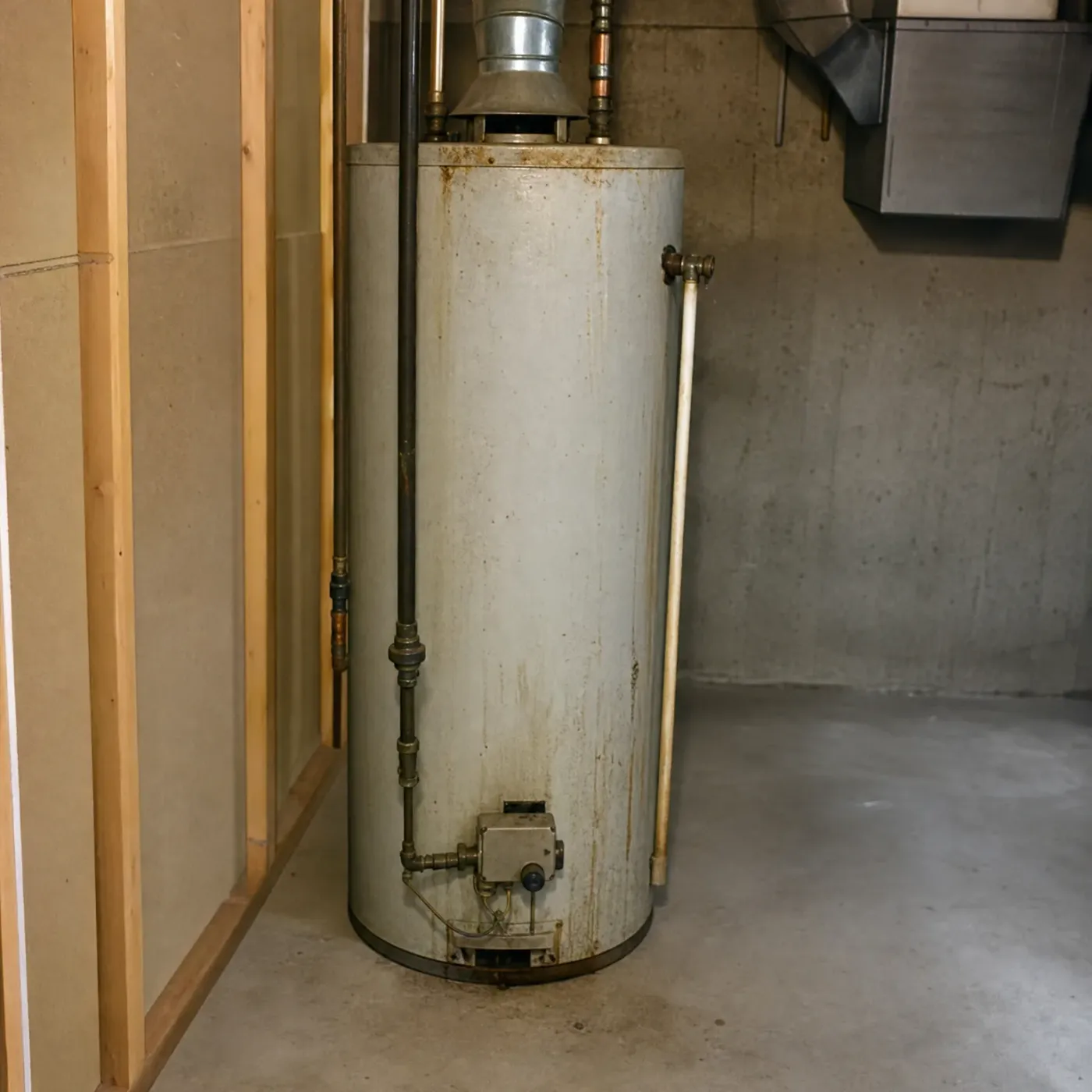
An old rusting gas water heater with flue pipe and connected plumbing stands on a concrete floor in a basement corner beside an unfinished wood-framed wall and a metal duct.

Old and worn out

Rust like this on the tank and fittings means the unit is near the end of its life, not a candidate for a quick fix. When a water heater gets replaced anyway, that's the moment to weigh a heat pump model instead of putting in the same electric tank again.

Does Your Setup Fit One

Where it earns its keep

  • It needs room to pull heat from, so a garage or utility closet with some air space around it works better than a tight interior closet.
  • The compressor puts out cool air while it runs, which is a bonus in a Texas garage in July and barely noticeable in a house already running AC all summer.
  • Because it pulls heat from the air instead of generating it, it uses a fraction of the power a standard electric tank does to heat the same water.
  • It can run in standard mode and heat like a regular electric tank on the days you need recovery fast, like a full house of guests.
  • If your electric rates run typical for the state, the lower draw shows up on the bill every month, not just in summer.

Where it runs into trouble

  • In a small closet with the door kept shut, it has less air to draw heat from and has to work harder, which cuts into the savings.
  • It needs a condensate drain for the moisture it pulls out of the air, so the space has to allow for that line.
  • It's a taller unit than most electric tanks, so a cramped space with low clearance may not fit one without changes.
  • In a cold garage in January, a heat pump water heater draws heat from already-cold air, so it leans on backup electric heat more than it would in a warmer room.
  • If the space around it is unvented, the cool exhaust air can make the room noticeably colder over time.
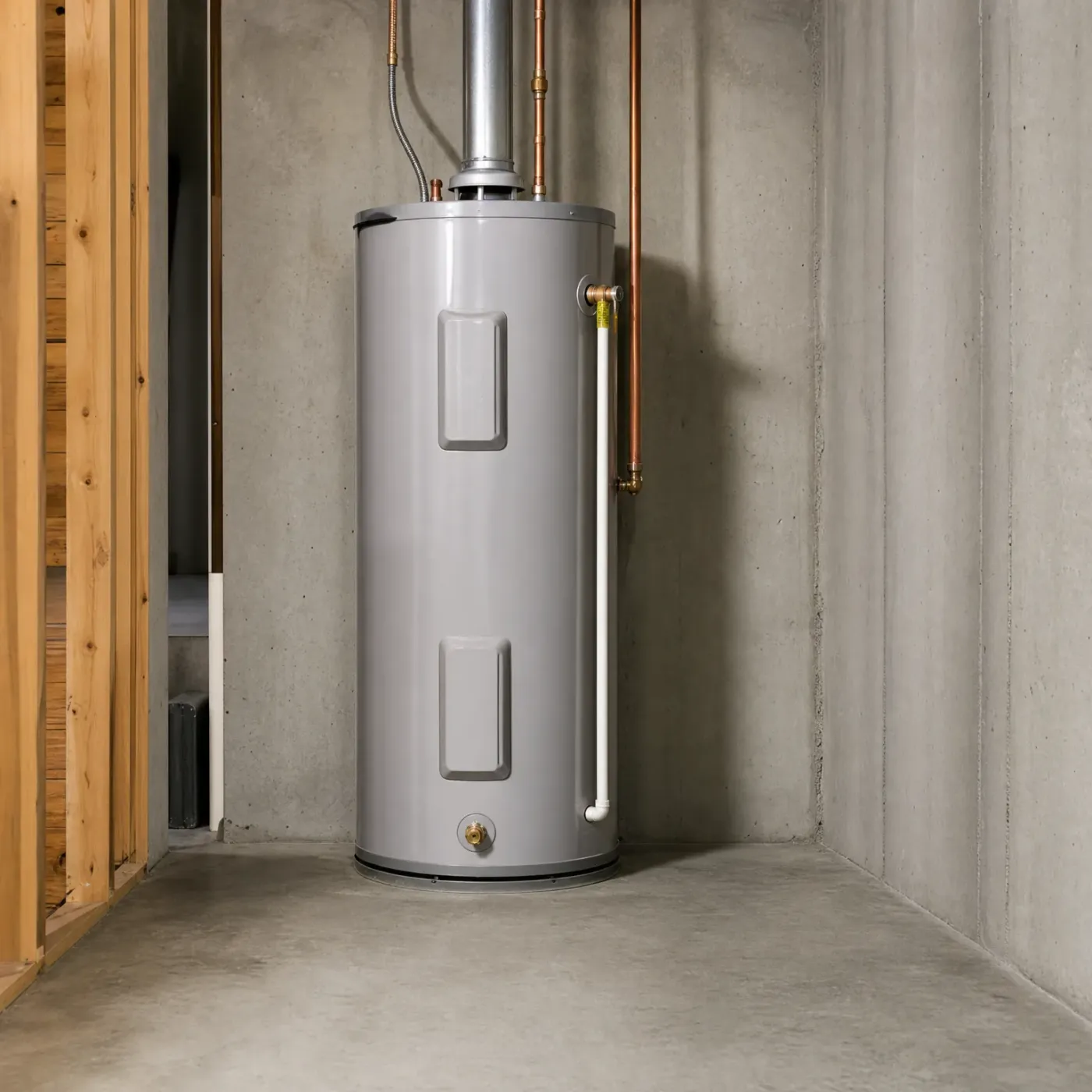
A gray cylindrical water heater standing in a concrete-walled basement corner, with copper and white pipes and a metal flue running up to the ceiling, next to exposed wood framing on the left.
This tank is heating water the way it was built to, element cycling on and off without anyone thinking about it.
A rusted cream-colored water heater with copper piping and a flue stands in the corner of a concrete-walled basement next to wooden shelving and ductwork.
Rust like this on an old electric tank usually means a leak is coming, and when it fails you need a replacement fast.
An older man with gray hair and a beard leans back on a beige sofa with his eyes closed, in a sunlit room with potted plants, a wicker chair and large windows behind him.
A woman in a cream knit sweater sits in an armchair with her eyes closed and a slight smile, beside an open window showing orange autumn foliage, with a mug, books and a lit candle on a small side table.

Send one request and you're done looking

Skip the round of in-home estimates for a new water heater.

Sending the form costs nothing.

A white cylindrical water heater on a concrete pad in a basement, with copper and metal piping above it and a gray furnace cabinet with ductwork to the right.

Working the way it should

This tank sits next to the furnace doing its job, element cycling on and off to keep up with the house. Copper lines and ductwork run overhead, all original to the room. Nothing here tells you it's struggling, and that's the point of catching it before it does.

A cylindrical water heater with two access panels and copper pipes stands on a concrete floor against a painted concrete block wall.

What a tank in trouble looks like

Rust on the panels and streaks near the base usually mean a leak is close behind. Once a tank gets to this state, a heat pump swap stops being a choice you get to plan and becomes whatever the plumber can get installed that day.

A closed dark laptop and a ceramic mug of coffee on a wooden dining table, with wooden chairs, a dark kitchen cabinet with cutting boards and a potted plant, and a leafy plant by a window in the background.

How a heat pump water heater actually heats your water

A standard electric tank has a heating element sitting in the water, and it runs that element to make heat directly. A heat pump water heater has a small compressor and fan mounted on top of the tank. The fan pulls in air from the room, the compressor concentrates the heat out of that air, and the unit transfers it into the water below. The element at the bottom of the tank is still there as backup for when hot water demand outpaces what the heat pump alone can deliver, but most days it barely runs. That's the whole reason it costs less to operate than the tank it replaces.

The tradeoff is that it needs a real volume of air to pull from, which is why placement matters more than it does with a standard tank. Finding a contractor who's installed enough of these to judge your garage or utility space correctly, rather than someone guessing from a brochure spec sheet, usually means calling around and getting a few opinions before you trust one. Submitting your info here skips that part. You describe the space once, and a contractor who already does this kind of install gets back to you.

Interior corner of a living room with a beige upholstered sofa and dark cushion in the foreground, a ceramic vase of leafy branches on a dark side table by a curtained window, a framed picture on the wall, and a wood-surround fireplace at right.

61.2% of homes statewide heat with electricity

That 61.2% includes most of your neighbors, and it's why this matters here more than in a gas-heavy state. Every one of those homes is already paying electric rates to heat water, so swapping the tank for a heat pump version cuts the same bill instead of adding a new kind of cost to compare.

ACS 2020-2024 5-year B25040

Where this leaves you

  • For most Texas homes already heating water with electricity, a heat pump water heater is worth the switch.
  • It needs air space around it, so where it would go in your home decides how well it performs.
  • An aging or rusting tank narrows your timeline, since a failed water heater forces a rushed replacement.
  • The compressor cools and dries the air around it, a side benefit in a garage or utility room through a Texas summer.
  • Sending one form replaces calling around to different contractors and repeating the same explanation to each one.
  • Comparing quotes on your own takes time that a single request to a matched contractor skips.

A heat pump water heater costs less to run than the electric tank most Texas homes already have, because it moves heat instead of making it. That holds true whether your garage stays warm all summer or your utility closet barely gets used. The part that decides your outcome is the space it goes in. Give it room to pull air from and it works the way it should. Box it into a tight closet with no airflow and it struggles. If your current tank is older or you've seen rust starting, that decision is closer than it feels, since a failed tank does not wait for a convenient week to go out. You'd be replacing it in a rush, with whatever is on the truck that day, instead of on your own schedule.

None of that changes what it takes to get there. Normally that means finding a few contractors, calling each one, describing the same tank and the same garage or closet three or four times, then sitting with quotes that are hard to compare because nobody priced the same thing. Sending one form here skips that part. You're not vetting strangers or keeping track of who quoted what. A matched contractor gets the details once, and the rest of the search stops being something you have to manage yourself.

A modern two-story house with dark siding and stone base at dusk, with lit soffit lights, a path of large rectangular pavers set in dark gravel, planting beds, a lawn, and an orange and blue sunset sky above distant trees and water.

Water Heater Installation

Finding a pro stops being your job

Step 1 of 3: Equipment
  • A multi-pane white window looking out on snow-covered evergreen and bare trees, with a ceramic mug, pine cones, a book, a knit blanket and a burlap cushion in the foreground.
    • A local installer who puts in water heaters gets your project.
    • Get in touch with a local installer about a new water heater.
  • A cream knit throw and striped pillow on a light upholstered sofa beside a window, with a woven basket of split firewood in the foreground.
    • Send it once and finding someone is no longer on you.
    • Send the form and stop researching installers for the new water heater.
  • A weathered wooden bench with a beige cushion and a fringed brown throw sits on a wood-plank porch beside a large planter with a thin-branched shrub, against a light-colored house wall with a dark-framed window.
    • Skip collecting and comparing quotes for the new water heater.
    • Skip searching for a water heater pro and answer a few questions instead.
  • Exterior of a dark shingle-sided house with a white-trimmed divided-light window, a yellow-leaved tree, trimmed shrubs, and two small pumpkins on a stone pillar cap.
    • One installer gets your project, so there's no bidding war over it.
    • Your request stays with one local pro.