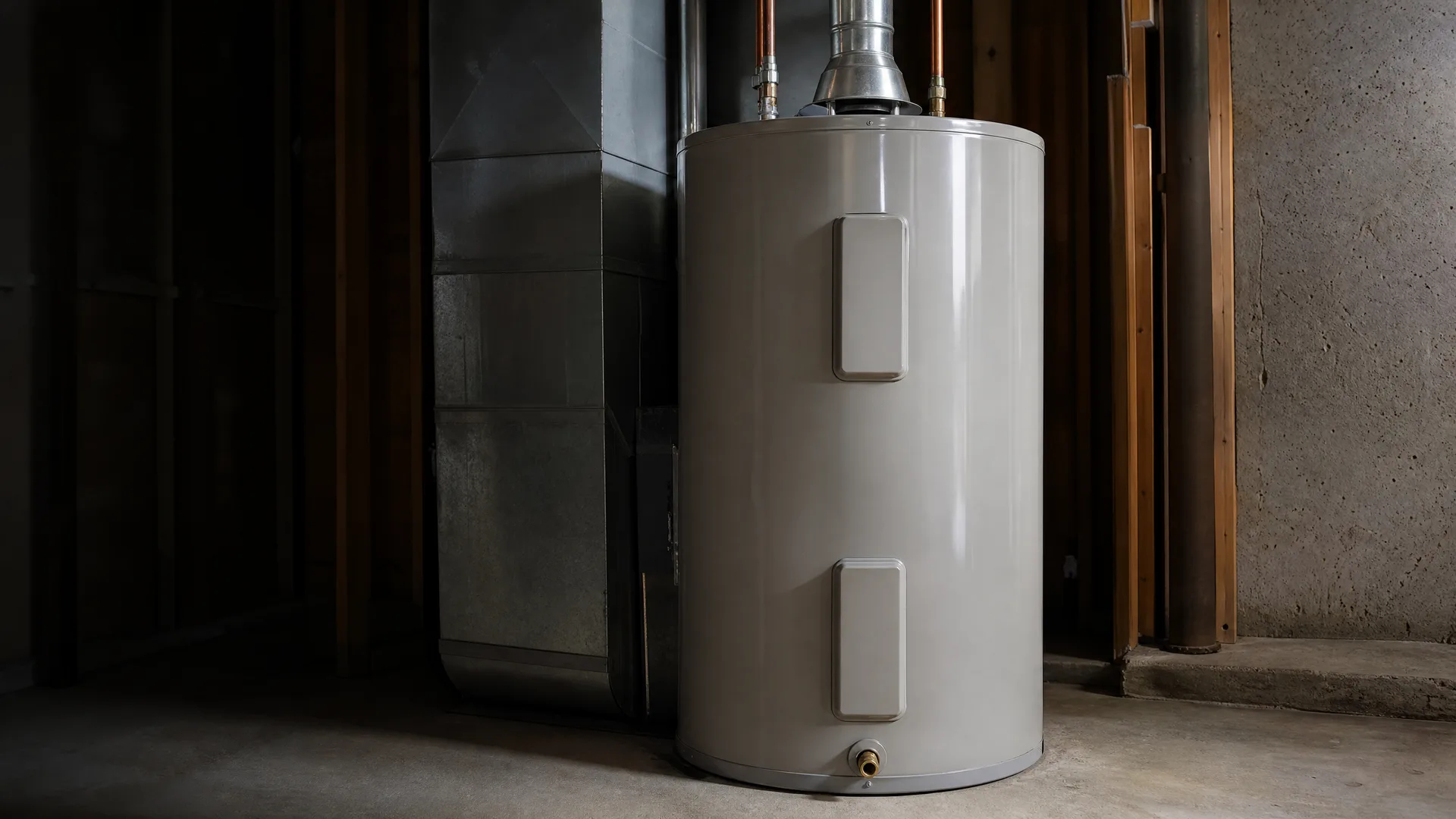
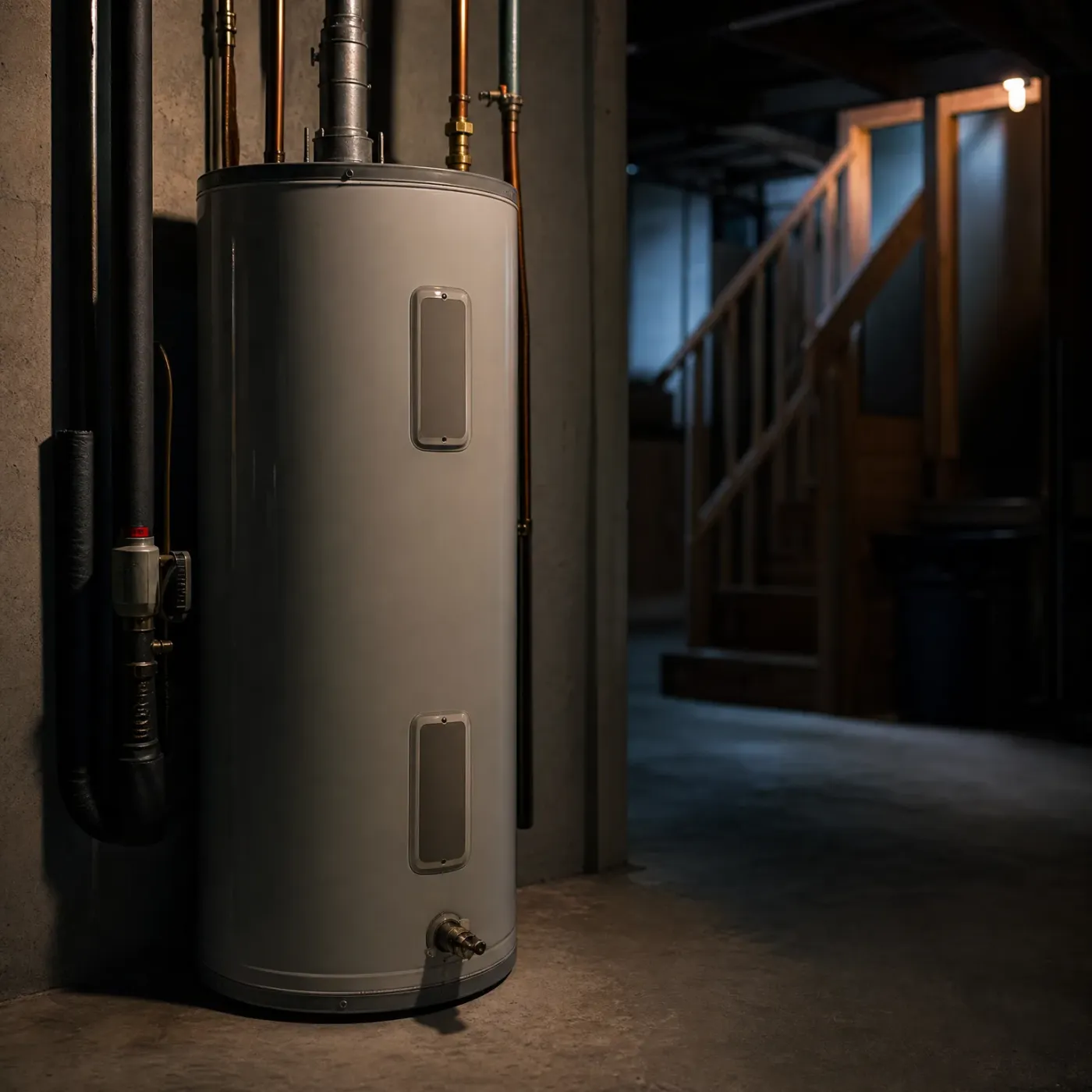
A tall cylindrical water heater with two access panels stands against a concrete wall in a dim basement, with copper and black pipes above it and a wooden staircase in the background.

No quotes to chase

Is a tankless water heater worth it in Dallas, TX

Whether a tankless unit makes sense depends on your gas line, your household's hot water use, and what you're paying now to heat it. This page gets into what changes with a tankless system and what it costs upfront versus a tank. Skip the search through contractor listings and the calls to explain your setup more than once. One licensed installer local to Dallas County looks at your water heater and tells you straight if switching pays off.

Start one form

For most homes in Dallas, a tankless water heater is worth it if the household uses enough hot water to need a bigger tank anyway, and it stays worth it longer here because mild winters mean the unit rarely works as hard as it would up north. A tankless heater warms water on demand instead of storing it, so you get hot water without limit as long as the flow rate stays under what the unit can handle. The catch is the gas line. Most tankless units need a larger gas line than older tank heaters were installed with, and running a new one adds to the job. If your home already has a gas line sized for it, or if you're replacing an electric tank and electricity costs more here than gas, the switch tends to pay off in lower monthly bills. If the gas line has to be upsized, it still may be worth it, but the upfront cost changes the math.

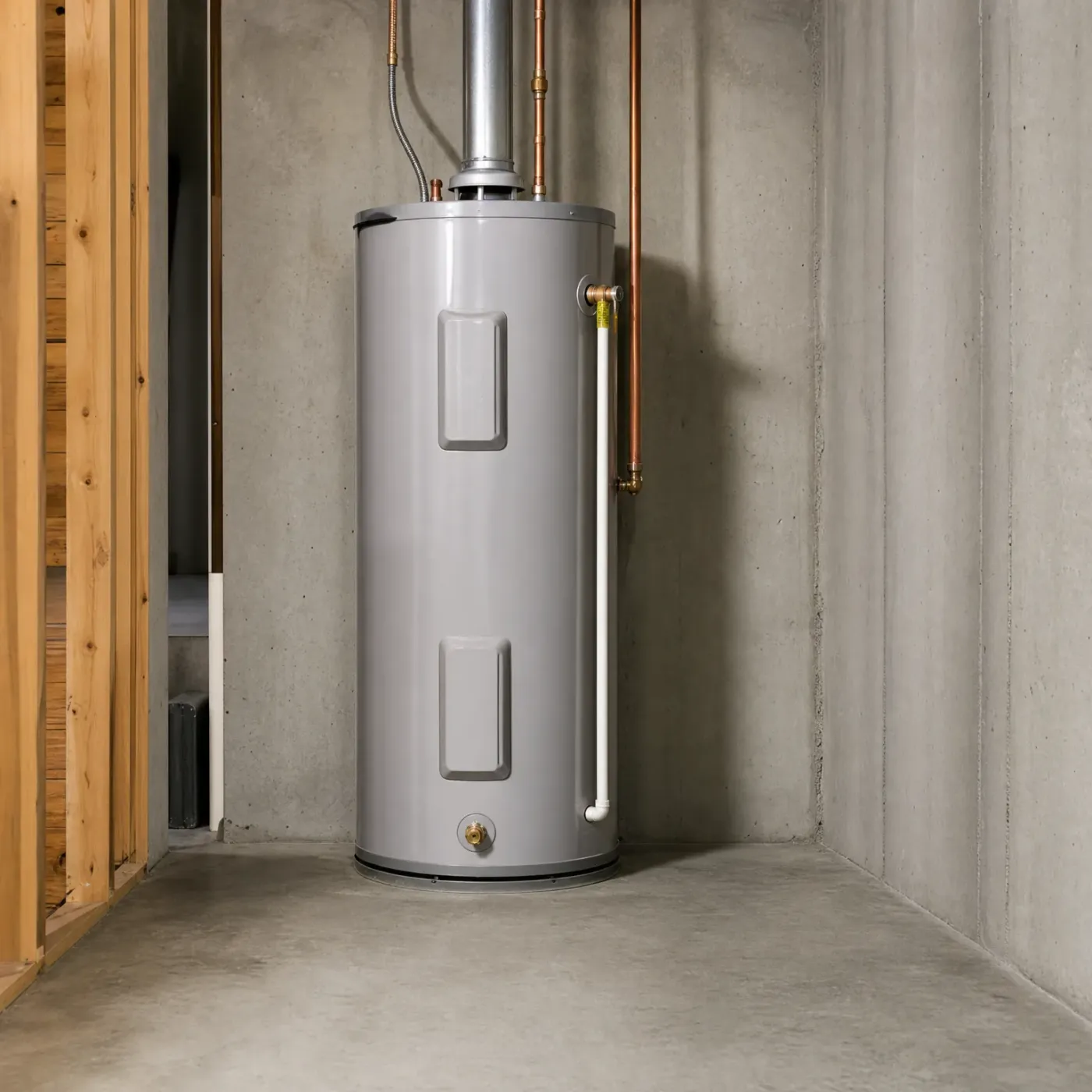
A gray cylindrical water heater standing in a concrete-walled basement corner, with copper and white pipes and a metal flue running up to the ceiling, next to exposed wood framing on the left.

A tank doing its job

This is what a working tank looks like: upright, dry, the fittings clean where the copper lines meet it. Electric tanks here run for years without drama since the water coming in doesn't get cold enough to strain the element the way it would further north.

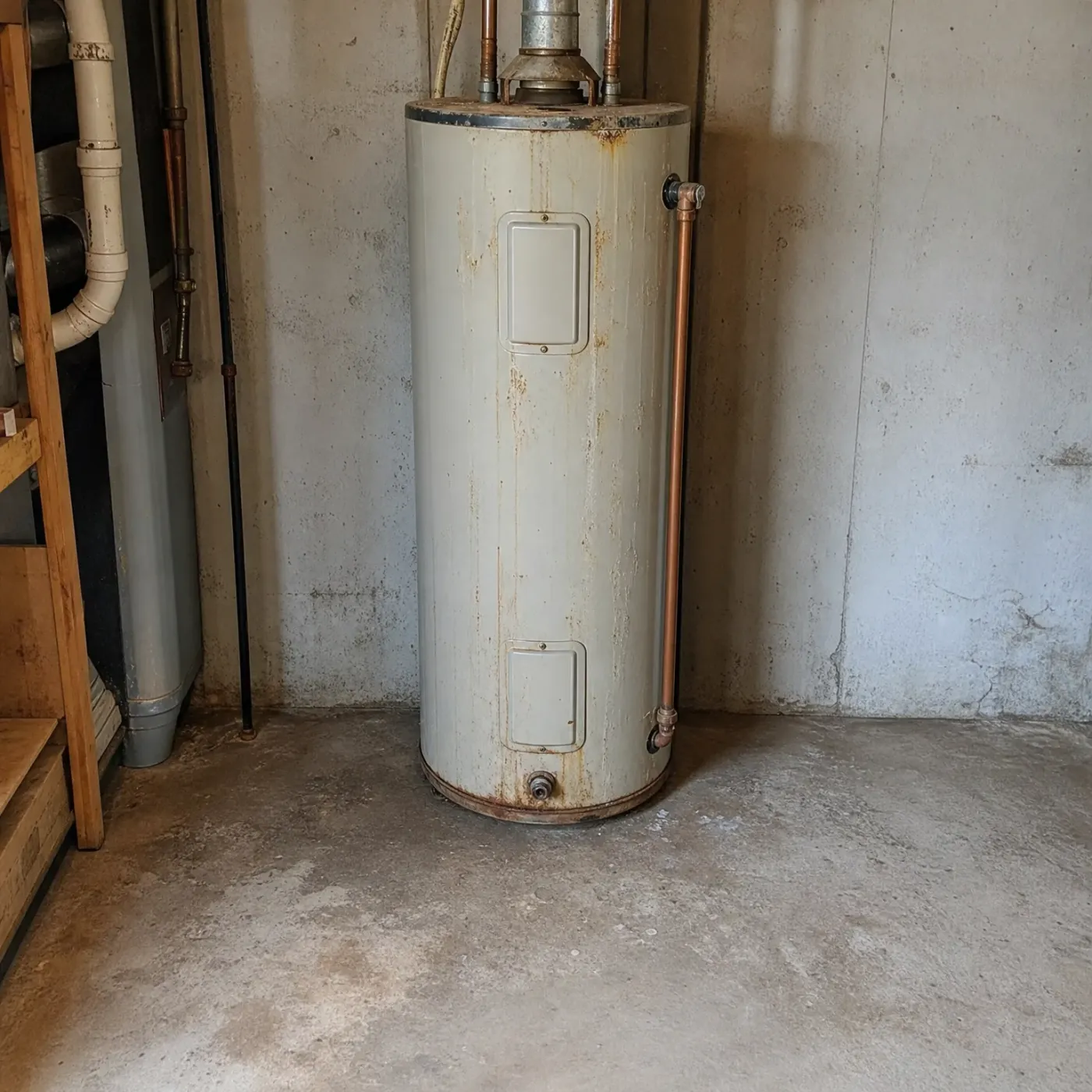
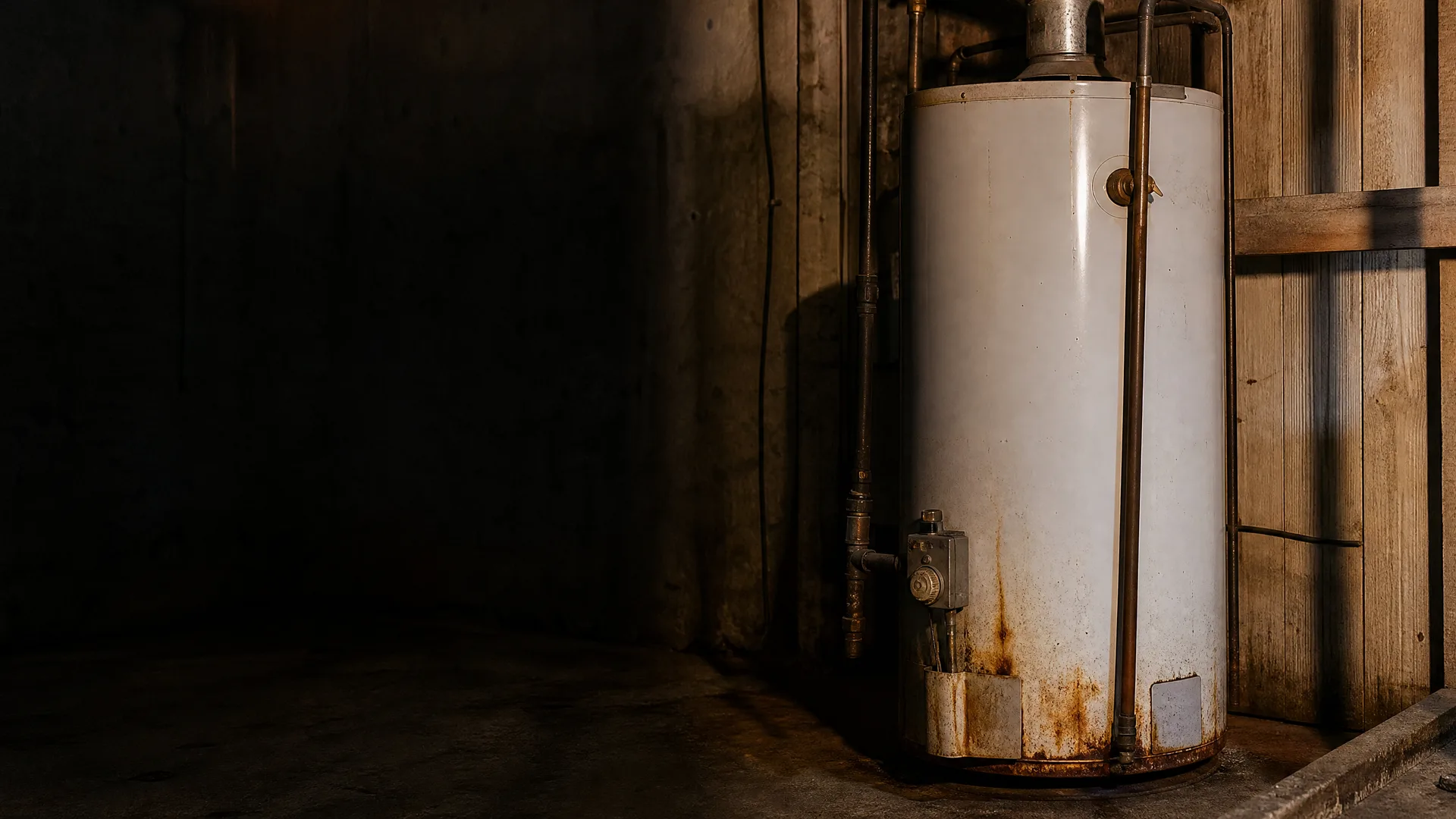
A rusted cream-colored water heater with copper piping and a flue stands in the corner of a concrete-walled basement next to wooden shelving and ductwork.

A tank on its way out

Rust like this on the jacket usually means the inside is worse. Once corrosion shows on the outside, the tank is close to a leak, and that's the point most homeowners start pricing a replacement instead of another repair.

Tankless or Tank: Which Fits Your House

Tankless

  • Most homes here run on electricity, and an electric tankless unit needs a dedicated heavy-duty circuit, sometimes more than one, which not every panel has room for.
  • A gas tankless unit needs a gas line sized for it, so if your house runs on electric heat, adding one means running new gas service, not just swapping the water heater.
  • It keeps making hot water as long as you run it, so a household that fills a tub and runs the dishwasher at the same time won't run out.
  • Mild winters here mean the incoming water is rarely very cold, so the unit isn't straining to hit temperature the way it would in a colder state.
  • It takes up a fraction of the space a tank does, which matters if yours sits in a closet or a tight utility space.
  • It needs a vent run to the outside sized and routed for that specific unit, which adds work a tank never asked for.

Tank

  • It works with the electrical or gas setup already in your house, so installation doesn't depend on adding a circuit or a gas line.
  • It holds a fixed amount of hot water, so back-to-back showers or a big load of laundry on wash day can draw it down.
  • It sits ready with water already hot, so there's no wait at the tap the moment you turn it on.
  • The tank itself takes up real floor space, usually a closet or a corner of the garage built around it.
  • Electric tanks here hold up well for years since the water coming in doesn't run cold enough to work the element hard.
  • If it fails, replacing it is usually a straight swap, since the space, wiring or gas line, and venting are already sized for a tank.
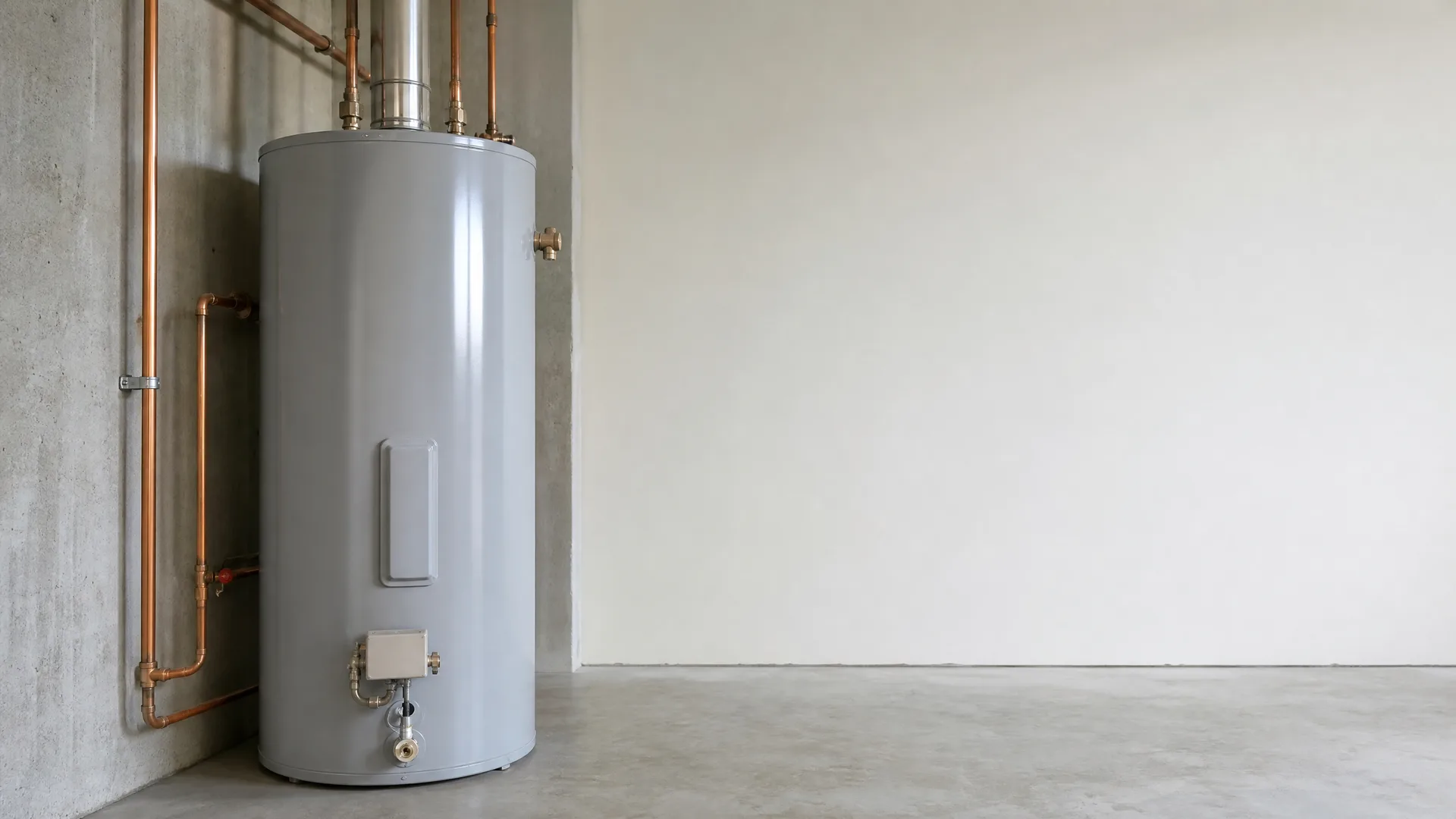
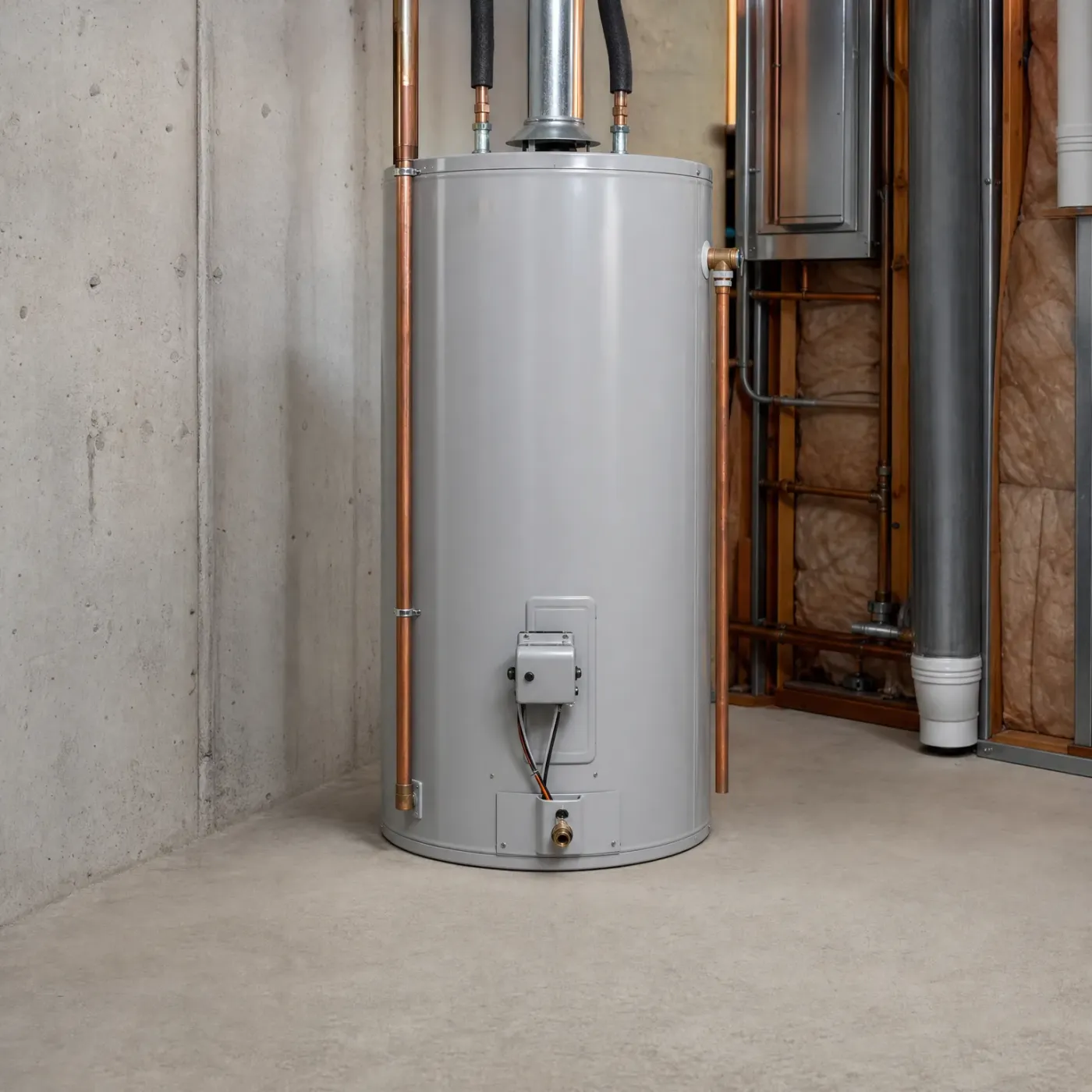
A gray cylindrical water heater with copper pipes stands against a concrete wall in an empty room with a smooth floor.

What the unit actually heats on demand

A tankless unit has no tank of water sitting ready, so it has to heat water as it passes through, right when you open the tap. Inside is a heat exchanger that the incoming water runs across, warmed by a gas burner or electric elements. The hotter you need the water and the faster it's flowing, the harder that exchanger works. That's why a unit sized for a single bathroom can fall behind if two showers run at once.

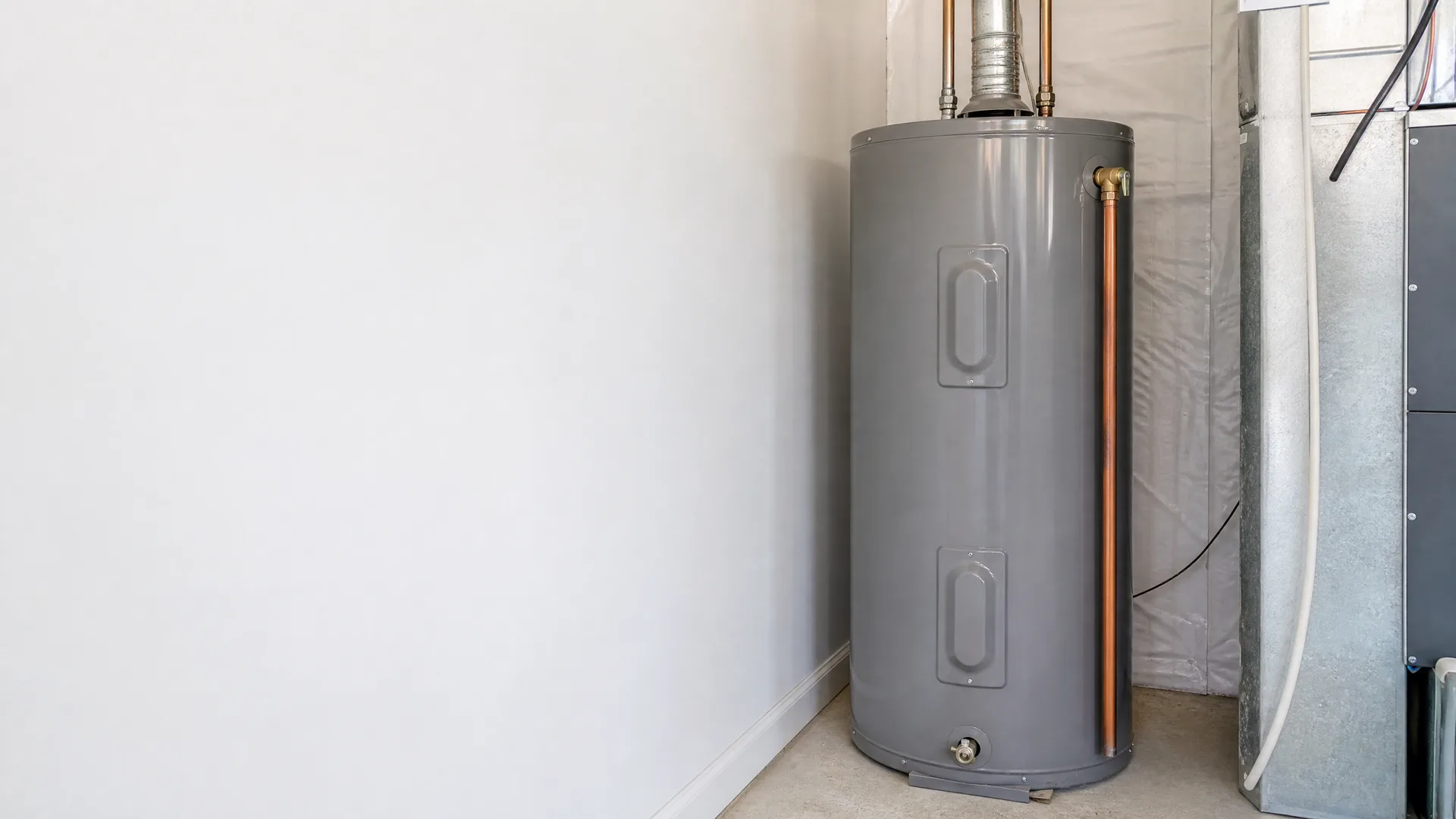
A gray cylindrical water heater with copper piping stands in a corner beside a metal furnace unit against a plain white wall.

Dallas water starts out warm

The water entering your house from the ground here is milder than it is in states with real winters, since Dallas winters don't freeze the ground deep the way the north does. A tankless unit doesn't have to raise the temperature as many degrees to get it to the shower or the washer. Less lift means less strain on the exchanger and the burner or elements, which is part of why these units tend to hold up well in this climate over the years.

A closed laptop and a ceramic mug on a wooden table in front of a kitchen with green cabinets, marble counter, black pot, cutting board, wooden bowl, and a white vase with greenery.

What you'd actually notice at your house

If your household is the kind that runs the dishwasher, a shower, and the washing machine around the same time, a tank running out of hot water is something you already know. A tankless unit doesn't run out, because it isn't storing a finite amount, it's heating water as it goes. What you'd notice instead is a steadier supply through a full morning of showers, not a short burst that fades on the third person in.

The other thing you'd notice is what it takes to get there. Checking whether your gas line and panel can support a tankless unit, finding someone who installs them regularly rather than occasionally, and getting a straight answer on what your house specifically needs is its own chore, separate from the work of running the new pipe or line. One local contractor who installs these year-round in Dallas can look at your gas line, your electrical panel, and your current tank and tell you what actually applies to your house, instead of you sorting through quotes that each assume something different about what you have.

A living room with a cream sofa and knit throw beside a window, with a wooden coffee table in the foreground holding a round woven tray, a small bowl, and a speckled vase of green leafy branches.
A woman with long gray wavy hair in a knit sweater sits on a light sofa with a striped pillow, looking toward a window in a room with wooden shelving and a potted plant.
A woman in a gray cowl-neck sweater stands in a living room with built-in shelves, a lamp, a sofa with cushions, and a bright window behind her, looking to her right.
A woman with long wavy brown hair in a dark blue sweater sits on a sofa with cushions, looking off to the side, with a wooden shelving unit, houseplant and bright window behind her.
A woman with long dark hair in a gray knit sweater sits indoors smiling and looking off to the side, with a window, houseplant, framed picture, and shelving blurred behind her.

One form, no calling around

A licensed installer who works in Dallas County gets your project.

You only hire the pro if you want to.

A house where hot water use is spread out, one shower in the morning, dishes at night, does fine on a tank and may never recoup the cost of switching.

A house where hot water use is bunched up, several showers back to back, the dishwasher running while someone's in the shower, is where a tankless unit earns its keep.

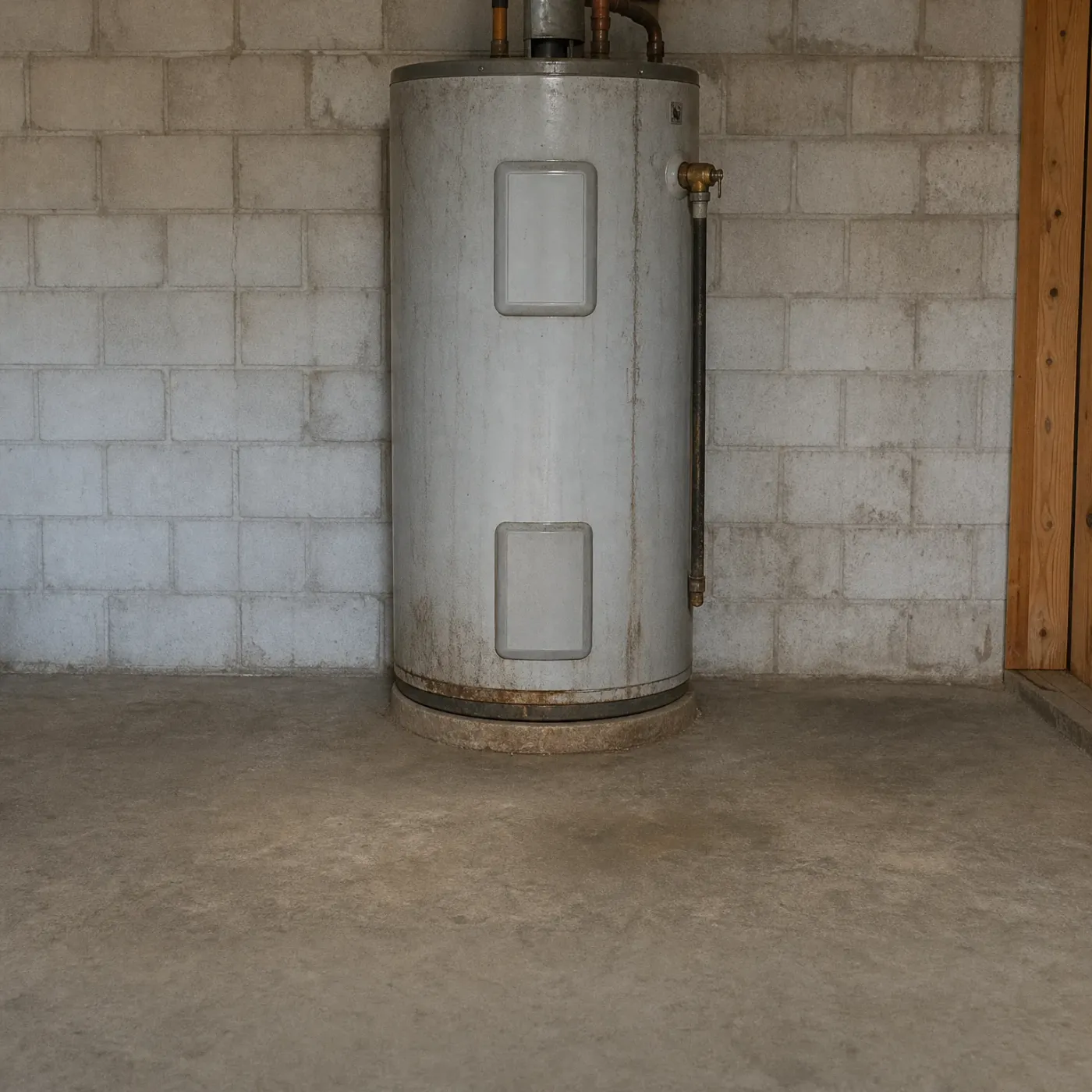
A cylindrical water heater with two access panels and copper pipes stands on a concrete floor against a painted concrete block wall.
Before you get your water heater installation
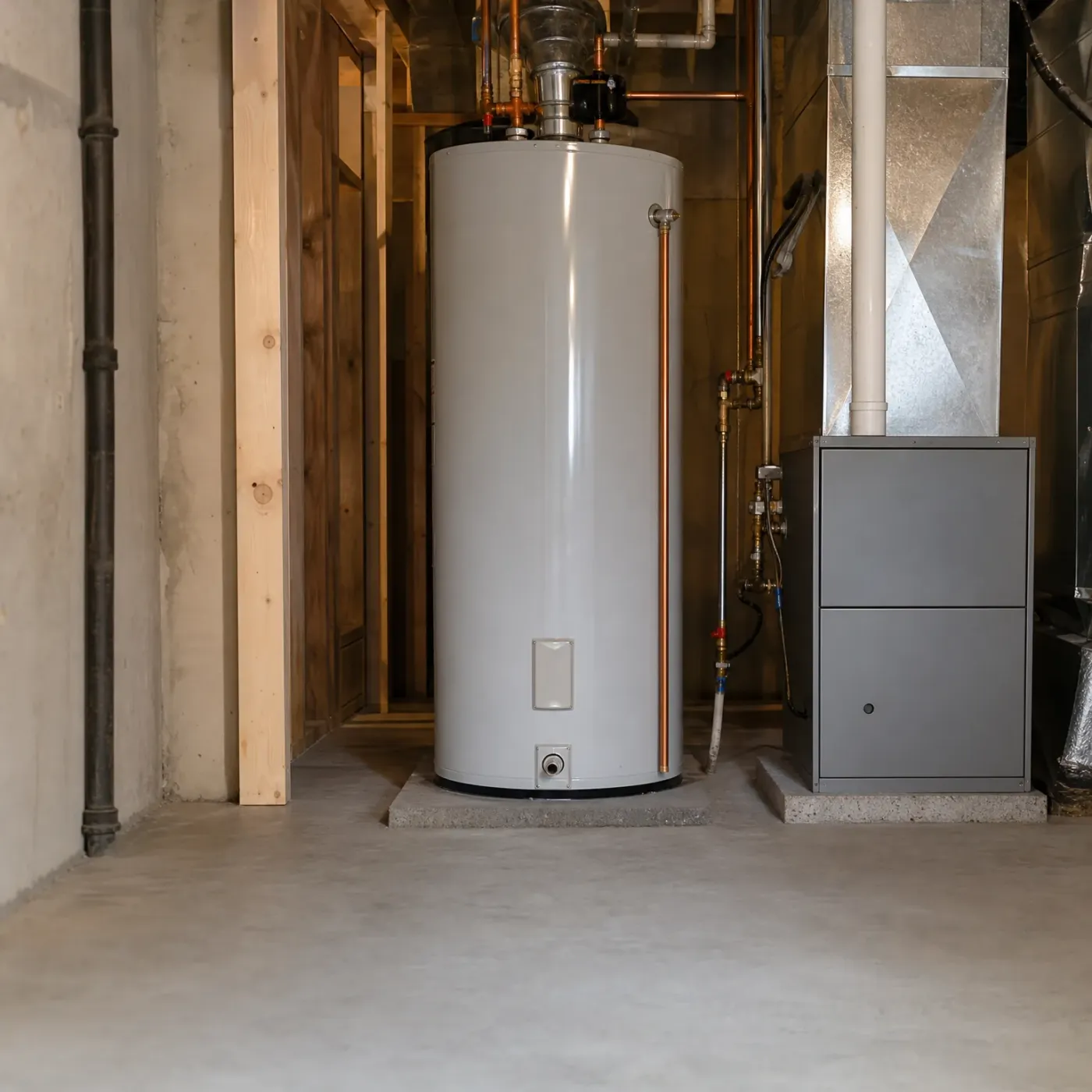
A white cylindrical water heater on a concrete pad in a basement, with copper and metal piping above it and a gray furnace cabinet with ductwork to the right.
After you get your water heater installation

Nothing inside a tankless unit heats until you turn on a faucet. A sensor at the inlet picks up the movement of water and that's the signal that starts everything else. The burner or the electric element doesn't come on before that, and it doesn't stay on waiting for you either. Water moves across a heat exchanger inside the unit, picking up heat in the few seconds it takes to pass through, rather than sitting in a tank warmed all day. On a gas unit, a fan or draft system pushes the exhaust out through a vent pipe built for that purpose. The gas valve isn't fixed at one output. It adjusts as it runs, based on how fast the water's moving through and how cold it was when it came in from the street. Shut the tap off and the sensor reads no flow, which cuts the burner or element within seconds. There's no tank holding heated water on standby, and nothing running when no one's using it.

How a tankless unit fires up

  • A flow sensor at the inlet detects water movement the moment you open a tap and signals the unit to fire.
  • The gas burner or electric element only activates once that flow is detected, not on a timer or a standby setting.
  • Water travels across the heat exchanger in a few seconds, picking up heat as it passes rather than sitting warmed in a tank.
  • An exhaust fan or draft system vents combustion byproducts out through a dedicated vent pipe sized for a gas tankless unit.
  • A modulating gas valve adjusts the burner's output based on how fast the water is moving and how cold it comes in.
  • Once you close the tap, the flow sensor reads zero movement and the unit shuts the burner or element down within seconds.
A gray cylindrical water heater stands in a basement corner against a concrete wall, with copper pipes, insulated flex lines, a metal flue, and insulated wall framing with ductwork to the right.
A tank in good shape, still under warranty, with years of service left, is a hard one to justify replacing with tankless.
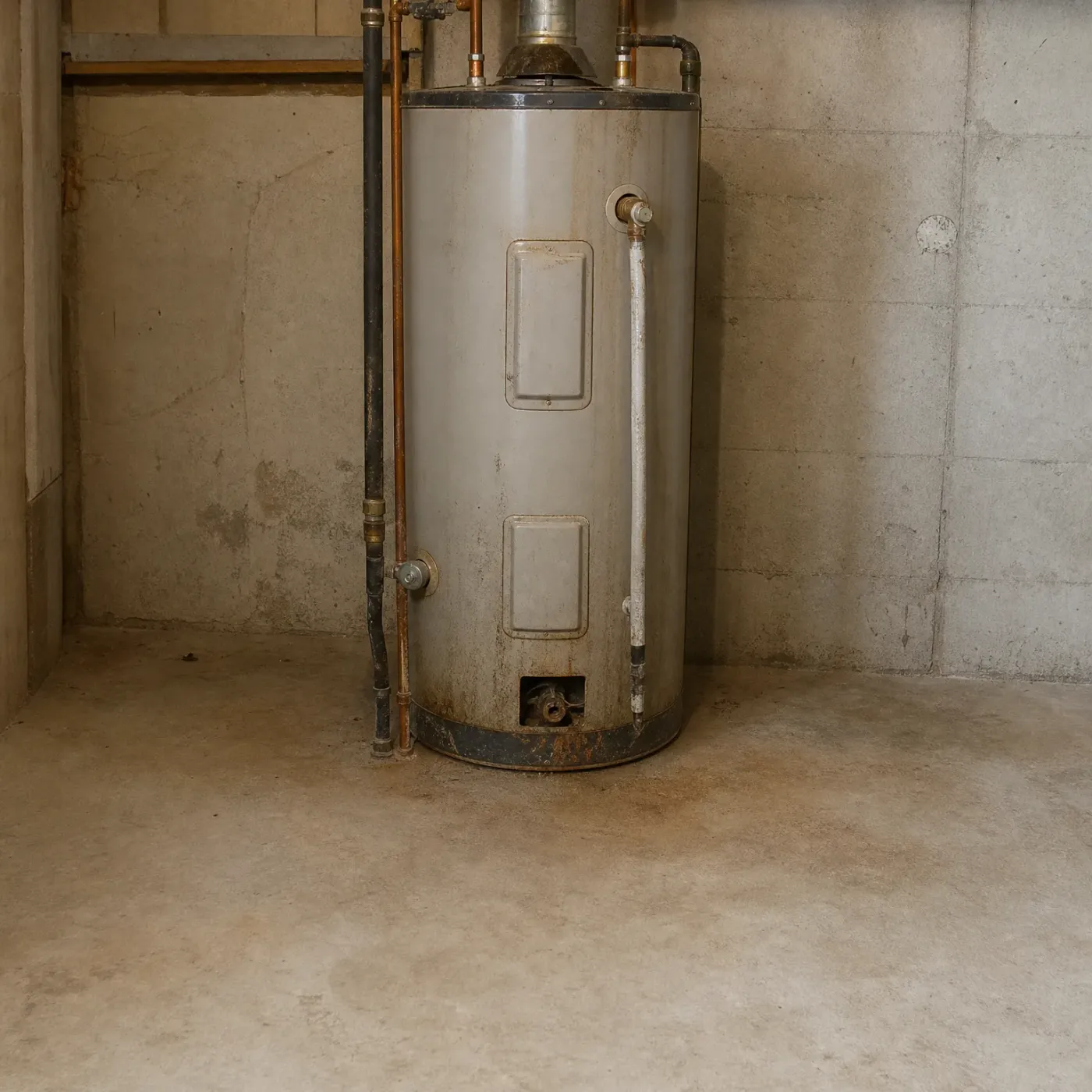
A rusting gas water heater with copper and steel pipes stands against a concrete block wall on a bare concrete floor.
A tank like this, rusted at the base and leaking there, is done, and that's the moment to look at tankless instead of another tank.
An old white water heater with rust along its base stands against a wooden wall in a dim basement with concrete floor and walls, connected to metal pipes.

The washing machine finished its cycle twenty minutes ago and the house has gone quiet, the kind of quiet that settles in after dinner when everyone's cleared out of the kitchen. You're down in the utility room because you thought you heard something, and there it is: a thin line of rust running down the side of the tank, pooling where the base meets the floor. The metal's gone dark there, soft-looking. You crouch down and touch it and your fingers come away damp. It's not dripping, not yet, just seeping, slow enough that you could almost talk yourself into waiting. Outside, the evening's warm enough that the AC is still running somewhere behind you.
How much hot water does your house actually need?

  • 2.63 people per household on average

    The average household in Dallas County runs 2.63 people, and a household that size is usually the point where a tank starts running short.

  • Half the homes here were built by 1983

    Half the homes in the county were built in 1983 or earlier, old enough that the original tank has likely been swapped at least once already.

  • 61.8% of homes heat with electricity

    61.8% of homes here heat with electricity, which is the fuel that limits whether a tankless unit can just swap in or needs new wiring first.

ACS 2020-2024

A woman with dark hair in a bun sits on a grey couch holding a sleeping child wrapped in a knit blanket, with a lit lamp and potted plant blurred in the background.
A smiling older woman with gray hair in a loose bun wearing a ribbed beige sweater stands in a dimly lit kitchen beside a window showing darkness outside, with a loaf of crusty bread on a wooden board in the foreground.

Staying with a tank

You replace the same type of unit you already have, no new gas line or circuit to run. Simpler install, and a licensed local installer can usually get it done the same visit.

Fill out one form

Switching to tankless

You get a unit that won't run out partway through a busy evening, but the installer needs to check your gas line or panel first to see what your house can support.

Fill out one form

Power here costs 16.63 cents per kilowatt-hour

At 16.63 cents per kilowatt-hour, every gallon an electric tank keeps hot around the clock adds to the bill, whether anyone uses it or not. A tankless unit only draws power when a tap is open, so at that rate it stops paying for heat nobody's using.

EIA-861 2025

Where That Leaves You

  • Whether tankless is worth it comes down to how much hot water your house actually uses and what your gas line and panel can support.
  • Mild Dallas winters mean a tankless unit here works less hard year-round than the same unit would in a colder state.
  • A tank that's still sound and under warranty is rarely worth replacing early, but a rusted or leaking tank is the right moment to compare the two.
  • A licensed local installer who works on both tank and tankless systems in Dallas County homes can tell you quickly which one fits your gas line and electrical setup.
  • Going through one local contractor instead of several means you explain your house and your water heater once, not on repeat calls.

Tankless is worth it where the house would need a bigger tank anyway, and Dallas's mild winters mean that once it's in, it keeps earning its keep longer than it would somewhere cold. Where it doesn't pay off is a house with light, spread-out hot water use and a tank that's still sound. The gas line and the panel decide what's possible before the hot water math even matters, and that's not something to guess at from the utility room with a flashlight. A tank that's rusted at the base or already leaking has made the decision for you. One that's a few years in and still under warranty hasn't, and there's no reason to rush it.

What you need next is someone who can look at your gas line, your panel, and your actual tank and tell you straight which way you fall, not a pitch for the more expensive option. A licensed installer working in Dallas County sees both kinds of systems in houses like yours all the time and knows what a panel here can usually carry and what an older gas line can't. Going with one contractor means you describe your house and your water heater once, to someone who already knows the area, instead of repeating it on call after call while you sort through different answers. That's the part that's actually in your hands right now. The water heater itself will tell you the rest.

A beige cylindrical water heater with two access panels and a copper pipe connection at the top, standing on a concrete floor beside metal ductwork in a dim basement.

Explain it one time

Step 1 of 3: Equipment