



Is a tankless water heater worth it in Denton, TX

Send the form and the search for an installer is over.

Let a pro reach out

Is a tankless water heater worth it in Denton, TX?

You keep seeing tankless water heaters come up whenever you look into replacing your water heater, and the price tag makes you want to know if it actually pays off here. Your house runs on electricity like most around Denton, and you're wondering if the switch makes sense for a Texas summer and a mild winter, or if a standard tank does the job just as well for less trouble.

For most homes in Denton, a tankless unit is worth it if you run out of hot water now or plan to stay in the house a long time

Winters here are mild, so the incoming water a tankless unit has to heat never gets as cold as it does farther north. That means an electric tankless system doesn't have to work as hard here as it would elsewhere, and it can keep up with a shower or the dishwasher without the lag you'd see in a colder climate. The tradeoff is upfront cost and the electrical work involved, since tankless units draw more power at once than a tank does. If your home's panel can handle that, or can be upgraded for it, a tankless heater will give you hot water on demand instead of running out partway through back to back showers, which is the main reason homeowners here switch.

A man with gray hair and a beard wearing a dark green shirt jacket over a navy top sits on a gray sofa in a living room, looking to the side, with a window, potted plant and shelving in the background.
A gray-haired man in a navy button-up shirt over a white tee sits on a light gray sofa in a living room, looking off to the side, with a window, houseplant, framed picture and shelving behind him.
A man with gray hair, a beard and glasses, wearing a dark green sweater, sits on a gray sofa in a sunlit living room with a potted plant, table lamp and wooden sideboard behind him.
A man with grey hair and stubble in a dark sweater sits on a grey sofa indoors, looking off to the side, with a potted plant and a sunlit window behind him.

Tank or Tankless in Denton

Tank

  • An electric tank water heater costs less to install, since it doesn't need the larger breaker or dedicated circuit a whole-home electric tankless unit requires.
  • It keeps 40 to 50 gallons hot and ready, which covers most households even with Denton's long run of muggy summer days raising shower demand.
  • If the power goes out, a tank holds onto its hot water for a while since it's already heated and sitting insulated in the tank.
  • Replacement is usually a same-day swap because the vent, gas or electrical hookup and water lines are already in place.
  • It runs out partway through a long shower or back-to-back loads if demand outpaces how fast it can recover.

Tankless

  • It heats water only as you use it, so there's no standby tank losing heat between uses, which matters less here since winters are mild and the unit isn't fighting cold incoming groundwater most of the year.
  • A whole-home electric tankless unit draws a heavy electrical load, and most homes here need an electrician to confirm the panel and wiring can support it before installation.
  • It won't run out of hot water mid-shower, since it heats on demand rather than drawing down a fixed supply.
  • It takes up far less space, mounting on a wall instead of standing a few feet tall on the floor.
  • Since power here is typical in price, the lower standby loss doesn't translate to the same savings it might where electricity costs more.
  • Installation takes more planning than a tank swap because of the electrical work involved, so it isn't usually a same-day job.
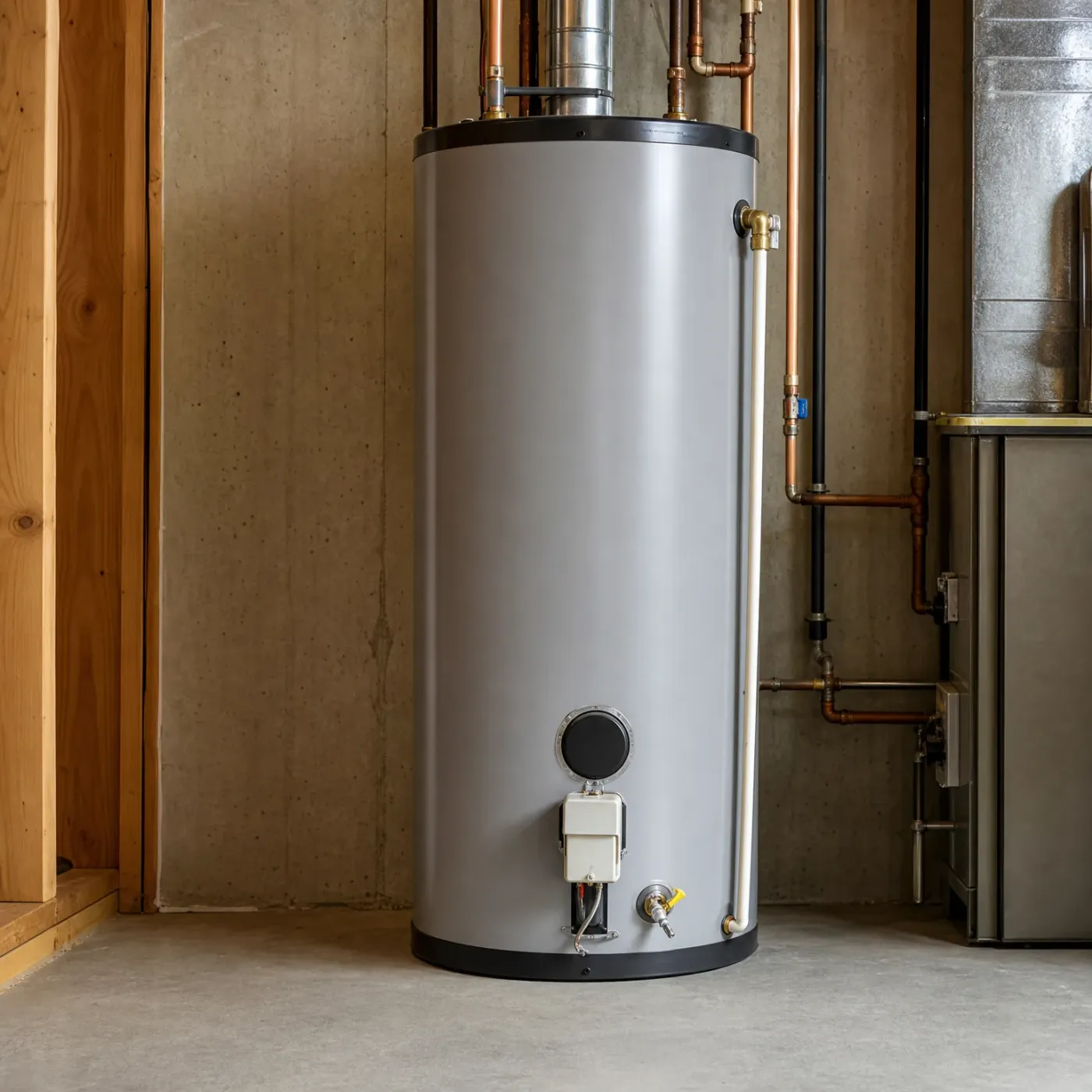
A gray cylindrical water heater stands on a concrete floor against a concrete wall, with copper and black pipes running overhead and a metal duct and dark equipment cabinet to the right.

A tank water heater doing its job

This is what a tank water heater looks like when it's running the way it should. The connections are tight, the flue is clear, and there's no rust working its way down the tank. Electric tank units in Denton can run a long time without trouble when they're installed right.
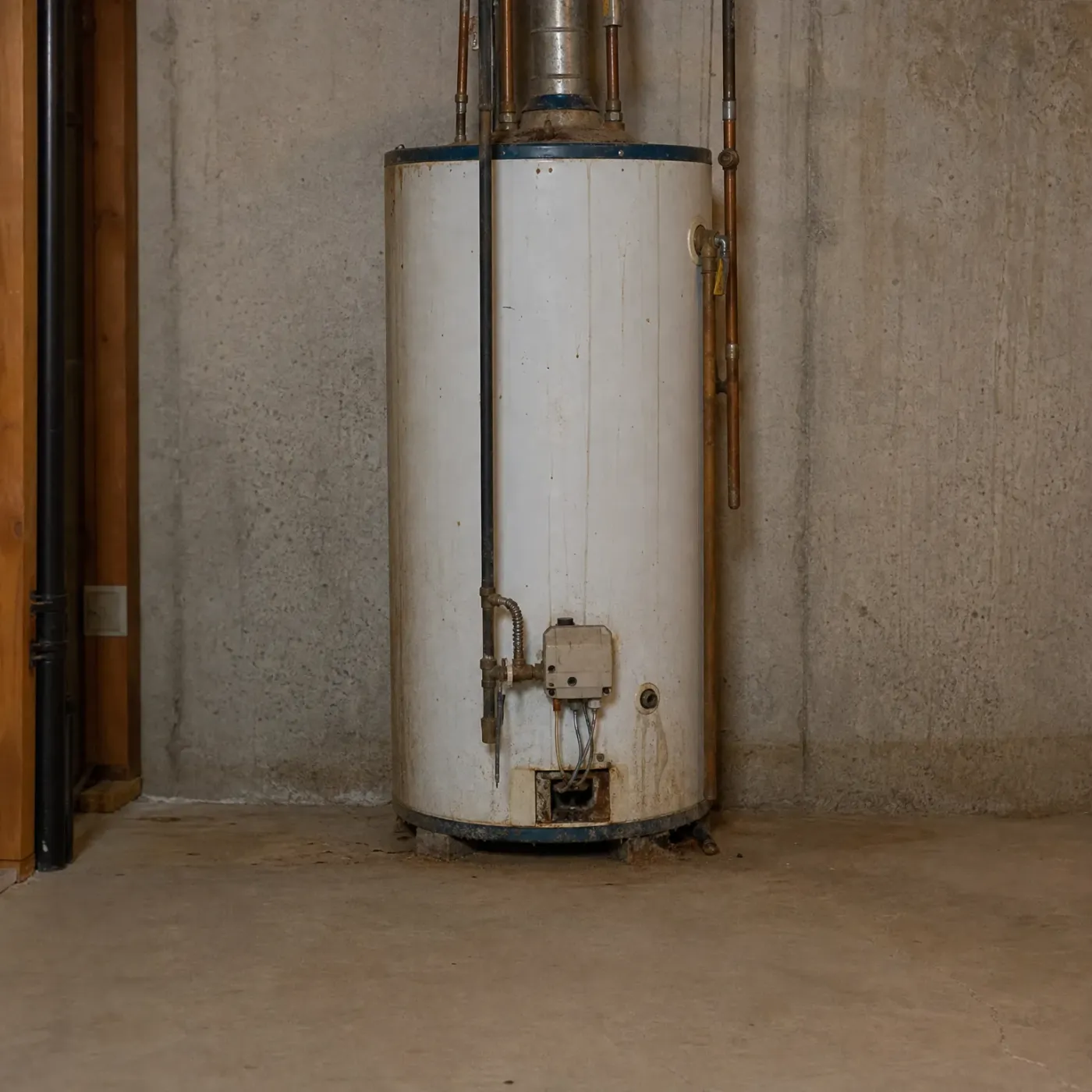
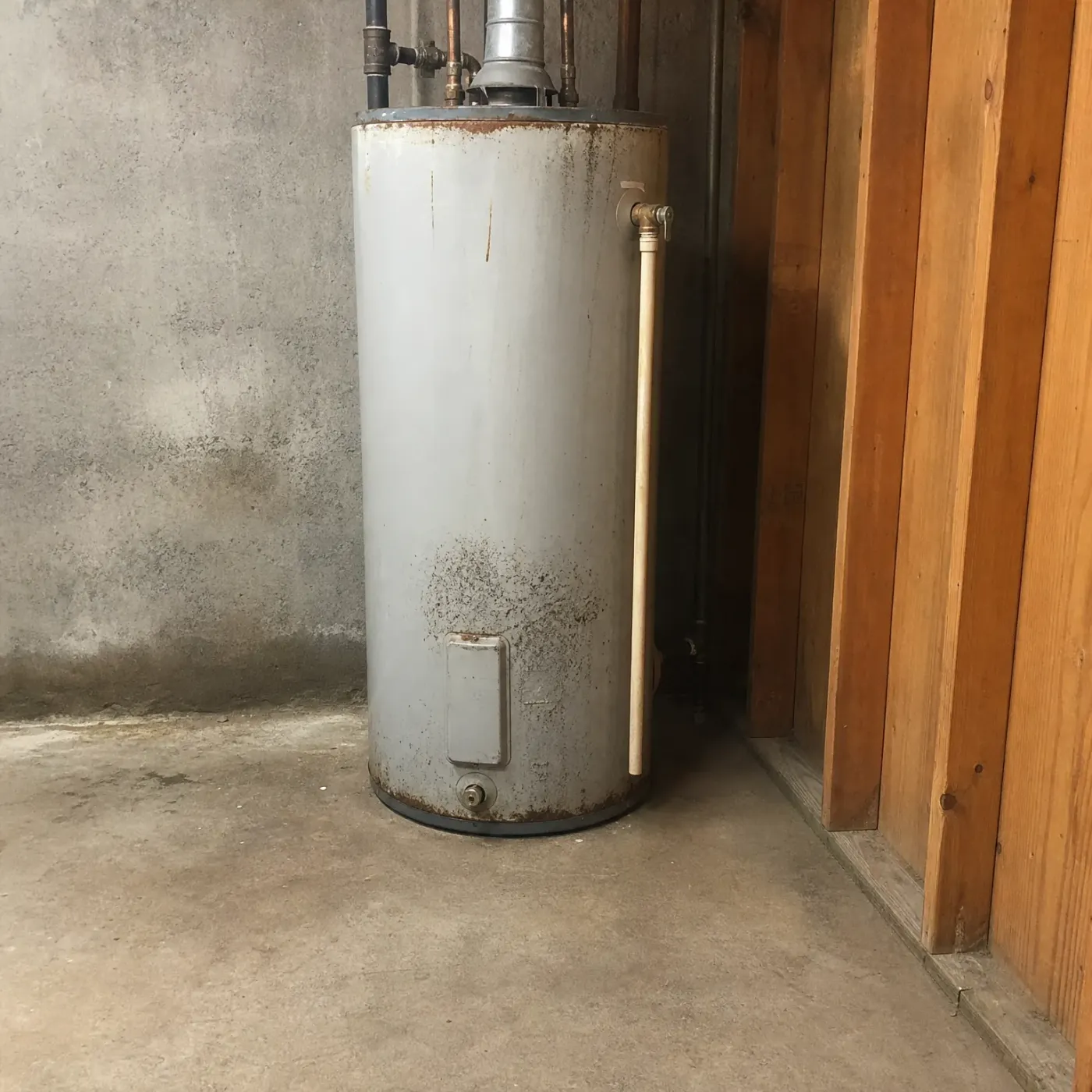
An old white gas water heater with rust stains, copper pipes and a flue stands in the corner of a concrete-walled room with a bare concrete floor and a wooden door frame at left.

A tank water heater past its time

Rust stains on the tank, a corroded flue, worn paint around the fittings. This is what tells you a tank is on its way out, not a date on a calendar. Once a tank looks like this, the question isn't whether to replace it, it's what to replace it with.

Running out of hot water more than once a week?

If the shower turns cold before the second person in the house gets one, or you're timing laundry and dishes around who showered last, that's the tank running out of hot water, not a broken unit. With an electric tank, once the 40 or 50 gallons are used up, you wait for it to recover. A tankless unit doesn't have that limit, since it heats water as it runs instead of storing it. You might also notice the tank making popping or rumbling sounds, which usually means sediment has built up on the bottom. Left alone, that sediment makes the tank work harder and can shorten how long it lasts.

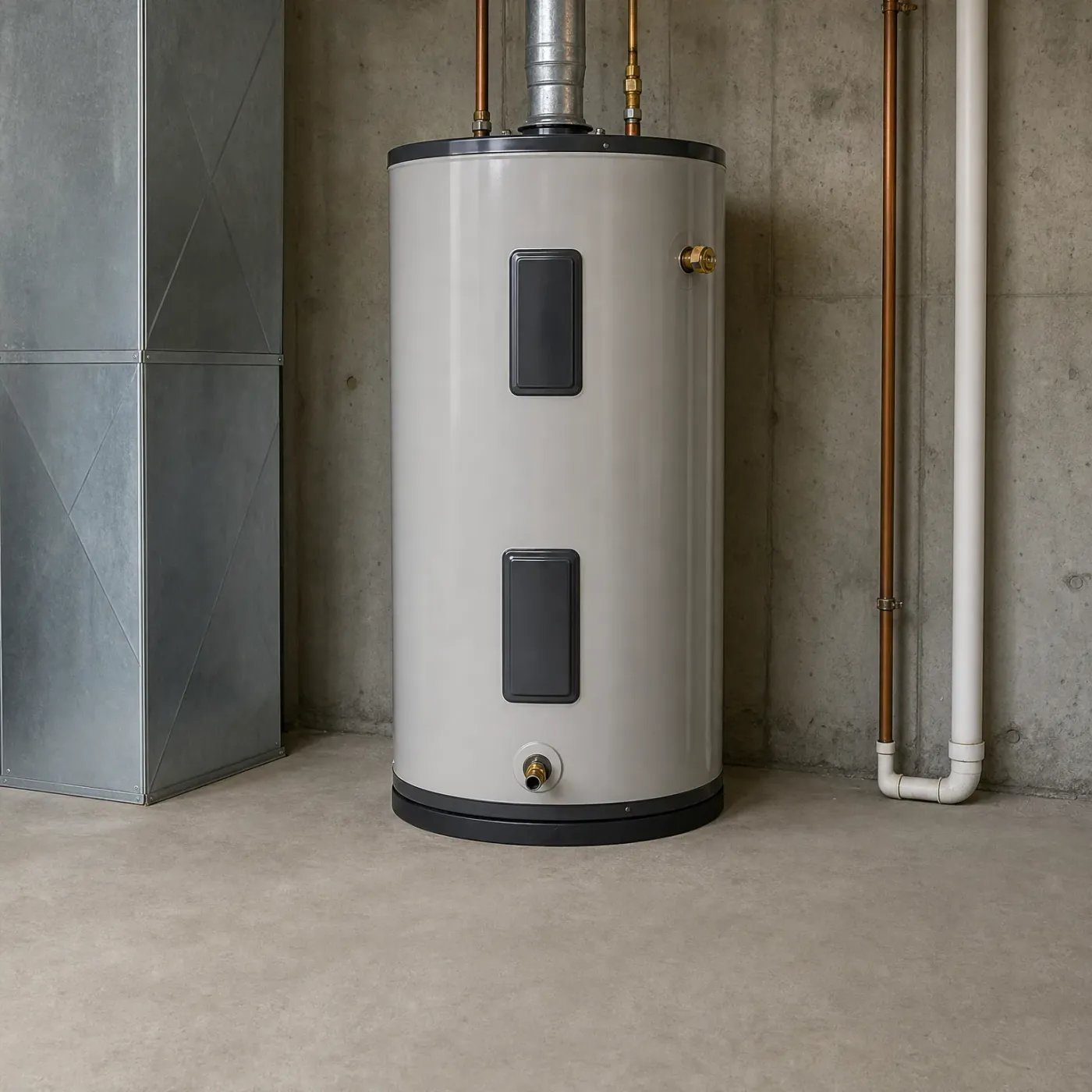
A cylindrical beige water heater with two dark access panels stands on a concrete floor against a concrete wall, with copper and white pipes to the right and sheet-metal ductwork to the left.
An electric tank like this one, with tight fittings and a clear drain valve, still has years of service left in it.
A rusting gray cylindrical water heater with copper pipes and a drain tube stands on a concrete floor against a concrete wall beside vertical wood paneling.
Rust working down the tank and soot near the base mean the tank is failing, not something a repair will fix.

How a Tankless Unit Actually Heats

  • An electric tankless unit heats water only when a fixture calls for it, instead of keeping a tank hot around the clock.
  • Flow sensors detect water movement and switch on heating elements sized to raise the temperature as water passes through.
  • Because the unit has no tank, it needs a larger dedicated circuit to deliver enough power fast enough for a hot shower.
  • Output is limited by amperage, so running a shower and a dishwasher at once can pull more than the unit can supply.
  • A buffer tank or recirculation line can cut down on the delay before hot water reaches a faraway bathroom.
  • Mineral buildup on the heating element is the most common reason a tankless unit loses output over time.

Open the tap and a flow sensor inside the unit picks up the movement right away. That's the signal that tells the heating elements to switch on. There's no tank sitting full of hot water waiting for you, so the unit has to react fast and pull enough power to raise the temperature of the water as it passes through, in real time. That takes more amperage than a tank heater ever needs, which is why a whole-home electric tankless unit needs its own dedicated circuit with a larger breaker. It's sized for the job, not for convenience.

That same limit on power is what trips people up. The unit can only push out so many gallons per minute at the temperature rise it's built for. Run a shower and start the dishwasher at the same time and you can ask for more hot water than the elements can deliver, and the output drops to cover both. If the bathroom farthest from the unit always takes a while to warm up, a recirculation line or a small buffer tank closer to that fixture can shorten the wait.

Over time, the thing most likely to cut into output isn't the electronics. It's mineral buildup collecting on the heating element itself, the same scale that forms in a kettle, and it's worth asking a contractor how that gets checked on this kind of unit.

A woman with shoulder-length blonde-grey hair in a light knit cardigan sits in a grey upholstered armchair, looking toward a window, with a bookshelf and a small potted plant behind her.
A woman with her hair in a bun sits wrapped in a gray knit blanket on a couch, eyes closed, with a young boy asleep against her shoulder, beside a lit table lamp in a dim room.

Stop chasing a water heater pro

A licensed installer who works in Denton County gets your project.

Sending the form costs nothing.

What an electric tankless unit draws

A whole-home electric tankless water heater needs enough power to heat water instantly, with no tank to store a head start. That usually means a large dedicated breaker, sometimes more than one, sized to the unit's heating elements. Your panel has to have the room for it. If your panel is already full or close to its limit, that's worth checking before you decide, since adding the circuit can mean panel work on top of the unit itself. A tank heater draws less because it heats gradually and holds that heat, so it asks less of your electrical system from the start.

Why sizing for your house matters

Tankless units are rated by how many gallons per minute they can heat to a usable temperature, and that rating has to match what your house actually asks of it at once. Running a shower while the dishwasher and a washing machine both go can pull more hot water than a single unit is sized for, and the fix for that is sizing the system for your heaviest moment, not your average day. A licensed installer works that out from your fixtures and your panel together, since the right size depends on both. Undersized, it falls short right when you need it most.

How many people are actually sharing your hot water?

  • 2.68 people per household on average

    Households in Denton County average 2.68 people, so most hot water demand here is a family of two to four running showers back to back, not a crowd.

  • Half the homes here were built by 2003

    Half the homes in Denton County were built in 2003 or later, so a lot of the water heaters in them were sized for electric tank units, not a tankless retrofit.

  • 54.2% of homes heat with electricity

    Electricity heats 54.2% of homes in Denton County, which is why the question for most readers here is a breaker and circuit question before it's a gas line question.

ACS 2020-2024

When tankless makes sense here

If your household runs showers back to back most mornings, or you've added people to the house since the tank was put in, a tankless unit solves the actual problem instead of working around it. There's no tank to run out, so the third shower is as hot as the first. It also takes up far less space, which matters if the water heater sits in a closet or utility room you'd rather use for something else. The tradeoff is the electrical work. A whole-home electric tankless unit needs a large dedicated breaker, and your panel has to have the room and capacity for it.

When a tank still makes sense here

If your current tank keeps up with the household and you're not running out of hot water, there's no problem for tankless to solve. A tank water heater is simpler to install, costs less upfront, and doesn't ask anything of your electrical panel beyond what's already there. For a household of two to four, which covers most homes in Denton County, 40 to 50 gallons recovers fast enough between uses that most people never notice a limit. Replacing a working tank with tankless mainly buys you space and endless hot water, not a fix for a problem you have.

Power here costs 15.12 cents per kilowatt-hour

At 15.12 cents per kilowatt-hour, an electric tankless unit's bigger draw shows up on the bill more than a tank's does, since it's pulling hard power the moment someone starts a shower instead of sipping power all day to hold a tank warm. Whether that nets out cheaper depends on how much hot water your house actually uses.

EIA-861 2025

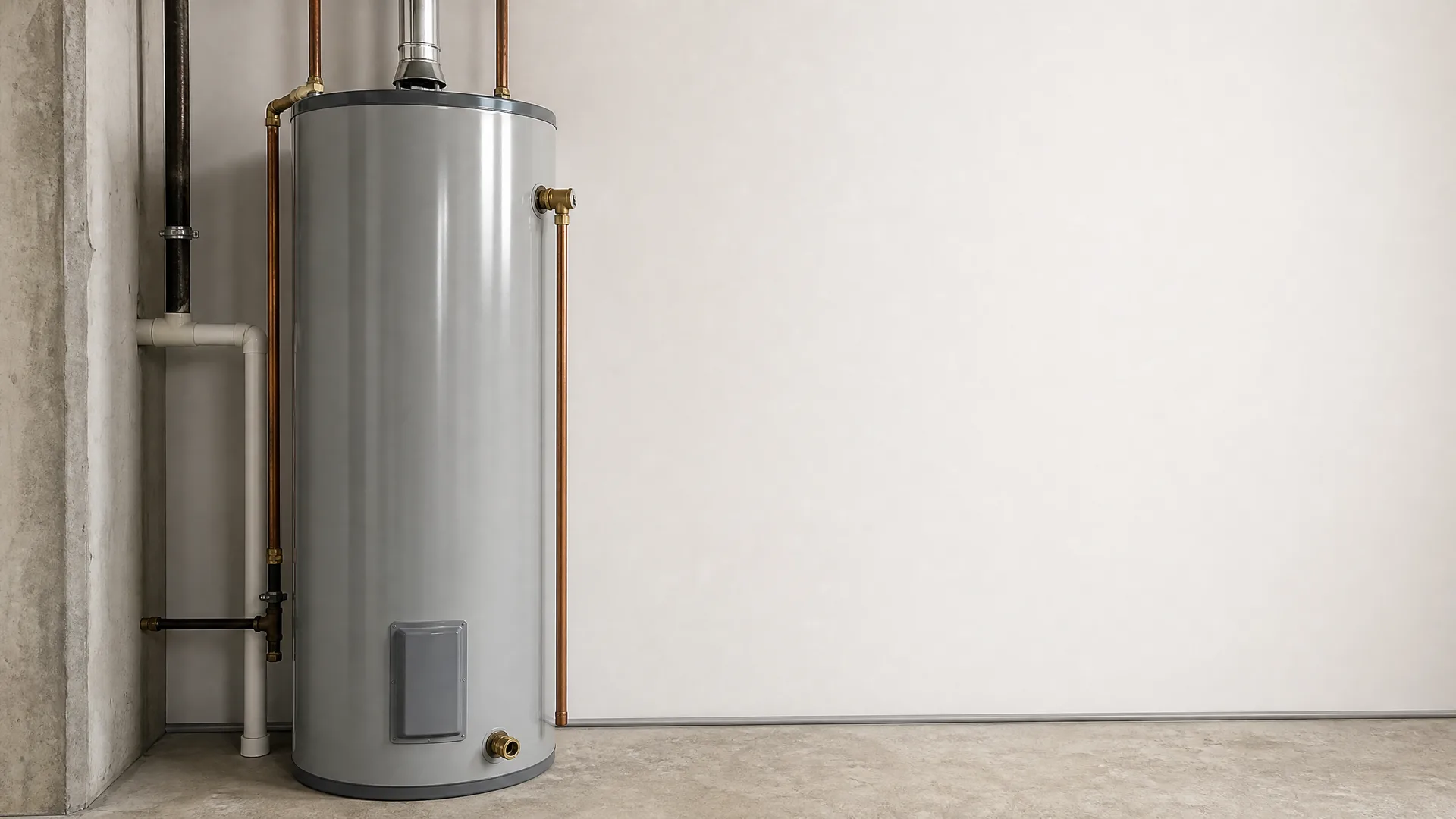
A gray cylindrical water heater with copper and PVC pipes stands against a plain light wall in a bare concrete-floored room.

Morning routine stays on schedule

If everyone showers within the same hour before school or work, a tankless unit keeps up because it isn't limited by what's stored. It heats water as it passes through, so the fourth shower is no different from the first. For a house where the hot water gets used hard in a short window, that's the difference that matters, not the energy bill.

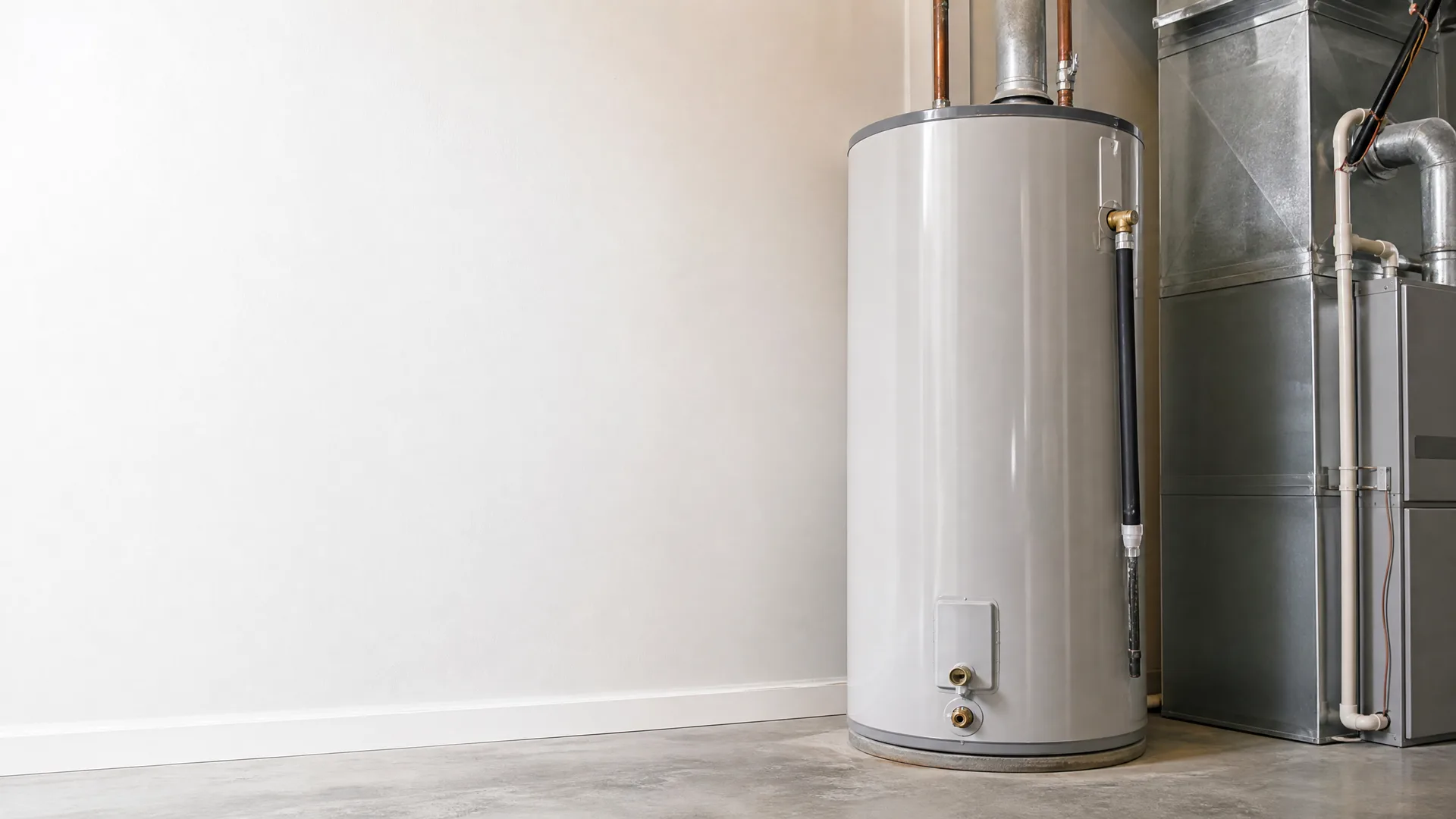
A gray cylindrical water heater with copper pipes stands against a white wall on a concrete floor, next to metal ductwork and a furnace.

Simple habits don't need it

If your household showers one after another with gaps between, or does laundry and dishes at different times of day, a 40 to 50 gallon tank already covers that without strain. There's no demand problem to solve. Paying for the larger breaker and installation that tankless requires doesn't change anything you'd notice day to day.

Whether a tankless unit is worth it comes down to what your household actually does with hot water, not what the unit costs to buy. If your home keeps running out mid-morning or you've added people since the tank went in, tankless solves that for good. If the tank keeps up fine, swapping it for tankless just moves money around without fixing anything. Either way, the wiring work matters more in Denton than the brand on the unit, since a whole-home electric tankless heater needs a dedicated breaker sized correctly for your panel, and that's not a job to guess at. A licensed local contractor who installs and services both tank and tankless units around Denton County sees which one fails and why, season after season, and can tell you straight whether your panel and your household's hot water habits make tankless worth the switch or not. You don't need five opinions on this, just one who knows the equipment and knows Denton.

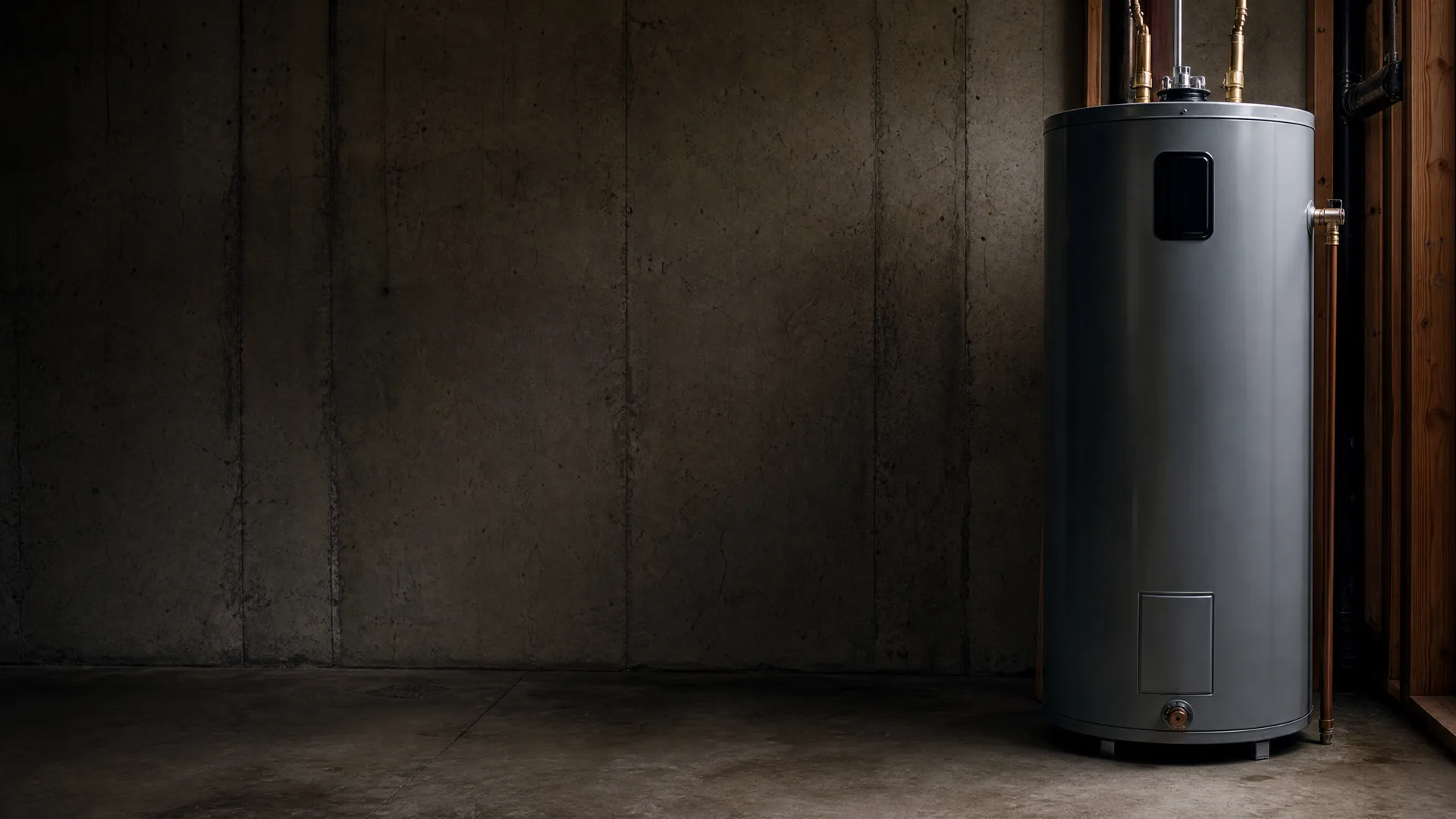
A gray cylindrical water heater with copper pipes and brass fittings at its top stands on a concrete floor against a bare concrete wall.

Send one request and you're done looking

One installer gets your project, so there's no bidding war over it.

Step 1 of 3: Equipment