No hot water in Sugar Land, TX

A Fort Bend County pro who repairs water heaters gets your request.

Get my match

Why am I suddenly out of hot water?

You turned on the tap expecting hot water and got nothing but cold, or water that never climbs past lukewarm. Nothing changed on your end. No one in the house ran three showers back to back. For it to stop working this suddenly, something inside the water heater itself has failed rather than just run low. In Sugar Land and the rest of Fort Bend County, this is one of the more common calls a water heater repair contractor gets.

Something inside the tank has failed, not run out

A gas water heater that goes cold suddenly usually means the pilot light or igniter has gone out, or the gas control valve has failed. An electric one usually points to a burned out heating element or a tripped thermostat. Most homes in Fort Bend County run on gas water heaters, so a pilot or igniter problem is the more common cause here. Either way, this isn't a slow decline where water gets gradually cooler over weeks. It's a part that worked yesterday and doesn't today. A contractor can usually tell which one it is by checking the pilot, the thermostat and the heating elements directly, rather than guessing from the symptoms alone.

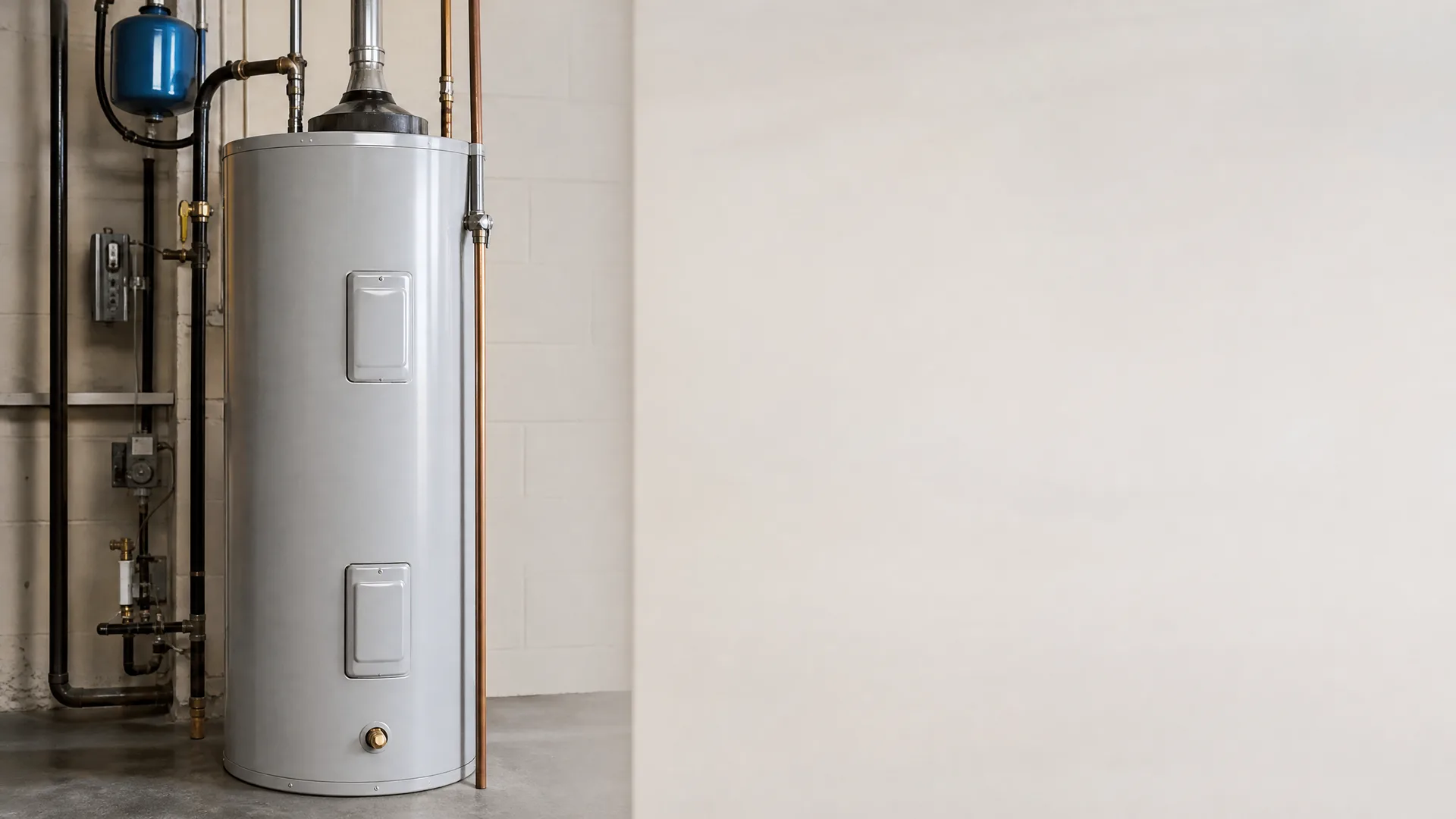
A gray cylindrical water heater with two access panels stands on a concrete floor beside copper and black pipes, a blue expansion tank, and an electrical box against a light wall.

Gas or electric, the clues differ

If your water heater runs on gas, a pilot that won't stay lit or a dirty flame sensor usually means no flame at all, so the tank never heats. If it's electric, one failed heating element often still gives you a little warm water before it turns cold, since the other element keeps working alone. Knowing which one you have narrows down what a contractor checks first.

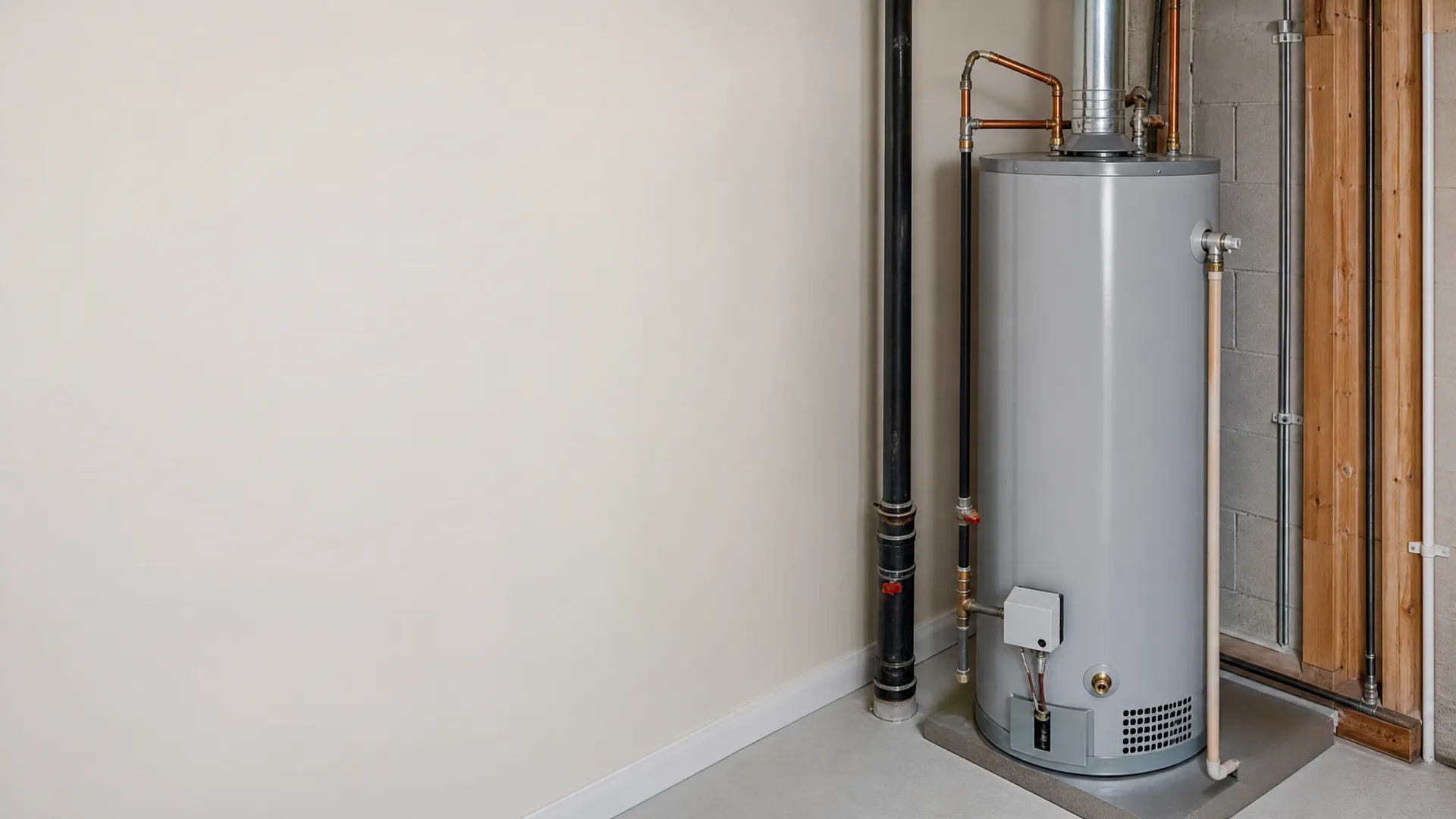
A gray gas water heater with copper and black pipes and a metal flue stands in the corner of a room with a beige wall, concrete block wall, and wood studs.

What the tank's age tells you

Most tank water heaters last around 8 to 12 years before a part finally gives out for good rather than just needing a repair. If yours came with the house or you've had it longer than that, a cold tap might be the thermostat, the thermocouple, or the tank nearing the end of what it can do. A unit only a few years old points more toward a single failed part than old age.

Why does your water heater have to work so hard here?

  • 3.03 people per household on average

    Fort Bend County households average 3.03 people, so one tank is covering more showers, more dishes, more loads of laundry than it would in a smaller home.

  • Half the homes here were built by 2005

    Half the homes in Fort Bend County were built in 2005 or earlier. If yours is one of them, check how old the water heater itself is, since it may not be the original.

  • 57.7% of homes heat with gas

    57.7% of homes here heat with gas, more than any other fuel. If yours is one, a pilot or igniter problem is the first thing worth ruling out.

ACS 2020-2024

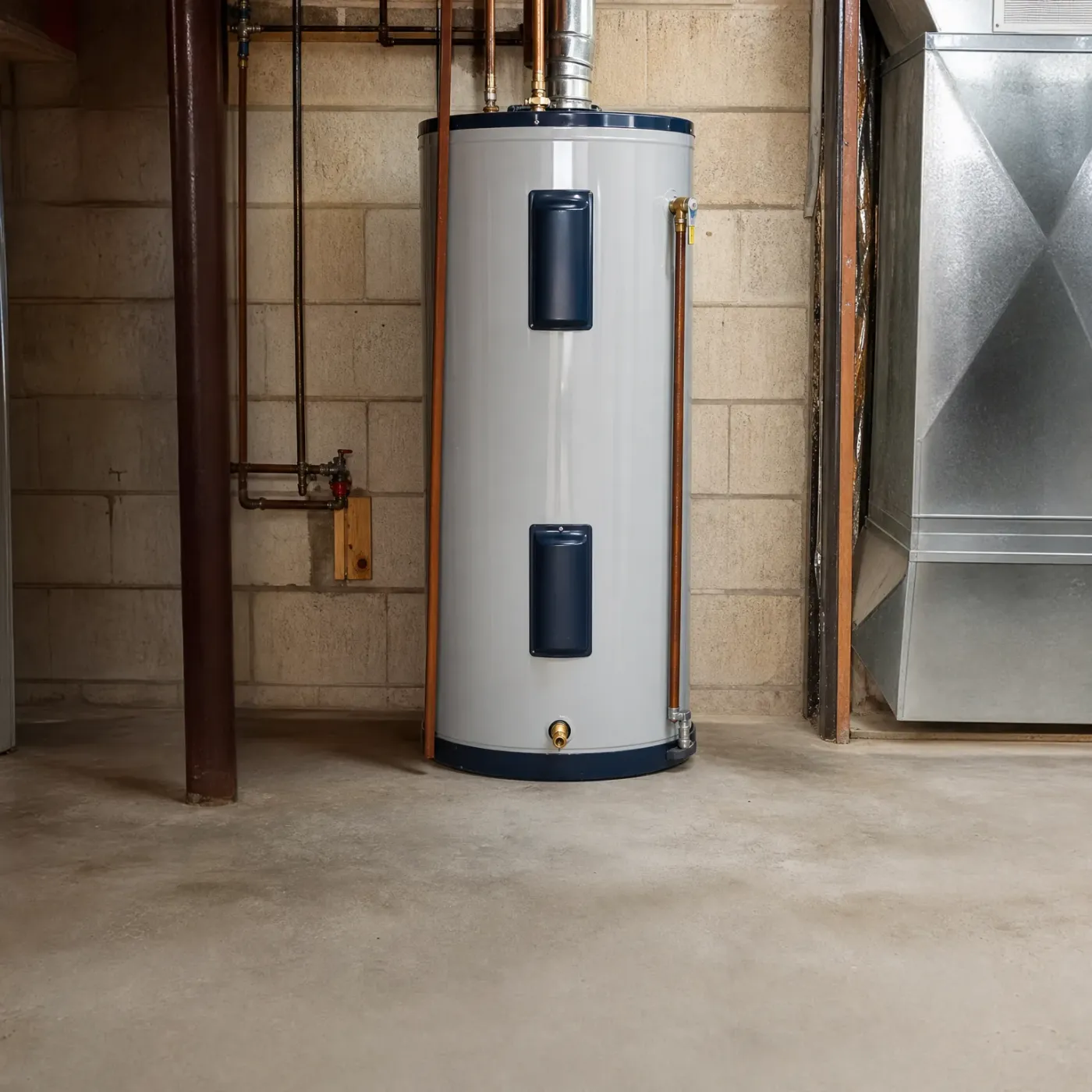
A white cylindrical water heater with two dark access panels stands on a concrete basement floor against a concrete block wall, with copper pipes, a flue duct above, and sheet metal ductwork at right.

When it's still doing its job

The tank sits connected and quiet, copper lines running clean to the shutoff valve, the exhaust duct sealed up tight. No rust on the jacket. No damp spots on the floor underneath it. This is what you want to walk past without a second look.

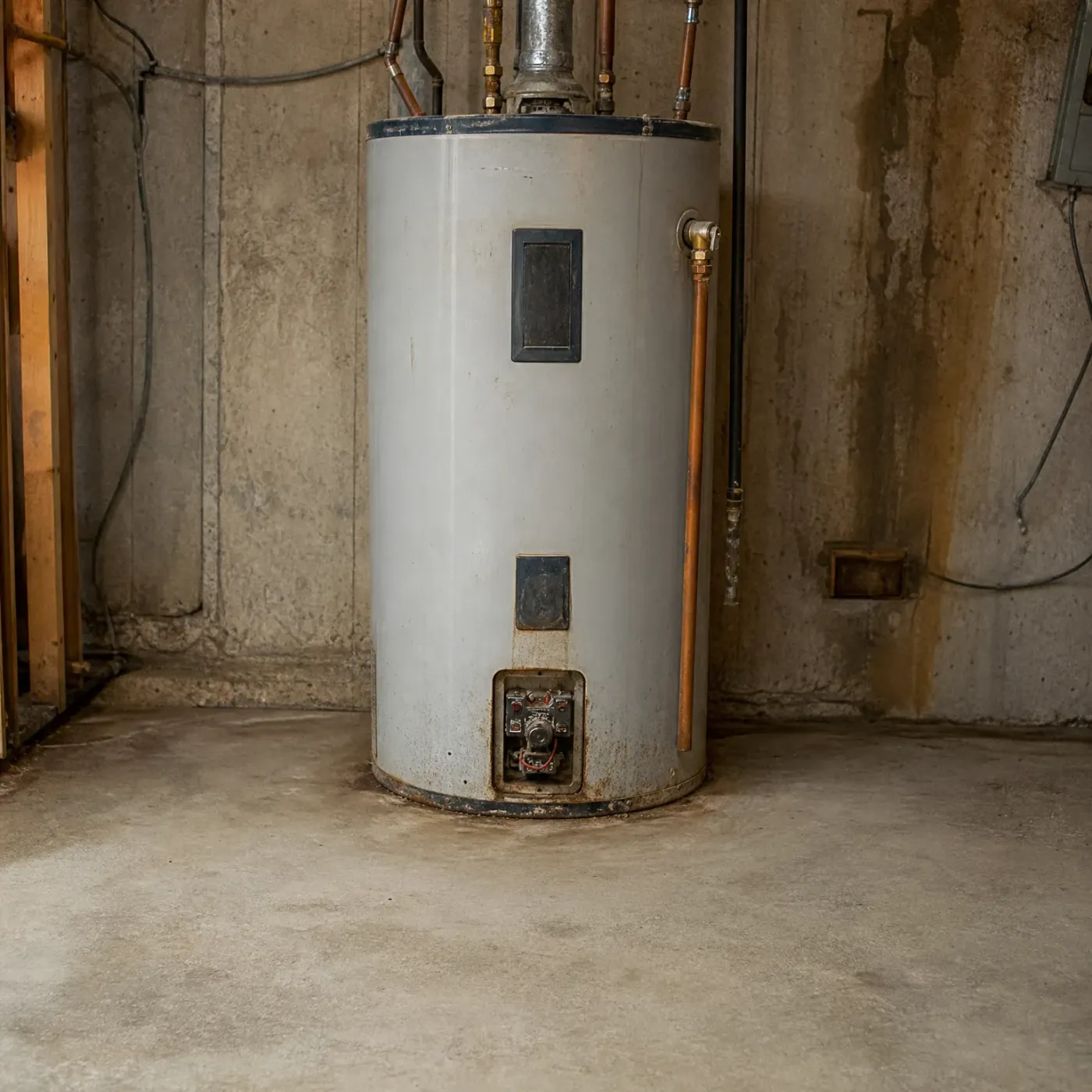
A white cylindrical water heater with copper piping and a gas control valve stands against a stained concrete basement wall on a bare concrete floor.

When it's telling you something

Rust spreading across the jacket and around both access panels means the tank itself is breaking down, not just a part inside it. Wiring connections at the top corrode the same way. Once a tank looks like this, a repair might buy you time, but it won't buy you much.

Is this going to cost you more than a cold shower?

A tank that's stopped heating rarely stays a quiet problem. Check the floor around the base for a damp patch or a faint musty smell, and look at the jacket for rust starting at a seam. A leak that's been dripping slowly can soak the drywall or subfloor before you ever see standing water. If the pilot keeps going out or a breaker keeps tripping, that's the tank telling you something failed, not something that will fix itself by Tuesday. With 3 people typically running hot water through one tank in Fort Bend County, putting off a look at it usually means the next person in line gets the cold water, not you.

A woman in a cream cowl-neck sweater stands in a lamp-lit room looking out a window at a snow-covered yard with shrubs and bare trees at dusk.
A woman in a gray turtleneck sweater stands near a large window in a lamp-lit living room, looking out at falling snow and snow-covered conifers.
A woman in a chunky knit sweater stands by a large window looking out at snow-covered ground, with a dimly lit living room containing a gray sofa, framed artwork, shelves and table lamps behind her.
A woman in a gray turtleneck sweater stands in a dimly lit living room with a lamp and bookshelves, looking out a multi-pane window at falling snow.

Get matched with a water heater pro in Fort Bend County

A water heater acting up in July feels different from one acting up in January, but in Sugar Land the fix is the same either way, and it starts with someone who actually knows your unit. Most houses here run on gas, and a gas tank that's out usually traces back to a pilot or a flame sensor, something a tech who works these systems every week will check first instead of guessing. Electric units fail differently, and the contractor matched to your request will know which questions to ask before ever touching the tank. You get one contractor, local to this area, not a handful of strangers competing for the job. That matters when the problem is specific to your setup, your fuel type, your tank's age. A cold shower is an inconvenience. A tank that's been quietly leaking behind a rusted seam is not. The sooner someone who knows what usually goes wrong in Fort Bend County homes takes a look, the sooner you know which one you're dealing with.

How the tank actually heats

  • A gas water heater lights its burner only after the thermostat calls for heat and the gas valve opens in sequence.
  • The pilot or igniter has to prove a flame before the main burner gets gas, so a bad flame sensor shuts the whole thing down.
  • An electric tank has two heating elements, an upper and a lower, wired so only one runs at a time.
  • If the upper element fails, the lower one can still heat the bottom of the tank, which is why you get a little warm water before it turns cold.
  • A thermocouple or flame sensor that's coated in soot will read no flame even when one is burning, so the gas valve shuts off the pilot as a safety measure.
  • The dip tube feeds cold water to the bottom of the tank, and if it's broken, cold water mixes in near the top where the hot water draws from.

A gas water heater doesn't just sit there burning. The thermostat on the tank watches the water temperature, and only when it drops below the set point does it call for heat and open the gas valve. Before any gas reaches the main burner, the pilot or igniter has to prove it's actually lit. That proving step is a safety measure, and it's also where things go wrong. A thermocouple or flame sensor coated in soot can't tell the control that a flame is present, even if one is burning right in front of it, so the valve shuts everything down rather than risk gas with no flame to burn it.

Electric tanks work differently but fail in a pattern just as predictable. There are two heating elements, one near the top of the tank and one near the bottom, and they're wired so only one runs at a time. The upper element handles the water you draw first. If it fails, the lower element keeps working on its own, heating the bottom of the tank while the top stays cold. That's why a failed upper element gives you a few minutes of warm water before it turns cold, instead of no hot water at all.

One more part worth knowing: the dip tube. It runs cold water down to the bottom of the tank so it can heat before rising to the top, where the hot water outlet draws from. A cracked or broken dip tube lets that cold water mix in near the top, cooling the supply you're actually pulling from.

A bearded man in a plaid flannel shirt stands indoors looking out a frost-covered window, with a steaming dark blue mug on the wooden sill and snow-covered trees outside.
A man in a blue T-shirt sits on a light gray sofa, laughing while looking at an open laptop in the foreground, with a framed picture, lamp and potted plant behind him.

Waiting it out another day

If the pilot relights on its own or the breaker trips back on and stays, you might decide the tank is fine and move on with your day. Some problems really do pass. But a tank that cuts out once and seems to recover is often doing the same thing it did the first time, just not far enough along yet for you to notice. You lose nothing by watching it closely for a day or two, but you lose the warning if you stop paying attention once the hot water comes back.

Getting it looked at now

A failed flame sensor or a heating element that's down to one won't fix itself, and running the tank on whatever is left working usually just wears down what's left faster. Having someone look at it while you still have partial hot water, rather than after you lose it completely, means the diagnosis happens on your schedule instead of in the middle of a cold morning. A local contractor who works on tanks like yours all year can usually tell from a few questions whether it's the part or the tank itself.

Power here costs 16.77 cents per kilowatt-hour

At 16.77 cents per kilowatt-hour, running an electric water heater's backup elements to cover for a failed one adds up fast on your bill. If yours is electric and only half-working, that's a reason to get it looked at rather than let it limp along.

EIA-861 2025

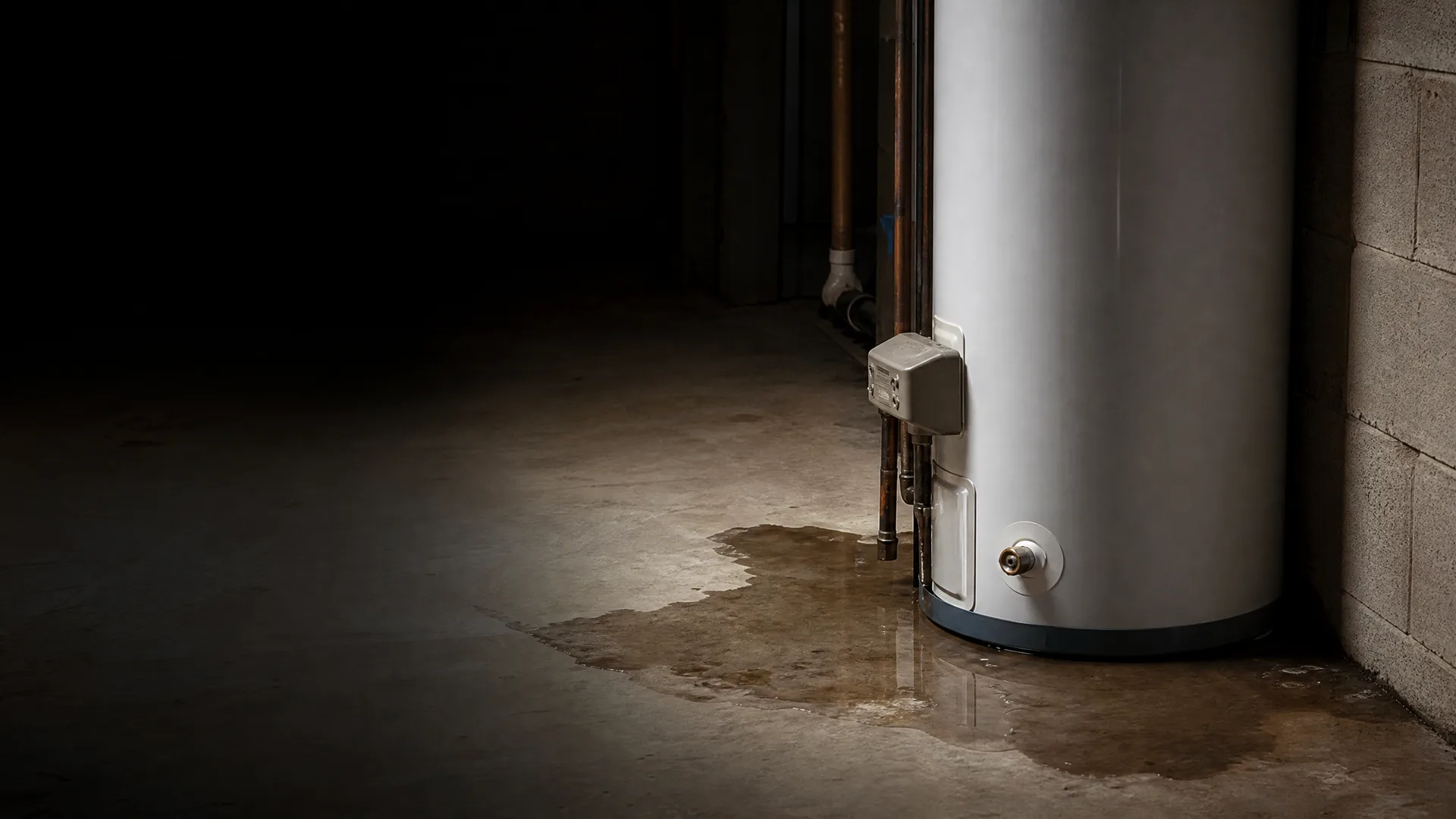
A white water heater against a concrete block wall in a dim basement, with a pool of water spreading across the concrete floor at its base.

Saturday morning, and you're down in the basement to grab something off the shelf when your sock gets wet. You look down and there's a pool spreading out from the base of the tank, already reaching the edge of the drain pan. The water's cold, so this has been going on a while, maybe since you went to bed. You crouch down and see it's coming from a seam low on the tank, not a fitting, not a valve. Upstairs someone's asking why the shower never warmed up. You shut the water off at the valve on top and go find towels, already running the numbers on how much carpet is between here and the stairs.
No hot water usually traces back to one part doing its job wrong: a pilot that won't hold, a flame sensor that's dirty, a heating element that's burned out, a breaker that keeps tripping. The fix depends on which one it is, and that's worth finding out before you're buying a new tank you didn't need. Whether you're on gas or electric, a tank that's quit or a leak spreading under it is worth a call now rather than a wait and see. Someone who works on water heaters around Sugar Land all year has seen this exact failure plenty of times, on gas tanks and electric ones, in older homes and new builds alike, and knows what to check first. You'll be matched with one licensed local contractor for your job, not a handful of companies competing for your callback, so the person who reaches out is the one who's actually going to show up and look at your tank.

A single-story stone-clad house with low-voltage path lights along a gravel bed and lawn at dusk, with a tree line and orange sky on the horizon.

Water Heater Repair

Find a water heater repair pro in Fort Bend County

Step 1 of 3: Equipment
  • A ceramic vase holding leafy green branches and a shallow wooden bowl sit on a wooden window ledge beside a sunlit window, with a cream upholstered chair and knit throw in the foreground.
    • Get matched with a pro who works on water heaters in Fort Bend County.
    • Your request goes to a Fort Bend County pro who takes water heater jobs.
  • Sunlit living room corner with a beige upholstered sofa, a round wooden side table holding a ceramic vase of olive branches, linen curtains at a window, a floor vent in the baseboard, and a woven jute rug on hardwood flooring.
    • Get the water heater repair search off your mind today.
    • Once you send the form, finding a pro is off your list.
  • A wooden side table with a single drawer holds a shallow carved wood bowl and a white ceramic vase of green eucalyptus stems, beside a window and an upholstered chair draped with a cream knit throw.
    • Explain the water heater problem once instead of to every shop in Fort Bend County.
    • Skip calling shops to ask who repairs water heaters in Fort Bend County.
  • Corner of a house with horizontal siding, a white-framed window and stone veneer base, beside a covered entry with wooden steps, a potted plant, mulched beds of green shrubs and a flagstone path.
    • A licensed pro who repairs water heaters in Fort Bend County gets your request.
    • The pro who reaches out is licensed in Texas.