Water heater leaking in San Antonio, TX

Send it today

A water heater leaking in Bexar County doesn't wait for a convenient time, and water on the floor around the tank is worth taking seriously right away. You don't need to spend the afternoon calling around San Antonio to find out who can look at it. Send the request once and the search is off your plate. It goes to one licensed local contractor, not a handful of companies competing for the job, so you're not fielding call after call while you're trying to deal with a wet floor. Whoever gets your request works on water heaters in homes around here regularly and knows the ones that show up again and again in this area. That's the match this page makes: someone who's local, licensed, and already familiar with this kind of leak, so you're not explaining your situation from scratch. Fill out the form and let someone else carry the job of finding help.

Why is my water heater leaking?

Water pooling under the tank or dripping from a fitting usually means one specific thing has failed, not that the whole unit is doomed. Before you mop it up or shut off the water, it helps to know what's actually causing it, since some causes mean a quick repair and others mean the tank itself is done.

It's usually a failed valve, a loose fitting, or a tank that's rusted through

Most leaks start at one of three places. The pressure relief valve on top can open and drip if pressure inside builds too high. A fitting where a pipe connects to the tank can loosen over the years and weep at the joint. And if the tank itself has rusted through on the inside, water will seep out of the steel, usually low on the side, and that's the one case where the tank needs to be replaced rather than fixed. A valve or a fitting can often be repaired or swapped out. Rust means the leak will only get worse, not better, so it matters which one you're dealing with before you decide what to do next.

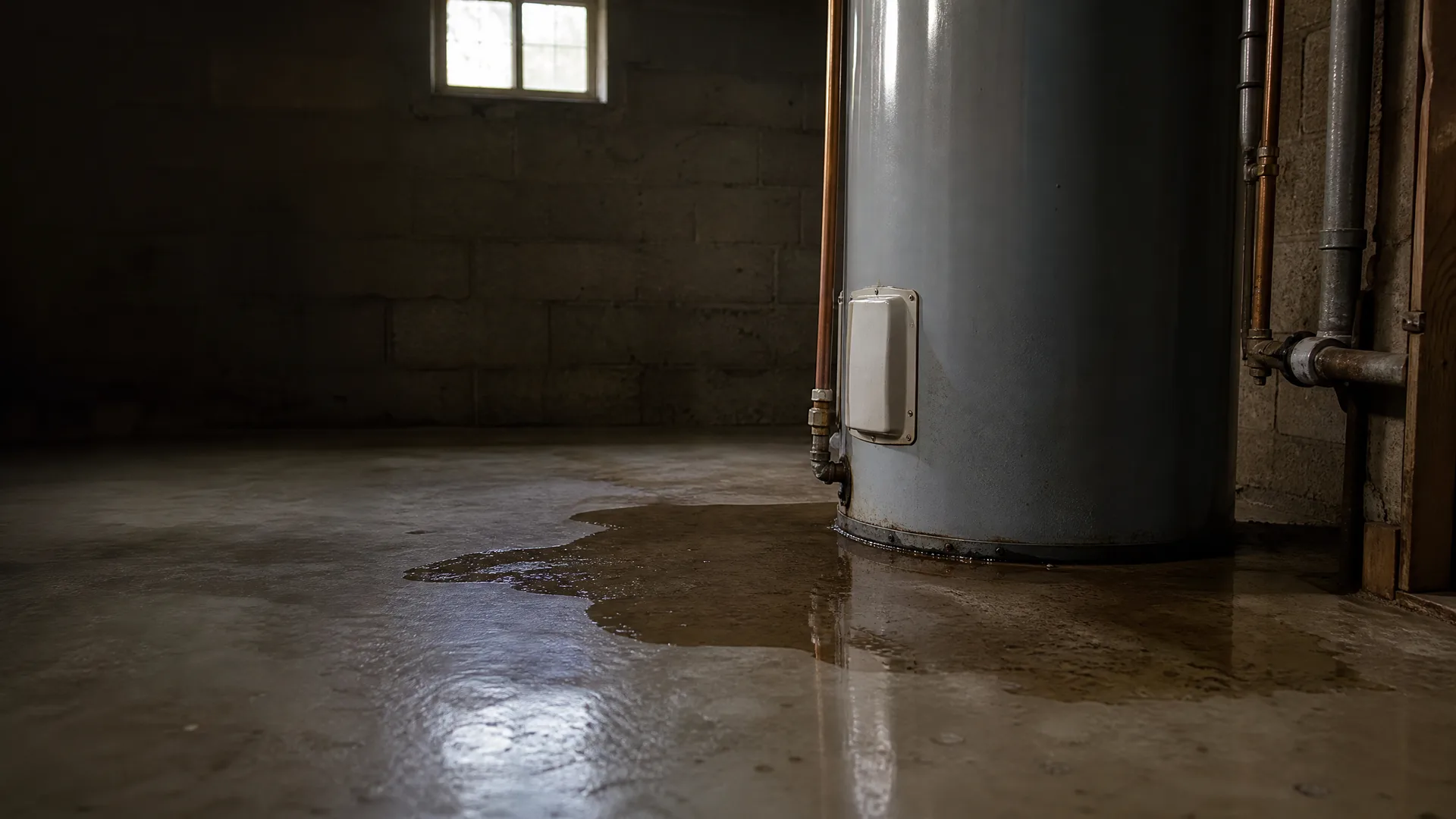
A gray cylindrical water heater stands in a dim basement with concrete block walls, copper and metal pipes along the wall, and a pool of water spreading across the concrete floor.

Basements are rare in San Antonio, but a good number of tank water heaters here sit in a garage, and that Saturday morning you're pulling the car out when you notice it. A thin ring of water has worked its way from the base of the tank toward the floor drain, maybe eight inches across, no bigger. You crouch down and run a hand along the bottom of the tank. Damp, not dripping. The garage is already warm, the way it gets most Saturdays this time of year, and for a second you wonder if it's just condensation. Then you see the water is still spreading, slow but steady, past where the concrete was dry an hour ago.

What does your home tell you about that leak?

  • 2.7 people per household on average

    Most households in Bexar County run 2.7 people, which means a water heater here is usually working every day, not sitting idle. A leak tends to show up fast once the tank's seams start to give.

  • Half the homes here were built by 1990

    Half the homes in Bexar County went up in 1990 or earlier. A water heater that came with a house that age has likely been replaced at least once already, maybe more.

  • 69.6% of homes heat with electricity

    Electricity heats 69.6% of homes in Bexar County, more than any other fuel. That's worth knowing because an electric water heater leaking near its wiring is a different kind of urgent than one that isn't.

ACS 2020-2024

The tank itself is leaking

Water coming from the bottom of the tank, or seeping out of the tank wall itself, means the tank has rusted through from the inside. Once the steel gives way like that, there's no patch or part that fixes it. Tanks don't repair, they get replaced. This is the outcome nobody wants to hear, but it's also the easiest to be sure about. If you dry the area and the water comes back within an hour or two from the same spot on the tank, that's your answer, and a licensed plumber in San Antonio can get a new unit in without much back and forth.


A part or fitting is leaking

Water dripping from a fitting, a valve, or a connection at the top of the tank is a different situation. The drain valve, the pressure relief valve, the inlet and outlet connections, or the fittings on the hot and cold lines all wear out or loosen over time, and any of them can be replaced without touching the tank. This is the more common cause and the better one to find. A plumber who works on these year-round in Bexar County can usually tell which part it is just by looking at where the water starts.

A smiling man in a dark navy sweater sits on a light sofa in a living room, with a glass bowl of popcorn on a wooden coffee table and bookshelves behind him.
A smiling man in a dark green sweater sits on a tan leather sofa in a dimly lit living room, with a bowl of popcorn in the foreground and a kitchen area blurred behind him.
A smiling middle-aged man in a dark shirt sits on a gray sofa in a living room, with a bowl of popcorn on a side table and shelves, a window and kitchen area behind him.
A smiling bearded man in a dark gray t-shirt sits on a gray couch in a living room, with a large glass bowl of popcorn on a wooden table in the foreground.

Hand off the search today

The pro who gets in touch is licensed in Texas and works in Bexar County.

There's no charge for the request.

Where the water is actually coming from

  • A T&P valve releases water when tank pressure or temperature climbs past its set limit, and a steady drip from its side pipe means it's doing that job.
  • Thermal expansion pushes water back into the supply line on a closed system, and without an expansion tank that pressure has nowhere to go but out the valve.
  • A cracked dip tube or a loose cold water inlet fitting lets water seep at the top of the tank, which can look like a tank failure when it isn't.
  • The drain valve near the bottom has a rubber washer inside it, and once that washer hardens or cracks, water weeps out around the handle.
  • Fittings and unions loosen slightly as the tank heats and cools each day, and over months that movement is enough to start a slow leak at the threads.
  • Sediment that settles at the bottom of the tank traps heat against the steel, and that stress is part of what eventually cracks a weld or seam.

Every leak has a path, and tracing it back tells you more than staring at the puddle does. Start at the top of the tank. The cold water inlet fitting and the dip tube sit there, and a loose connection or a hairline crack in the tube will let water run down the outside of the tank until it pools at the base, looking for all the world like the tank itself failed. It didn't. Move down to the side of the tank, where the T&P valve's discharge pipe exits. Water dripping steadily from that pipe means the valve is relieving pressure or temperature that's gone past its set limit, which is the valve doing exactly what it's built to do. If your home has a closed plumbing system and no expansion tank, thermal expansion is a common reason that pressure builds in the first place, since the water has nowhere to go as it heats except back out through that valve. Lower still is the drain valve, a simple fitting with a rubber washer inside it. Washers harden and crack with age, and once that happens, water weeps out around the handle even when the valve is shut tight. Threaded fittings and unions loosen slightly every day as the tank heats and cools, and months of that small movement is sometimes all it takes to start a slow leak. Sediment at the bottom plays a quieter role, trapping heat against the steel and stressing a weld or seam until it finally gives.

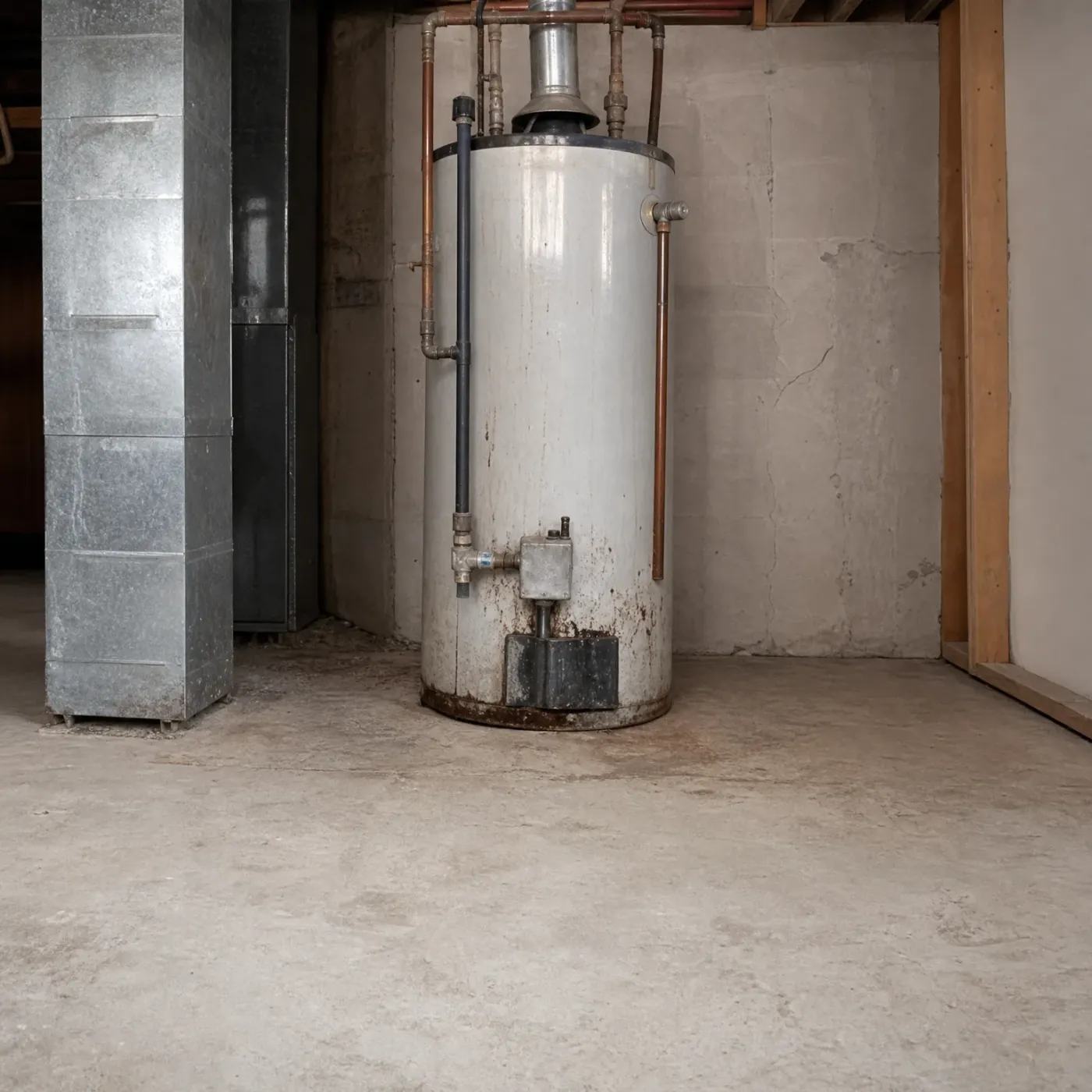
An old rusting cylindrical gas water heater with copper and steel pipes and a flue stands against a concrete basement wall beside metal ductwork on a bare concrete floor.
Before you get your water heater repair
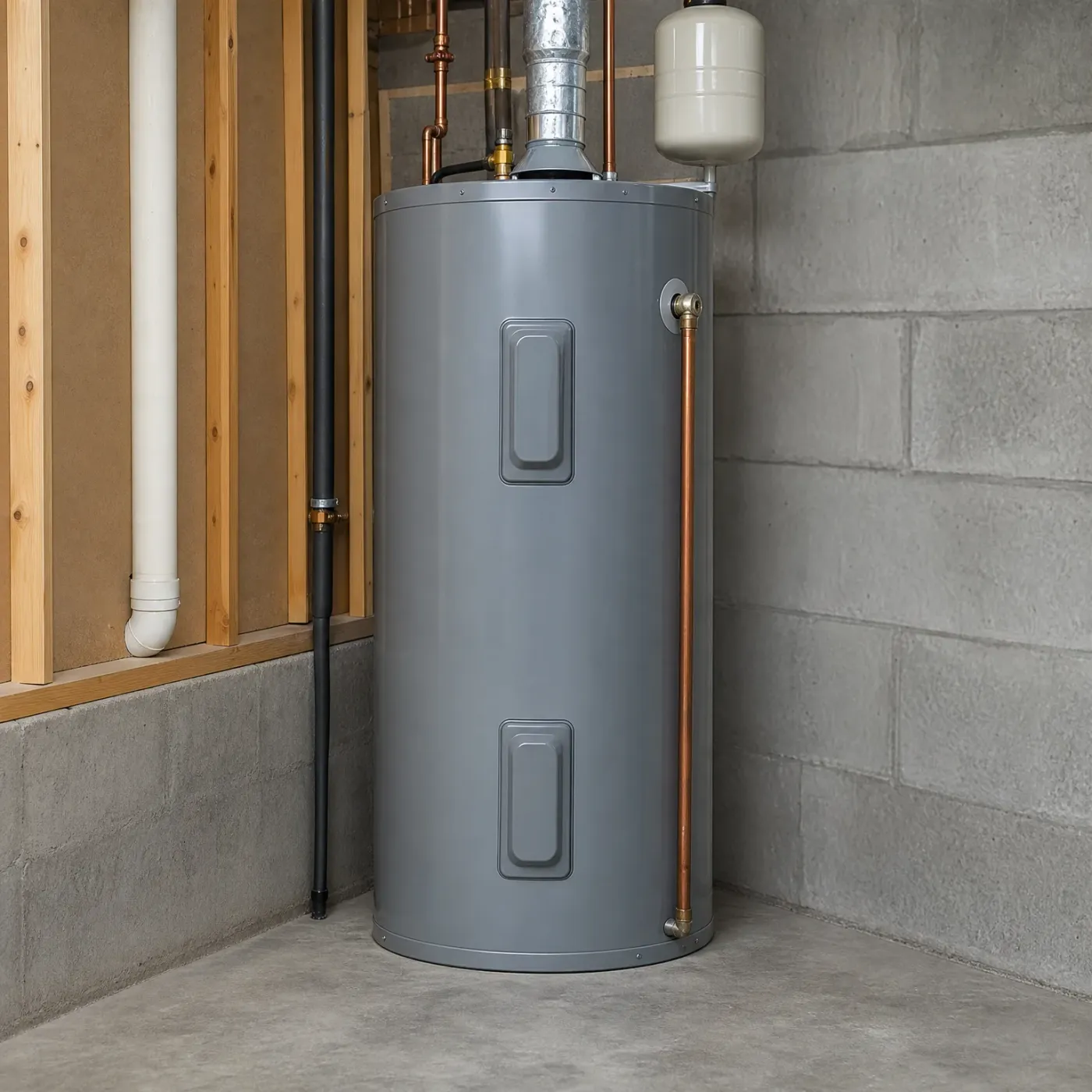
A gray cylindrical water heater with copper piping and an expansion tank stands in a basement corner beside a concrete block wall and exposed wood framing.
After you get your water heater repair

Rust-through can't be patched

Once the steel tank wall gives way, that spot won't hold again. A licensed plumber can tell you fast whether it's the tank or a part that's failed.

Find a licensed water heater pro

A fitting or valve is often the fix

Loose connections, a failed drain valve, or a T&P valve doing its job are common causes, and those get replaced without touching the tank.

Find a licensed water heater pro
A woman in a dark knit turtleneck sweater reclines on a couch under a cream knit blanket, looking down at an open book, with a lit table lamp and framed pictures behind her.
A smiling middle-aged man in a dark green sweater sits at a candlelit table with wine glasses and a plate of greens in a dimly lit interior.

Power here costs 12.38 cents per kilowatt-hour

Electric water heaters are standard in most homes here, and at 12.38 cents per kilowatt-hour, keeping that tank running isn't what strains a budget. So if yours is leaking, there's no reason to live with a slow drip or a pan of towels while you put off the call. The fix is worth doing now, not later.

EIA-861 2025

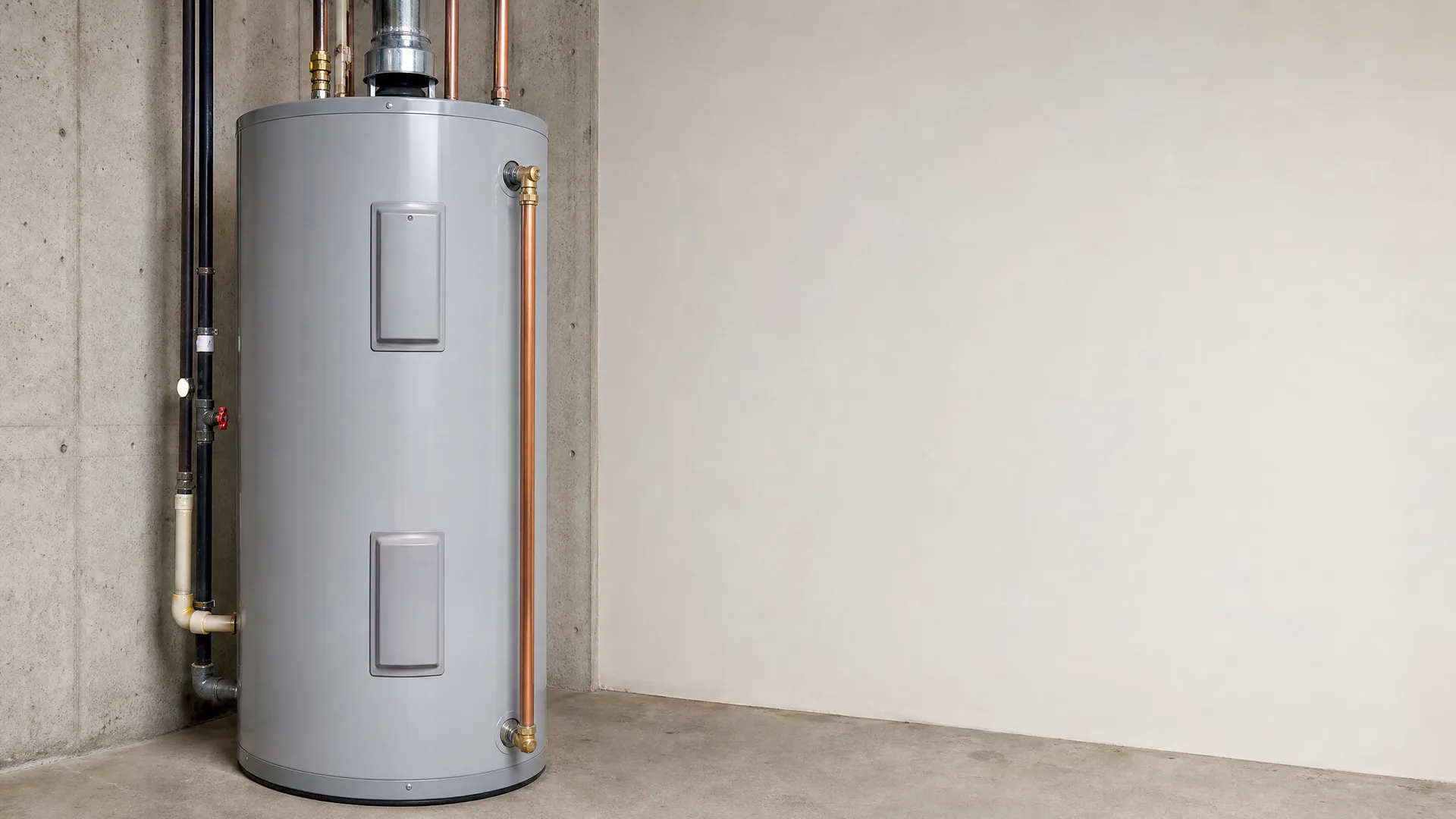
A gray cylindrical water heater with two access panels stands in a corner against a concrete wall, with copper and black pipes running up beside it on a bare concrete floor.

Leave it alone and see

Some people wait a few days to see if the drip stops, or if it only shows up when the water heater is running. That tells you something. A leak that only appears during a heating cycle points to the tank itself, and that means the wait only let more water hit the garage floor or the drywall behind it. Waiting doesn't change what's wrong. It just changes how much got wet before someone looked at it.

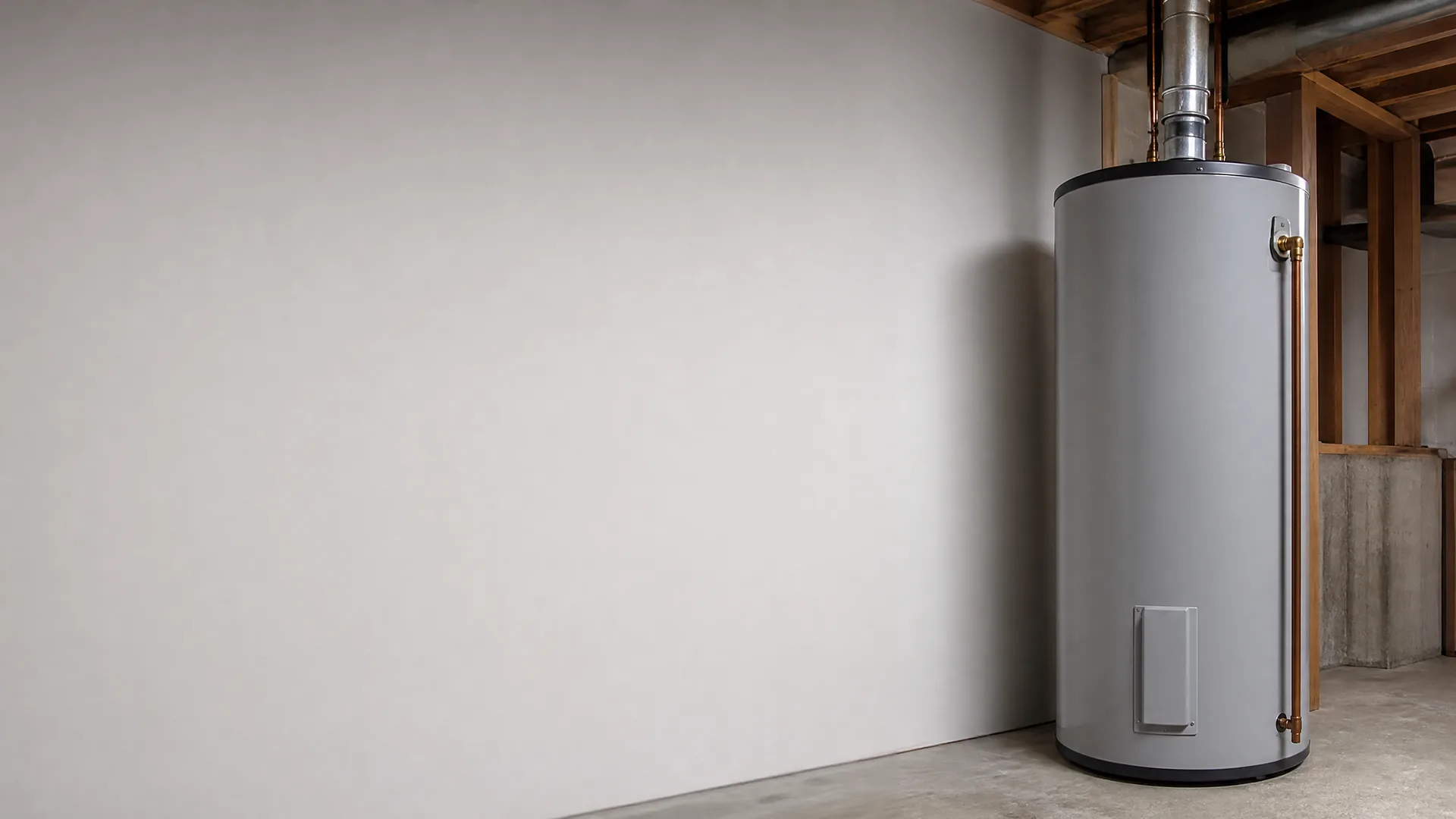
A gray cylindrical water heater with a metal flue pipe and copper piping stands in the corner of a bare room with light walls, a concrete floor, and exposed wood framing.

Get it looked at now

A licensed plumber can tell the difference between a loose fitting and a rusted tank in a few minutes, usually by looking at where the water is actually coming from. If it's a fitting, a valve, or a drain line, that gets fixed and the tank keeps running. If it's the tank wall, you'll know that too, before it fails completely and leaves you with a bigger mess and no hot water.

A leaking water heater almost always comes down to one of two things: a failed part that a plumber can replace, or a tank that's rusted through and needs replacing. Either way, you don't have to figure out which one it is yourself, and you don't have to spend the evening working through a list of companies to find someone who will. A licensed plumber working in Bexar County sees this exact problem all the time, in garages and closets all over San Antonio and the towns around it, and knows within a few minutes whether that drip is a part worth fixing or a tank that's done. Send the request once and it goes to one local plumber, not a handful of companies competing for your call. You'll know where you stand without having to chase it down.

A gray cylindrical water heater with copper pipes and a flue stands on a concrete floor in a dim basement, with metal ductwork and storage bins nearby.

It's off your list after this

Step 1 of 3: Equipment