



Get Hot Water Texas

Water heater pilot light out in Plano, TX

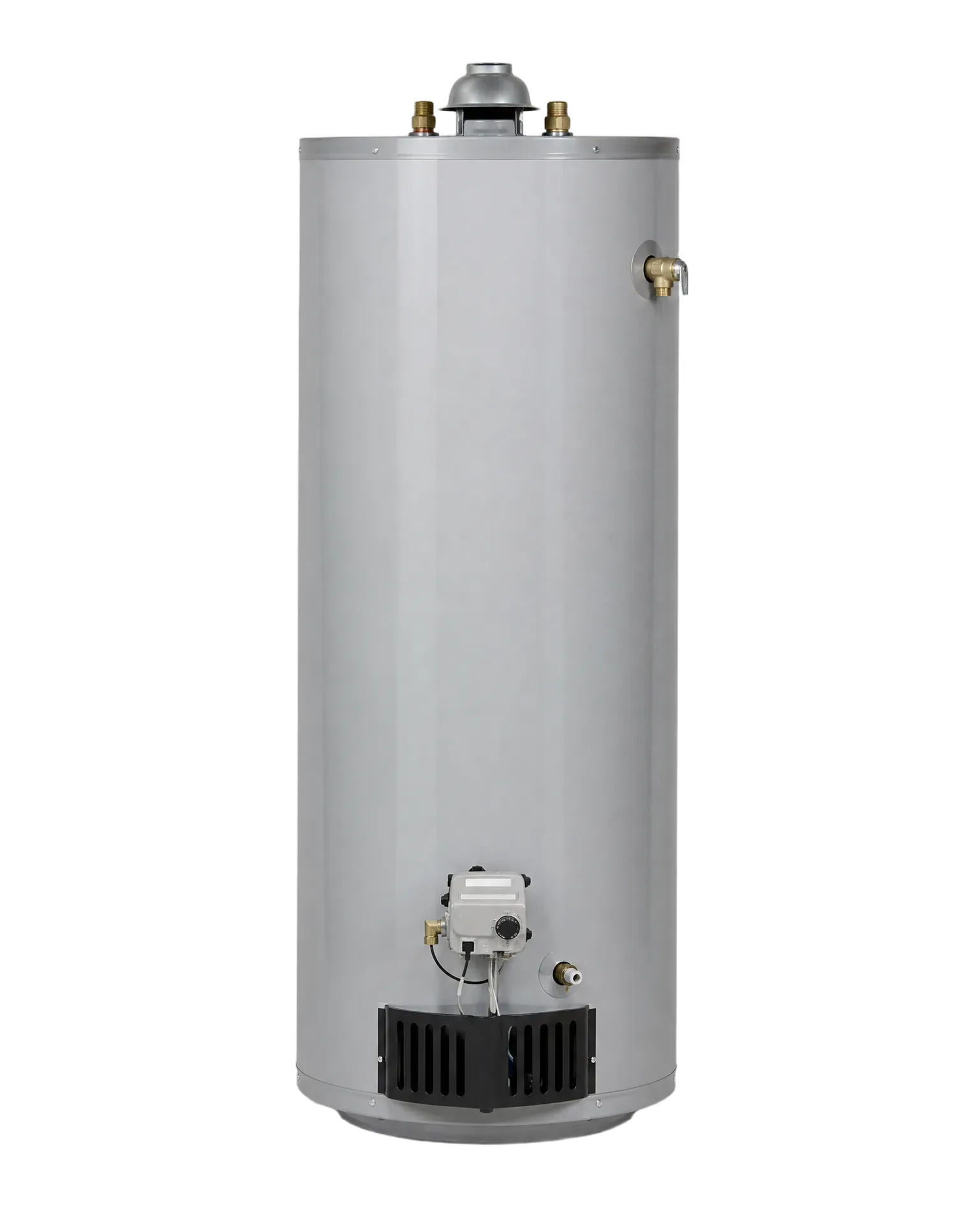
A gray cylindrical gas water heater with a top flue hood, brass fittings, a side drain valve, a lower gas control unit and a black burner access cover, photographed against a plain light gray background.
Match me with a pro

Why did my water heater's pilot light go out?

A pilot light that won't stay lit usually means no hot water until it's fixed, and with Plano's mild winters that still matters when the whole house depends on an electric system for everything but the water heater itself. You want to know if this is something simple or a sign the unit needs attention before you try relighting it again.

A weak thermocouple is the most common cause

The thermocouple is the small copper rod that sits in the pilot flame and tells the gas valve the flame is still burning. Once it wears out or gets coated in soot, it stops sending that signal even though the pilot lights fine, and the valve shuts the gas off as a safety measure. Drafts, a clogged pilot tube, or a failing gas valve can cause the same thing, so it's not always the thermocouple. If the pilot won't stay lit after a few tries, the part needs to be checked rather than replaced by guess. Gas water heaters work this way regardless of where they're installed, so this holds true whether the unit sits in a garage or a closet.

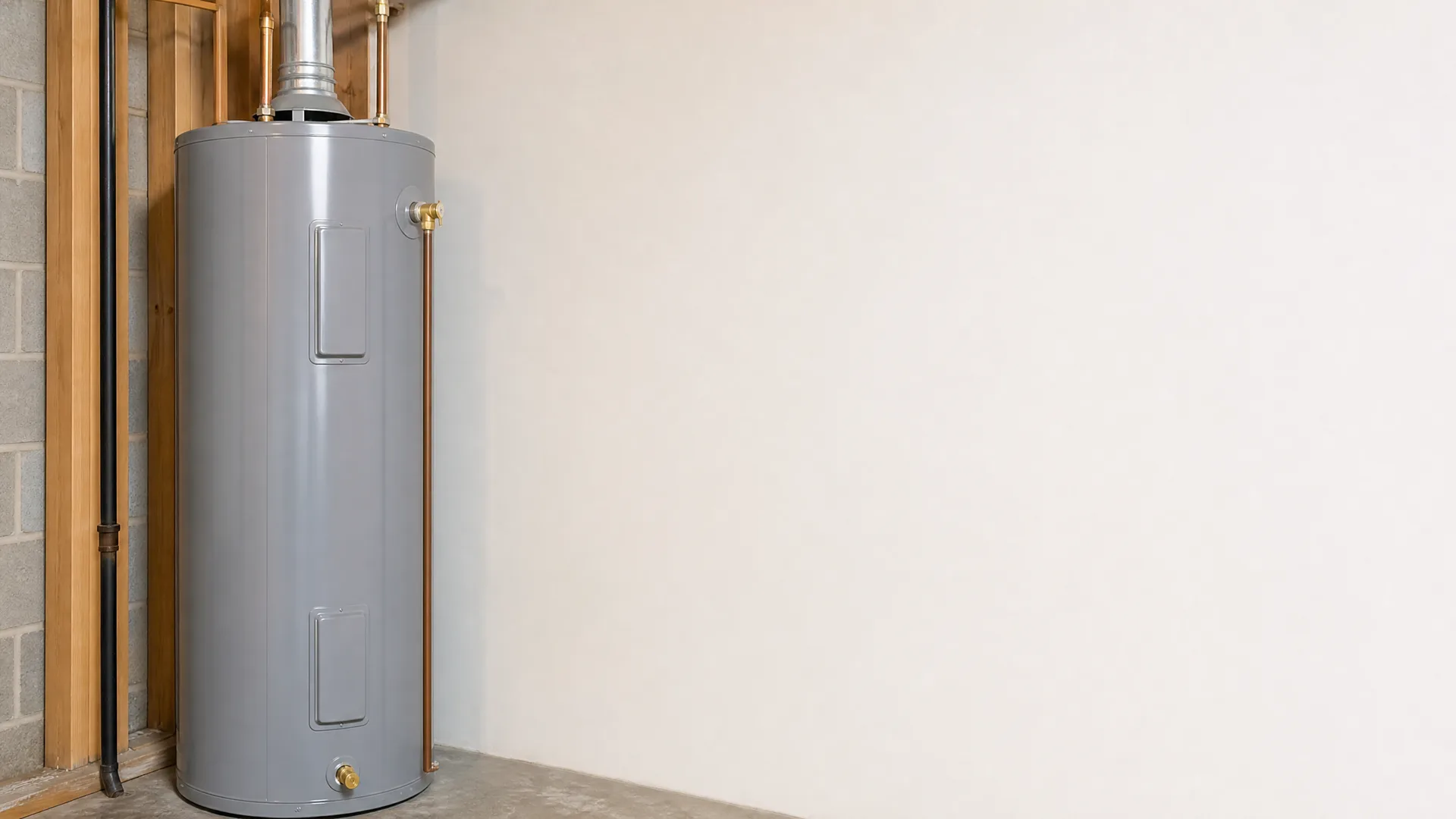
A gray cylindrical water heater with copper pipes and a metal flue stands against a plain light wall in a room with a concrete floor, beside wood framing and a dark vertical pipe.

What keeps the flame lit

A thermocouple sits right in the pilot flame. Once it heats up it tells the gas valve the pilot is burning and keeps the gas flowing. If that thermocouple wears out or sits out of position, the valve reads no flame and shuts the gas off, even while the pilot looks fine. That's why relighting it often works for a day and then fails again.

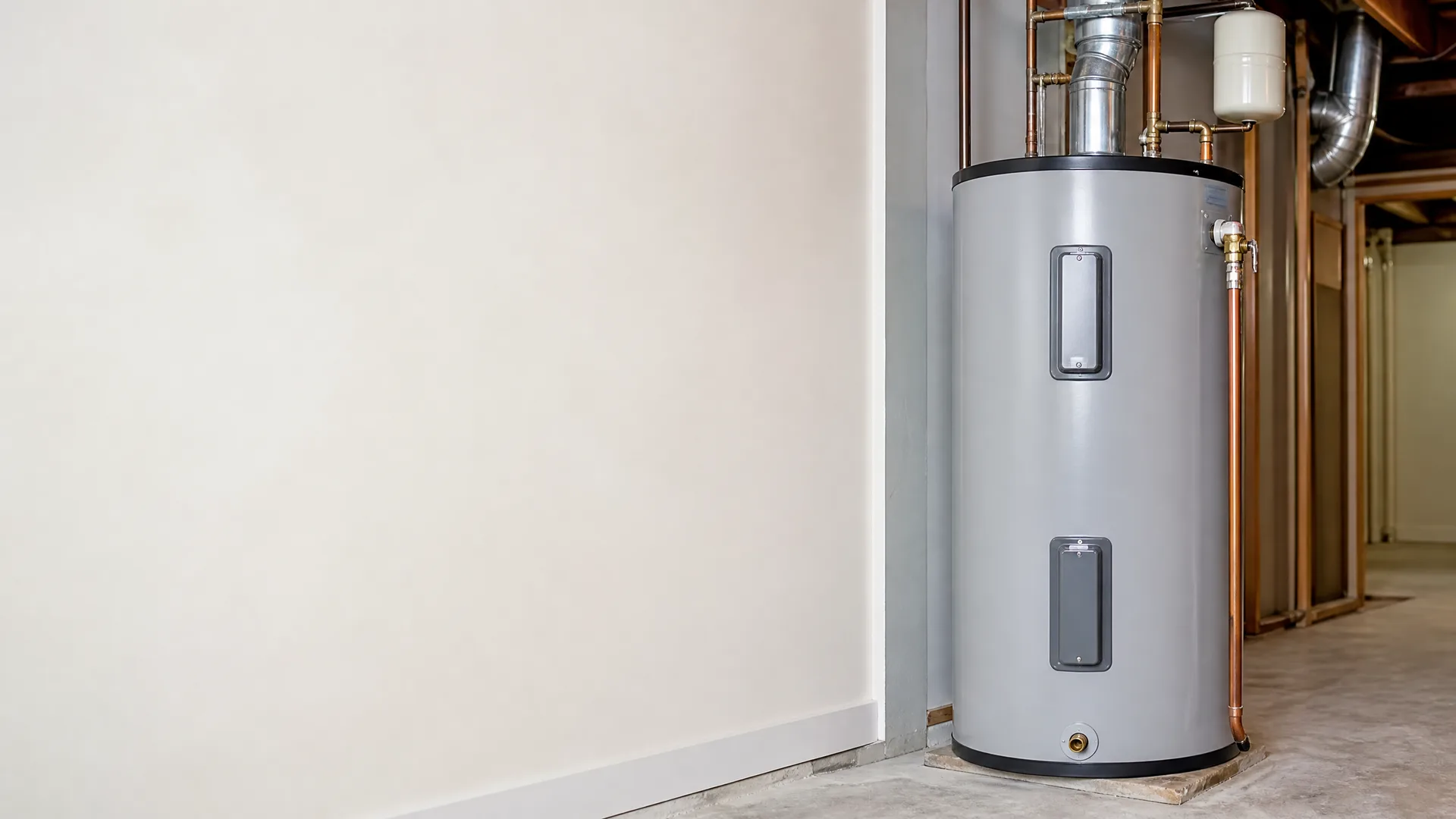
A gray cylindrical electric water heater with two access panels stands in a basement corner beside a plain light wall, with copper piping and ductwork overhead.

Drafts and vents play a part

Gas water heaters pull combustion air from around the tank and vent exhaust up through a flue. A vent that's partly blocked or a draft from a nearby door can pull the pilot flame sideways enough to trip the safety sensor. Check if the heater sits near a garage door, laundry vent, or windy corner of the house. Tanks installed in tighter closets are more exposed to this than ones with open space around them.

Why does a gas water heater matter so much in a house like yours?

  • 2.77 people per household on average

    Collin County households run 2.77 people on average, and that's more showers, more dishes, more loads of laundry pulling on the same tank.

  • Half the homes here were built by 2003

    Half the homes in Collin County went up by 2003, so a lot of these water heaters are original or on their second unit by now.

  • 49.8% of homes heat with electricity

    Electricity heats 49.8% of homes here, more than any other fuel, which means gas is already doing less of the work, and losing the water heater's pilot can leave gas out of the picture entirely.

ACS 2020-2024

Relighting the Pilot the Right Way

  • Relighting a standing pilot takes holding the gas control knob in for about a minute after the flame catches.
  • The gas control valve has a reset or pilot setting you turn to before you hold the igniter button.
  • A pilot that relights but goes out again within a day usually points to a failing thermocouple, not a draft.
  • Some tanks use an electronic ignition system instead of a standing pilot and relight on their own once power and gas are present.
  • A spider or insect nest in the burner assembly can block the pilot tube and should be checked before any part is replaced.
  • Gas supply issues, like a valve bumped closed elsewhere in the house, will keep a pilot from lighting at all.

Every gas water heater with a standing pilot has a gas control valve near the bottom of the tank, usually with a dial marked off, pilot, and on. Turning it to pilot is what lets you relight the flame safely. You hold down the knob or a red igniter button while the pilot catches, and you keep holding it for about a minute. That wait matters. It gives the thermocouple time to heat up and send its signal to the valve before you let go. Let go too soon and the flame dies, because the valve has no way yet to know the pilot is lit.

If the flame catches fine but is out again the next day, the thermocouple is the usual suspect. It sits in the pilot flame and wears out over time, or it can shift out of position after years of heat cycles. Either way, the valve stops getting a reliable signal and shuts the gas off as a safety measure.

Not every tank works this way. Newer units often use electronic ignition instead of a standing pilot, and those relight on their own once they have power and gas, no knob to hold.

Before assuming a part has failed, it is worth checking the burner assembly itself. Insects build nests in the pilot tube more often than people expect, and a blocked tube will stop a pilot from lighting no matter how good the thermocouple is. It is also worth checking that no gas valve elsewhere in the house got bumped shut, since that will stop gas from reaching the pilot at all.

A woman with wavy blonde hair wearing a grey knit cardigan over a green top sits on a sofa in a living room, looking off to the side.
A woman with long brown hair in a cream knit sweater sits on a light sofa in a living room, looking toward a window with sunlight on her face.
A woman in a gray sweater sits in a chair in a living room with a dark sofa, wooden coffee table with a potted plant, and a staircase behind her, looking toward a window.
A smiling woman with dark hair in an updo, wearing a gray ribbed turtleneck sweater, sits on a light sofa in a living room and looks off to the side.
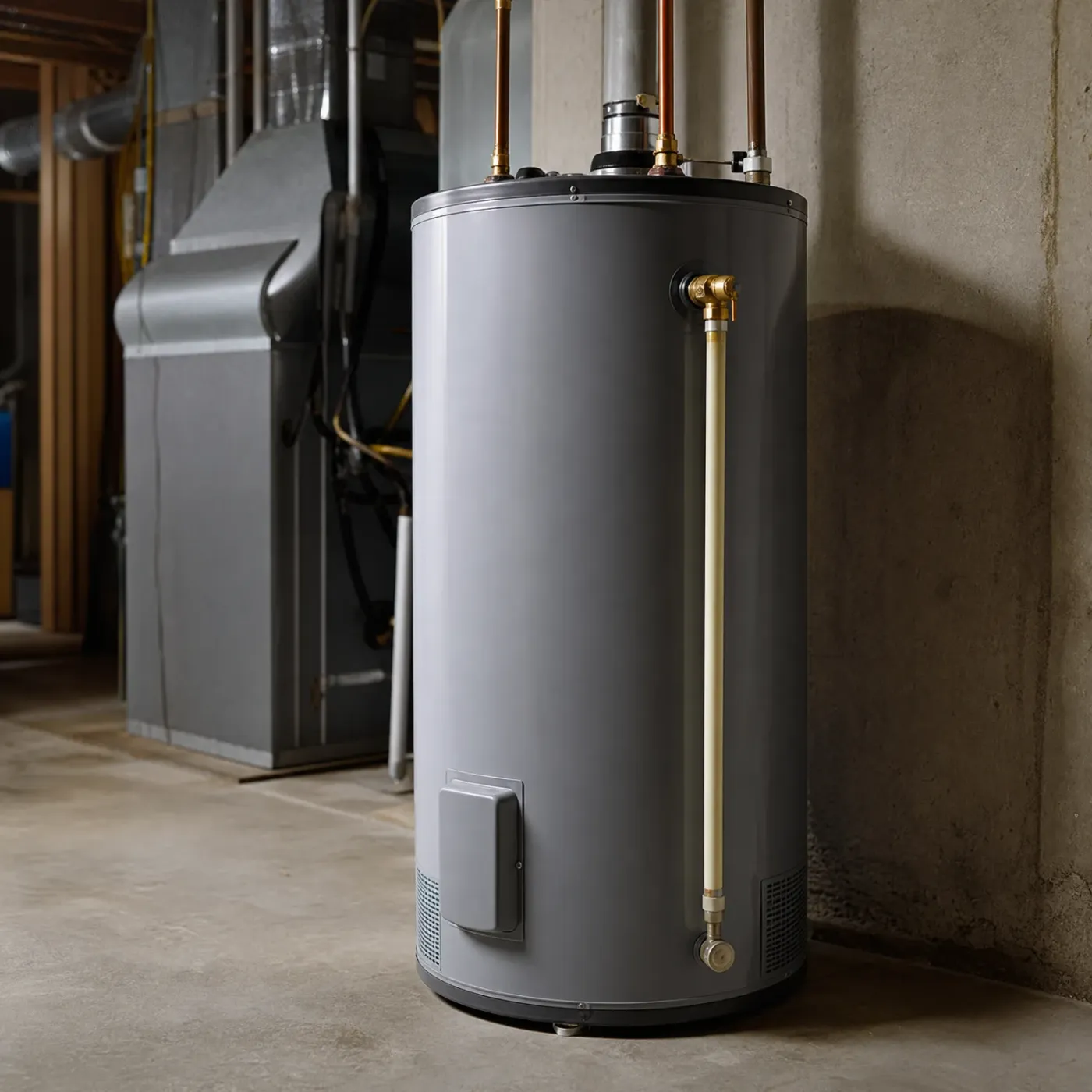
A gray cylindrical water heater with copper pipes and a brass valve stands on a concrete basement floor beside a concrete wall, with ductwork and a furnace in the background.

Get the right pro for your water heater

Send the request and finding a pro stops being your problem.

Get matched with a pro who fixes water heaters in Collin County.

Find my pro

Asking costs nothing, and the choice to hire stays yours.

Relight It or Call for Help

Relight it yourself

  • Most gas control valves have a pilot setting and clear steps printed right on the valve door.
  • If the pilot catches and holds after you let go of the knob, the thermocouple is still doing its job.
  • This costs you nothing but a few minutes and works fine if the pilot just blew out on its own.
  • If it won't stay lit after a couple of tries, that points to a part that needs replacing, not a relighting problem.
  • A gas smell at any point means stop and don't try to relight it again.

Call a contractor

  • A pilot that won't hold a flame after several attempts usually means the thermocouple needs replacing.
  • A contractor can test the thermocouple's reading and tell you whether it's worn out or just out of position.
  • If the gas control valve itself has failed, that's not a part a homeowner can swap out.
  • A contractor can also check for a draft or venting issue if the pilot keeps blowing out on its own.
  • Getting it looked at sooner matters more with an electric house, since the water heater is likely the only gas appliance keeping hot water running.
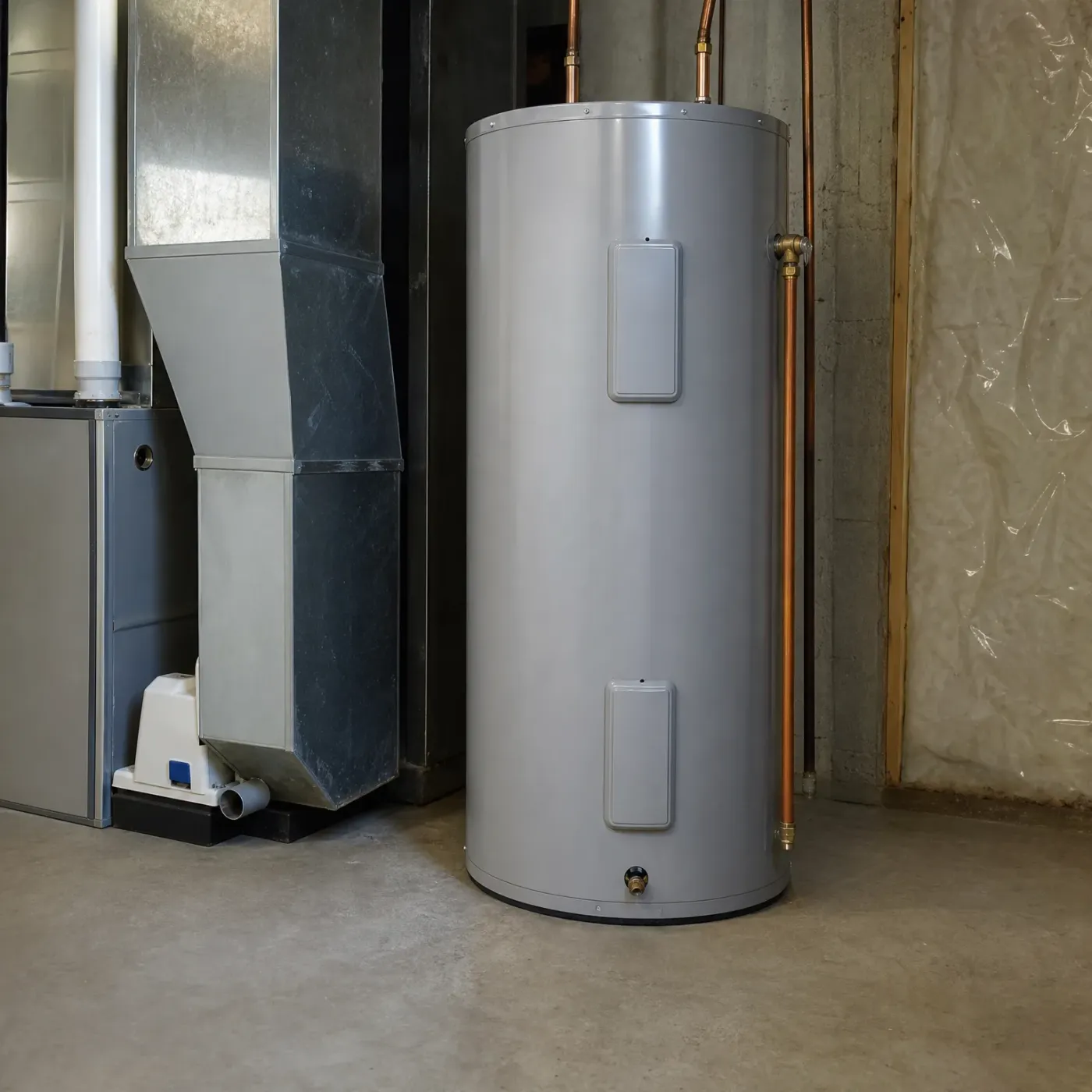
A gray cylindrical electric water heater with two access panels stands on a concrete floor in a basement, with copper pipes above and behind it, sheet-metal ductwork and a furnace to the left, and a plastic-covered insulated wall to the right.

Working the way it should

A water heater that's holding its pilot keeps that flame burning steady under the tank, day in and day out, without you thinking about it. The thermocouple stays seated in the flame, the gas valve keeps feeding it, and hot water just shows up when you turn the tap.
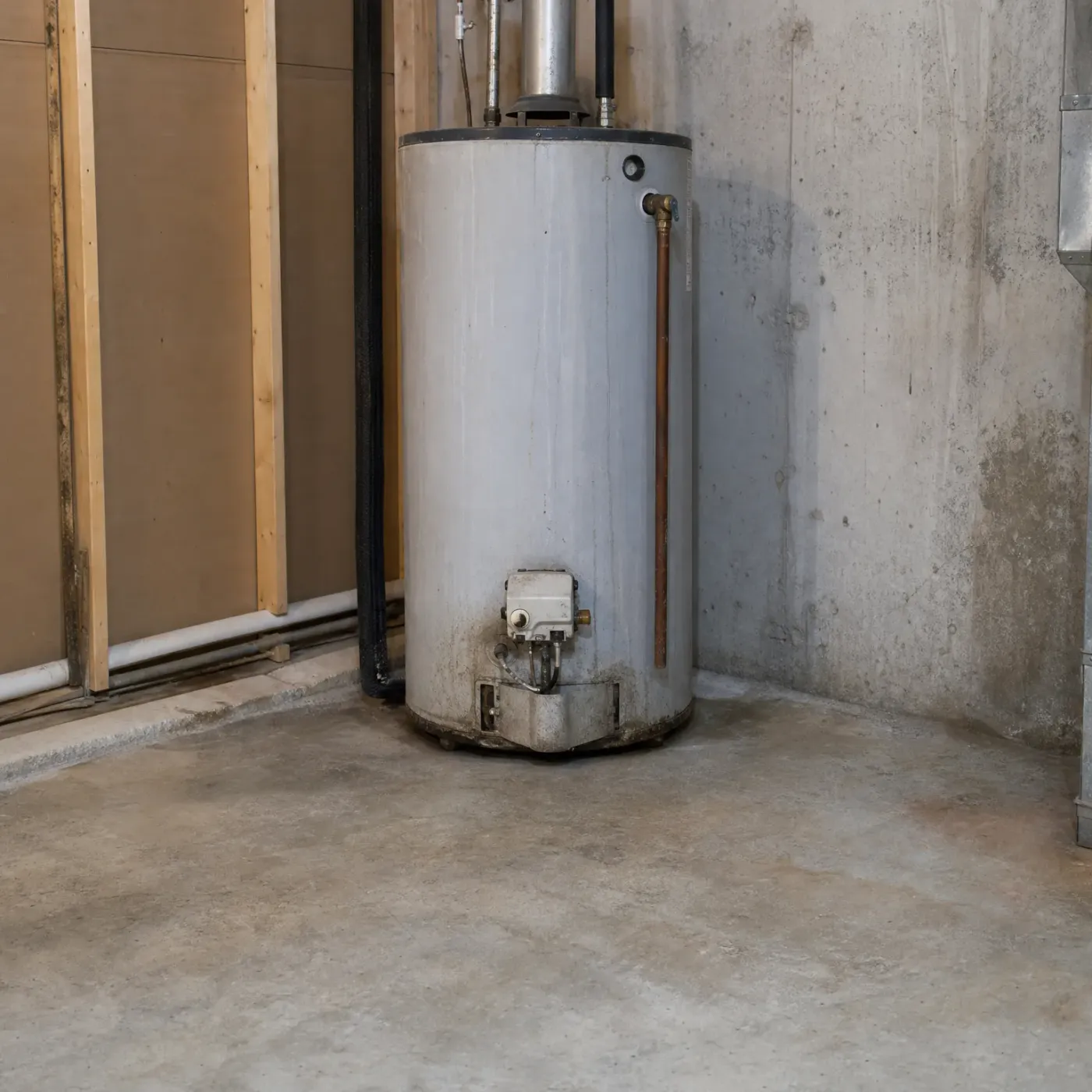

An older gas water heater with a copper pipe and flue stands on a concrete floor in a basement corner between a bare concrete wall and an unfinished wood-framed wall.

Pilot won't stay lit

Rust around the base, grime on the burner assembly, a flue pipe that's seen years of use. An older tank like this is more likely to have a thermocouple that's worn out of position or a burner that's dirty enough to choke the flame. Once the pilot goes out, the gas valve shuts things down until someone relights it or fixes what's causing it.

What are you noticing right now

You turn on the hot tap and nothing changes. The water stays cold no matter how long you run it. If you pull the cover off the burner chamber, there's no small blue flame where there should be one, maybe just the smell of gas if it's been trying to light and failing. Some water heaters click or make a faint ticking sound as the control tries to spark the pilot without catching. Left alone, this isn't a safety problem by itself, but a house that depends on electricity for heat still needs that tank working for every shower, every load of dishes, every load of laundry the household runs through in a day.

  1. Gas to the pilot cuts off when the thermocouple cools below temperature.

  2. Flipping the gas valve to pilot lets gas reach the pilot tube again.

  3. Holding the igniter button floods the pilot with gas to light.

  4. The flame heats the thermocouple until it signals the valve to stay open.

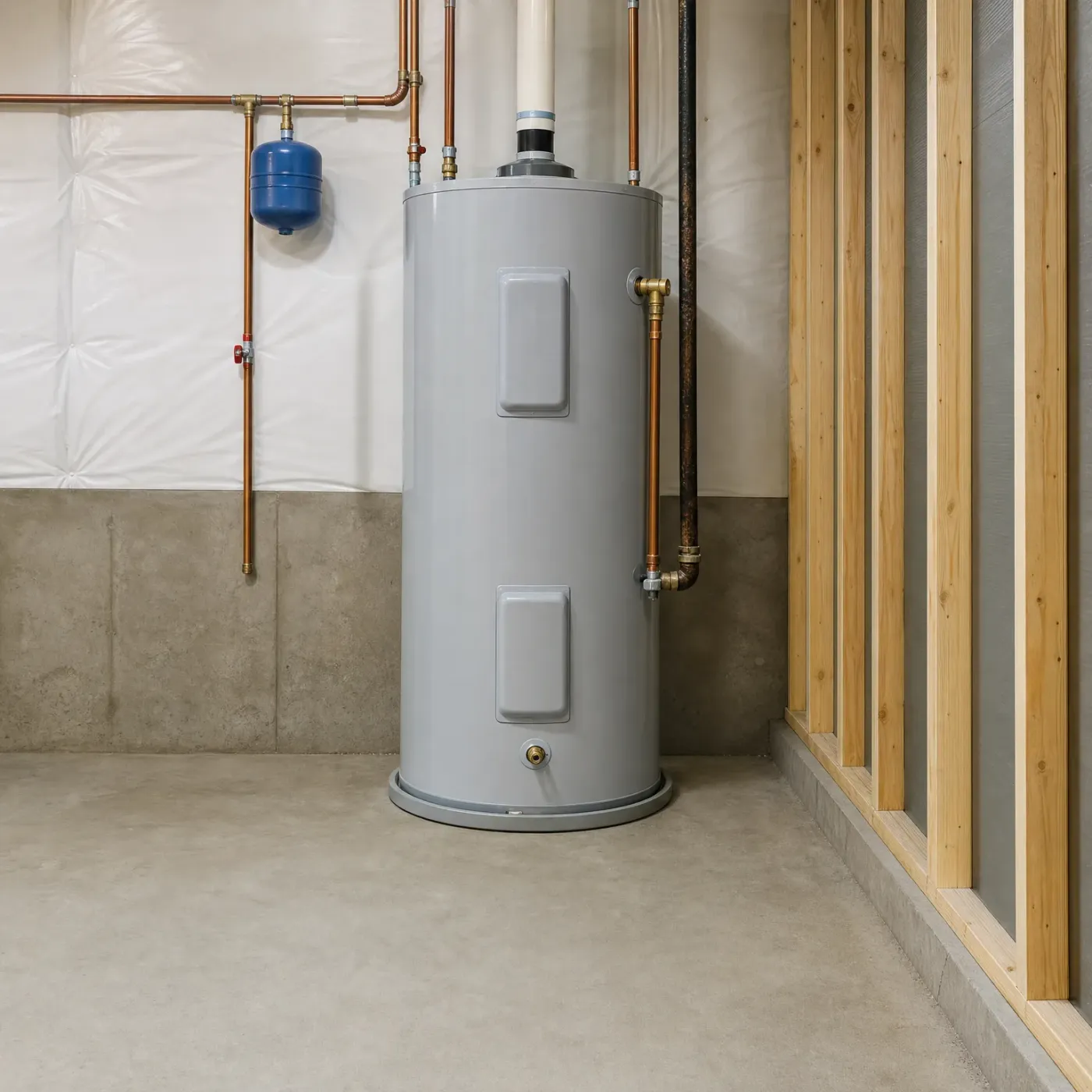
A gray cylindrical water heater stands on a concrete basement floor against a plastic-sheeted insulated wall, with copper supply pipes, a blue expansion tank, a black vertical pipe, and exposed wood wall framing at right.
A tank in good shape has clean, dry fittings and a burner chamber you'd never need to think about.
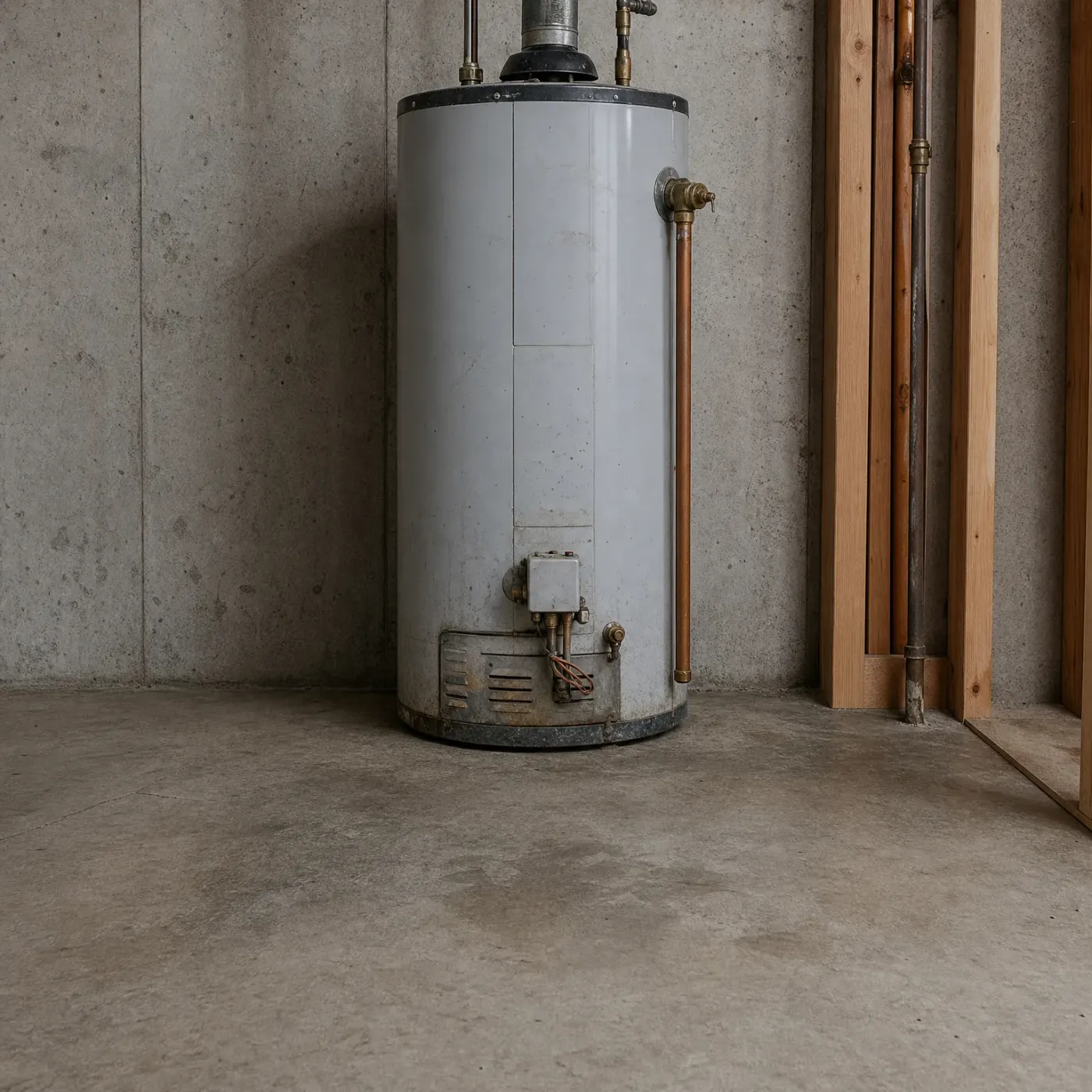
An older gray gas water heater with copper and brass piping stands on a concrete floor against a concrete wall, beside exposed wooden wall framing and vertical pipes.
Rust and grime around the burner like this are often where a pilot starts cutting out for good.
An older woman with grey-blonde hair in an updo and a beige turtleneck sweater smiles while looking to the side in a warmly lit kitchen, with a round loaf of bread on the counter in front of her and a dark window showing snow outside.
A woman with her hair in a bun holds a sleeping child against her chest on a couch, both wrapped in a knit blanket, with a lit lamp, potted plant and framed picture in the background.

A thermocouple is the usual answer, but it isn't the only one. Soot around the pilot opening often means the flame is getting pulled off the thermocouple by a draft, not that the part itself is bad. The pilot tube is a narrow path, and dust or even a spider web can choke it down enough to starve the flame. The gas valve can fail on the inside too, holding its pilot setting but never passing gas through to the burner, which looks the same from outside as a dead thermocouple. Sometimes the problem isn't a part wearing out at all. It's a wire at the thermocouple connection that's worked loose, cutting the same signal a worn thermocouple would. And a thermocouple that's already weak can hang on through most of the year and only quit once the water heater closet gets cold enough to push it past the point it can still read true. Knowing which of these it is matters, because the fix for a clogged pilot tube isn't the fix for a bad valve.

What else can cause it

  • A thermocouple that's slow to catch can still hold a flame but take longer each time you relight it.
  • Soot staining around the pilot opening points to a draft problem pulling the flame off the thermocouple.
  • The pilot tube itself can clog with dust or spider webs, starving the flame even with a good thermocouple.
  • A gas valve can fail internally and hold the pilot setting without ever letting gas reach the burner.
  • Loose wiring at the thermocouple connection causes the same shutoff as a worn thermocouple would.
  • Cold snaps that drop the water heater closet's temperature can make a marginal thermocouple quit sooner.
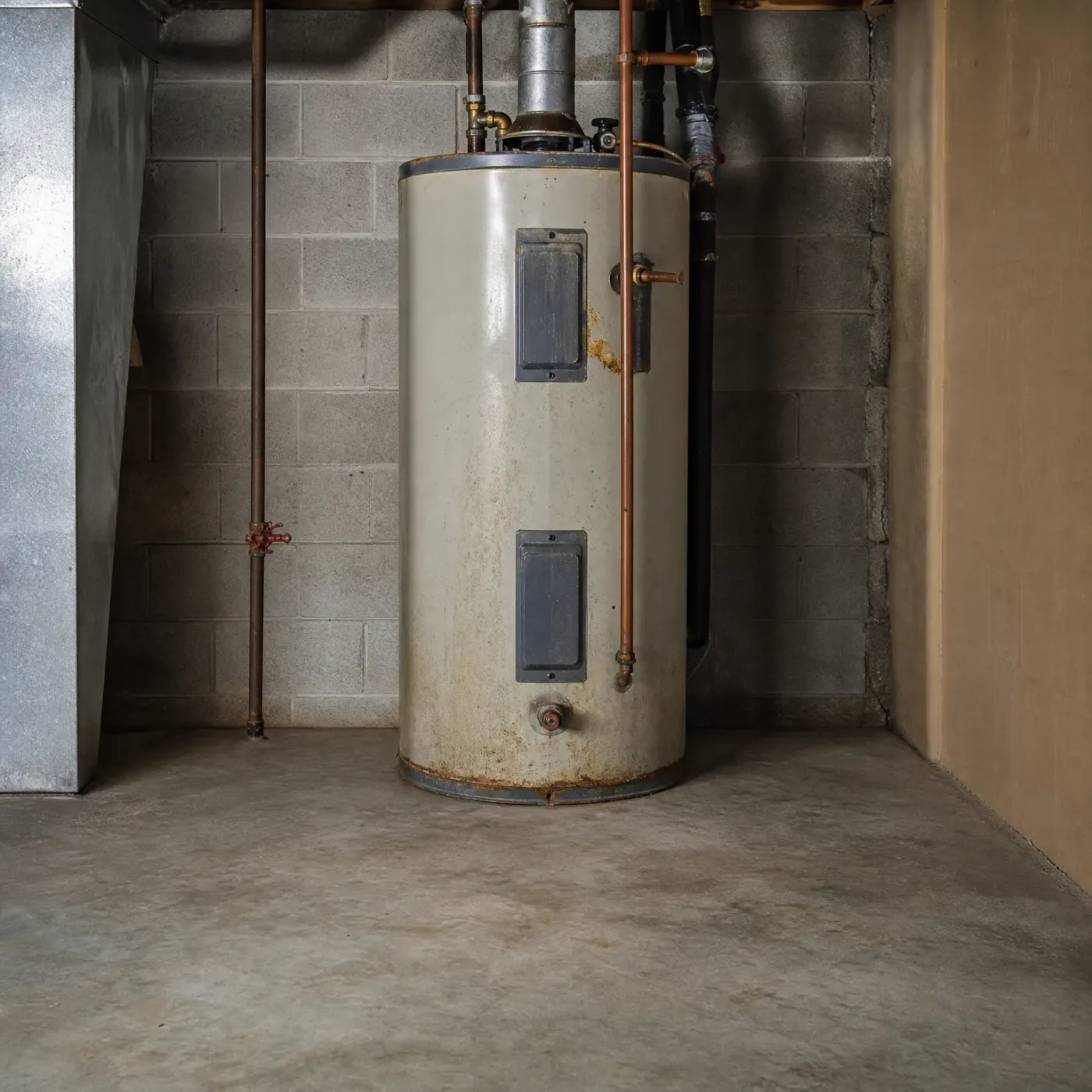
An aging cream-colored water heater with rust streaks and two access panels stands on a concrete floor against a concrete block basement wall, with copper and black pipes running up to the ceiling and a metal duct at left.
Before you get your water heater repair
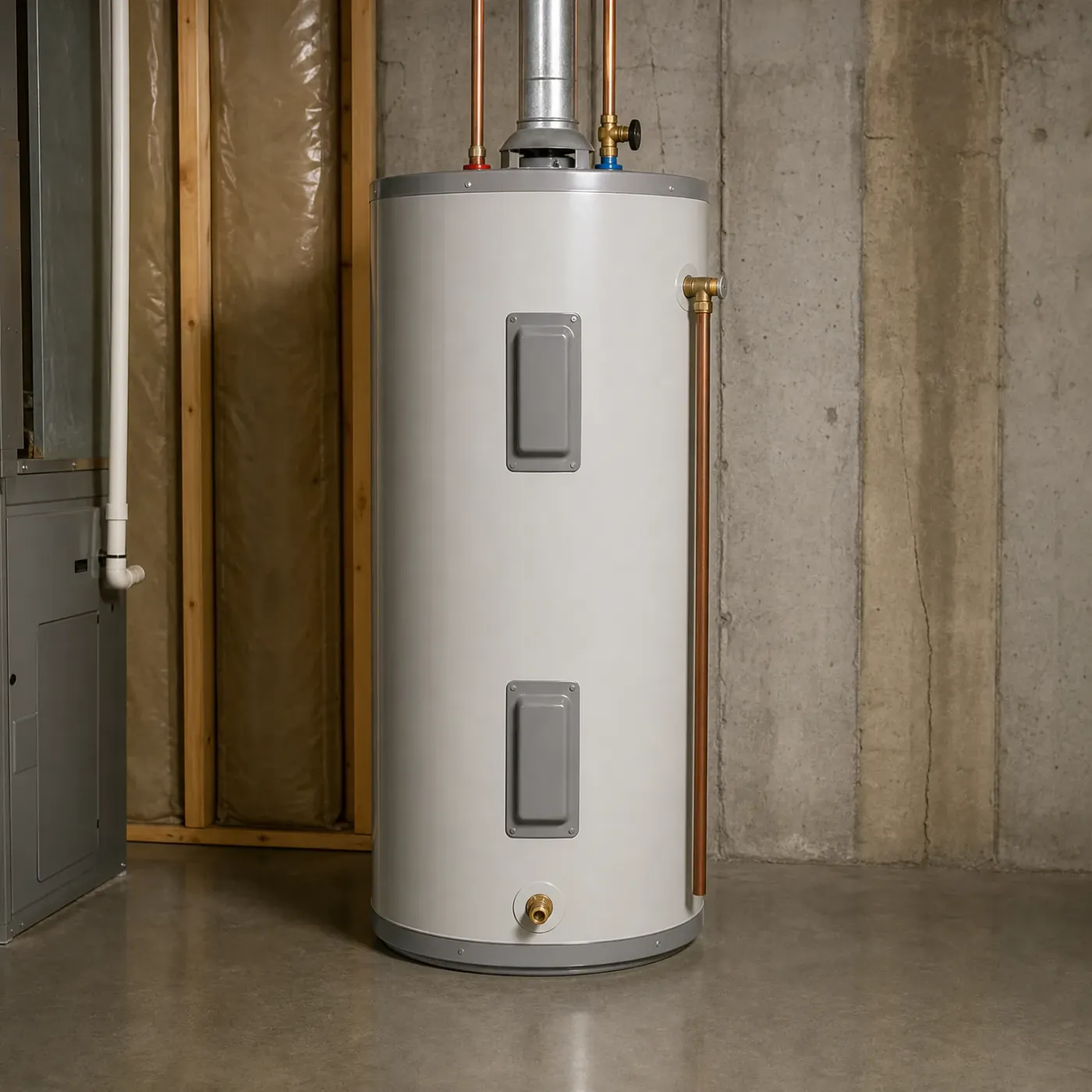
A white cylindrical water heater with two access panels, copper supply pipes and a metal flue, standing on a concrete floor against a concrete wall beside insulated wood framing and a gray electrical panel.
After you get your water heater repair
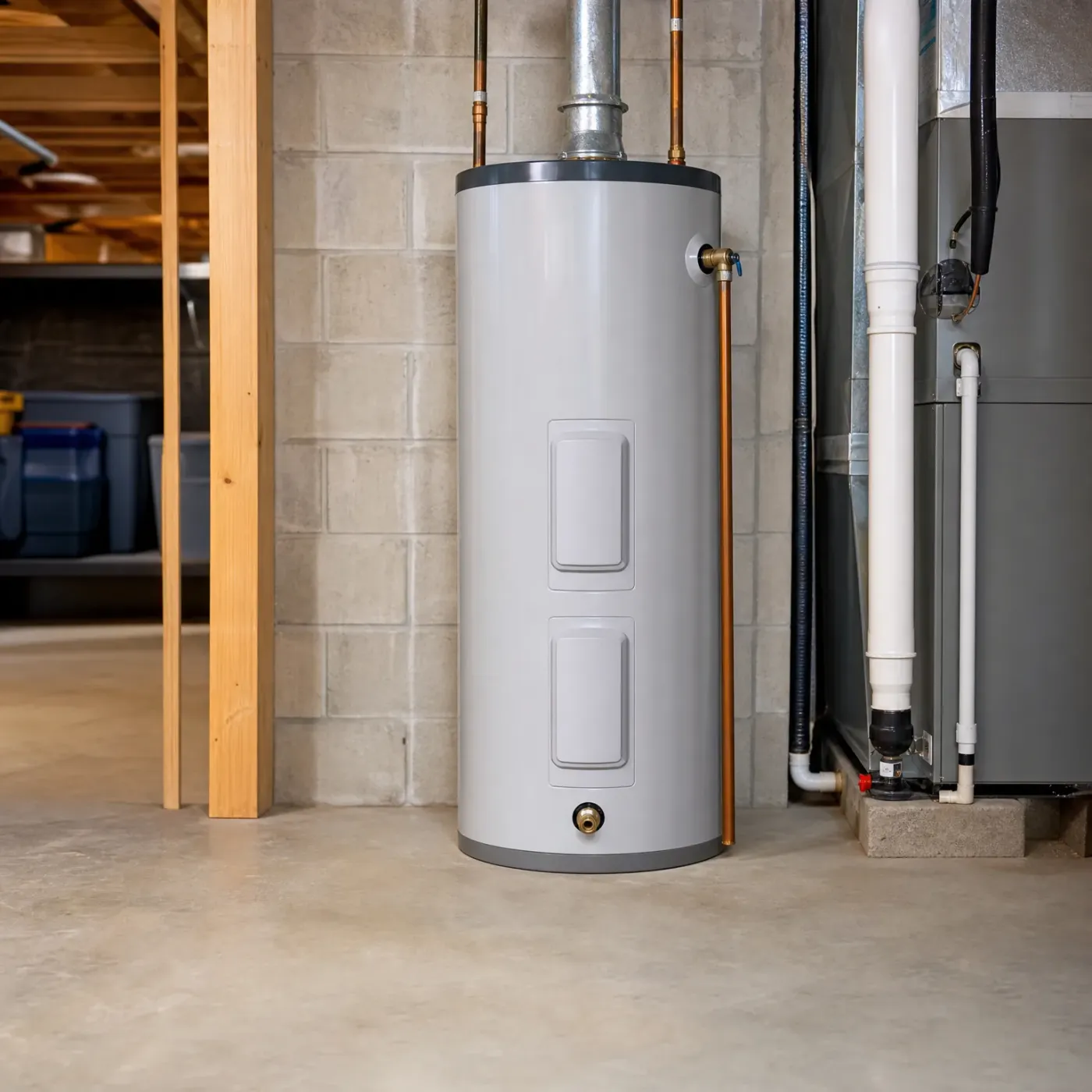
A gray cylindrical water heater with copper pipes stands against a concrete block wall in a basement, next to white PVC piping and a gray furnace, with wood framing and storage bins at left.

A tank that's not giving you trouble

This is what a water heater looks like when nothing's wrong. Clean copper lines, a dry exhaust flue, panels shut tight. The tank just sits there and does its job, no rust, no smell, no reason to open it up and check.

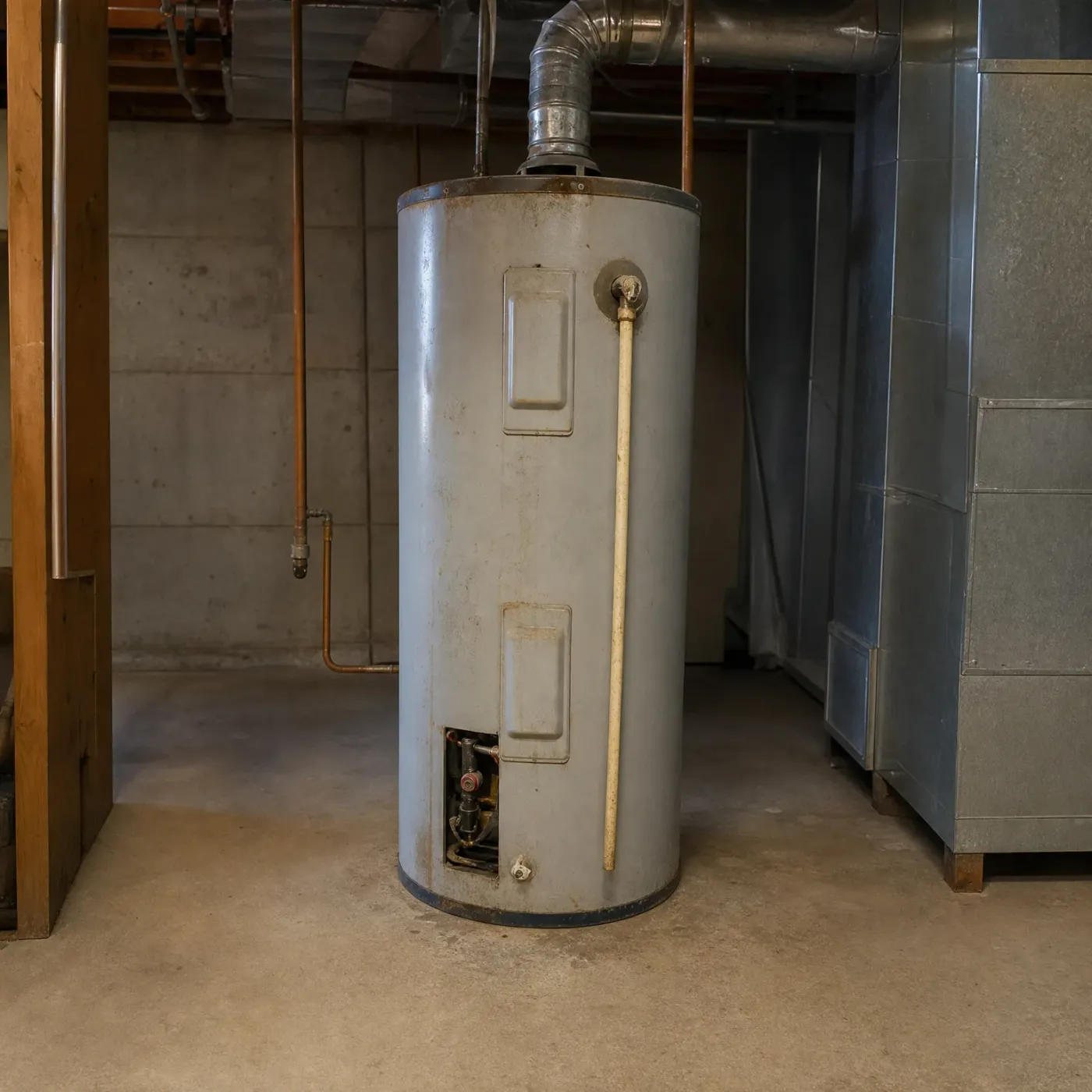
An older gray gas water heater with a metal flue pipe stands on a concrete basement floor beside ductwork and exposed copper piping.

A tank past due for a look

Surface rust like this on the tank tells you the unit has been through a lot of hot and cold cycles. The flue pipe and relief valve discharge still have to be clear and tight even on an older unit like this, or a pilot that's out stays out.

Power here costs 15.96 cents per kilowatt-hour

At 15.96 cents a kilowatt-hour, heating water with electricity backup or running the rest of the house while the tank is down adds up fast. A gas water heater costs little to run next to that rate, which is one more reason to get the pilot relit instead of switching the whole system over.

EIA-861 2025

A pilot that won't stay lit comes down to a short list of causes, and most of them show themselves once someone opens the burner chamber and looks. A worn thermocouple, a clogged pilot tube, a draft pulling the flame where it shouldn't go. None of it is a mystery once a trained eye is on it. You've already tried the knob, maybe more than once, and if it's not holding, that's information, not failure. It means the fix needs a hand other than yours. Once you send the request, you're done hunting for who to call and done guessing what's wrong. A contractor who works on these tanks across Plano and the rest of Collin County takes it from there. Until then, the water stays cold and the house still needs hot water for dishes and showers and everything else that doesn't run on electricity. That part doesn't wait, but finding someone to fix it no longer has to sit on your list.

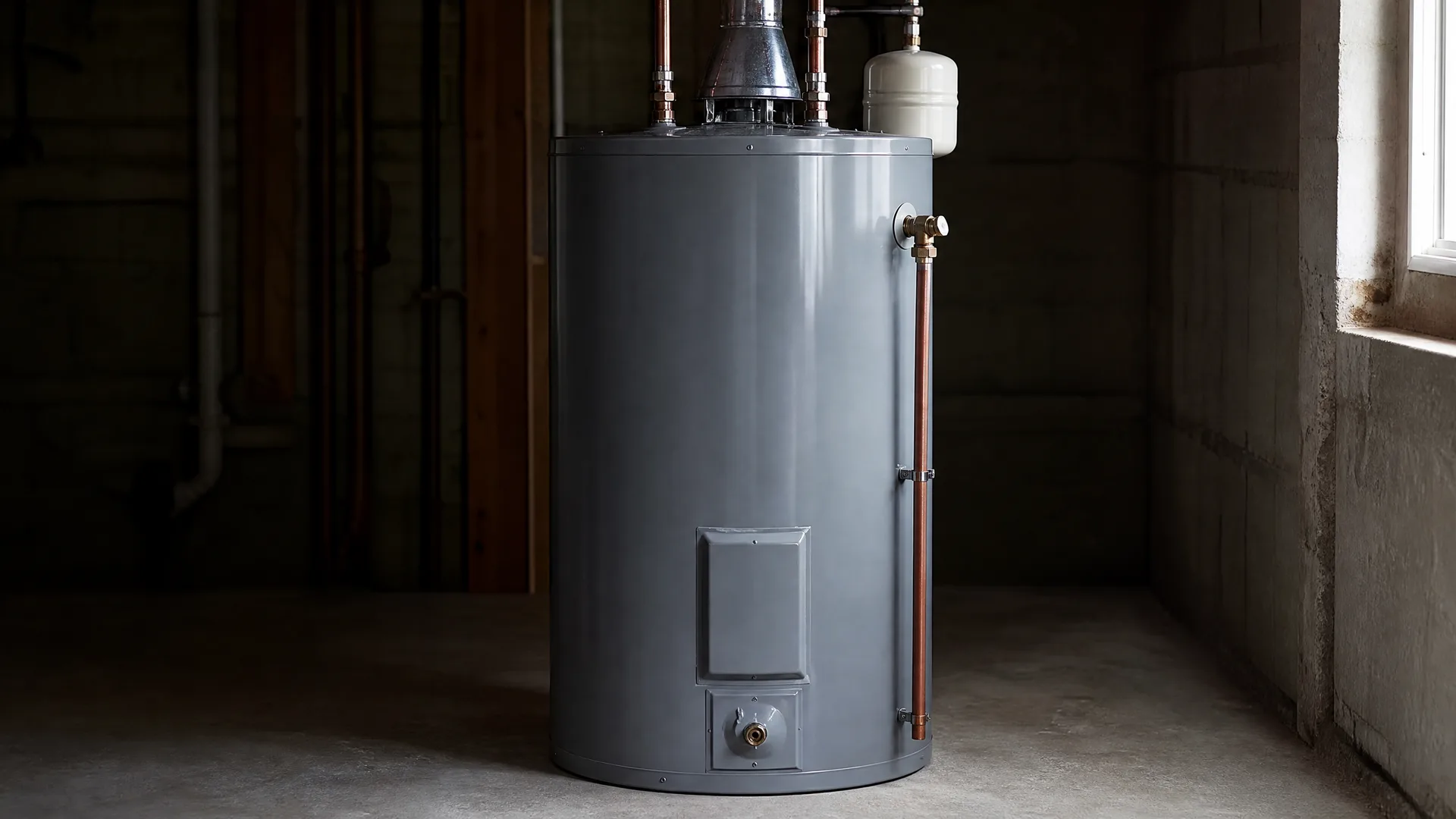
A gray cylindrical water heater with copper piping and a metal flue stands on a concrete floor in a dim basement with block walls and a window at right.

A pro who works on water heaters

Step 1 of 3: Equipment