 Hand it off
What size water heater a Texas home needs
Send the form and the search for an installer is over.
A family of four in Texas usually needs a 50 gallon tank if it's electric. Gas runs smaller for the same household, closer to 40 gallons, because it recovers faster. Get the size wrong and you feel it right away: cold showers when two people run water back to back, or a tank that's bigger than you'll ever use, costing you more to keep heated for no reason.
Tank size isn't the only number that matters. Electric water heaters need the right amperage and breaker size for the elements inside. Get a tank that needs more power than your panel can give it, and it won't run right no matter how well it's installed.
That's the part most people don't think about until the install is already underway. You know how many people live in your house and how many bathrooms you're running. What you don't know, usually, is how that translates into tank size, recovery rate, and what your electrical panel can actually support. That's a contractor's job to work out, not yours.
Right now, your options are to call around and find someone who installs water heaters, explain your house and your situation to each one, wait on quotes, and sort through who actually knows what they're doing. Or you can skip that part.
Send the form below and the job of finding someone qualified stops being your problem. No more calling around, no more repeating yourself to the next person on the list, no more guessing which quote is the honest one. Someone who installs water heaters for Texas homes takes it from there.
What size water heater do I need for my house in Texas?
Maybe your current tank is giving out, or you're building and need to pick one, or you just want to stop guessing after a bad shower. The number changes with how many people live in the house, how many bathrooms are in use at once, and whether the house runs on electric or gas. Texas homes lean electric, and that shifts the math a bit from what you'd find in a house piped for gas.
Size it to your household, not your house
A single person or couple can run on a 30 to 40 gallon electric tank. A family of four usually needs 50 gallons if electric, since electric units recover slower and need more stored water to cover two showers running close together. Add a gallon or two of capacity for each extra person past four, or look at a larger tank once a house has more than two bathrooms seeing regular use. Get it wrong on the low side and the second shower of the morning runs cold. Get it wrong on the high side and the tank spends the day heating water nobody uses yet, which costs more over a year than it needs to.
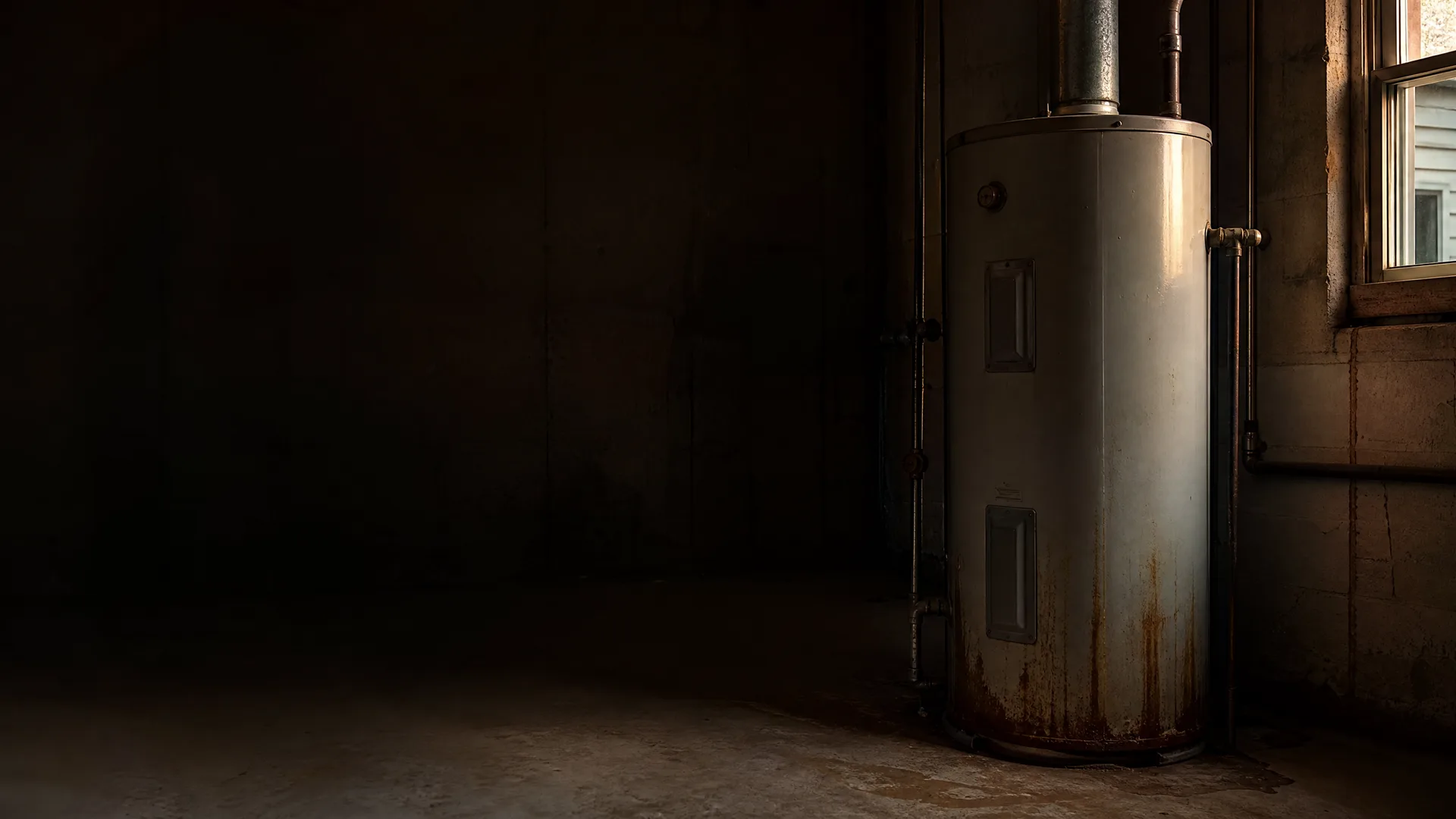
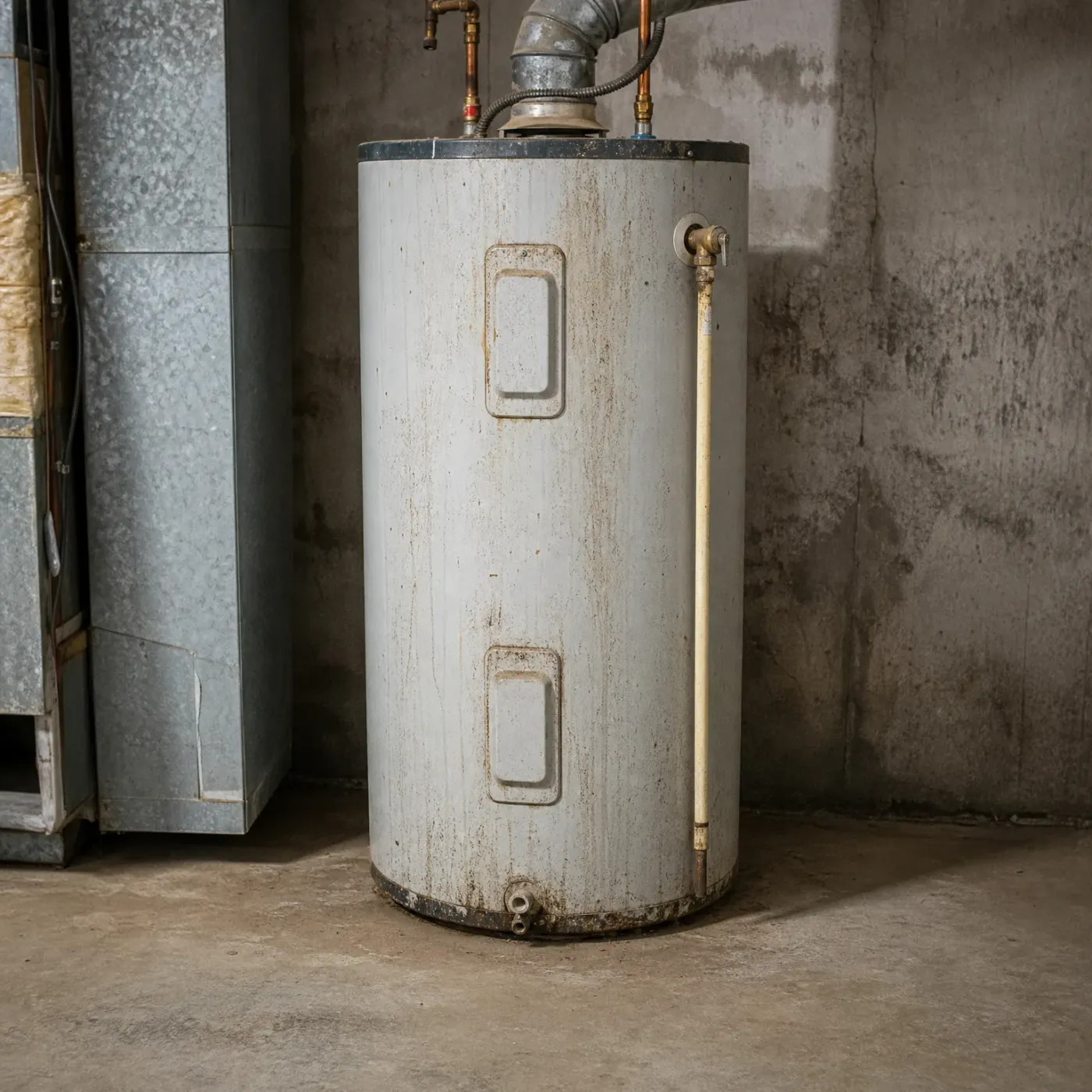
You're down in the utility room after dinner, flashlight in hand, because the water went lukewarm halfway through the dishes. The tank's older than you'd like to admit, and there's a rust streak running down from the seam near the bottom, dried in a line toward the drain pan. The room's warm the way it gets in a Texas summer, even with the vent, and the tank is ticking faintly as it cools. You crouch down and look at the streak a second time, like it might not be what you think it is. It is. You already know you won't be shopping around for someone to look at this. You'll send the form and let someone else take it from here.
Send one request and you're done looking

Skip collecting and comparing quotes for the new water heater.
It costs nothing to send, and you don't have to hire anyone.
Why electric tanks run bigger
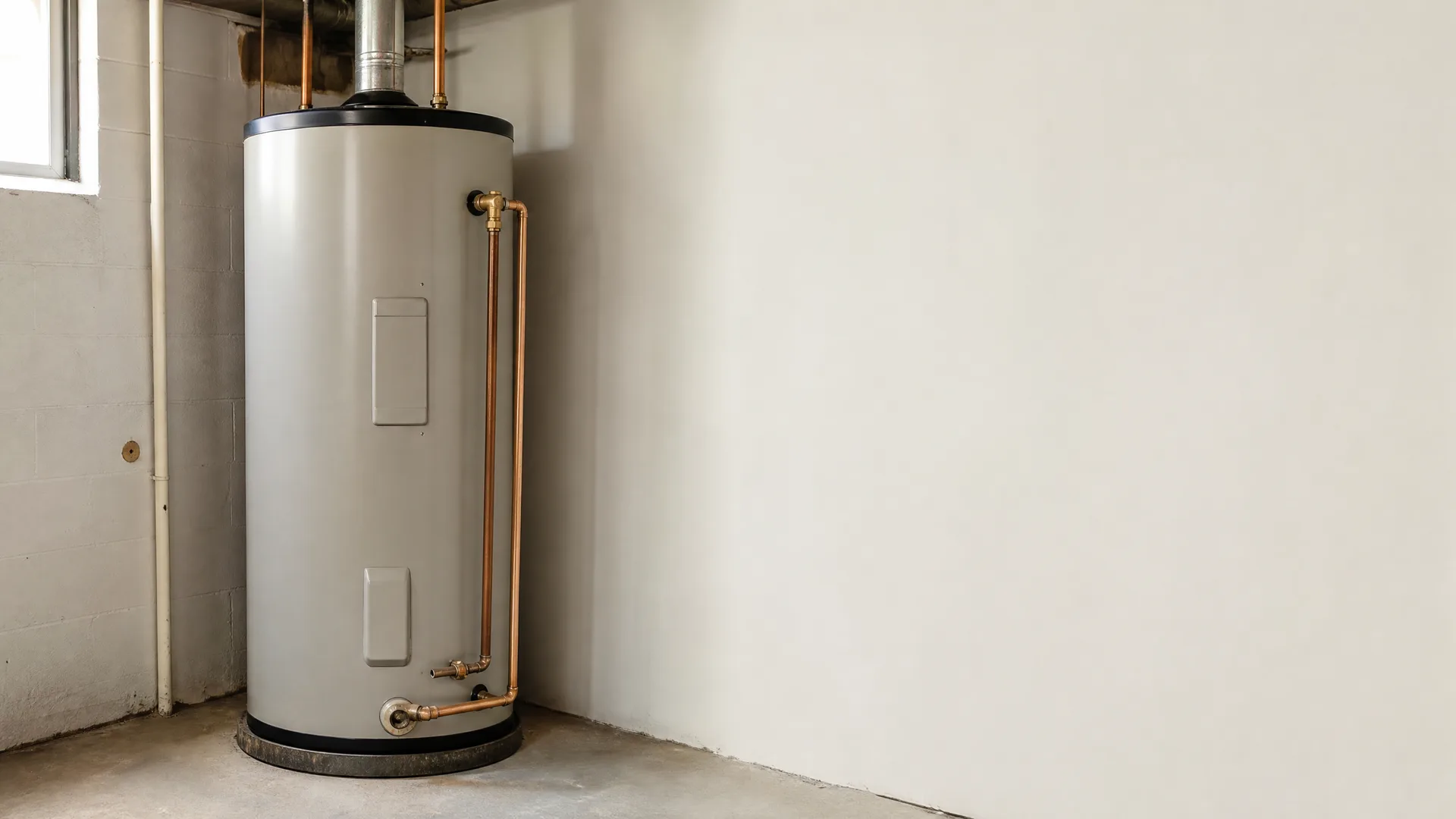
An electric water heater warms the whole tank with elements inside it, and that takes longer than a gas burner underneath. That's why a Texas home on electric needs more stored water to get through a stretch of showers and laundry without running cold. Gas recovers fast enough to get by on less. If your house heats with electricity, which most do here, size the tank for the slower recovery, not just the number of people using it.
What undersizing actually feels like
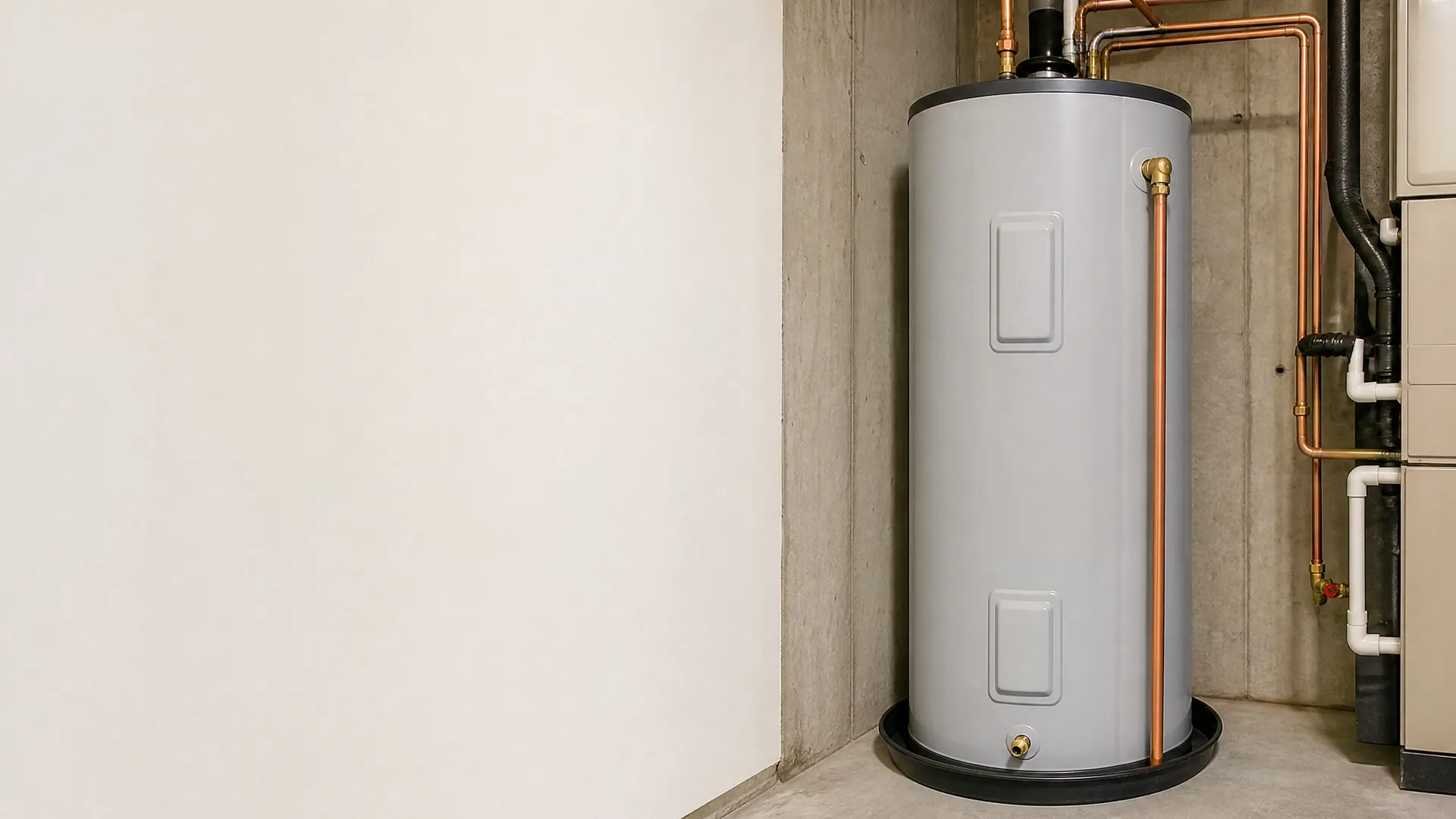
A tank that's too small doesn't fail all at once. It runs out partway through the morning, when someone's dishwasher is going and someone else wants a shower. The water heater itself isn't broken. It just can't hold enough hot water to cover everyone's overlapping use. Sizing for your household's actual pattern, not just a headcount, is what keeps that from happening on a random Tuesday.
Running out of hot water before everyone's had a turn?
You notice it most on a night when the whole house is moving at once, dishes in the sink, someone starting a shower, maybe the washer going too. The water turns lukewarm, then cold, before the last person gets through. If that happens most weeks and not just on the rare busy night, the tank is probably too small for how many people are actually using it now. An undersized tank also runs more than it needs to, heating the same water over and over to keep up, which shows up on the power bill. Left alone, it just keeps happening, because the tank doesn't fix itself and the house isn't getting any smaller.
Sized Right or Sized Wrong
Undersized tank
- Recovery time stays the same, so a tank too small for your household never catches up between showers.
- The water heater cycles more often to keep up with demand, which puts more wear on the elements over the years.
- You end up timing showers and laundry around each other instead of running the house the way you want to.
- Guests or extra people in the house for a weekend will feel it immediately, even if the tank is fine for a normal day.
- A unit working past its real capacity shows strain sooner, not just in comfort but in the parts themselves.
Correctly sized tank
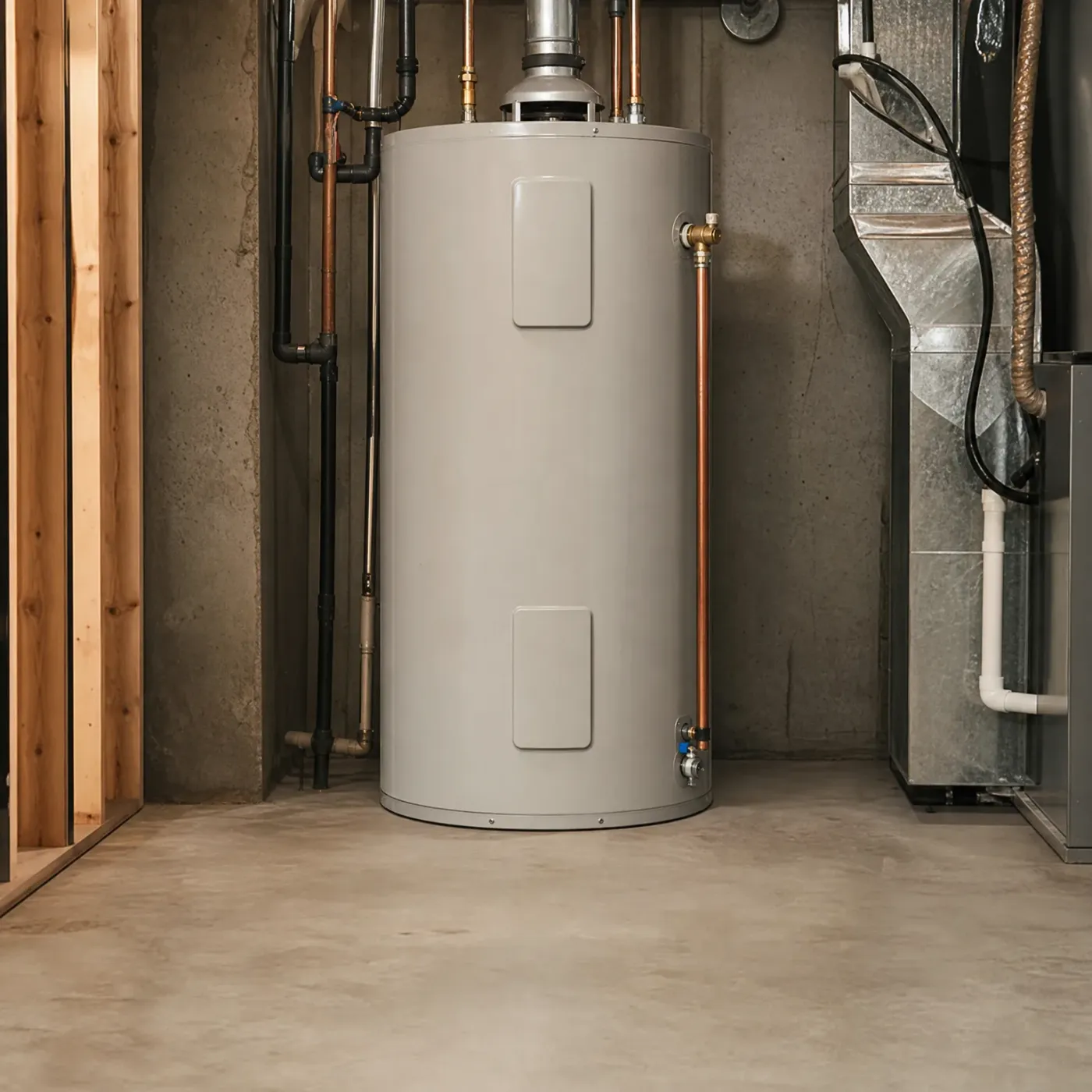
- A 50 gallon electric tank sized for a family of four covers back-to-back showers and the dishwasher without a lukewarm stretch.
- The elements cycle on a normal schedule instead of constantly chasing demand, which is easier on the tank long term.
- You stop thinking about hot water as something to ration and just use it the way the house needs.
- Sizing it to the household now means you're not guessing again in a few years if the family grows.
- The pressure-relief valve and fittings work under the load they were built for, not above it.

A plumber measures your household's peak hour demand in gallons.
That number gets matched against a tank's first hour rating, not just its size.
Incoming water temperature gets checked, since groundwater here runs warmer than up north.
The tank's recovery rate is weighed against your gallon size to confirm the fit.


61.2% of homes statewide heat with electricity
Most homes in Texas heat water with electricity, same as yours probably does. That matters here because an electric tank needs more stored capacity than a gas one to cover the same household, so sizing it right means leaning toward the bigger number, not the smaller one.
ACS 2020-2024 5-year B25040
The right size comes down to how many people are in your house and whether the tank is electric or gas, and on electric that usually means sizing up rather than down. Get it wrong and you'll know fast, in a cold shower or a dish load that won't finish. Get it right and the tank just does its job, year after year, without anyone thinking about it. You don't have to work out the gallons yourself or figure out what counts as a safe margin for your household. You also don't have to spend evenings searching for a plumber, calling a few to see who answers, explaining the rust streak and the lukewarm showers over again to each one, then sitting with a stack of quotes trying to tell them apart. Once you send the request, that part is off your plate. Someone qualified takes the measurements, checks your incoming water temperature, and sizes the replacement to your house, not a guess pulled from a chart.
Finding a pro stops being your job
Fill out one short form instead of calling around.