Set right and maintained
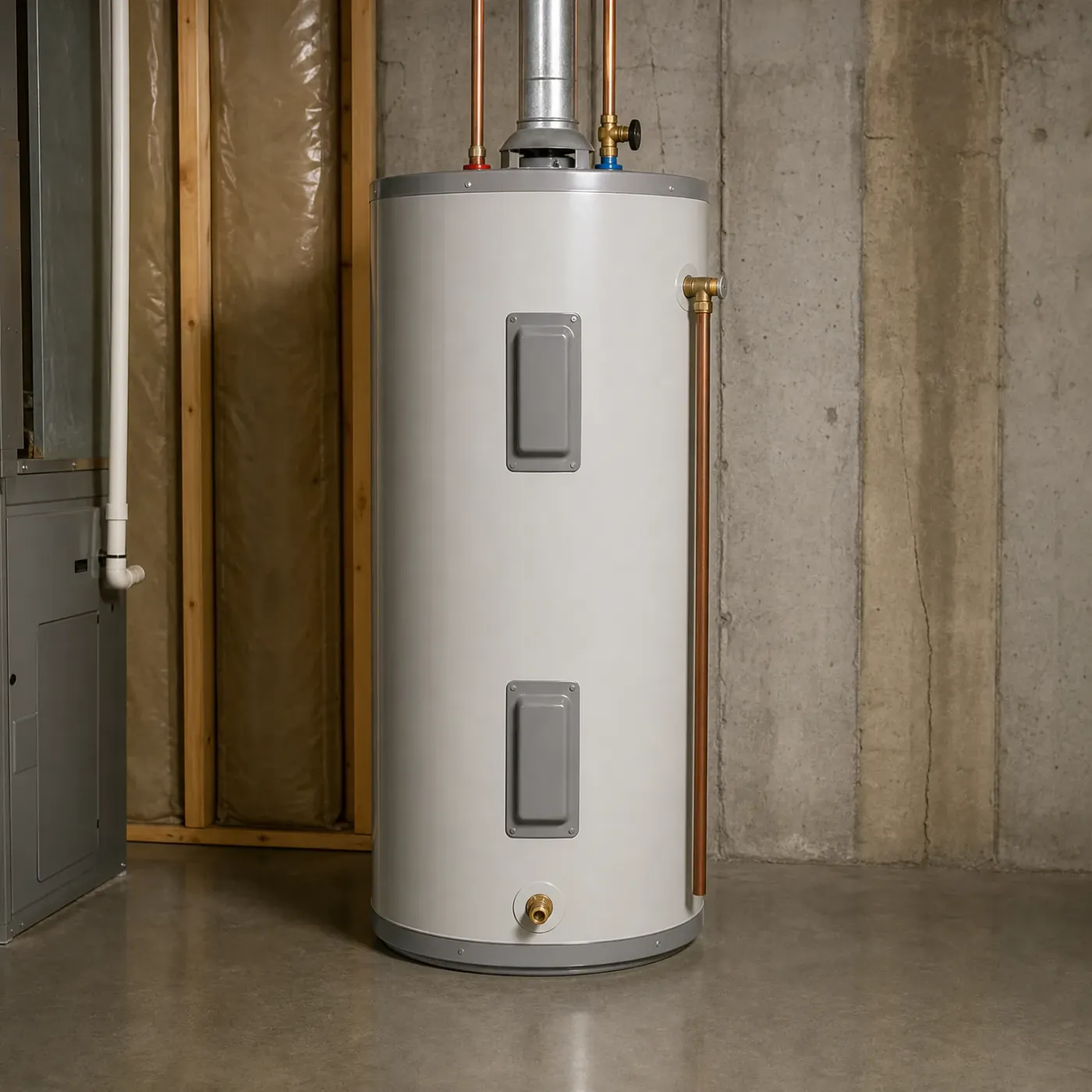
This tank holds its setting and the copper lines stay clean and dry. The expansion tank mounted on the pipework is doing its job absorbing pressure, and there's no sign of corrosion anywhere near the fittings.
 Skip the calls
Fill out one form instead of calling around for a water heater tune-up.
120 degrees is the right setting for most homes in Texas. That's hot enough for showers and dishes without wasting power keeping a tank hotter than you need. Go much higher and you're paying for heat that just sits in the tank, especially with electric water heaters, which is what most homes here run on.
Setting it is easy. Knowing why your bill or your hot water hasn't matched that number is the part that takes someone who works on these tanks regularly.
A water heater that's set right but still runs out of hot water, or costs more than it should, usually has something going on inside it. Sediment on the bottom of the tank. A heating element on its way out. A thermostat that's drifted off from what the dial says. These are maintenance issues, and they're easy to miss until the tank's not doing its job.
If you've gotten to the point of wanting someone to look at it, you know what's next without a referral: searching for a plumber who works on water heaters specifically, calling two or three, describing the same problem to each one, then sitting with quotes that don't line up because nobody looked at the same tank. That's a lot of phone calls for a tank setting.
This page connects you with a licensed plumber local to your part of Texas, someone who services water heaters all summer as a matter of course and has a good sense of what typically wears out first in a tank that's been running here for a few years. One contractor, not a handful competing for the job, so you're not fielding calls from three different companies by the end of the day.
From here, the rest of this page covers what 120 degrees means for your tank, when a different setting makes sense, and what to check before you call anyone at all.
120 degrees works for almost every household in Texas. That setting gives you water hot enough for a shower or a full sink of dishes, with a little room to spare, but it doesn't push the tank to hold heat you're not using. Most water heaters here run on electricity, so every degree above 120 is a degree you're paying to maintain around the clock, not just when someone turns on the tap. The tank cycles on and off all day to hold whatever temperature it's set to, so a higher number means more cycles and more run time, not faster hot water. There are reasons to go higher, a large household that runs through hot water fast, or a tank set far from the bathrooms it serves, but those are exceptions, not the rule. If your water takes a long time to run hot, or never feels hot enough at 120, that's usually a sign something in the tank needs a look, not a reason to turn the dial up.
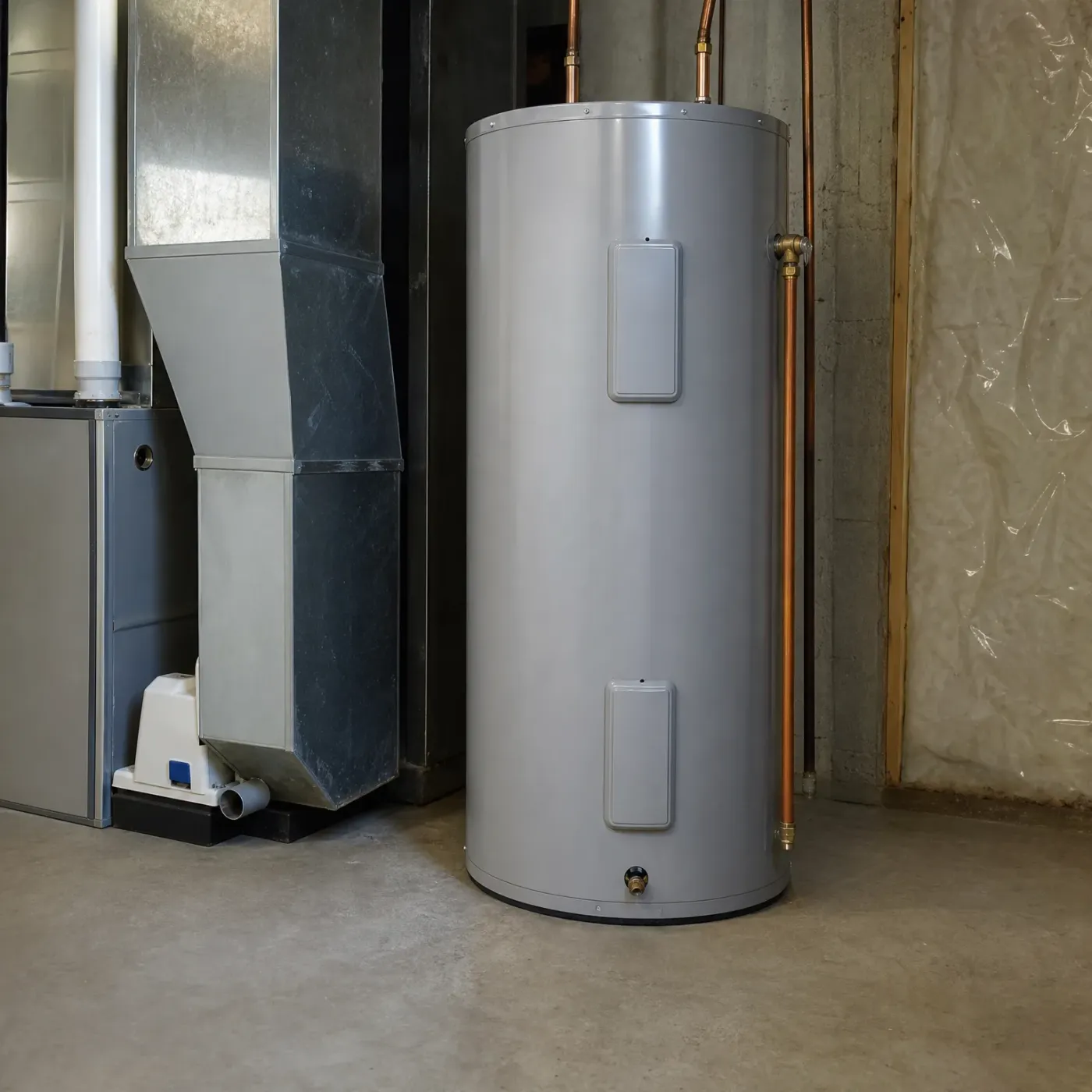
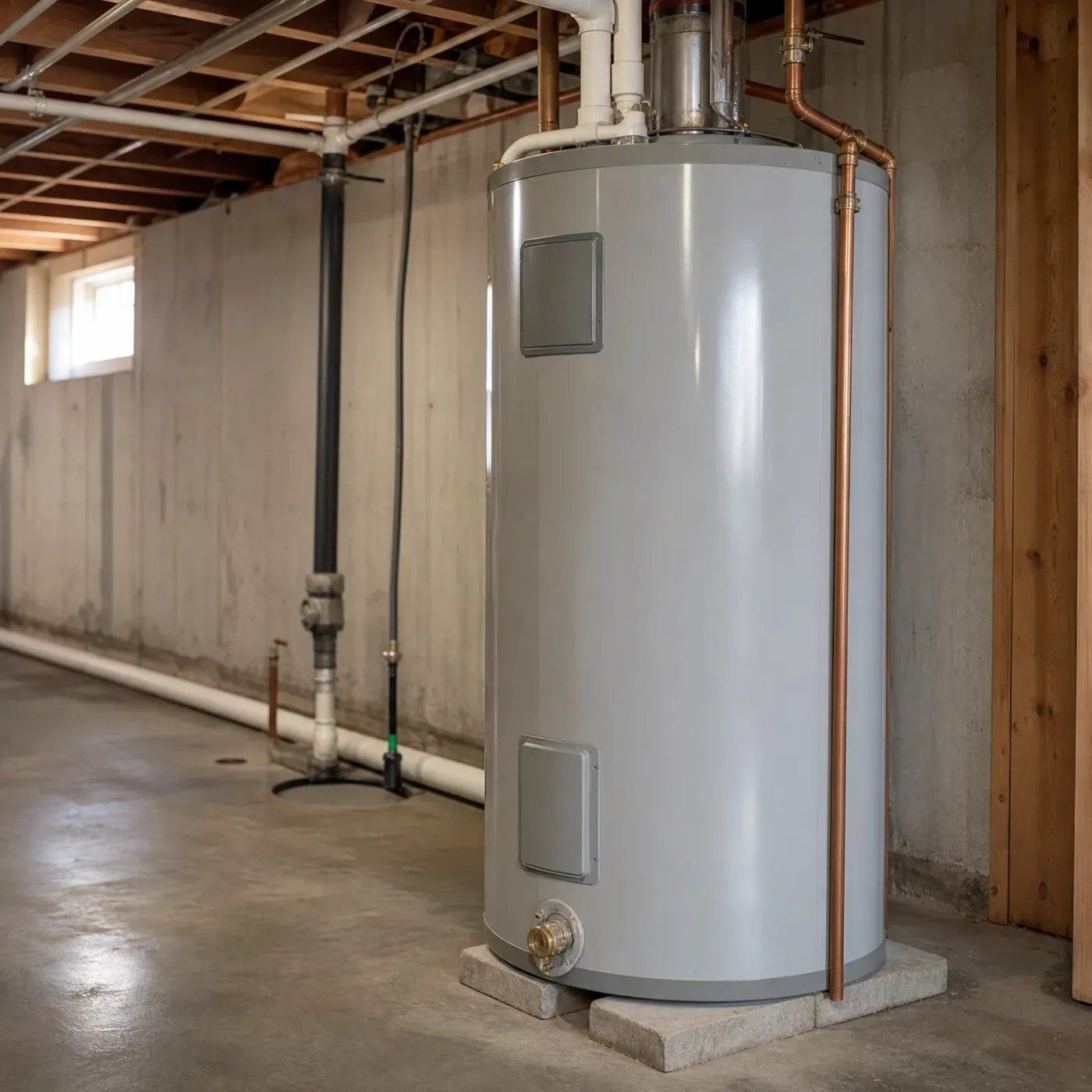
Most electric tanks run two elements, one near the top and one near the bottom, and each has its own thermostat behind a small access panel. Those panels are usually low on the tank, not up top where you'd think to look. Both thermostats need to be set to the same temperature. When they're not, the elements end up working against each other, and the one picking up the slack wears out ahead of schedule. The thermostat itself only knows the water right next to the element, not the room, so what the dial says and what's actually coming out of the tap can drift apart after a while. That drift gets worse if sediment has settled at the bottom, since it sits between the lower element and the water and makes that element run longer to reach the same setting. None of that means turning the dial higher helps. Past 120, you're not getting hot water any sooner, you're just moving the point where the element finally cuts off.


A licensed local pro takes the request for your water heater tune-up.
Skip calling around to set up a water heater tune-up.
It costs nothing to send, and you don't have to hire anyone.
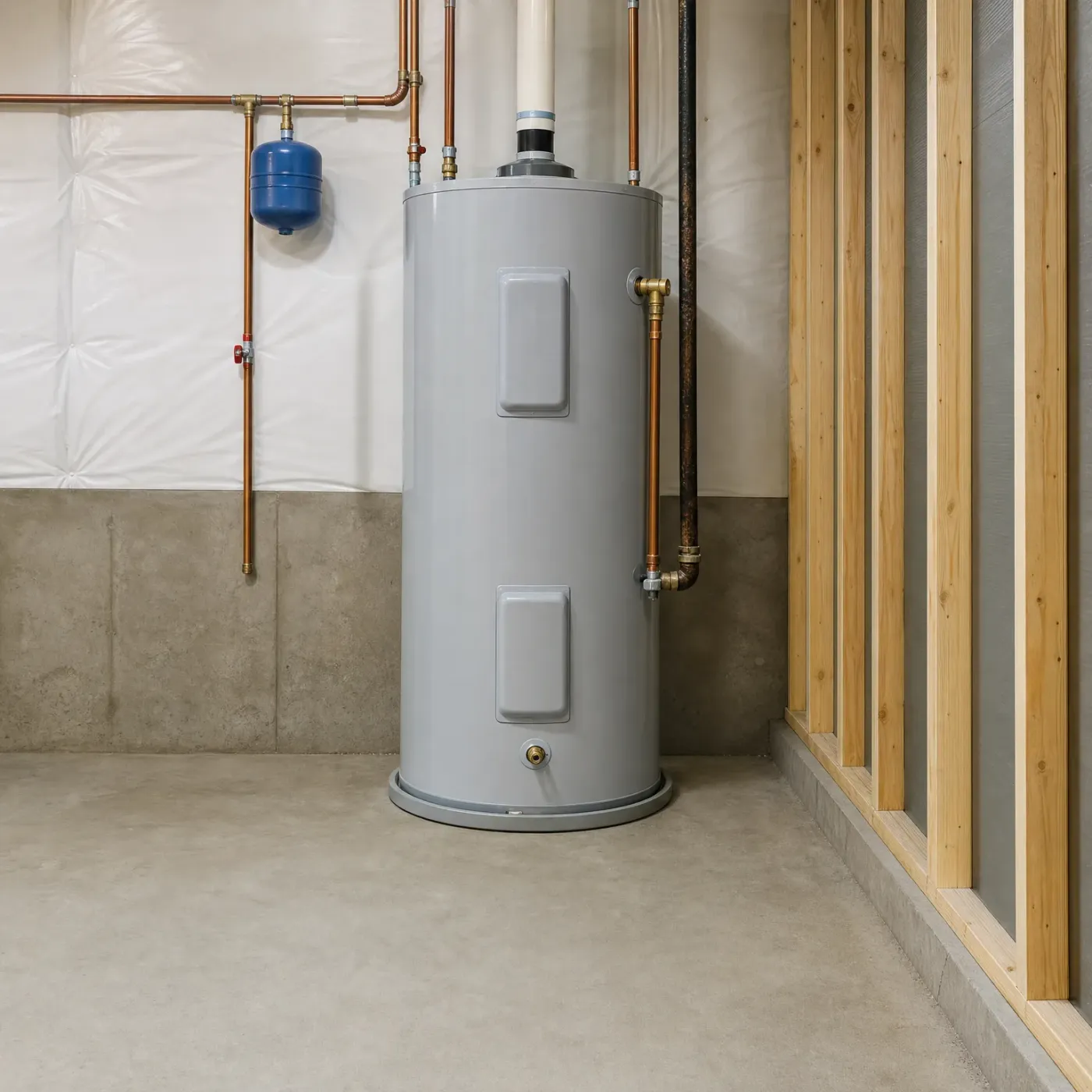
This tank holds its setting and the copper lines stay clean and dry. The expansion tank mounted on the pipework is doing its job absorbing pressure, and there's no sign of corrosion anywhere near the fittings.
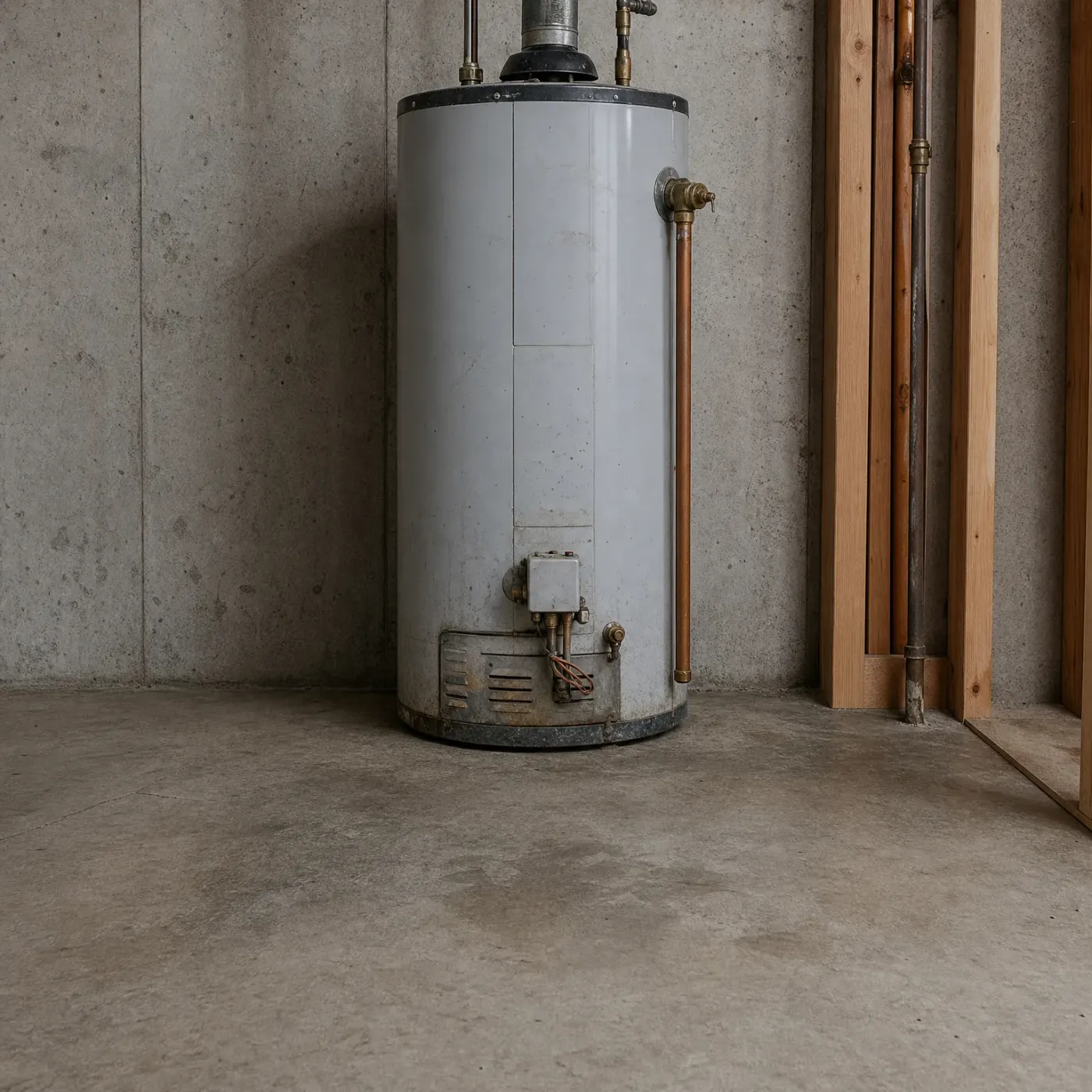
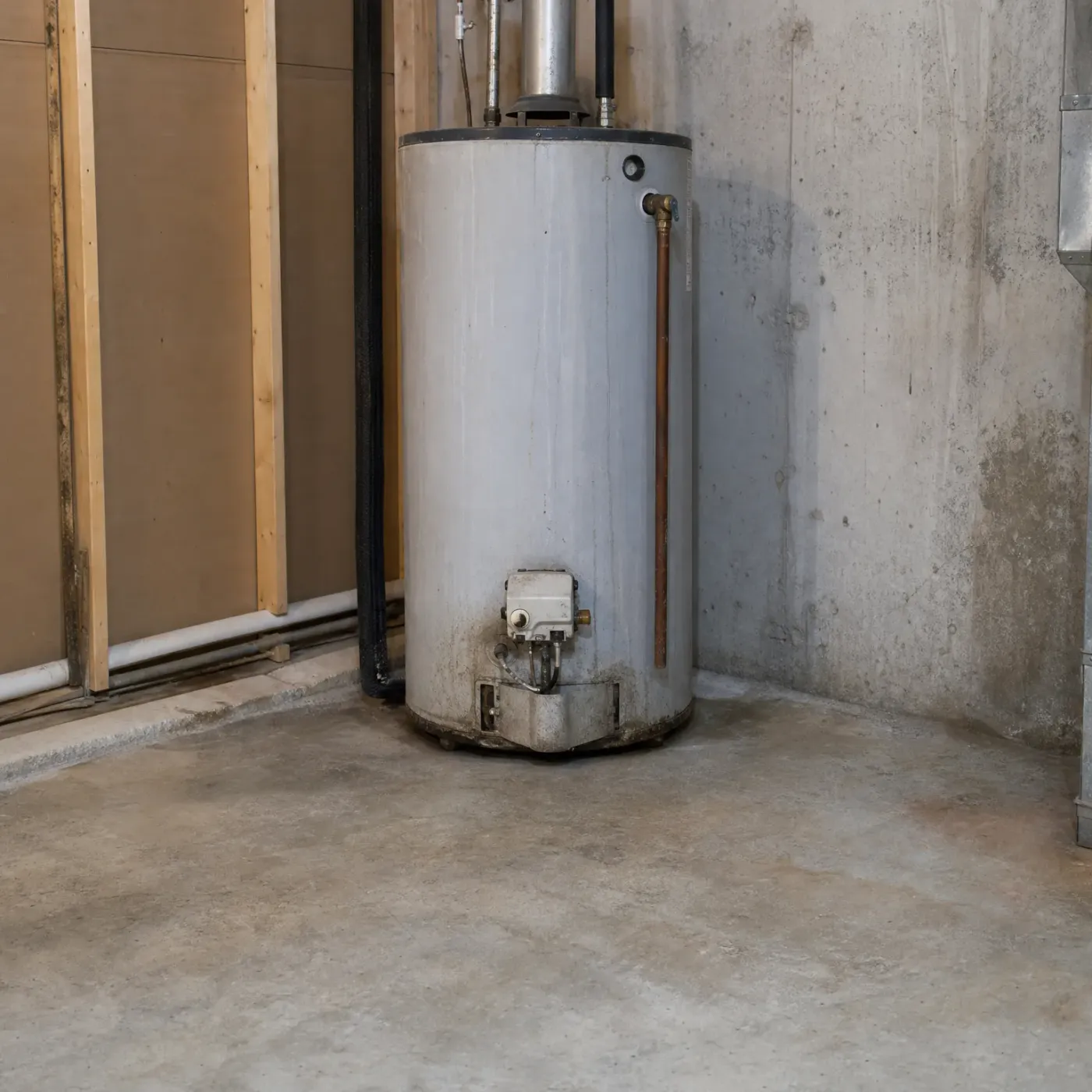
Rust has worked its way up the base and grime has built up around the burner. An older gas tank like this one still needs a look every so often, even if the temperature is set correctly, because wear like this changes how it heats water.
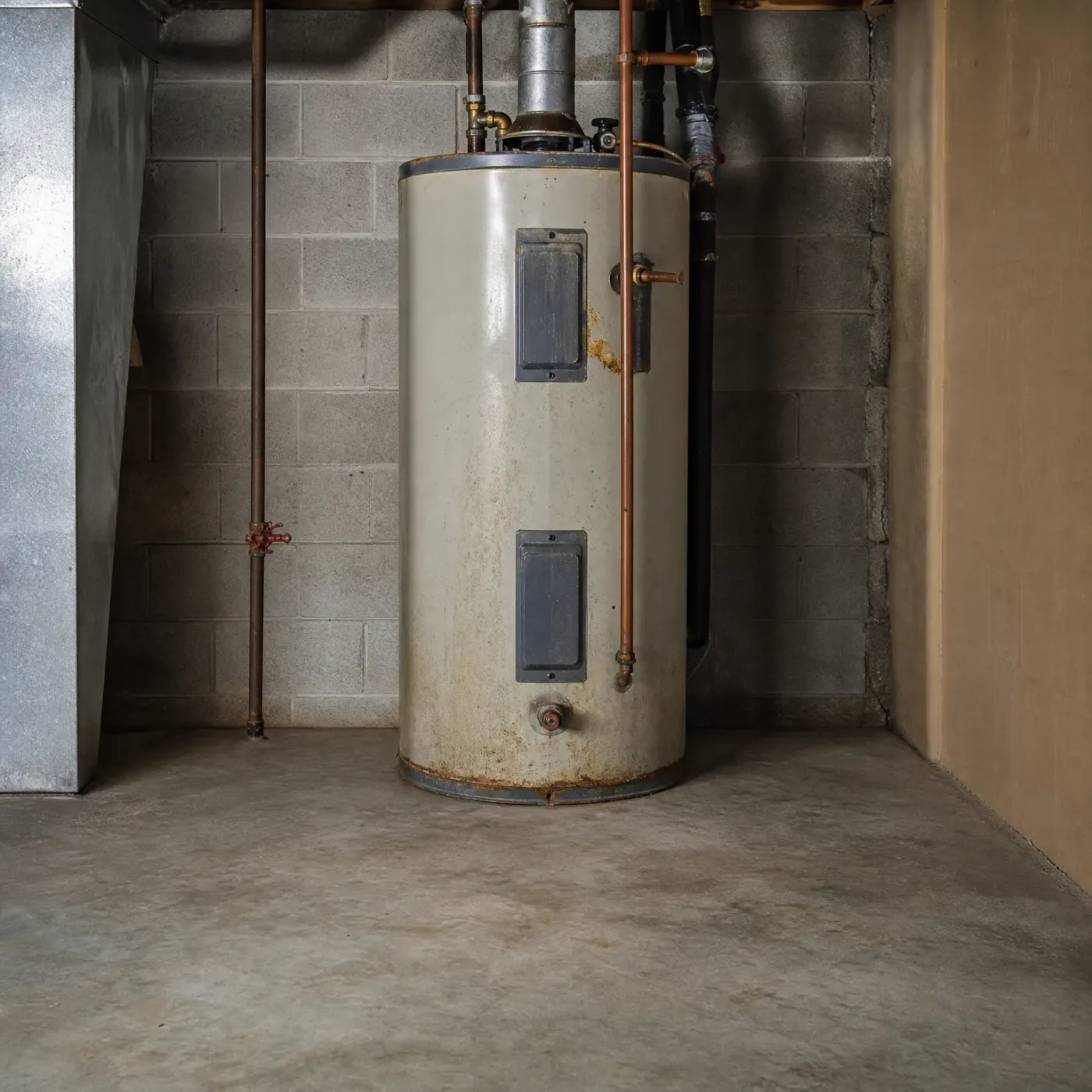
Every 10 degrees above 120 adds to what an electric tank spends holding that water hot around the clock, whether anyone uses it or not.
At 120, the tank cycles to maintain one number instead of fighting its way back up from a higher one, which is less wear on the elements over time.
With most houses here running electric water heaters, that thermostat setting is doing real work on your bill every single day. Keep it at 120 and the elements don't have to cycle as hard to hold it. That's money you keep instead of paying to heat water nobody's using.
ACS 2020-2024 5-year B25040
Cold water enters the tank through the dip tube first
The thermostat checks tank temperature against its setting
The element or burner fires when water drops below setting
Heat rises through the tank as the water warms

120 degrees is the number for your water heater. That's settled. What decides whether you actually get the bill savings and the safe hot water that number promises is whether the tank itself is in shape to hold it, the elements cycling the way they should, the thermostat reading true, the fittings dry.
Finding that out yourself means tracking down a plumber who works on water heaters, explaining the tank's age and what it's doing over the phone, then doing that again with the next company if the first one can't get out soon or the quote feels off. A local contractor matched to your address already knows what tends to go wrong with tanks running through Texas summers, and you're only talking to the one person, not fielding calls from three companies at once. You'll know where the tank stands, and you won't have spent the evening finding out who to ask.





Skip the search
Your request stays with one local pro.