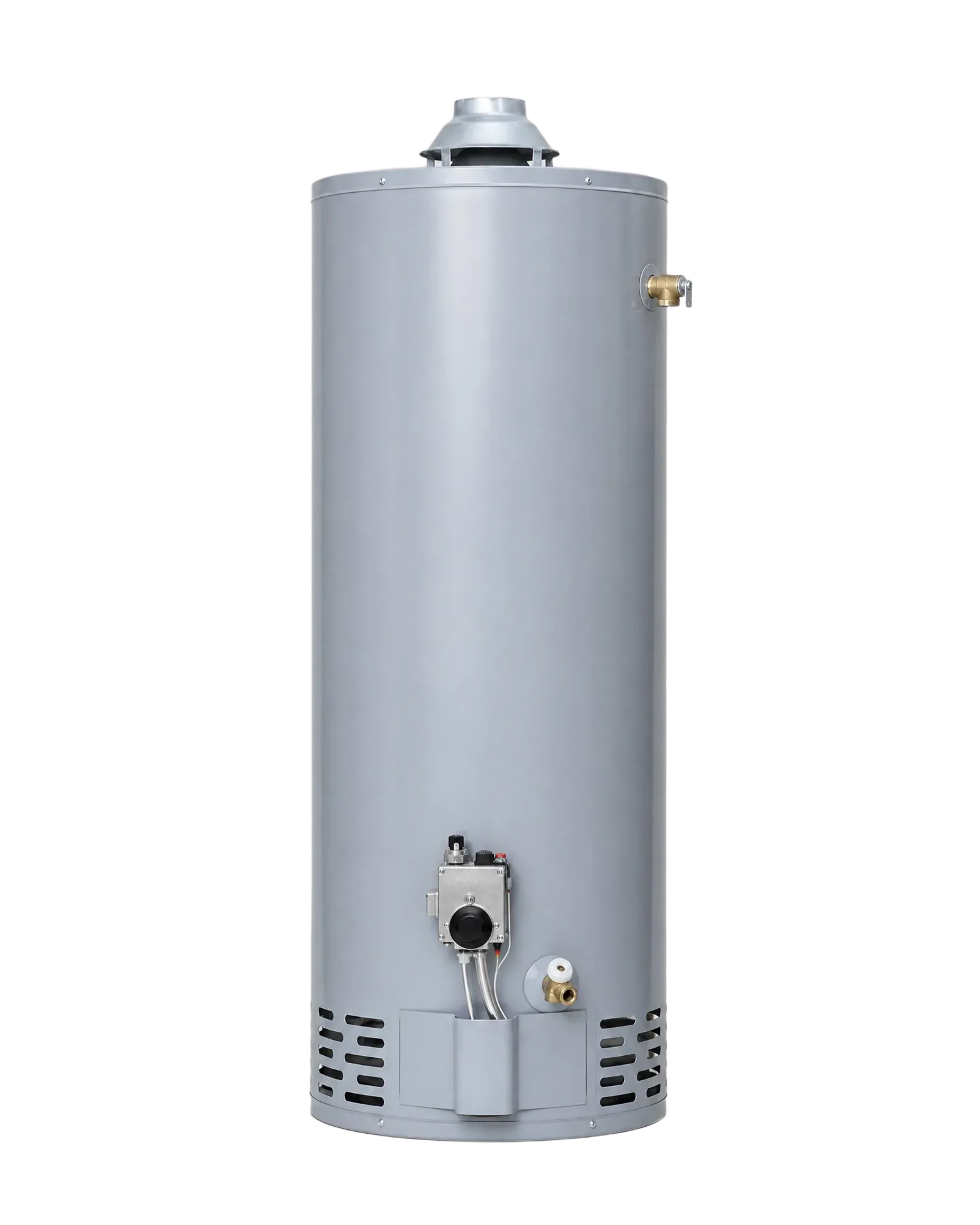
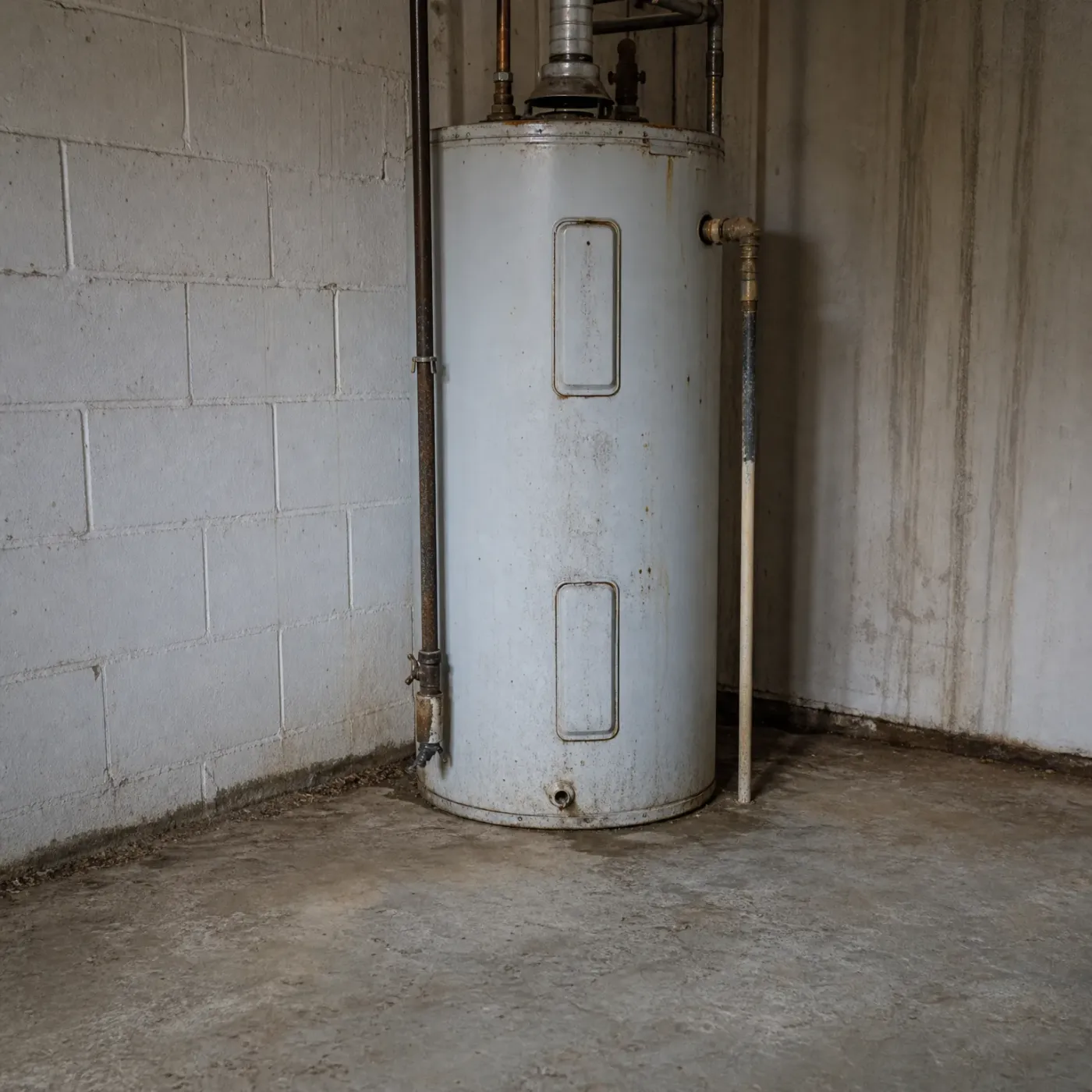
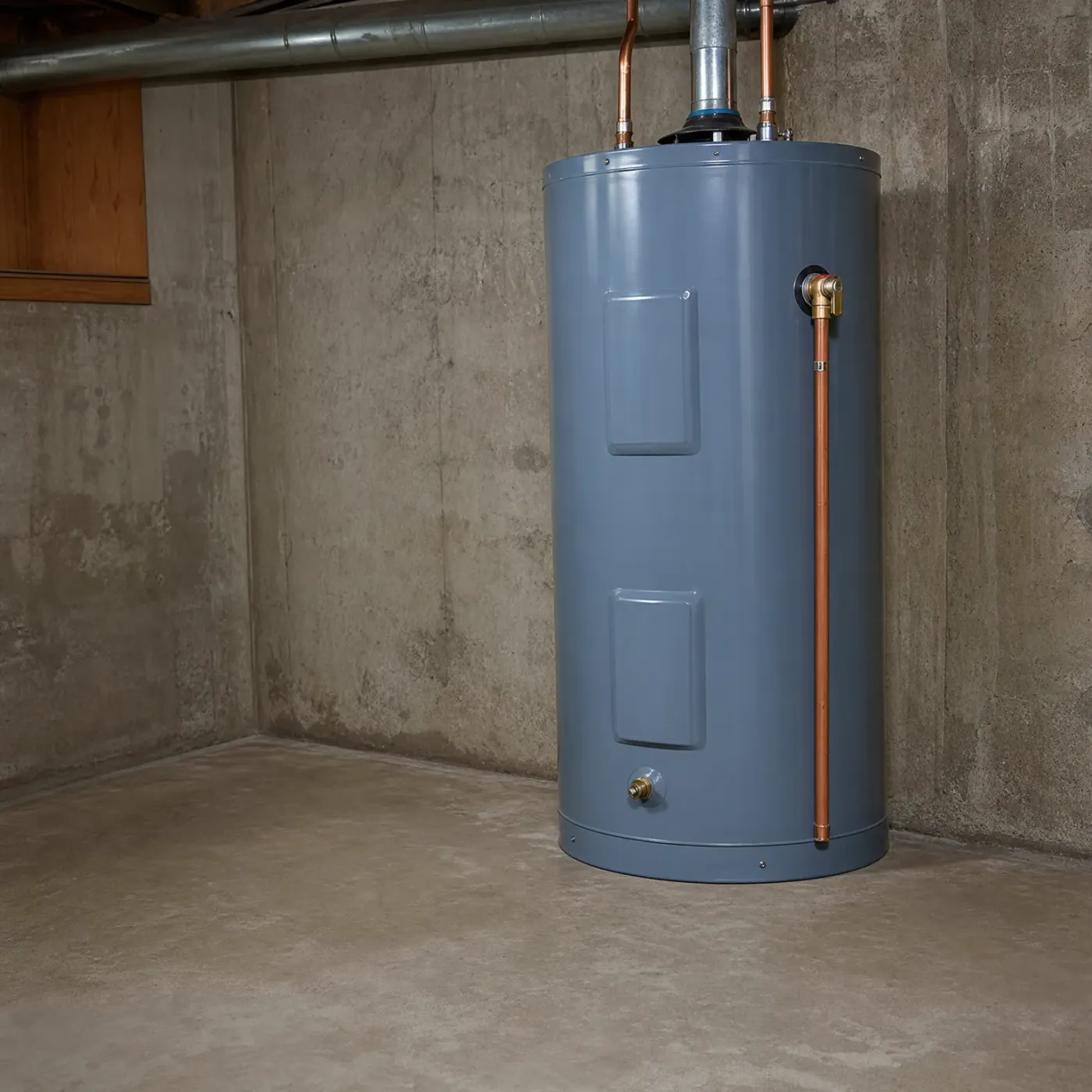
Most water heaters last 8 to 12 years, and age is the main thing to check first. Look at the data plate on the tank for the manufacture date, since the model number alone won't tell you. If yours is in or past that range, start planning for a new one even if it still runs, because the tank itself wears from the inside and a failure means water all over the floor, not just no hot water. Rust-colored water, a tank that's rusting on the outside, popping or rumbling sounds, or water pooling at the base are all signs the tank is failing regardless of its age. With Montgomery County's mild winters, the heater doesn't work as hard here as it would further north, but that doesn't add years once it's past the normal range. A repair makes sense for a thermostat, element, or valve. It doesn't make sense once the tank itself is the problem.
Signs Your Water Heater Is Failing
Rust-colored water from the hot tap usually means the tank itself is corroding from the inside.
A tank that rumbles or pops as it heats is building up sediment on the bottom, which makes the burner or element work harder.
Water pooling around the base often means a crack in the tank, not just a loose fitting.
The anode rod inside the tank is what corrodes first to protect the steel, and once it's used up the tank is next.
A gas water heater that won't hold a pilot light or keeps tripping its thermocouple is often nearing the end rather than needing another repair.
If the cost to repair it runs close to half the price of a new one, replacing it is usually the better call.
Age tells you when to start watching. These signs tell you when to stop waiting. Most of them trace back to the same part: the anode rod. It's a length of metal inside the tank that corrodes on purpose, so the steel tank doesn't have to. While it's intact, it takes the damage for you. Once it's used up, usually somewhere in that 8 to 12 year window, the tank itself starts rusting from the inside, and that's what shows up as rust-colored water at the hot tap. Sediment is a separate problem, but it shows up around the same age. Minerals in the water settle at the bottom of the tank, and the burner or element has to push heat through that layer to reach the water above it. That's the rumbling or popping you hear as the tank heats. Water on the floor around the base is worth checking right away rather than waiting on. A loose fitting drips. A cracked tank leaks steadily and won't be fixed by tightening anything. On gas units, a pilot that won't stay lit or a thermocouple that keeps tripping can sometimes be the part itself, but past a certain age it's usually the tank signaling it's done. Before paying for another repair, get a number for it. If that number lands near half of what a new unit costs installed, the repair isn't the better deal.
How much water heater do you actually need in Montgomery County?
2.75 people per household on average
The average household here runs 2.75 people, per Census figures. That's enough showers, laundry and dishes back to back that an undersized tank runs out of hot water fast, especially replacing like for like if your household has grown.
Half the homes here were built by 2004
Half the homes in Montgomery County were built in 2004 or later, per Census figures. A newer house doesn't mean a newer water heater. The one installed when the house was built could still be the one you have now.
51.7% of homes heat with electricity
51.7% of homes here heat with electricity, more than any other fuel, per Census figures. An electric water heater replacement needs to match the wiring already in place, which is one more thing worth confirming before you buy.
ACS 2020-2024
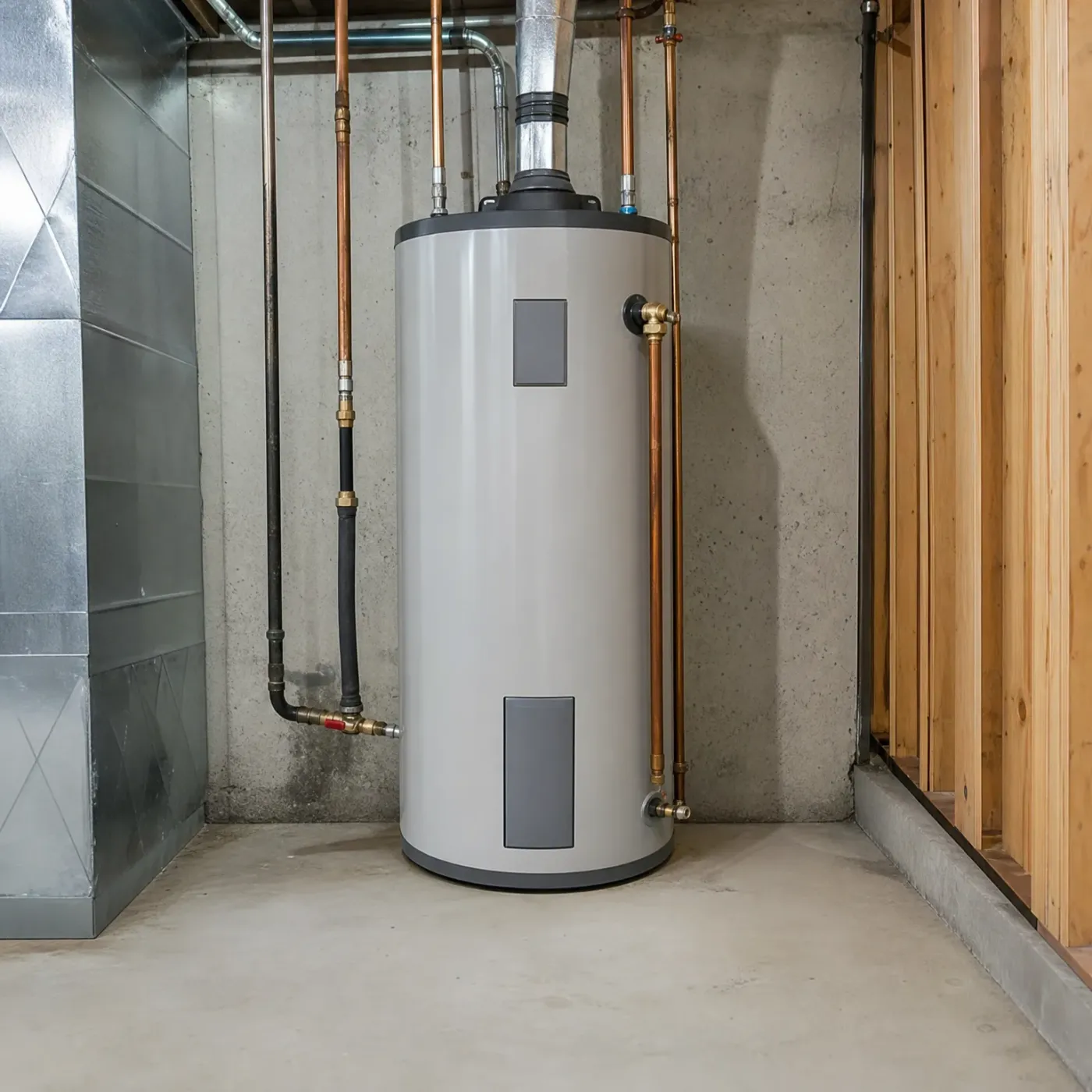
Still doing its job
A water heater that's heating properly keeps steady pressure through the copper lines and runs quiet. No drips at the fittings, no streaks down the jacket. If yours looks like this and falls inside the normal age range, there's no reason to touch it yet.
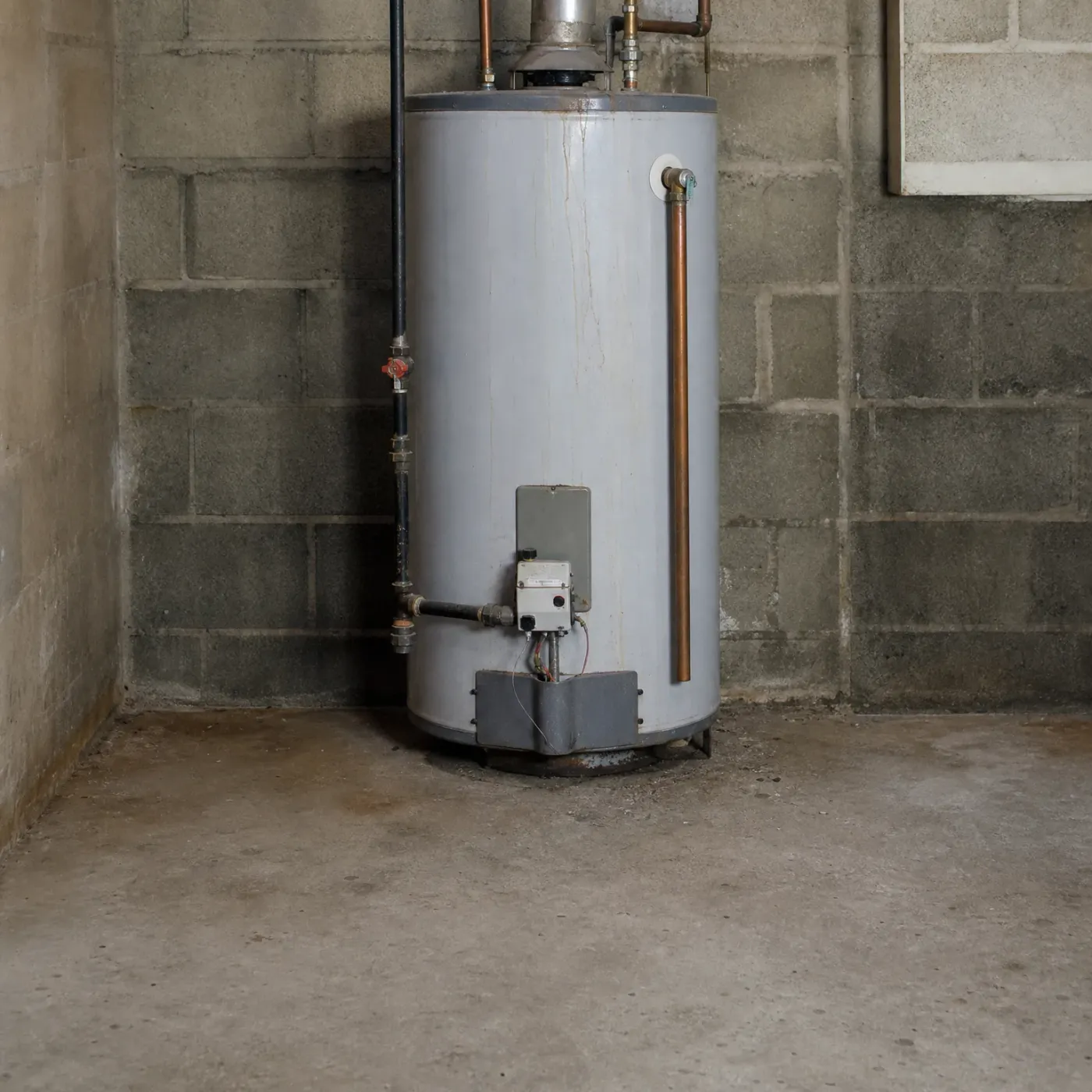
Running on borrowed time
Corrosion around the gas valve and control unit, or dampness near the base where the iron pipe connects, means the tank is breaking down from the inside. Once you see that at the bottom of the unit, replacement isn't something to put off.
Before you get your water heater installationAfter you get your water heater installation
A water heater on its way out rarely waits for a convenient week. The tank that's rumbling or already leaking at the base is the one that fails on a Saturday morning, and then you're the one calling around Montgomery County for someone who can look at it today, explaining the same symptoms to every voice that picks up, trying to tell a fair quote from a padded one with no way to check. Sizing it right the first time matters too, especially if your household has grown since the one in the garage was installed. Handing the request off once, instead of working the phone yourself, means you're matched with a contractor suited to what your home needs, and they reach out to you. If the data plate says it's past 10 or 12 years, or you're already seeing the signs, there's no reason to wait for the morning it quits on you.
So where does that leave your water heater
If the tank is 8 to 12 years old, or past it, that's the main fact. Rust-colored water, popping sounds, or water pooling at the base all point the same direction, no matter what the data plate says. A tank that's still quiet, still holding steady pressure, and still inside that age range doesn't need to go yet.
Once you know which side of that line you're on, the next step is finding someone to handle it, and that's the part that eats a Saturday. You'd be calling around Montgomery County, explaining the same problem to three different companies, then sitting with quotes that don't line up. Instead, you can get matched with a contractor who takes on jobs like yours, and they'll reach out to you directly.
Water Heater Installation
Find a water heater installation pro in Montgomery County
Step 1 of 3: Equipment
Say what's going on with your water heater, and a pro who works on them reaches out.
Your request goes to a Montgomery County pro who takes water heater jobs.
Send the form and the search for an installer is over.
After this form, you can stop searching for a water heater pro.
Skip searching for a water heater pro and answer a few questions instead.
One form replaces the calls you'd make to find a water heater pro.
A licensed installer who works in Montgomery County gets your project.
One installer gets your project, so there's no bidding war over it.