


Still doing its job
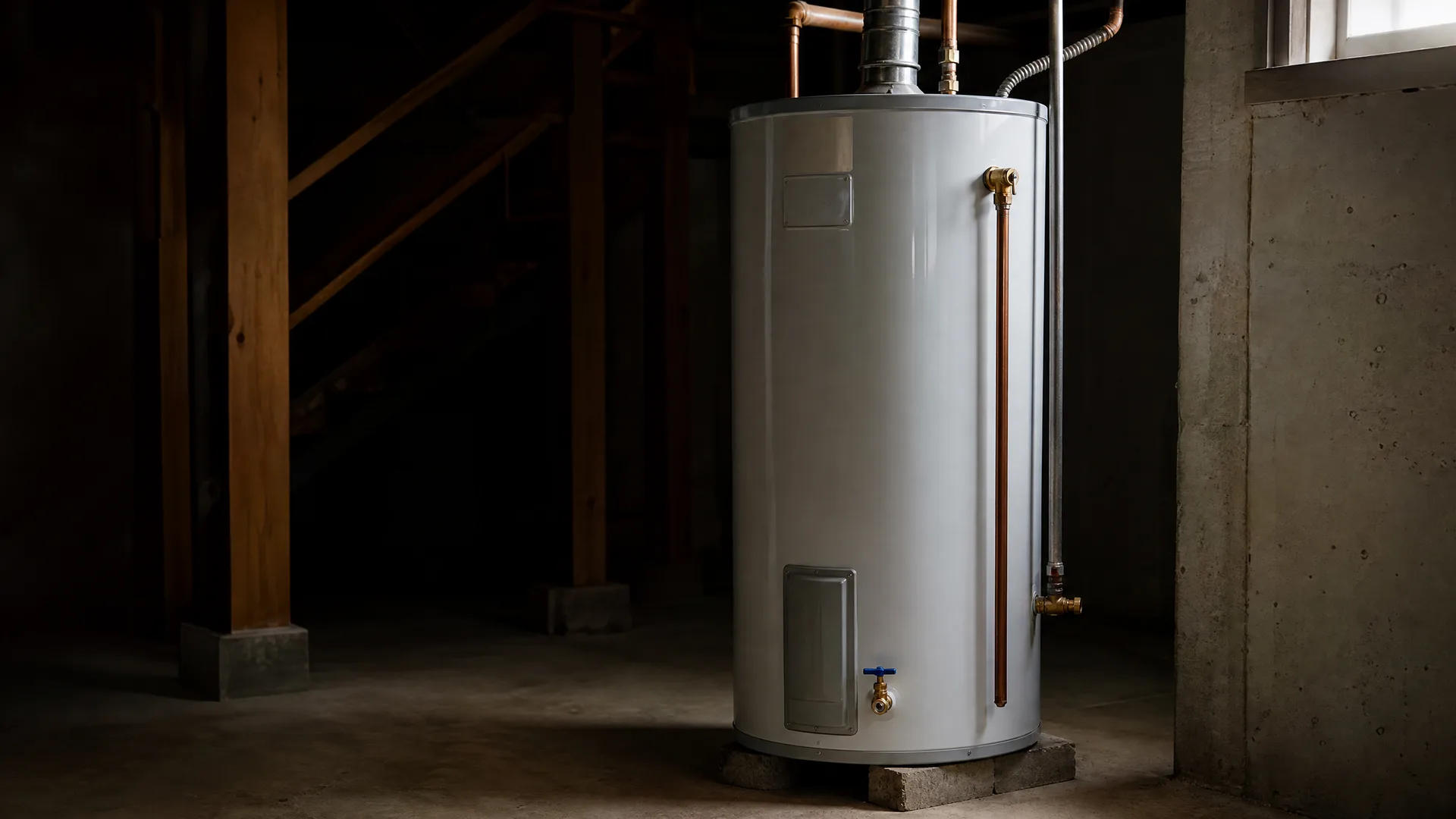
A water heater like this is heating water on demand with no rust in sight and no stains on the floor around it. The pipes are tight and dry. If yours looks like this, there's nothing to do but check on it now and then.
Send the form and the search for an installer is over.
Let a pro reach outMost water heaters last 8 to 12 years, and in Denton the ones in a garage or attic tend to wear out closer to that upper end since they're not fighting hard freezes most winters. Replace it once you see rust-colored water, a tank that's rumbling or popping, or water pooling around the base. That puddle means the tank itself is cracked, not a fitting you can tighten, and once that starts it doesn't stop. An electric water heater that's simply not keeping up, running cold after a couple of showers, is often a failing heating element rather than a reason to replace the whole unit, so check the age on the tank's label before assuming the worst. If it's past 10 years and showing any of these signs, plan on replacing it rather than repairing it again. Waiting past that point usually means it fails on its own schedule, not yours.




2.68 people per household on average
A household here runs 2.68 people through the same tank on average, and that steady draw is what wears out a heater, not just its age on paper.
Half the homes here were built by 2003
Half the homes in Denton County were built in 2003 or earlier. If yours is one of them, the water heater may already be a replacement itself, not the original.
54.2% of homes heat with electricity
Electricity heats 54.2% of homes here, more than any other fuel, so most tanks in the area run on an electric element rather than a gas burner.
ACS 2020-2024
Sediment settles at the bottom of the tank and hardens over time.
The heating element or burner has to work harder to reach the set temperature.
The tank metal underneath the sediment starts to corrode from the heat stress.
A pinhole leak forms in the tank wall and water starts seeping out.
That popping or rumbling comes from sediment hardening at the bottom of the tank, and once you hear it, the unit's working harder than it should to heat the same amount of water. Look at the water itself too. If it runs rust-colored or cloudy out of the hot tap, or smells off, that's the tank telling you something's wrong inside it, not just the pipes. Check the floor around the base for dampness or a slow drip, since that often shows up before a real leak does. Left alone, a tank in this state can fail outright, and a full tank letting go means water damage to whatever room it sits in, whether that's a garage, a closet, or the space below it.
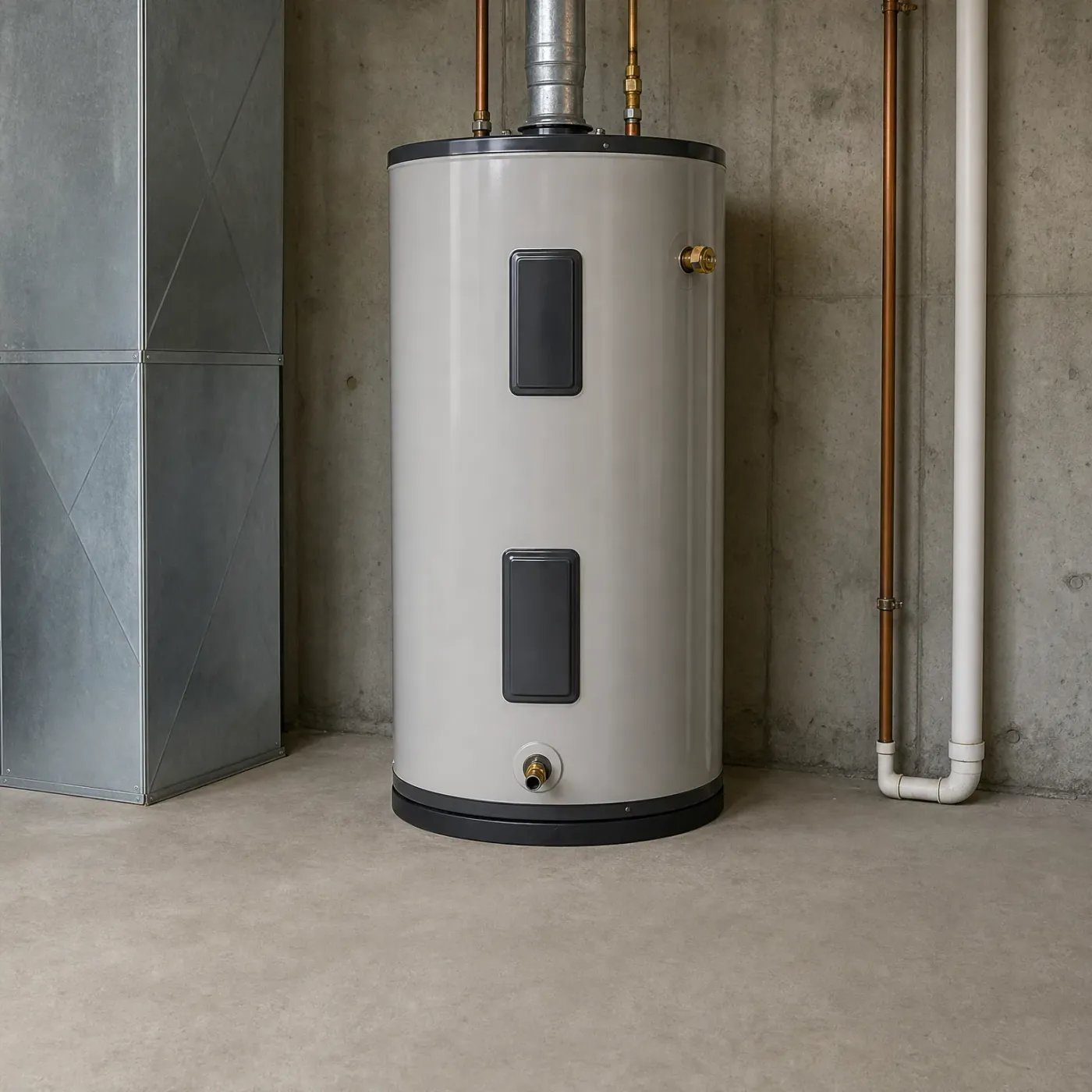
A water heater like this is heating water on demand with no rust in sight and no stains on the floor around it. The pipes are tight and dry. If yours looks like this, there's nothing to do but check on it now and then.
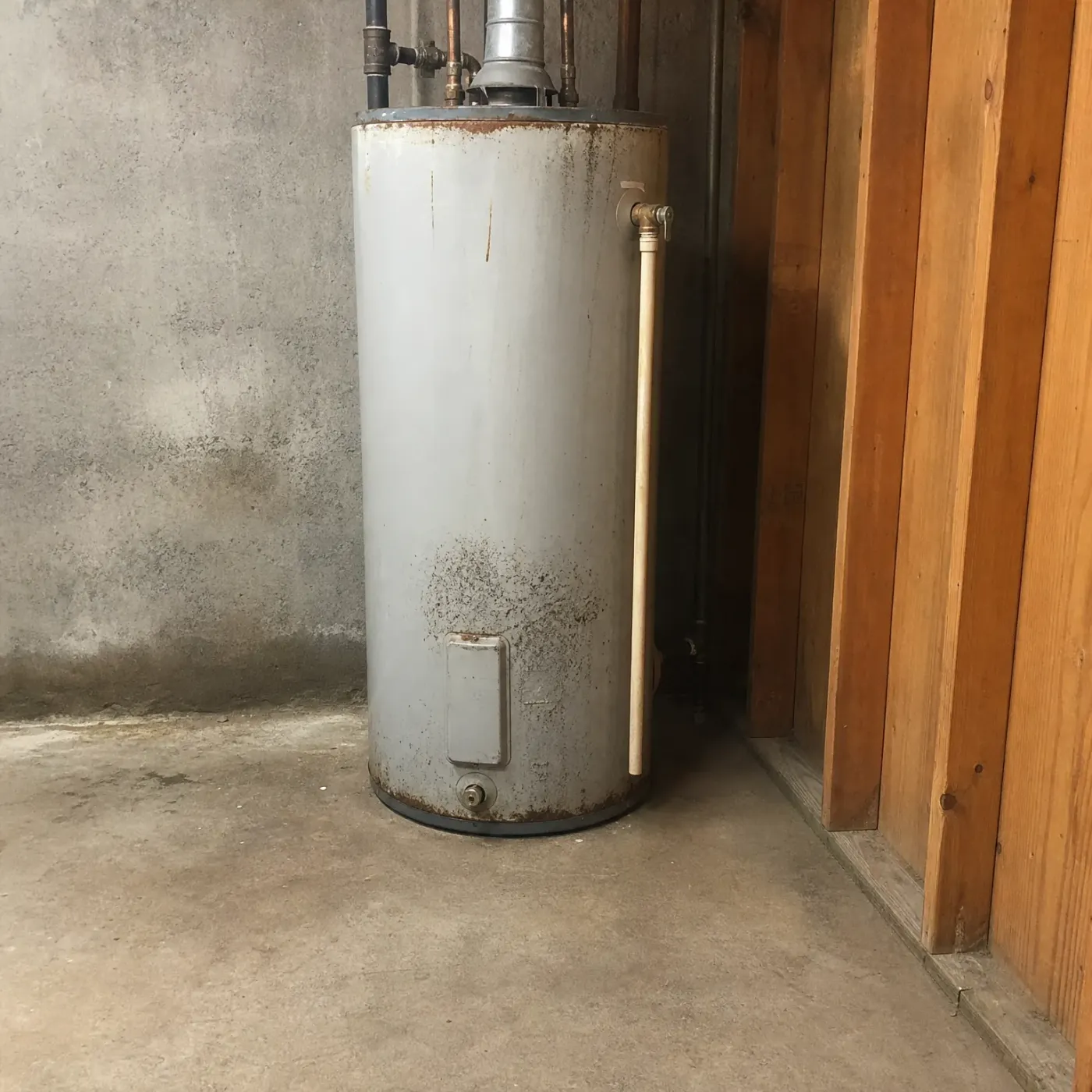
Rust like this on the tank itself, not just the fittings, means the steel is failing from the inside. Soot staining and heavy corrosion around the relief valve mean a repair won't hold. A tank in this shape needs replacing, not patching.
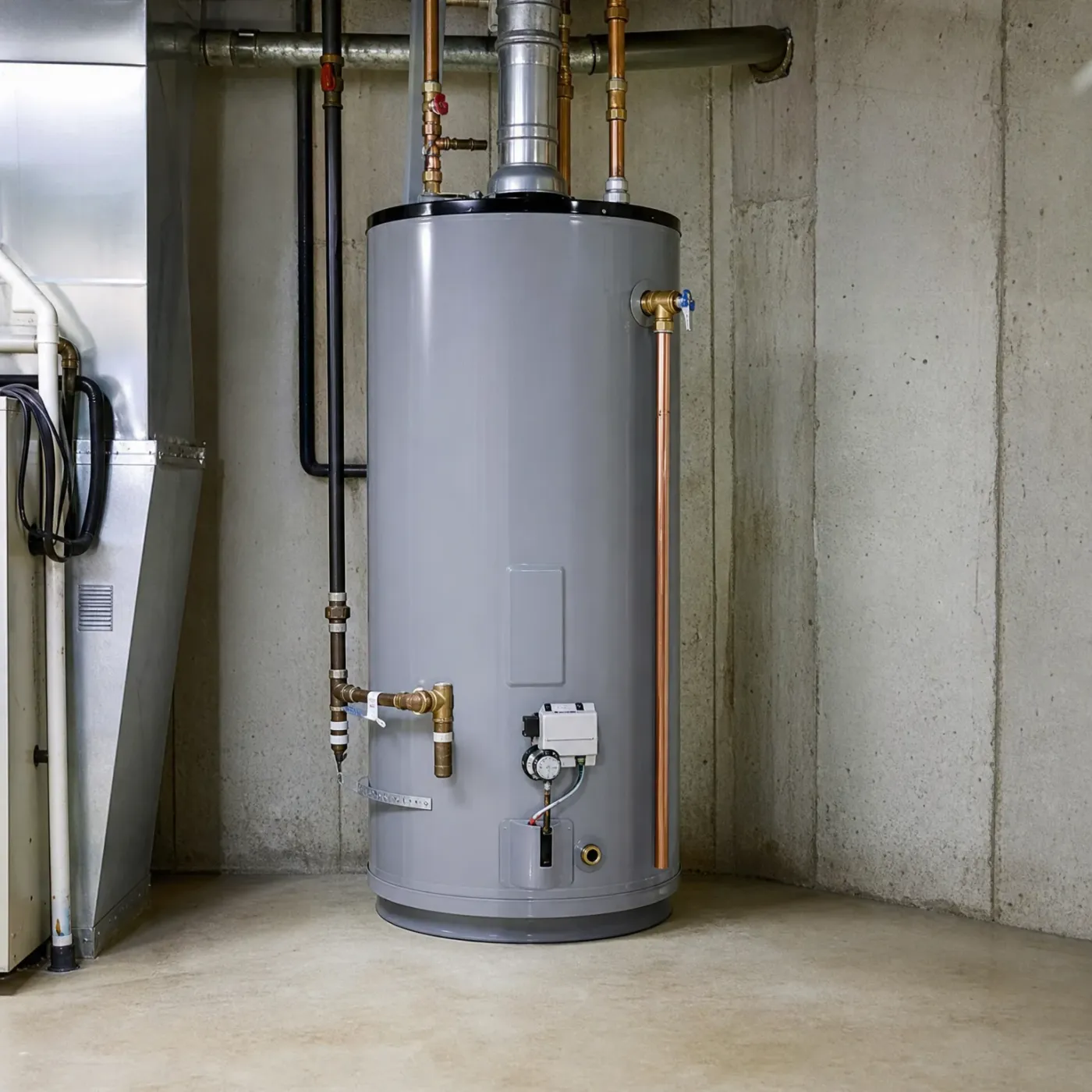
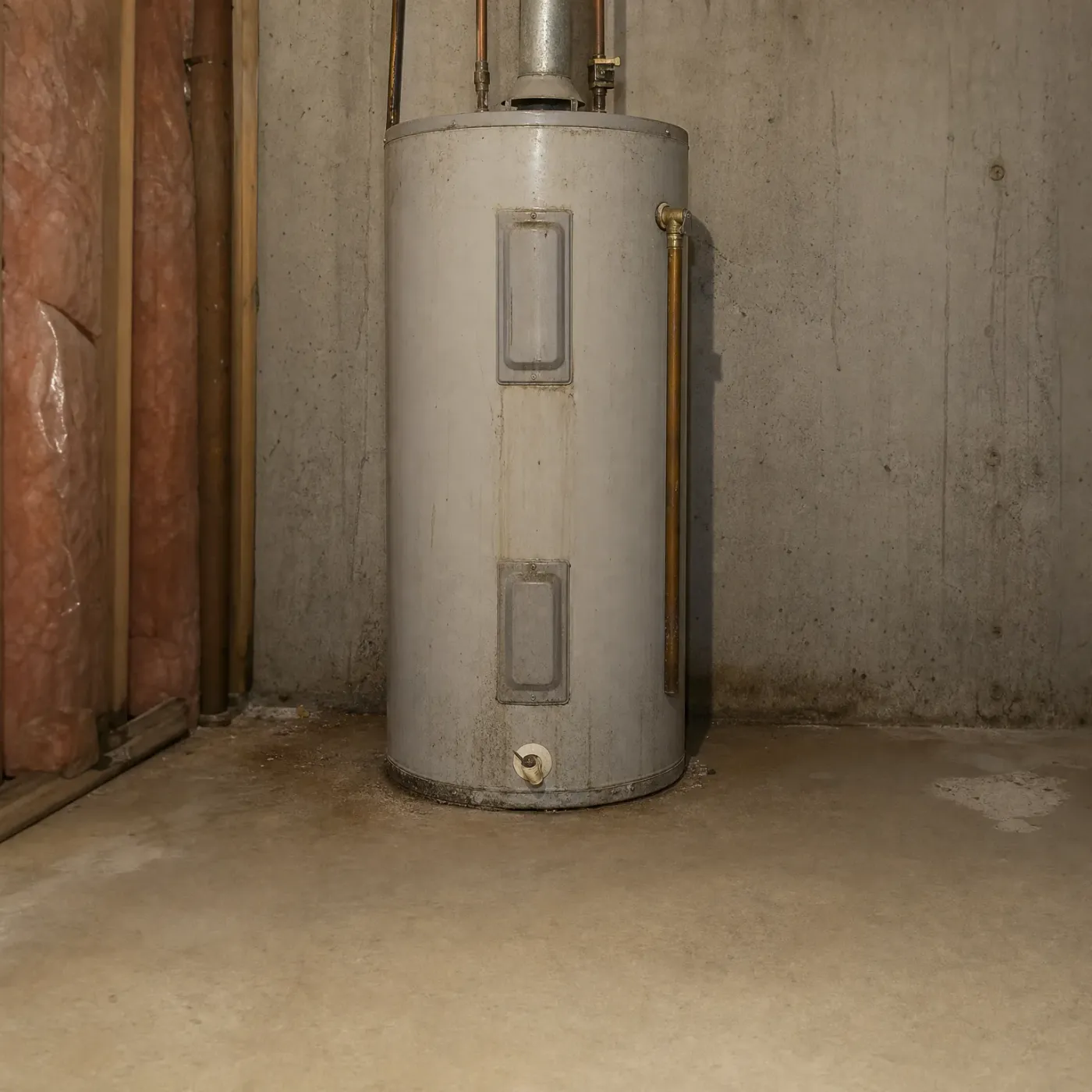
You've got a water heater acting up and a plumber could probably patch it, but you don't want to spend money on a repair just to be back here in a year. The math changes depending on what's actually wrong and how old the tank is, so it helps to know where that line sits before you decide.
A thermostat, heating element or gas valve can be swapped without touching the tank, and that's worth doing if the unit is only a few years old. The tank itself is a different story. Once steel is rusting through or sediment has hardened across the bottom, no part replacement fixes that, because the problem is the tank, not what's attached to it. A water heater in Denton sitting past 8 to 12 years with any sign of a leak or rust-colored water is past the point where a repair makes sense. At that age the tank is closer to failing outright than the part that just broke.
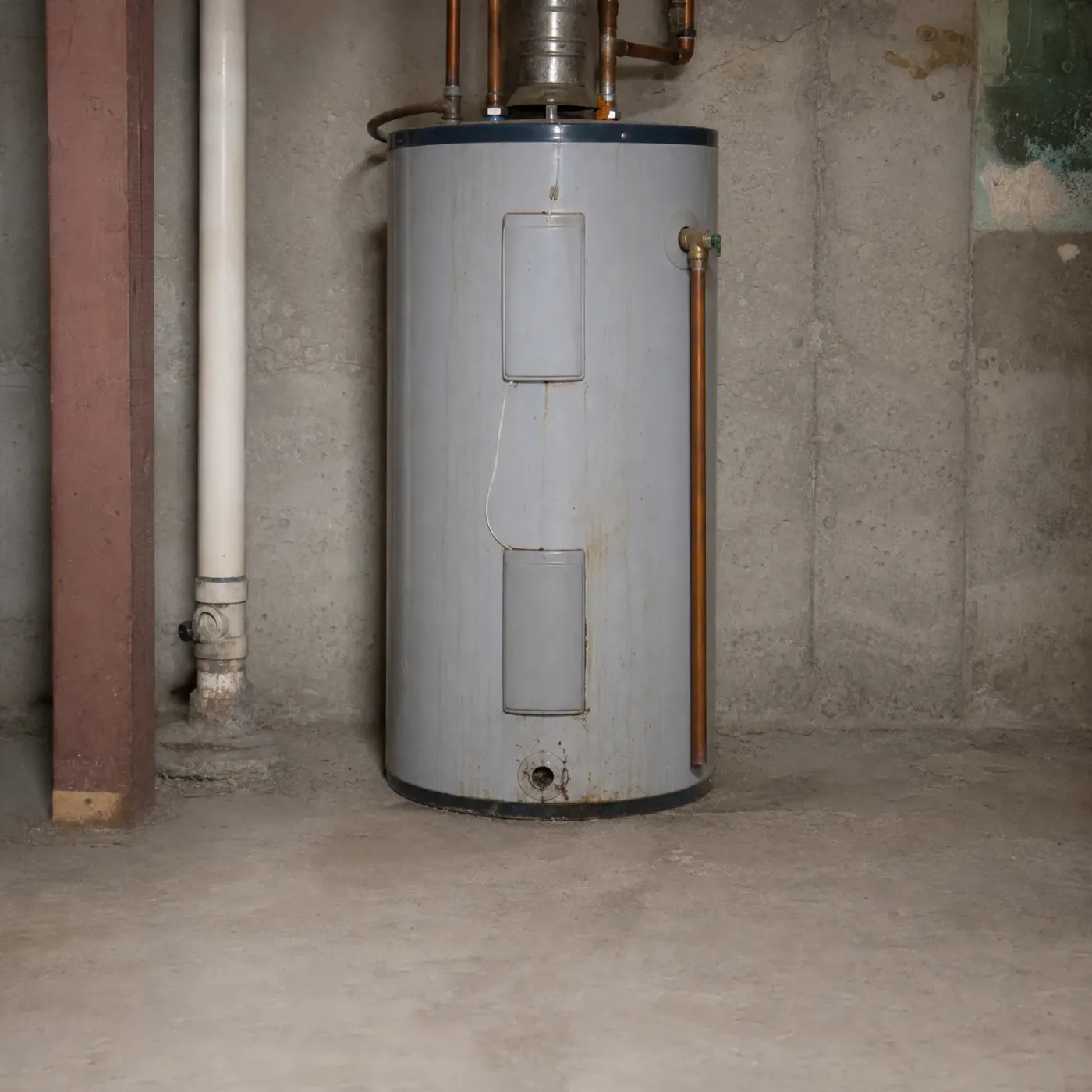
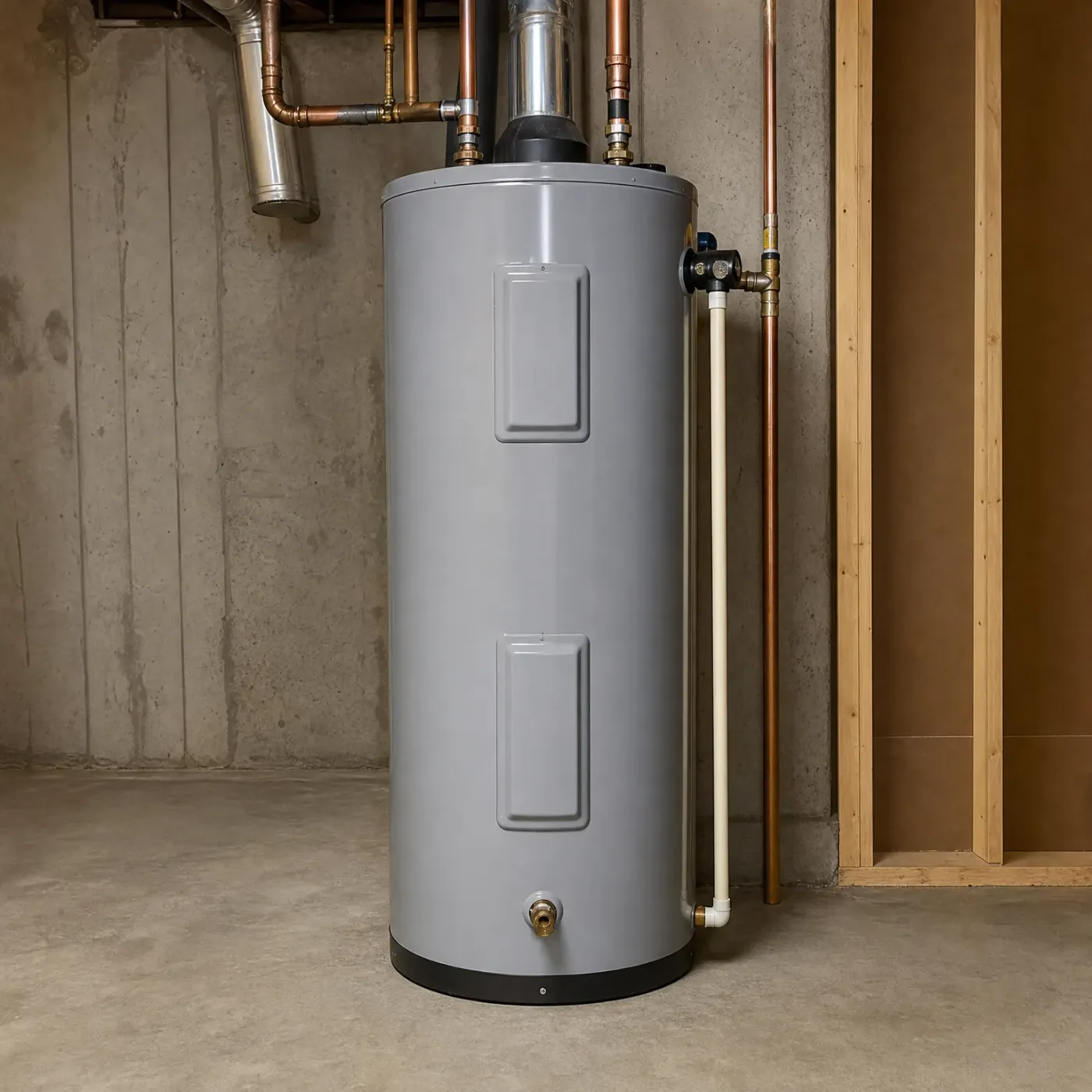
Skip the round of in-home estimates for a new water heater.
It costs nothing to send, and you don't have to hire anyone.
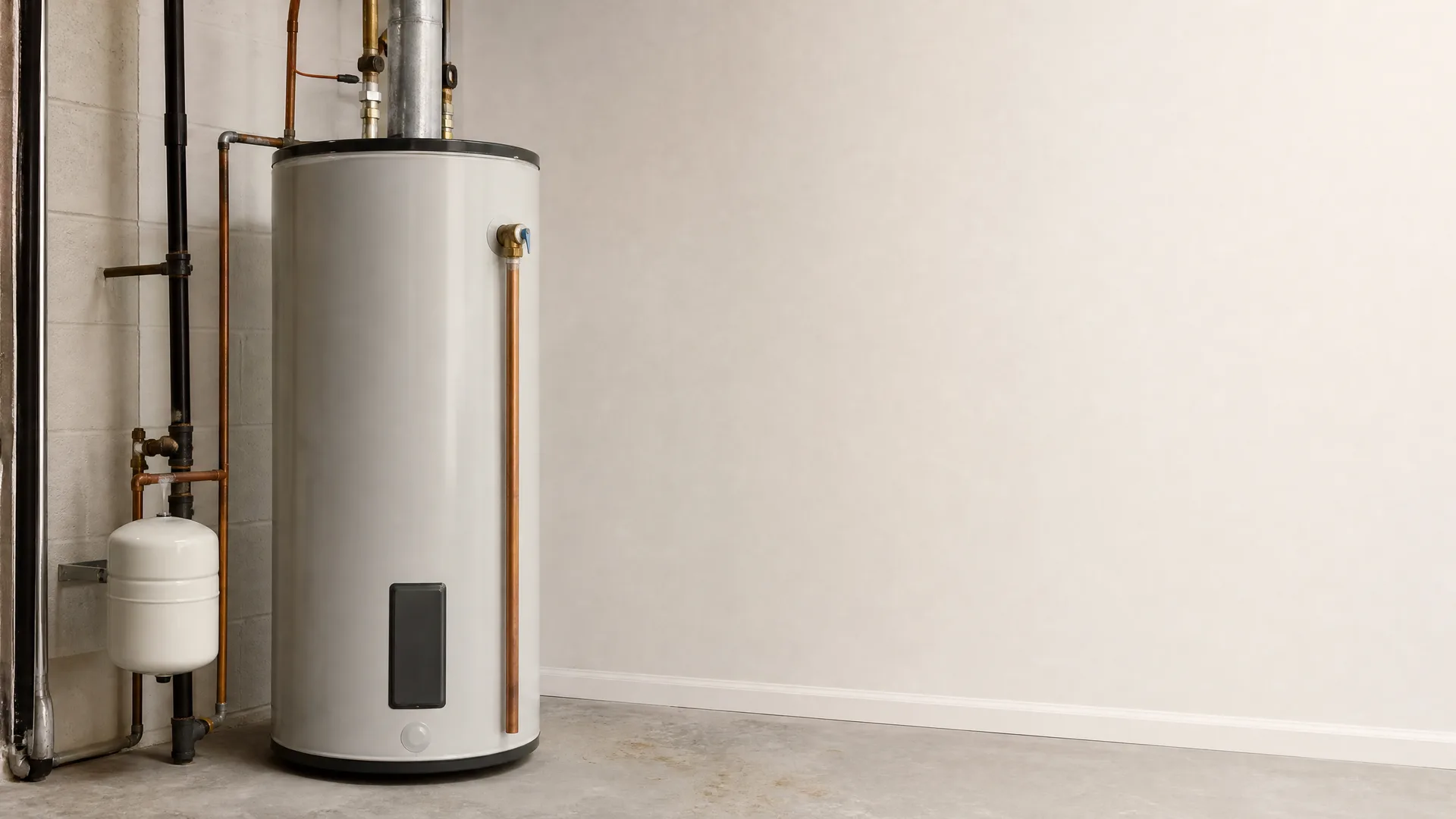
A water heater in a garage or attic loses heat to that unmanaged space, so it cycles on more often than one in a closet near the rooms it serves. More cycles means the burner or element puts in more hours over the same 8 to 12 years. In Denton that space rarely freezes, so the tank isn't fighting cold incoming water on top of everything else, but it's still working for every gallon.
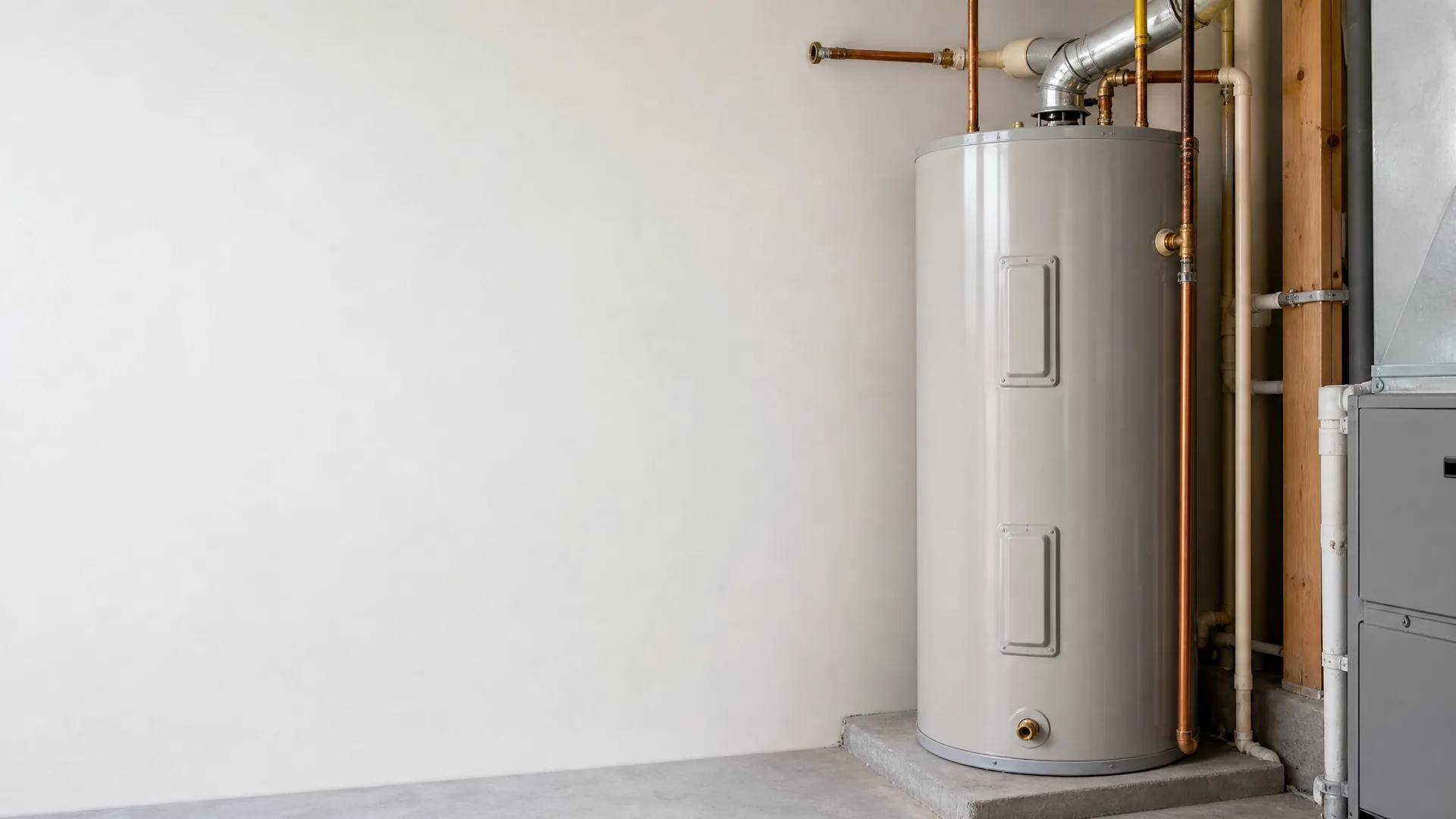
Inside the tank is a metal rod that corrodes on purpose, so the steel tank around it doesn't have to. Once that rod is used up, the tank itself starts taking the damage, and that's when you get the rust-colored water and the pinhole leaks. Checking or replacing the rod before it's gone is cheap next to replacing the tank, but most homeowners never know it's there until a plumber mentions it.

A tank past 10 or 12 years doesn't usually just quit. It leaks slow at first, down a drain pan if you have one, into the attic insulation or garage floor if you don't. By the time you notice a soft spot in the ceiling below it or a water stain spreading across drywall, that's a repair on top of a replacement. If the unit sits in a closet near bedrooms, a failure means wet carpet and drywall, not just a wet garage slab.
There's also what it's costing you now, every month, before anything fails. A tank fighting sediment at the bottom runs its element or burner longer to hit the same temperature, and that shows up on your power bill whether or not you've connected the dots. Once you decide it's time, the part that eats your weekend is finding someone licensed to do the install, checking reviews, getting a second quote to make sure the first wasn't padded. Send the form here and that search is off your plate.

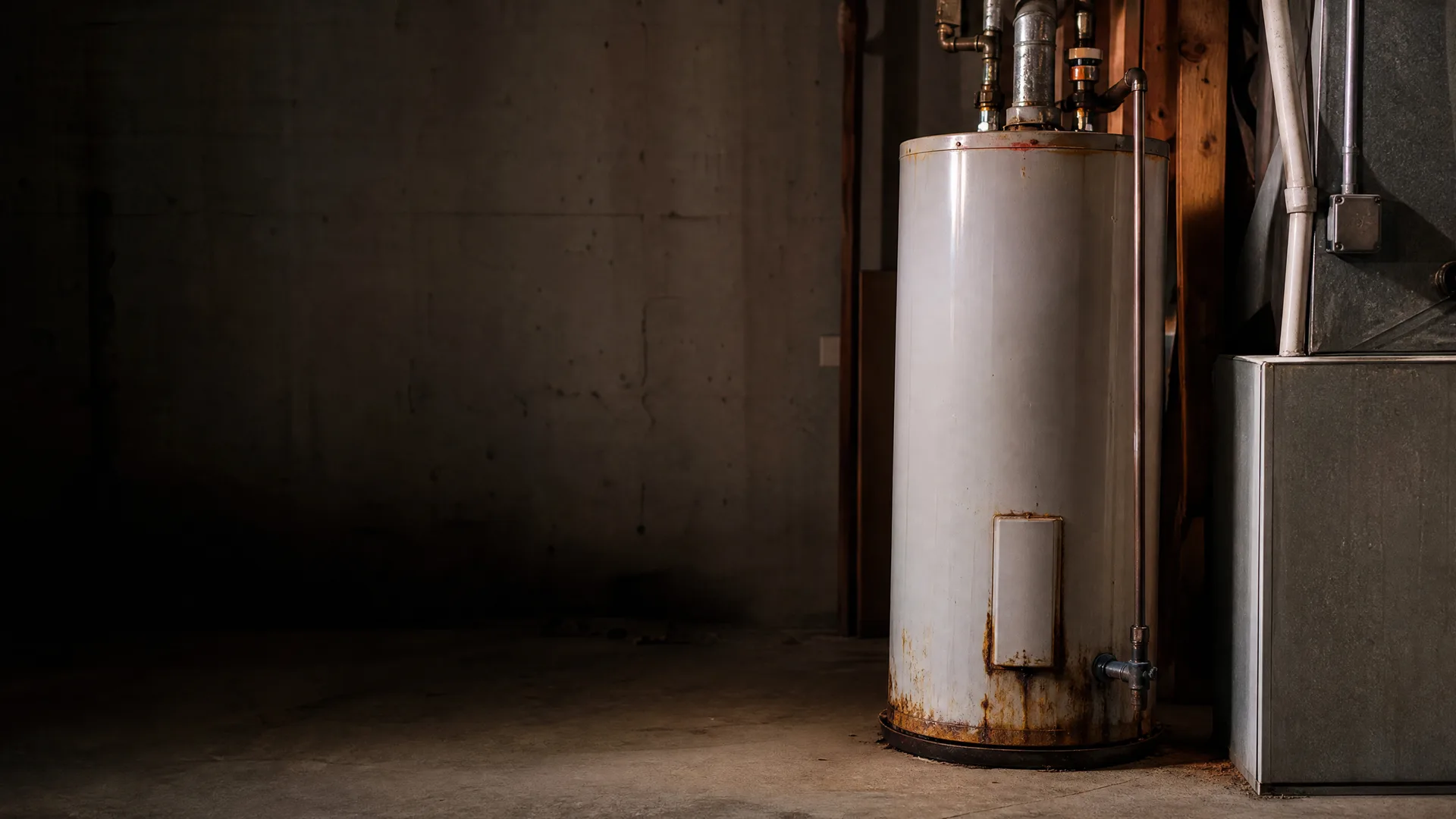
You go down to switch a load of laundry and the light in the utility room is already on, that low yellow bulb over the tank. It's past eight, dark outside, the kind of muggy Denton evening where the room feels warmer than it should. You almost miss it. Then you see the streaks running down the side of the tank, orange-brown, pooling where the base meets the floor. You crouch down and touch the concrete and it's wet. The rust isn't new. It's been working its way down for a while, you just hadn't come down here with the light off before.
Most homes here heat water with electricity, so that rate lands straight on your bill every time the tank cycles on. An old unit with a failing element or a heavy coat of sediment pulls more power to hit the same temperature, and you pay that 15.12 cents per kilowatt-hour for every extra minute it runs.
EIA-861 2025
You've got the signs to check and the age to weigh them against. Rust in the water, a tank that rumbles or pops, a damp spot at the base: any one of those means replacement, not repair. If your unit's still young and the trouble is a bad thermostat or a heating element, a repair holds it over. Past 8 to 12 years, especially one that's sat in a garage or attic doing extra work to make up for the heat it loses, you're better off putting that repair money toward the new unit instead.
What you don't want is to wait past the point where the signs are telling you something. A tank that fails slow leaks into attic insulation or down a garage floor, and that's a harder mess than a planned shutoff and swap. You've seen what the sediment and the corrosion do over time, and you've seen what it costs you in power before the tank ever quits outright.
So the question isn't really whether to replace it. If the signs are there, you already know. What's left is skipping the part where you search around for a plumber, call a few, explain the same problem to each one, and sort through quotes to find who's worth hiring. Send the form once and that legwork is off your plate.
Finding a pro stops being your job