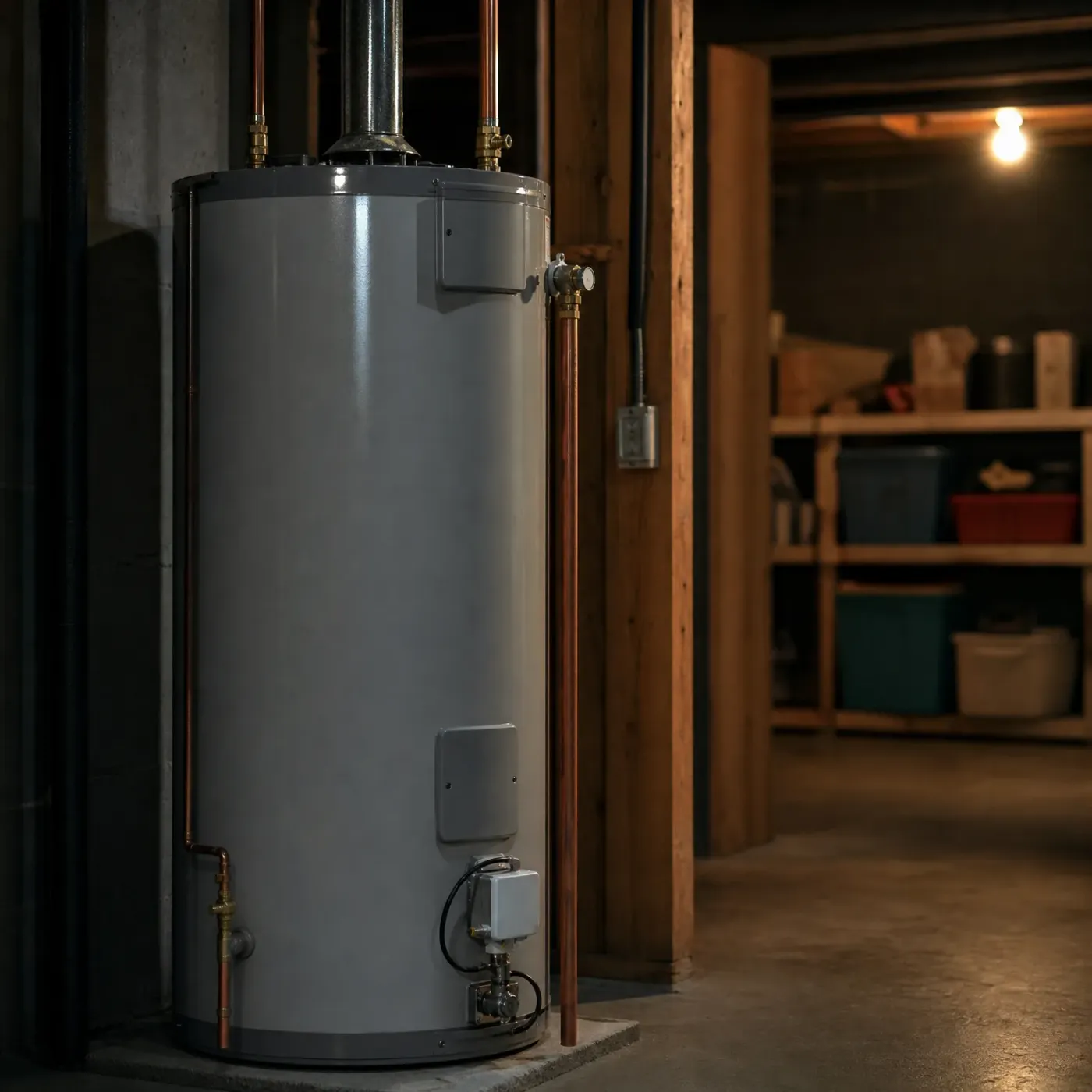




A large gray cylindrical water heater with copper pipes and a metal flue stands on a concrete pad in a dim basement, with wood framing and shelves of storage bins lit by a bare bulb behind it.

Skip calling around

Why you run out of hot water fast in Texas

Running out of hot water fast usually comes down to one part failing or a tank that can't keep up anymore, and with most homes here heating electrically, the fix is specific to that kind of system. This page gets into what causes it and what a repair involves, so you're not stuck calling around to different companies, explaining the same problem over and over, and weighing quotes against each other.

Describe it once

Running out of hot water fast usually means one of two things: a failed heating element or a tank that's lost most of its capacity to sediment. Most homes in Texas run electric water heaters, which use one or two elements to heat the tank. When the bottom element fails, the tank only heats the top portion, so you get a few minutes of warm water before it turns cold. Sediment does something similar from the other direction, building up on the tank floor until it takes up space the water used to fill, and insulating the element from the water it's supposed to heat. Either way, the tank stops delivering what it used to, and a shower that used to last turns short. A repair can replace the failed element or flush the tank, depending on which it is, and a technician can tell which by checking the water at different points in the draw.

A woman in a knitted shawl sits in a living room with a fireplace, shelves, a sofa with cushions, and a lamp by a bright window, looking off to the side.
A woman with long brown wavy hair in a green shirt over a white top stands in a living room with built-in white shelves, a ceiling fan, a potted plant and a sliding glass door.
A woman with shoulder-length gray-streaked hair in a light gray knit sweater stands smiling and looking off to the side in a living room with a sofa, houseplant, framed picture, and sunlit sliding glass door.
A woman with shoulder-length curly gray hair wearing a gray knit sweater stands near a window with a sheer curtain, looking to the side, with a blurred interior room behind her.

What a failed element looks like

An electric water heater with two elements heats the top of the tank first, then the bottom. If the bottom element fails, you still get some hot water, but the tank only has enough heated volume for a few minutes before it turns cold. If the top element fails instead, the water coming out is cold from the start, because the thermostat up top never gets the chance to call for heat. Either way, the tank itself may be fine. It's the element and its thermostat that a contractor tests first.


What sediment does to capacity

Electric elements sit inside the tank, and over time minerals in the water settle around the lower one and build up on the tank floor. That layer insulates the element from the water it's supposed to heat, so it cycles longer and still falls behind. It also eats into the space available for hot water, so a tank that held enough for a full shower now runs out halfway through. Flushing the tank removes the buildup, but once it's packed in thick around the element, replacement is usually the more reliable fix.

A woman with her hair in a bun holds a sleeping young child against her chest, both wrapped in a textured beige knit blanket on a sofa in a dimly lit room with a lamp, framed picture, and bookshelf behind them.
An older woman with gray hair in a bun and glasses, wearing a beige knit sweater, smiles while looking to the side in a warmly lit kitchen, with a loaf of bread on the counter in the foreground and a snowy scene outside the window.

Electric water heaters wire the two elements so only one runs at a time, controlled by a pair of thermostats stacked on the side of the tank. That wiring is why testing starts at the top. If the upper element checks out, the work moves down to the lower one, since it carries most of the load of keeping a full tank ready. Sediment reaches the lower element first, settling at the bottom until a thick enough layer sits between the coil and the water, insulating it instead of letting it heat. A multimeter across each element shows whether the coil is still intact. Draining the tank clears loose sediment, but scale that's hardened over years usually means pulling the element out to get at it directly. Even a good element can look bad if the thermostat reading it has drifted out of calibration, cutting power before the water reaches temperature. That shows up the same way a sediment problem does, as a tank that seems to quit early no matter how long it's had to recover.

How a technician finds the fault

  • An electric water heater has two thermostats, and the upper one controls power to both elements so it can't run at the same time as the lower.
  • When the upper element and thermostat test fine, a technician moves to the lower element, which does most of the work of keeping a full tank of hot water ready.
  • Sediment settles on the lower element first because it sits at the bottom of the tank, and a thick enough layer insulates it from the water it's supposed to heat.
  • A multimeter test on each element reads continuity through the heating coil, and a reading of zero or infinite means that element has burned out.
  • Flushing the tank through the drain valve at the bottom removes loose sediment, but hardened scale built up over years often needs the element pulled out to clear.
  • A thermostat that's lost calibration can shut an element off well before the water reaches its set temperature, which looks like a tank that runs out early even with both elements working.
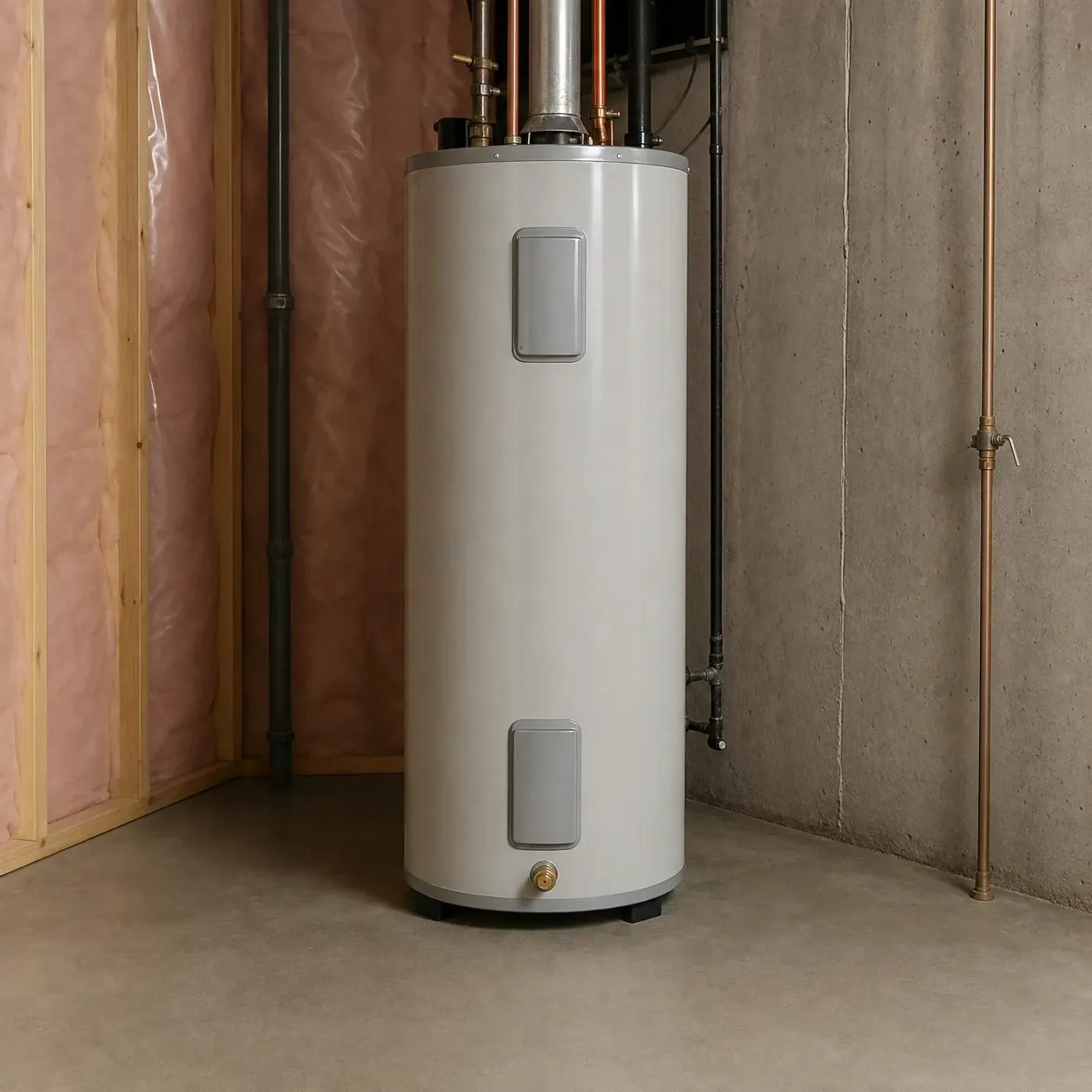
A white cylindrical water heater with two access panels and a brass drain valve stands on a concrete floor in a basement corner, beside a pink-insulated stud wall and a concrete wall with copper and black pipes.
Both elements heating and the tank clear of scale, you get the full tank of hot water it's rated for.
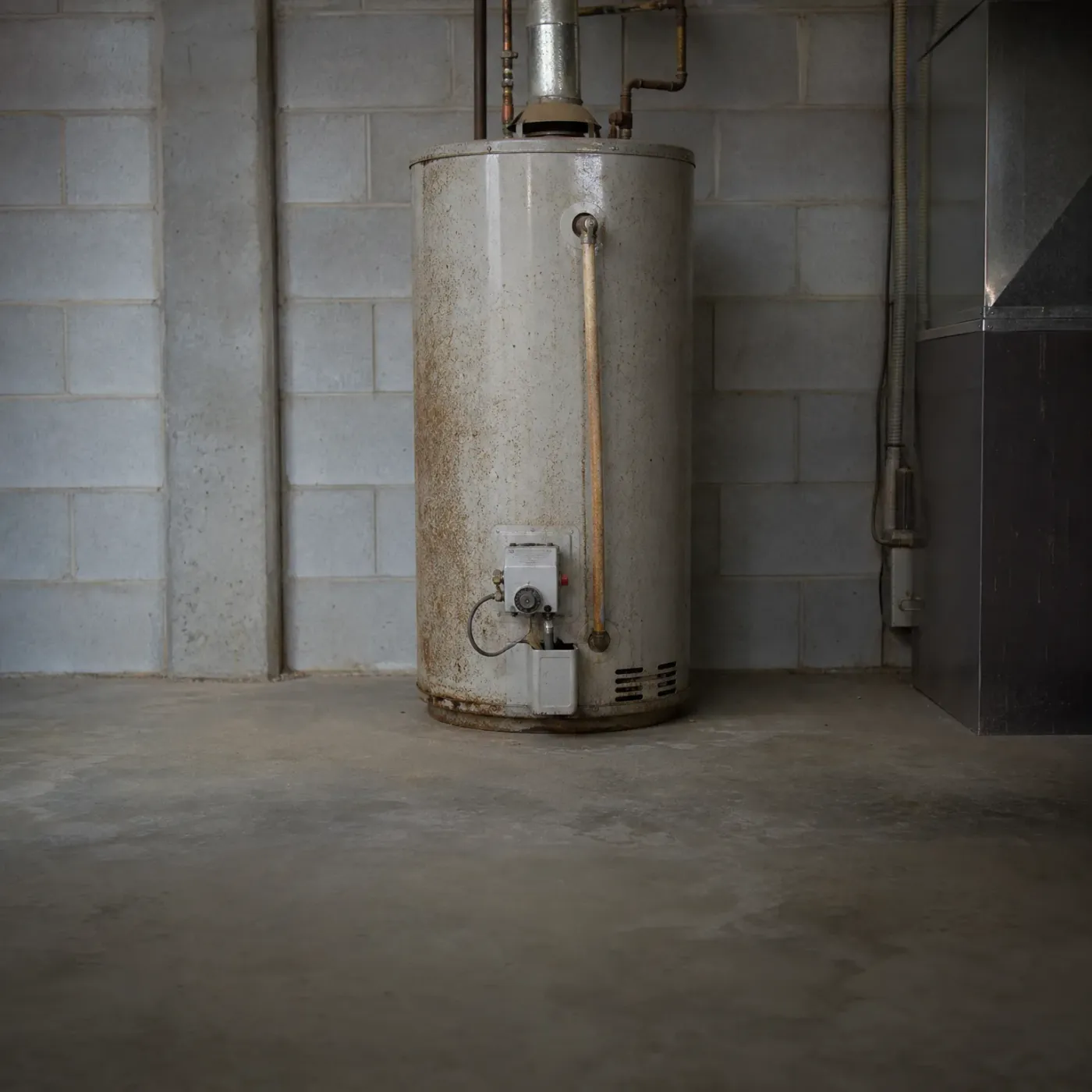
A rusted gas water heater with a flue pipe stands against a concrete block wall on a bare concrete floor, next to a dark metal duct or furnace cabinet at right.
Rust like this on the tank means it's failing from the inside, and a new water heater is the only real fix.
  1. Cold water enters the tank through the dip tube at the bottom.

  2. The lower element heats that incoming water first.

  3. Heated water rises as the upper element maintains the top of the tank.

  4. The upper thermostat cuts power to the lower element once satisfied.

An old rusting cylindrical gas water heater with copper and steel pipes and a flue stands against a concrete basement wall beside metal ductwork on a bare concrete floor.
Before you get your water heater repair
A gray cylindrical water heater with copper piping and an expansion tank stands in a basement corner beside a concrete block wall and exposed wood framing.
After you get your water heater repair

Describe it once

A water heater that's down to one working element or half full of sediment isn't something to leave alone through a Texas summer, when a cold shower is the last thing you want after the heat. Once you know which part is failing, finding someone to fix it is its own chore: searching for a local plumber, calling a few, describing the same symptoms each time, then weighing quotes that don't quite match up. That's the part this page takes off your plate. The request goes to one licensed plumber working in your area, someone who deals with electric water heaters all the time and has a good sense of whether it's the lower element, a bad thermostat, or sediment that's built up enough to matter. You're not fielding calls from five different companies trying to win the job. You get one who already knows what tends to fail on these systems and can tell you what they find.

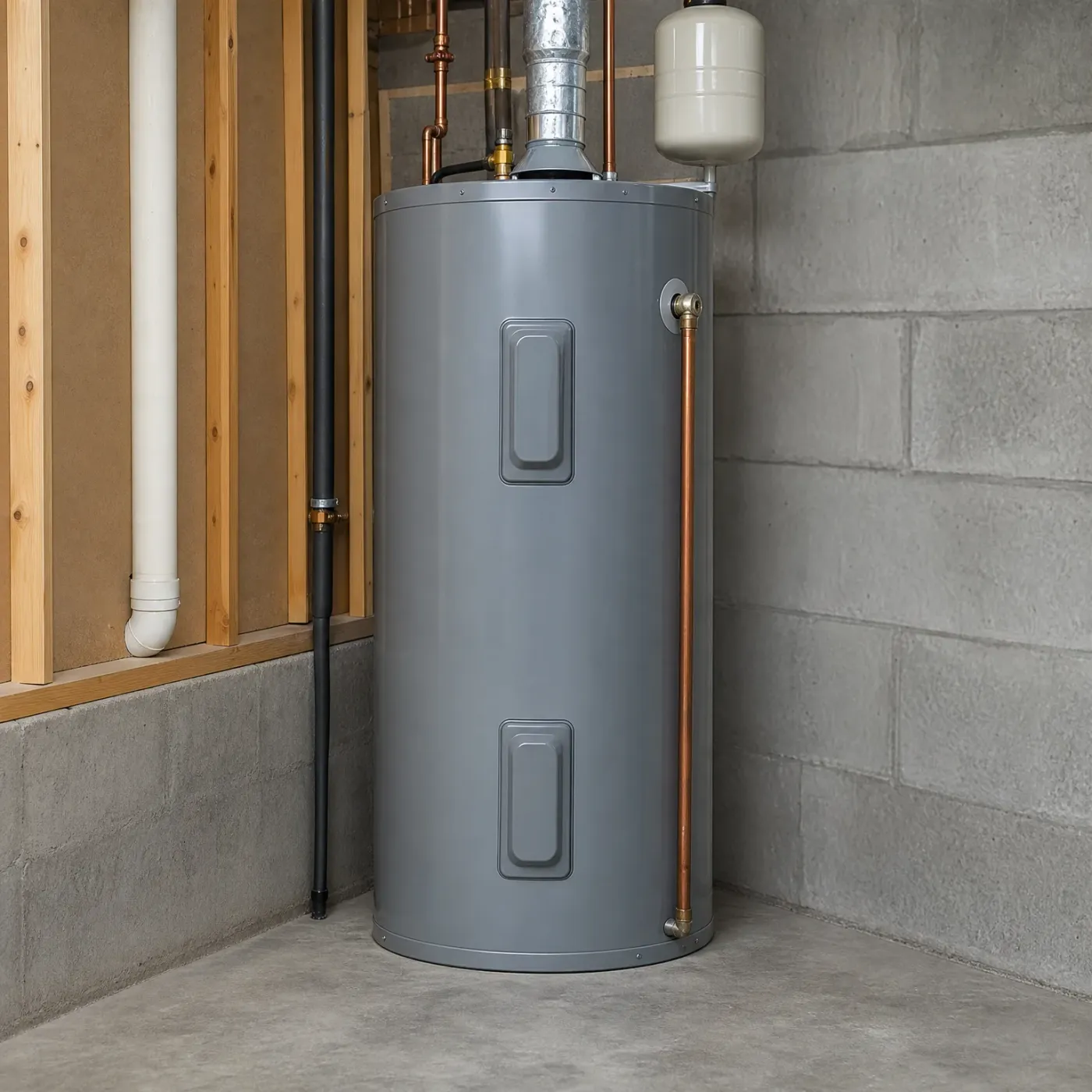
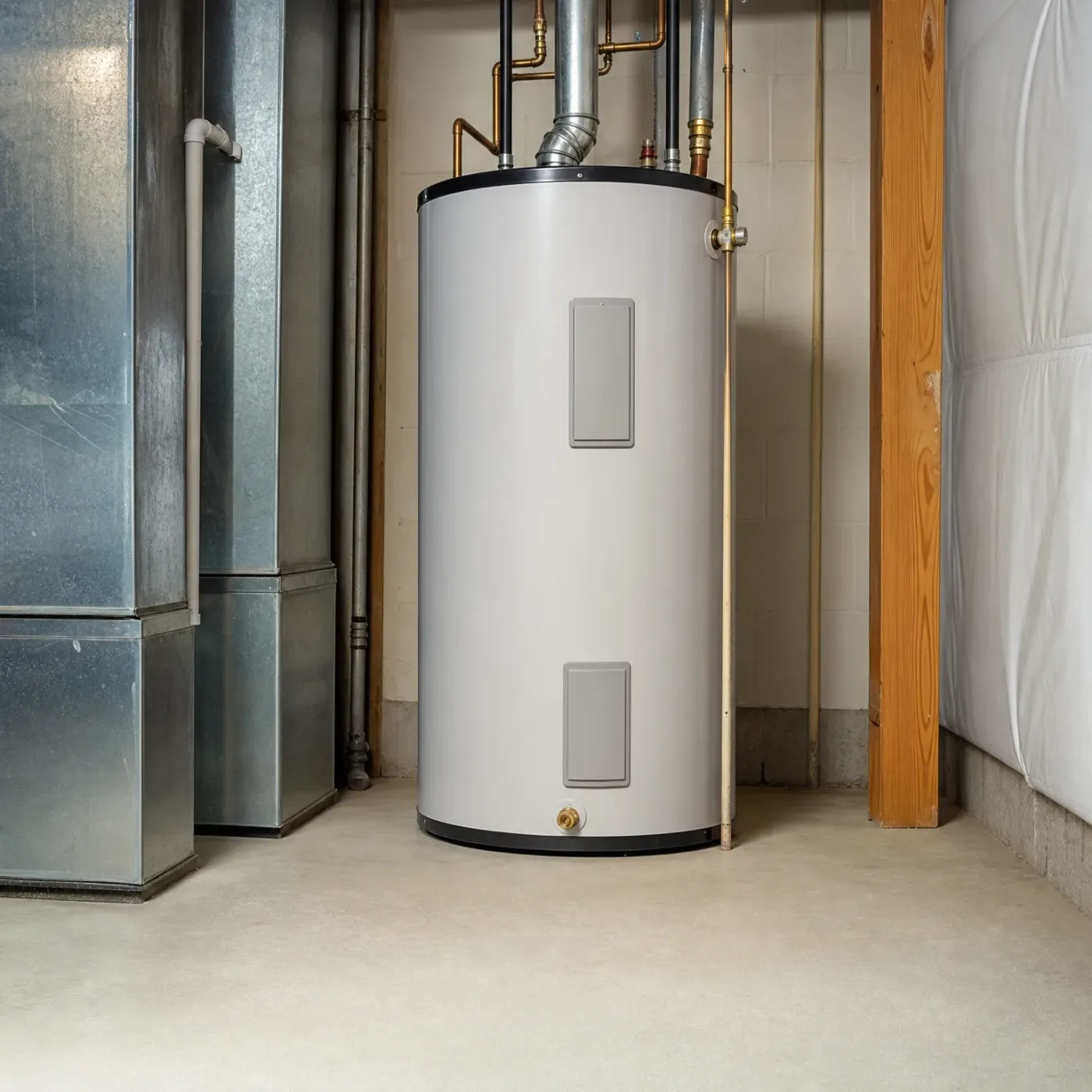
A white cylindrical water heater with two access panels stands on a concrete floor in a basement corner, beside galvanized ductwork, copper and metal pipes, a wooden post, and a concrete block wall.

Tank heating properly

This is what a working electric water heater looks like, standing in its spot next to the ductwork with both access panels in place. Both elements take turns heating the tank, so you get the full volume of hot water it was built to hold, shower after shower.

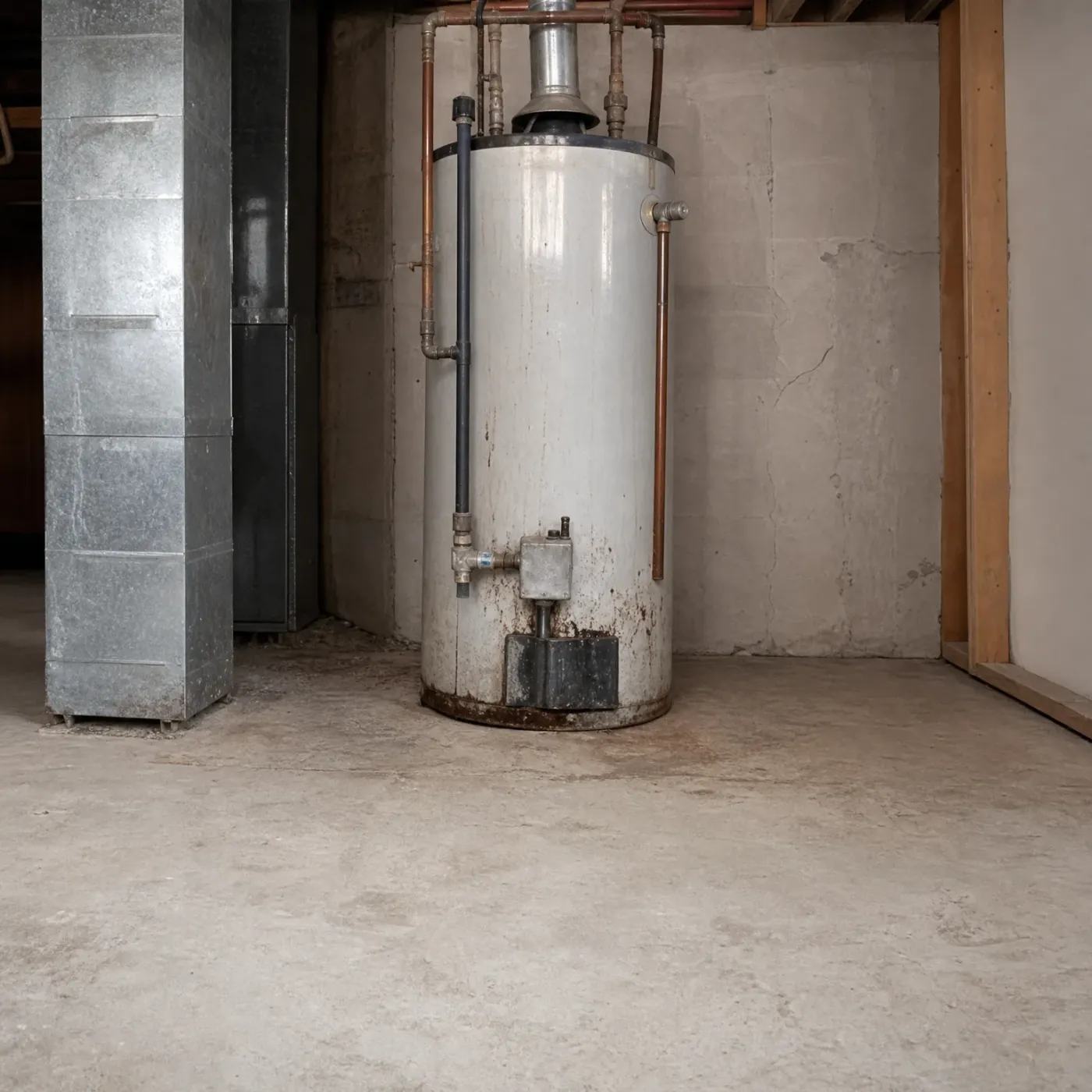
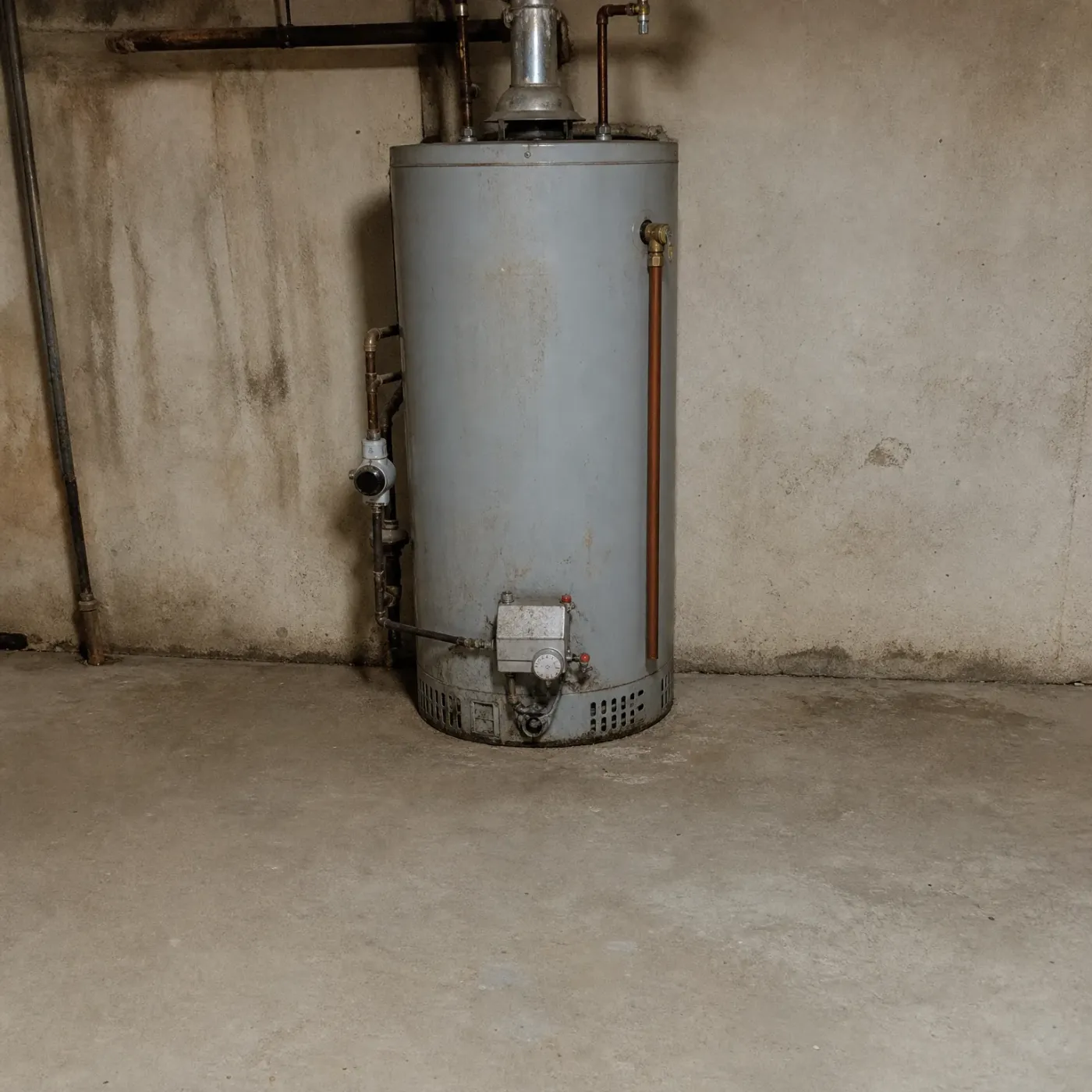
An older gray cylindrical gas water heater with copper and steel piping and a flue, standing on a concrete floor against a stained concrete wall.

Tank on its way out

This older tank shows the signs worth checking on yours: the flue, the relief valve, the gas control at the base. On an electric tank, the same age and the same neglect usually means a dead element or sediment packed into the bottom, and shorter hot water every week until someone looks at it.

61.2% of homes statewide heat with electricity

With most houses here running on electric water heaters, a repair means working on one or two heating elements and their thermostats, not a gas burner or venting. That's the part that fails and the part that gets fixed.

ACS 2020-2024 5-year B25040

A closed laptop and a cream mug of coffee on a coaster sit on a dark wooden table, with a potted plant at left and a kitchen counter, tiled backsplash and shelf of ceramics in the background.

One bad element, and the tank can't keep up

Running out of hot water fast comes down to the lower element giving out or sediment taking up space the water should fill. A technician who works on these tanks every week can tell which one it is in a few minutes, usually by testing the elements and thermostats and looking at what comes out when the tank is drained.

Finding that person is the part you don't have to do. No calling around to ask who works on electric water heaters, no repeating the same description of your cold showers to three different companies, no sitting with a stack of quotes trying to guess which one is honest. One licensed contractor local to you takes the call, already knowing it's an electric tank and what usually goes wrong with one.

A living room corner with a beige upholstered armchair holding navy and striped cushions, a small round wooden side table with a carved bowl and a potted green plant, a framed landscape picture on a pale wall, built-in shelving, and a curtained window.
A single-story stucco house at dusk with a lit paver walkway lined by low path lights, desert plants and boulders in front, and distant mountains under an orange and blue sky.

Water Heater Repair

No phone calls to make

Step 1 of 3: Equipment
  • A cream chunky cable-knit throw draped over a beige upholstered armchair beside a bright window, with a wooden side table holding a book and a vase of leafy branches at left.
    • Tell a local repair pro what your water heater is doing.
    • Say what's going on with your water heater, and a pro who works on them reaches out.
  • Living room corner with a gray sofa holding beige pillows and a knit throw, a round wooden coffee table with a dark planter and shallow bowl, a jute rug, a floor lamp, a framed landscape print on the wall, and a window showing trees.
    • Send the request today and stop worrying about who to call.
    • Send the request today and let a water heater pro reach out to you.
  • A living room corner with a cream sofa and cushion, knit throw, wooden coffee table holding a shallow bowl and dark ceramic vase with green foliage, a floor lamp, potted plant in a woven basket, and linen curtains at a window.
    • Answer a few questions instead of calling shop after shop.
    • Describe your water heater job once, to one pro.
  • A round reclaimed-wood coffee table with a black metal base sits on a woven rug in front of a cream sofa with cushions, with a lit built-in fireplace and a tall indoor tree in the background.
    • Only one pro gets your request, so you hear from one company.
    • Your request stays with one local pro.