





Profile view of a bearded man wearing a dark baseball cap and a dark gray T-shirt against a plain off-white background.

Why your hot water is lukewarm in Texas

Step 1 of 3: Equipment

Why is my hot water lukewarm instead of hot?

Lukewarm water usually shows up the same way: the tap starts warm, then fades before anyone's done with a shower. You've already checked that the breaker or gas valve is on, so it's not a total outage. Something in the tank isn't getting the water fully up to temperature anymore, and with an electric water heater, which is what most homes in Texas have, that points to a specific part rather than the whole unit failing.

One of the two heating elements has likely failed

Most electric water heaters have two elements, one near the top of the tank and one near the bottom. When the bottom element fails, the top one still heats the water above it, so you get warm water instead of hot, and it runs out faster than it used to. A bad thermostat on either element causes the same thing. Sediment built up at the bottom of the tank can also block the lower element from heating the water around it properly. None of these are wiring or breaker problems, which is why the power stays on but the water never gets past lukewarm.

A woman in a cream cowl-neck sweater sits by a window with snow outside, in a dimly lit living room with a sofa, lit lamp, mirror, candles and a fireplace.
A woman in a gray turtleneck sweater sits beside a large window looking out at snow-covered evergreen trees, in a dimly lit living room with a lit fireplace, lamps, couch and houseplant.
A woman in a cream turtleneck sweater stands beside a large window with snow-covered ground and bare trees outside, in a dimly lit living room with lamps, a sofa and framed art.
A woman in a grey cowl-neck sweater stands indoors near a window, looking out at falling snow, with a lamp, framed picture and couch in the warmly lit room behind her.

Tank Problem Or Mixing Problem

Electric Element Problem

  • One of the two heating elements has failed, so the tank only gets partway hot before the water runs out of heat.
  • You get a short stretch of warm water that fades fast, often worse when someone else used hot water recently.
  • A thermostat on the tank set too low or stuck can cause the same lukewarm result even with both elements working.
  • Sediment can build up around the lower element over time and keep it from heating the water around it properly.
  • This shows up gradually, with the warm stretch getting shorter over weeks rather than stopping all at once.

Supply Or Mixing Problem

  • Cold water is mixing into the hot line somewhere before it reaches the tap, so the tank itself may be fine.
  • A failing mixing valve or anti-scald valve can let in more cold water than it should, even at full heat.
  • A cross connection between hot and cold lines, sometimes from a fixture or a shared line elsewhere in the house, dilutes the hot water before it arrives.
  • This usually shows up at one tap or one part of the house rather than everywhere at once.
  • Water coming out lukewarm right away, instead of starting hot and fading, points more toward this than toward the tank.
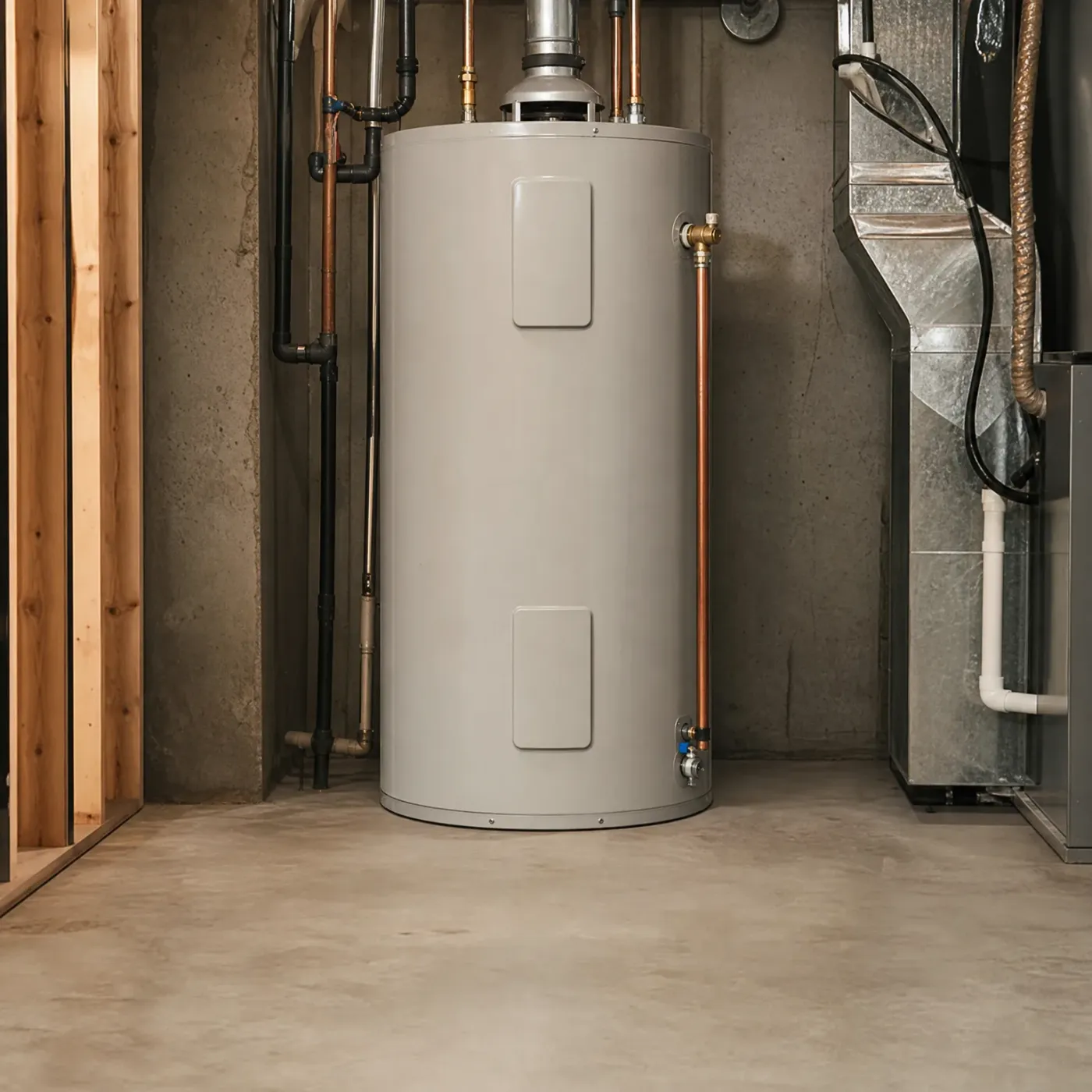
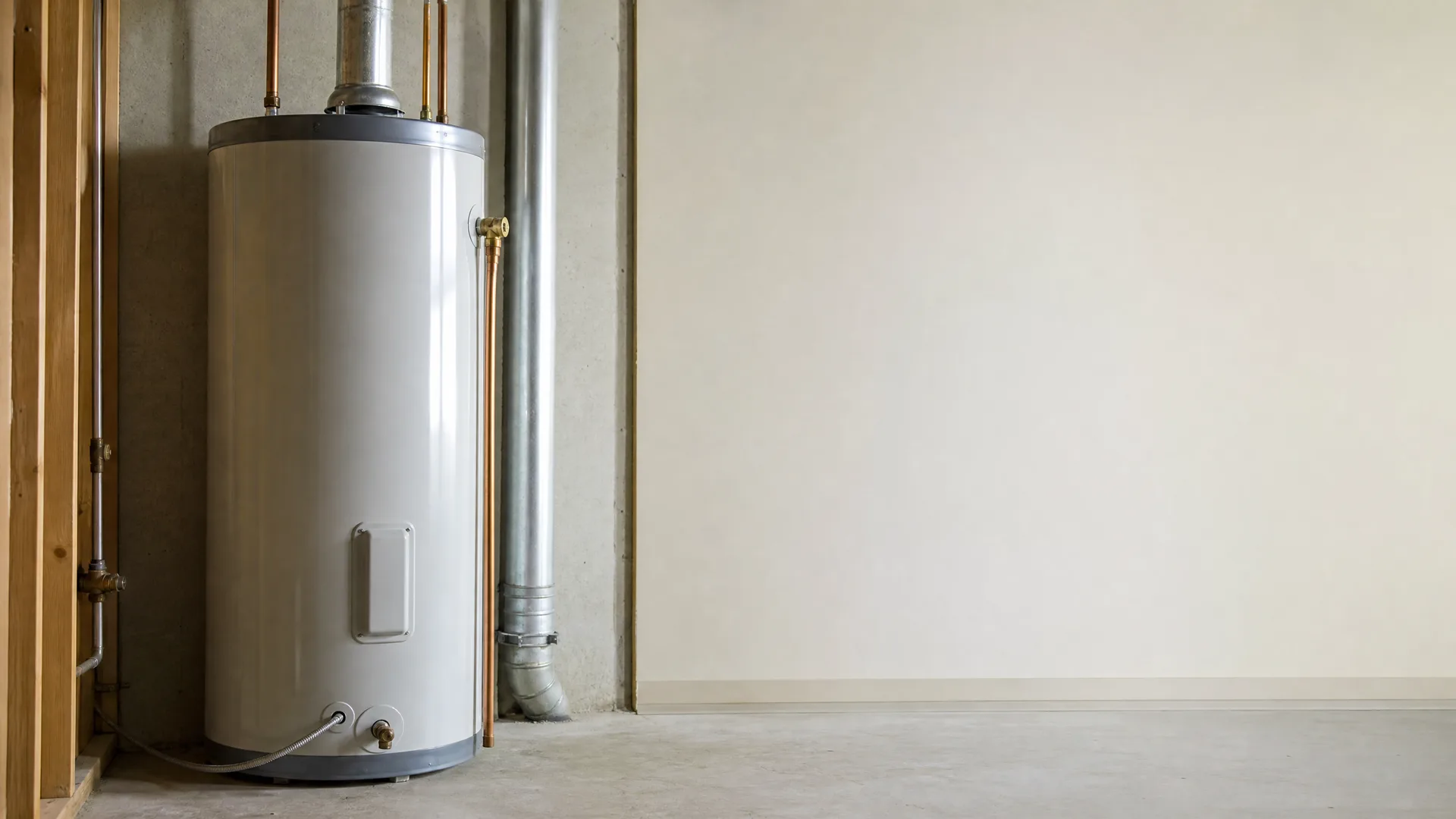
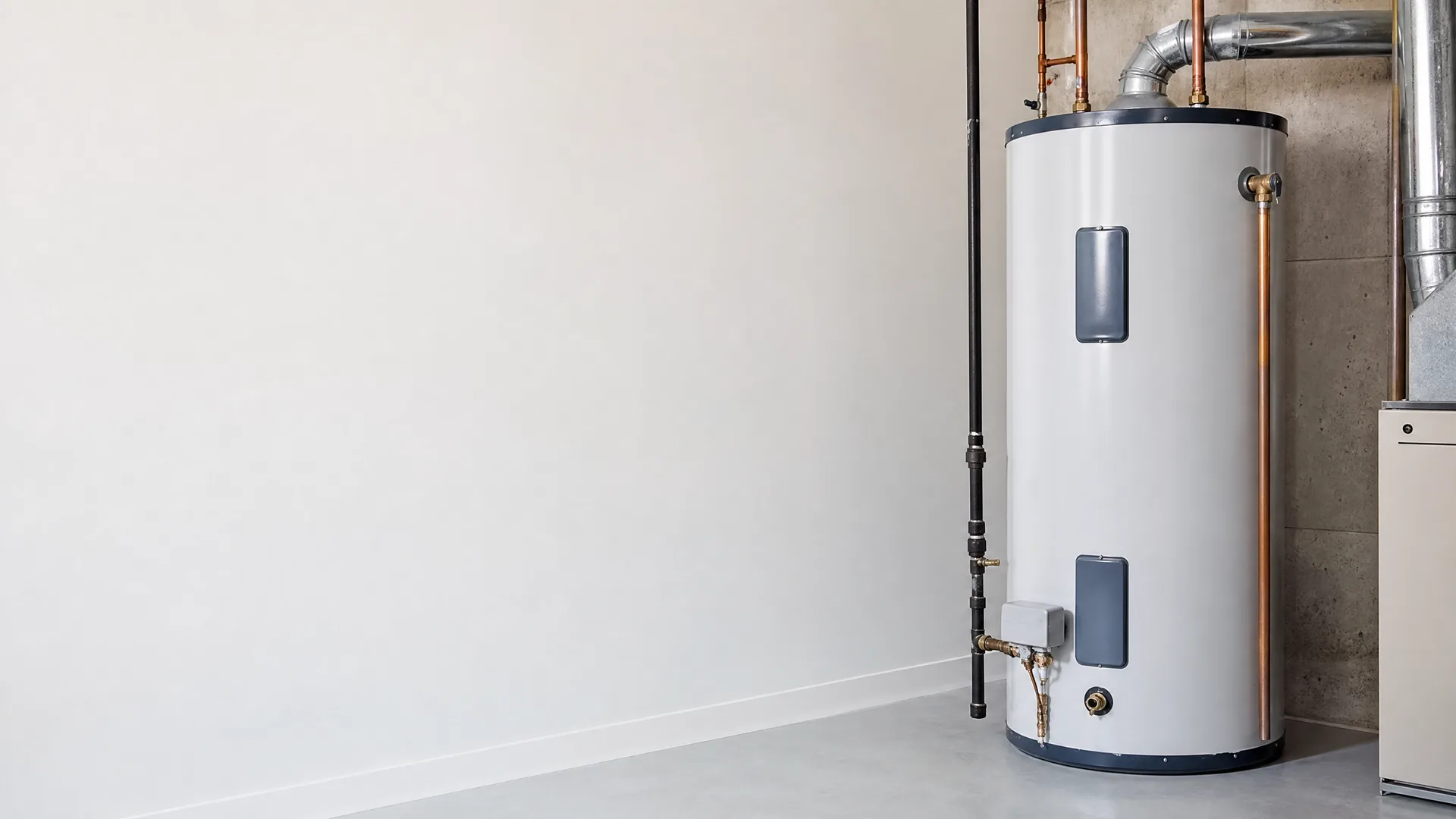
A white cylindrical water heater with copper pipes and a metal flue stands in the corner of an empty room with bare concrete floor, wood framing at left, and a plain light-colored wall.

How a thermostat loses its setting

Electric water heaters use a thermostat strapped against the tank to sense water temperature. If it drifts out of calibration or the contacts wear down, it can call for heat at a lower setting than the dial shows. You end up with water that tops out warm instead of hot, even though the element is firing fine when it does fire. A thermostat can't be recalibrated. It gets replaced.

A white cylindrical water heater with copper and black pipes stands against a plain white wall on a gray floor, beside a concrete wall and metal ductwork.

Why sediment changes recovery time

Most homes in Texas run electric tanks, and over time minerals in the water settle to the bottom and harden into a layer of sediment. That layer sits between the lower element and the water above it, so heat has to pass through it before the water ever warms. A tank that used to recover in under an hour can take noticeably longer once sediment builds up, and the element underneath it wears out faster carrying the extra load.

What is this doing to your water heater right now

A failing element or a thermostat that's drifted low isn't fixing itself. The tank is running longer to make less hot water, and the working element is carrying a load it wasn't built to carry alone. Left alone, that second element tends to fail too, and lukewarm turns to cold. You'll likely notice the shower running out faster than it used to, or the dishwasher not getting water hot enough to do its job. With most homes here heating water with electricity, a tank working harder than it should shows up on the power bill before anyone diagnoses why.

A bearded man in a plaid flannel shirt stands in a kitchen looking out a window toward snow-covered shrubs, with a steaming mug on the windowsill and potted plants on a shelf behind him.
A smiling man with dark curly hair in a navy t-shirt sits on a gray couch indoors, with a large-leafed plant and a window in the background.

Get the right pro for your water heater

A lukewarm shower in a Texas house with an electric water heater almost always traces back to one of two things: a dead element or a thermostat that's calling for less heat than the dial says. Neither one gets better by waiting, and neither one is something you can tell apart from the other just by running the tap longer. Figuring out which one it is means opening the panel, checking the elements with a meter, and testing the thermostat against the actual water temperature. You could call around for an electrician or a plumber willing to do that, explain the problem to each one, then sit with a stack of quotes trying to compare them. Or you can hand that off now and let a licensed contractor who works on water heaters take it from here. Either way the tank keeps running the way it's running until someone opens it up.

Living with it a while longer

You keep an eye on it, shift showers to times when nobody else needs hot water, and get used to turning the dial up past where it used to sit. The lukewarm stretch might hold steady for weeks. But a failed element doesn't heal itself, and a thermostat that's drifted low keeps drifting. The one working element keeps carrying a load built for two, and that shortens its life too. What starts as an annoyance tends to end as a full loss of hot water, usually at a worse time than this one.
Getting it looked at now

A licensed contractor can tell you in one visit whether it's the element, the thermostat, or both, and settle it instead of guessing. That skips the part where you'd be searching for who does this kind of repair in your area, calling a few numbers, describing the same symptoms over and over, and weighing quotes that don't quite match up. You get matched with someone who handles this specific problem, and they reach out to you directly. The lukewarm water doesn't fix itself either way, but this way you're not the one chasing it down.

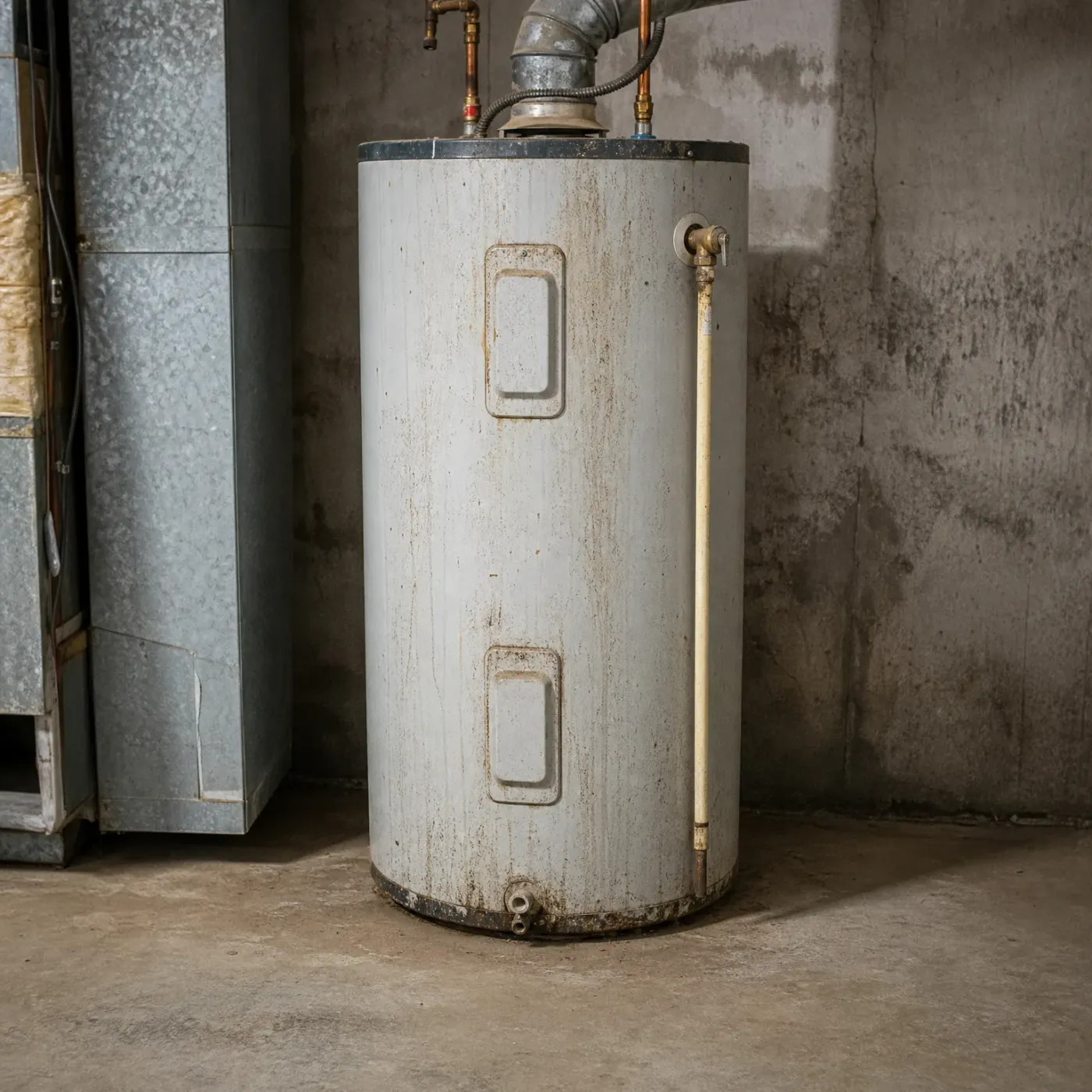
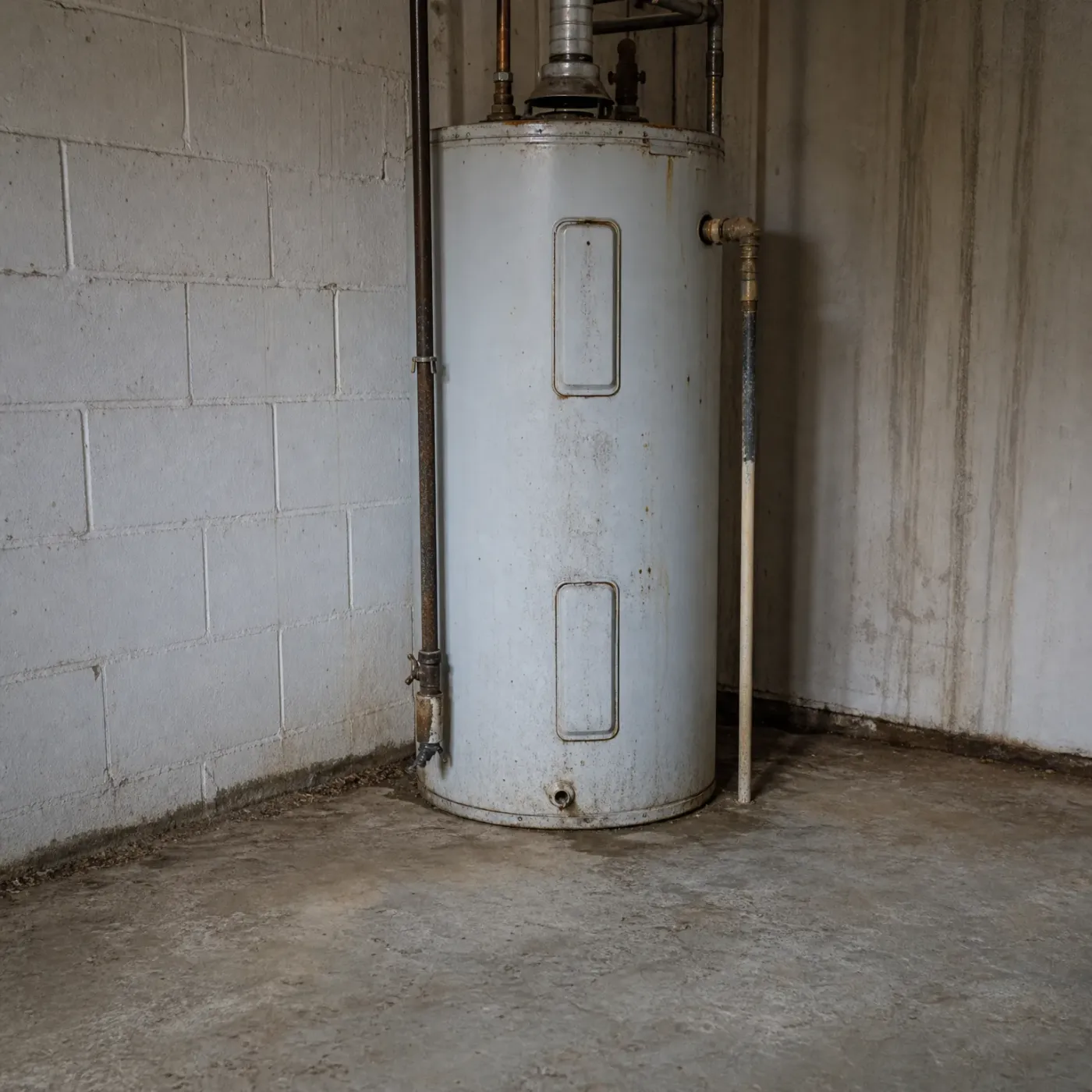
A white cylindrical water heater with rust stains and two access panels stands in a basement corner between a painted concrete block wall and a bare concrete wall, with metal pipes running up and alongside it on a concrete floor.
Before you get your water heater repair
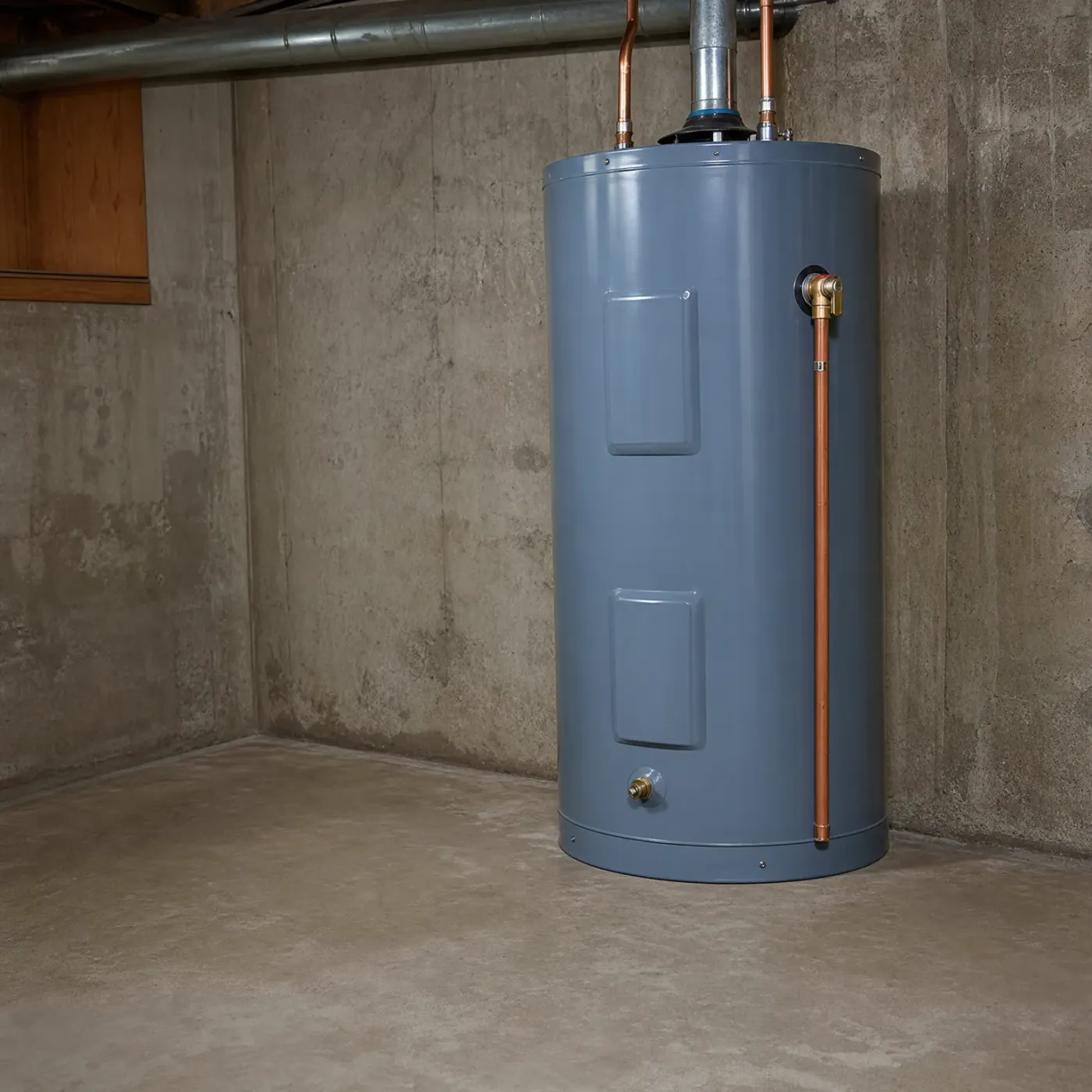
A gray cylindrical water heater standing on a concrete floor in a basement corner, with copper pipes and a metal duct running overhead along bare concrete walls.
After you get your water heater repair
  1. The thermostat calls for heat when the tank cools below its set point.

  2. Power reaches the upper element first, then the lower one.

  3. A failed element stops drawing power, so that section stays cold.

  4. The working element heats its section, but the other mixes in lukewarm.

A gray cylindrical water heater with copper piping and access panels stands against a concrete basement wall beside ductwork and vertical pipes.
A water heater working the way it should, heating on schedule and holding its temperature tank to tank.
An old rust-streaked cylindrical water heater with two access panels, copper pipes and a flue at the top, and a discharge pipe along its side, standing on a concrete floor beside galvanized ductwork against a bare concrete wall.
Rust like this on the tank and fittings means the water heater is failing, not just drifting out of calibration.

61.2% of homes statewide heat with electricity

With most Texas homes running on electric water heaters, yours is almost certainly relying on two elements to do the work of one tank. When either one goes out, there's no gas burner backing it up, just a slow fade to lukewarm.

ACS 2020-2024 5-year B25040

A dead element or a thermostat calling for less heat than the dial shows, that's what's behind the lukewarm water. The tank isn't going to fix itself, and the fade will keep getting worse until one element is carrying work it can't keep up. Finding someone to look at it is the part that eats your evening: searching through listings, calling a few places to see who even answers, explaining the same thing about the fading shower to each one, then sitting with quotes trying to tell who's being straight with you. You already know how to catch a small problem before it turns into a bigger one. What you don't have time for is the chase to find someone qualified to handle it. Once you're matched with a contractor who works on electric water heaters, that part is done. They'll reach out to you directly. The tank still needs the repair. But you won't be the one hunting for who's going to do it.

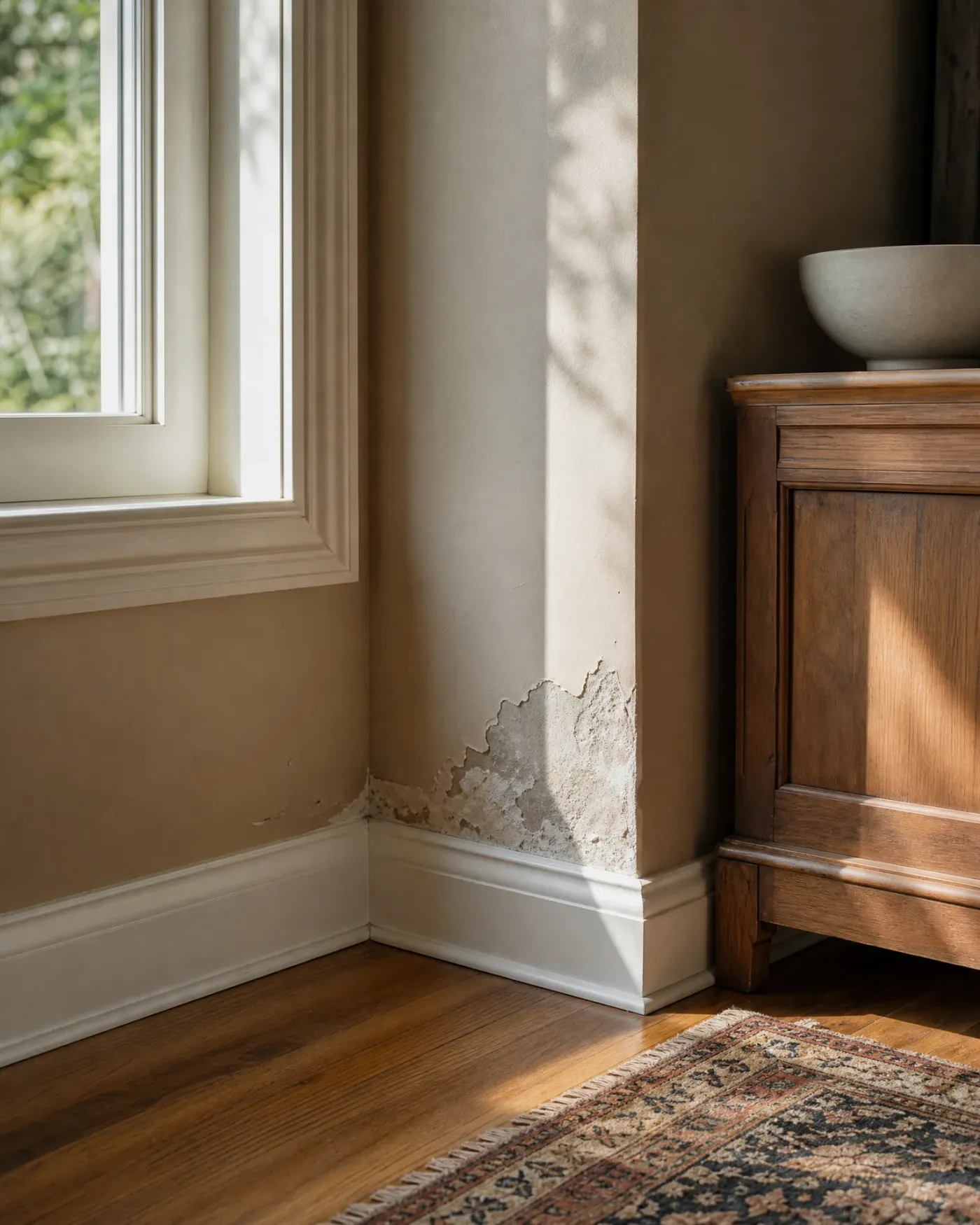
Interior room corner with sunlight from a window, showing peeling paint and damaged plaster on the wall above a white baseboard, a wooden cabinet with a pale bowl on top, hardwood floor and a patterned rug.
Interior corner of a room with tan walls, white profiled baseboard and window trim, a wood-plank floor in sunlight, and green foliage visible through the window.
An empty room corner with cream walls, white baseboard, two windows with deep sills showing green foliage outside, and a wood plank floor lit by sunlight.
Empty room corner with beige walls, white beadboard wainscoting, chair rail and baseboard, a window with green foliage outside, and sunlight casting leaf shadows on the wall above a wood floor.
Sunlit room corner with a multi-pane window, beige walls, white baseboard, wood floor with a woven rug, and a dark wooden cabinet holding a ceramic table lamp below a framed picture.

A pro who works on water heaters

Describe what your water heater is doing once, in one form.

Describe it once

You only hire the pro if you want to.