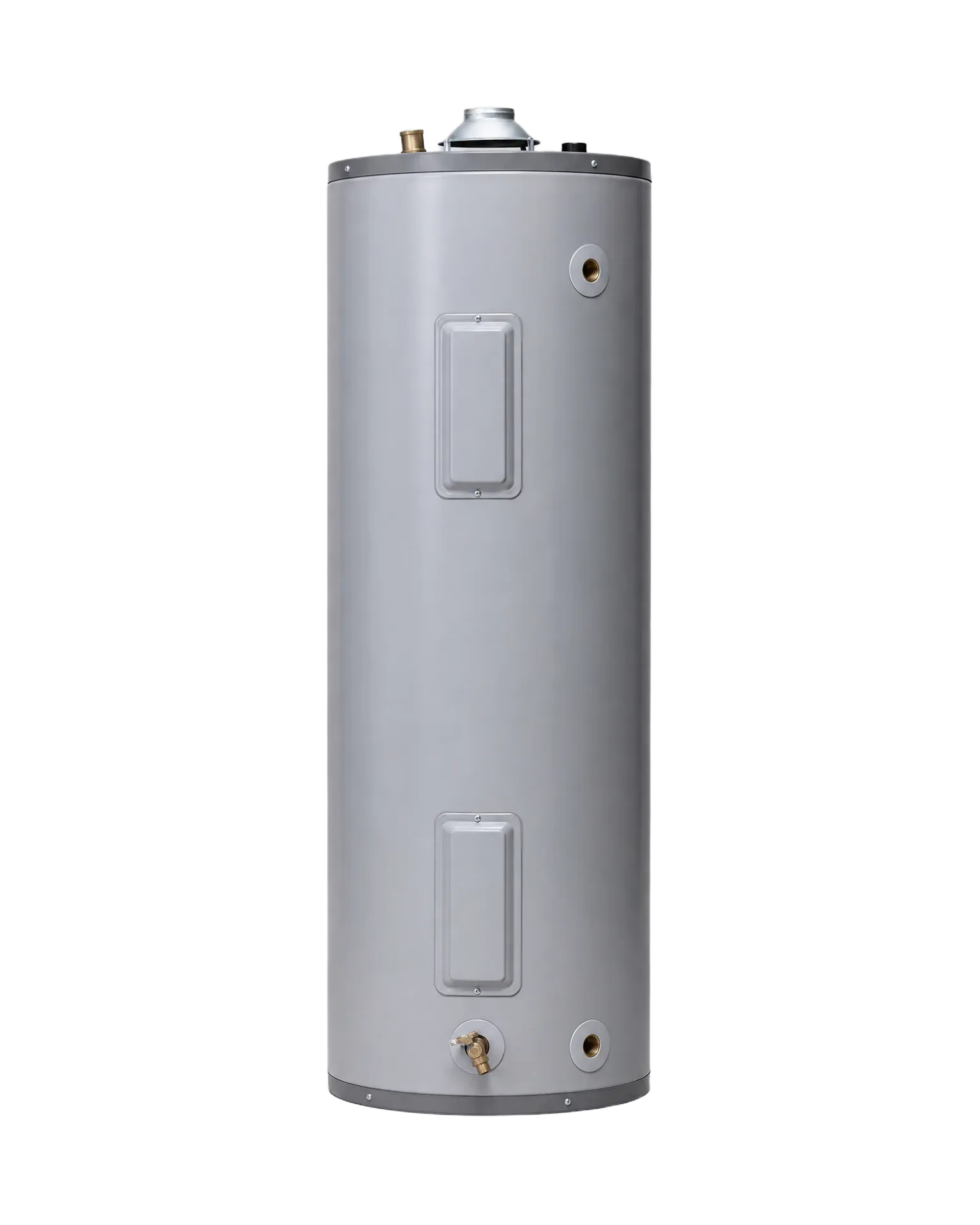
Two elements, one often ignored
The lower element fails more often because it does more work. A technician who checks it first usually finds the problem faster.
A slow-to-recover water heater usually means the lower heating element is failing, or the sediment sitting on top of it is soaking up heat that should be going into your water. Most homes in Texas run electric water heaters, which use two elements, an upper and a lower, and when the lower one goes bad you still get hot water, just less of it, and it runs out faster when the next person showers. Sediment does the same thing from a different angle: it builds up over years of use and acts like a blanket between the element and the water, so the element works but the heat doesn't reach the tank. Either way the tank itself is usually fine. What you're noticing, running out of hot water sooner than you used to, is a sign worth fixing before it turns into no hot water at all.
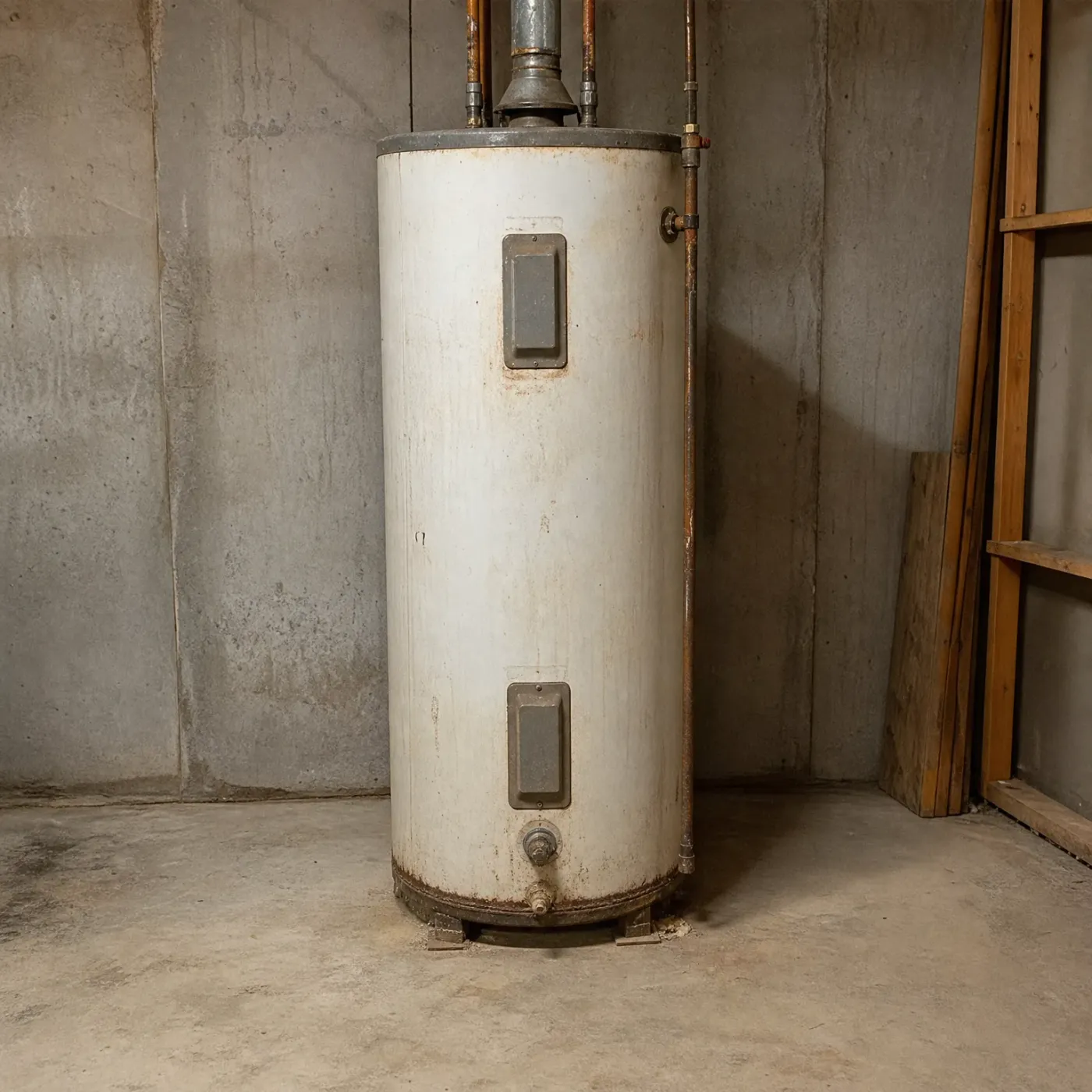
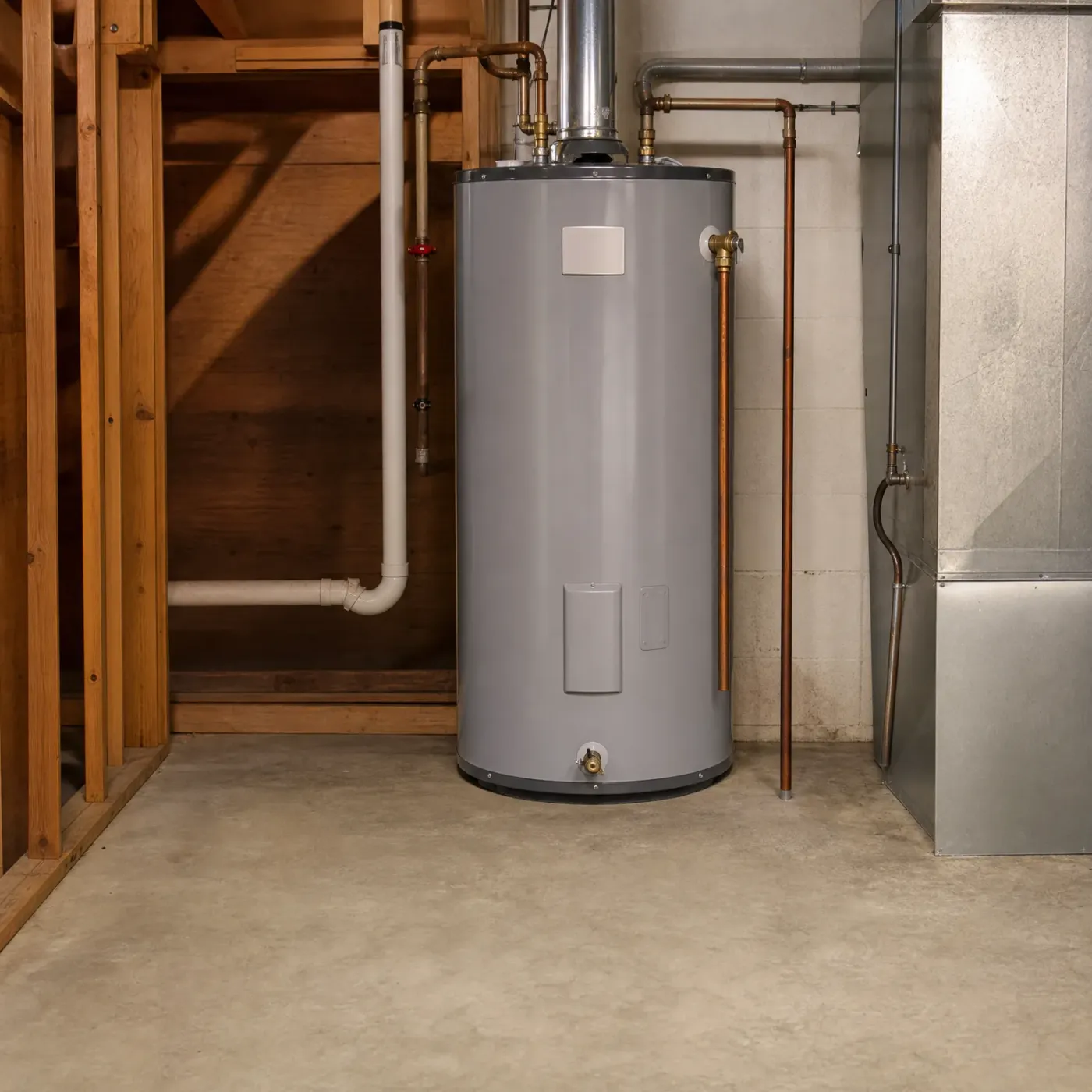
Your water heater splits the work between two elements stacked in the tank. The upper one only has to keep the top third warm. The lower one takes on the cold water coming in from the bottom, which is most of the job. When that lower element goes out, the upper one keeps heating on its own, so the tap still runs hot at first. It just doesn't last, and the tank takes much longer to catch back up once it's drawn down. Sediment causes a similar problem from a different angle. It settles right on top of the lower element and sits between the element and the water, so the heat has to fight through it instead of passing straight into the tank. A thermostat that's drifted can add to this too, cutting the element off before the water's actually up to temperature. From where you stand, a bad element, a layer of sediment, and a miscalibrated thermostat all look the same: slower recovery and a shorter stretch of hot water than you're used to.




The lower element fails more often because it does more work. A technician who checks it first usually finds the problem faster.
Texas water left sitting in a tank drops sediment on the lower element. That layer has to be dealt with before the element can heat properly again.
You run the shower and the hot water doesn't last like it used to. Dishes get lukewarm water halfway through a load. The water heater is working, the pilot or power light is on, but whatever comes out never gets as hot as it should, or it takes twice as long to feel it. You might hear a low rumbling or popping from the tank when it's running, which is sediment shifting around the lower element. Left alone, that element works harder and longer to do less, and a struggling element tends to be the one that burns out next, leaving you with no hot water at all instead of just less of it.

Monday, before work. You turn the shower on and step back to let it heat up, same as every morning, and the mirror doesn't even fog. You check the water with your hand. It's warm, not hot, and you know from the last few days it won't get much further than that. The towel is already off the rail, waiting. You get in anyway because the kids still need breakfast and the day doesn't wait for a water heater to make up its mind. It's quick, and it's not the shower you wanted. Outside it's already warm enough to feel sticky by the time you leave the bathroom, Texas humidity doing what it does, but the only thing on your mind is getting hot water back before tomorrow.
You don't need to figure out whether it's the lower element or the sediment sitting on it before you call someone. That's a diagnosis, and it's faster for a technician to make in person than for you to guess at from a cold shower. What you can skip is the part where you search around, call a few numbers, explain the same problem three times, and sit on quotes trying to compare them. This request goes to one licensed contractor working in your area, someone who deals with Texas water heaters all year and knows the lower element is the first place to look. You won't get a string of calls from companies you didn't choose. You'll hear from the one who's already set up to look at yours. Mornings with lukewarm water aren't getting better on their own, and the part that's failing won't fix itself. Handing it off now just means someone qualified is already looking at it instead of you running the same check again tomorrow.
A technician cuts power at the breaker before opening the panel.
A multimeter checks the upper and lower elements for continuity.
The lower element usually shows the failure, since it does more work.
Draining the tank reveals how much sediment sits on the element.
Most houses in Texas run electric water heaters, not gas, so the two-element setup described above is almost certainly what's in your closet or garage. When the lower element goes, there's no pilot or gas valve to check. It's the element itself, or the sediment sitting on it.
ACS 2020-2024 5-year B25040
You wait for a repair appointment the usual way: you search, you call a few numbers, you explain the cold shower story to each one, then you sit with quotes you can't really compare because nobody looked at the tank.
You tell it once, to one licensed Texas contractor who works on water heaters all season and already knows the lower element is the first place to check. No other company calls you about it.


A water heater that can't keep up usually has one of two problems, and both sit in the same place. The lower element has stopped working, or sediment has settled on top of it and is soaking up heat before it reaches your water. A technician finds out which one by cutting power at the breaker and testing both elements with a multimeter, then draining the tank to see how much sediment has built up underneath. That's the whole diagnosis, and it takes minutes once someone is standing in front of the tank.
What makes this straightforward is who shows up to do it. A technician who works on electric water heaters all year in Texas has seen the lower element fail more times than the upper one, so that's where they check first instead of guessing their way through the tank. You call one licensed contractor local to you, tell the cold shower story once, and that's the end of explaining it. Nobody else is calling you back asking the same questions a second or third time.
Once the element is replaced or the sediment is cleared out, the tank goes back to doing what it did when it was new. The lower element heats the incoming cold water the way it's supposed to, nothing sits between the heat and the water, and your shower runs the way it did before this started. That's the whole fix. Nothing about the tank itself needs to change, just what's gone wrong inside it.
Your request goes to one pro, not a list of companies.